Artwork
Laban Searching for His Household Gods
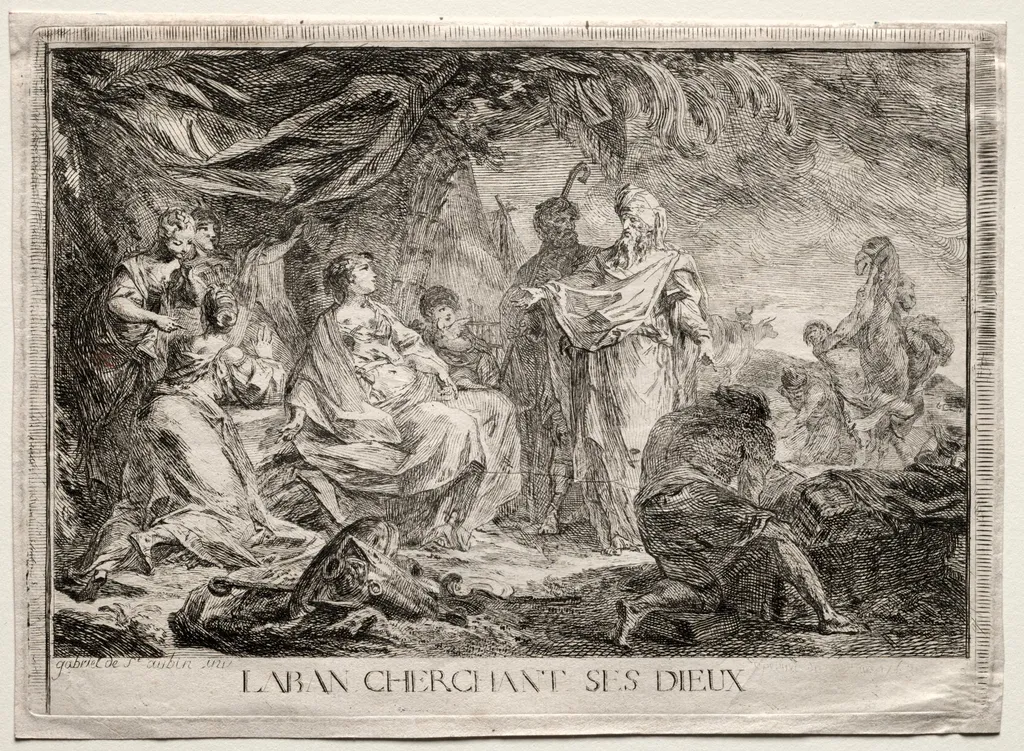
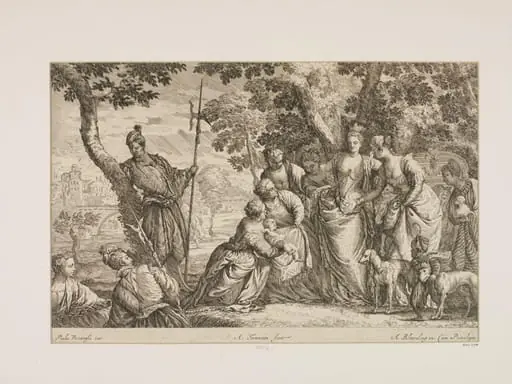
Laban Searching for His Household Gods is a print by the Romanticist artist Augustin de Saint-Aubin. It dates from 1763 and is held in the collection of the Cleveland Museum of Art.
About this work
Overview
The work is part of the collection at The Cleveland Museum of Art, where it is recognized for its narrative clarity and technical refinement.
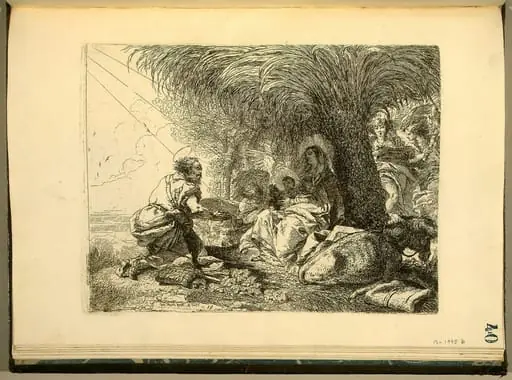
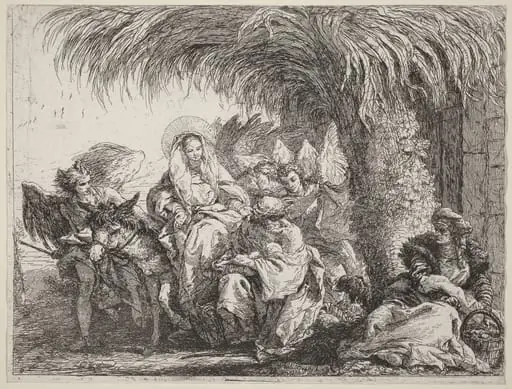
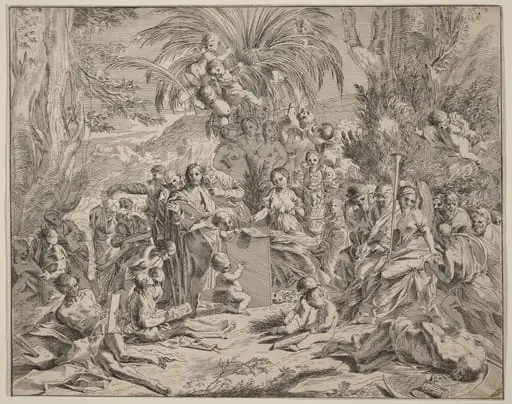
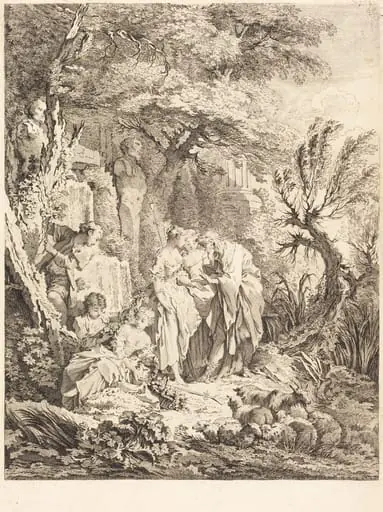
Created in 1763 by French artist Augustin de Saint-Aubin, this etching depicts a moment from the biblical Book of Genesis. The scene captures Laban’s search for stolen household idols, rendered with precise line work and dramatic contrasts. The composition is set against a rugged, storm-lit landscape, emphasizing tension and movement. The work is part of the collection at The Cleveland Museum of Art, where it is recognized for its narrative clarity and technical refinement.
Subject & Meaning
The print illustrates the moment Laban confronts his family after discovering his teraphim—small household deities—have been taken. Figures are arranged to convey urgency: Laban, staff in hand, dominates the scene, while others react with anxiety or suspicion. The seated woman and child suggest domestic disruption, and the grazing sheep hint at the pastoral context of the story. The imagery reflects themes of betrayal, possession, and divine authority in ancient Near Eastern culture.
Technique & Style
Saint-Aubin employed etching to achieve fine, controlled lines and deep chiaroscuro. The rocky terrain and turbulent sky are rendered with dense cross-hatching, enhancing the sense of unease. Figures are defined with crisp contours, contrasting with the atmospheric background. The composition directs the viewer’s eye toward Laban’s raised hand and the upward gaze of others, reinforcing the narrative’s emotional weight without overt symbolism.
History & Provenance
The print was produced during Saint-Aubin’s active years in Paris, where he was known for his illustrations of classical and biblical subjects. It was likely made as part of a series or independent print for collectors interested in religious narratives. The work entered The Cleveland Museum of Art’s collection in the 20th century, where it remains a representative example of 18th-century French printmaking focused on scriptural themes.
Context
In 18th-century France, biblical subjects remained popular in print culture, often serving moral or educational purposes. Saint-Aubin, trained in the tradition of academic illustration, drew from engraved precedents while adapting them to contemporary tastes. His work reflects a broader interest in textual illustration, particularly among Enlightenment audiences who valued clarity and emotional resonance in visual storytelling.
Legacy
Though not widely reproduced, the print exemplifies Saint-Aubin’s skill in translating narrative tension into graphic form. It stands as a quiet but effective contribution to the tradition of biblical illustration in print, influencing later artists interested in psychological depth within historical subjects. Its preservation in a major museum underscores its role as a refined artifact of 18th-century French graphic art.
Artist & collection
Artist
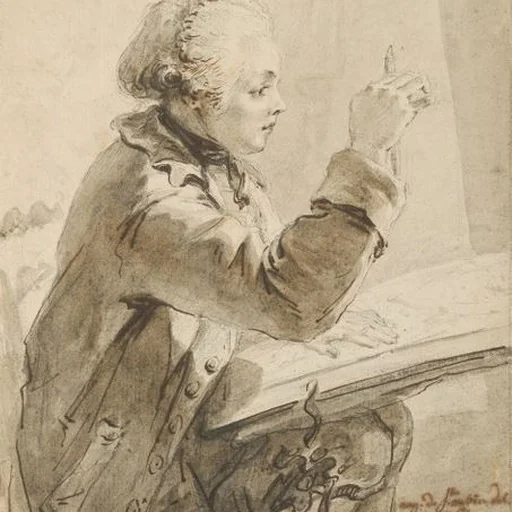
Augustin de Saint-Aubin sometimes styled Auguste de Saint-Aubin (3 January 1736 – 9 November 1807), belongs to an important dynasty of French designers and engravers.

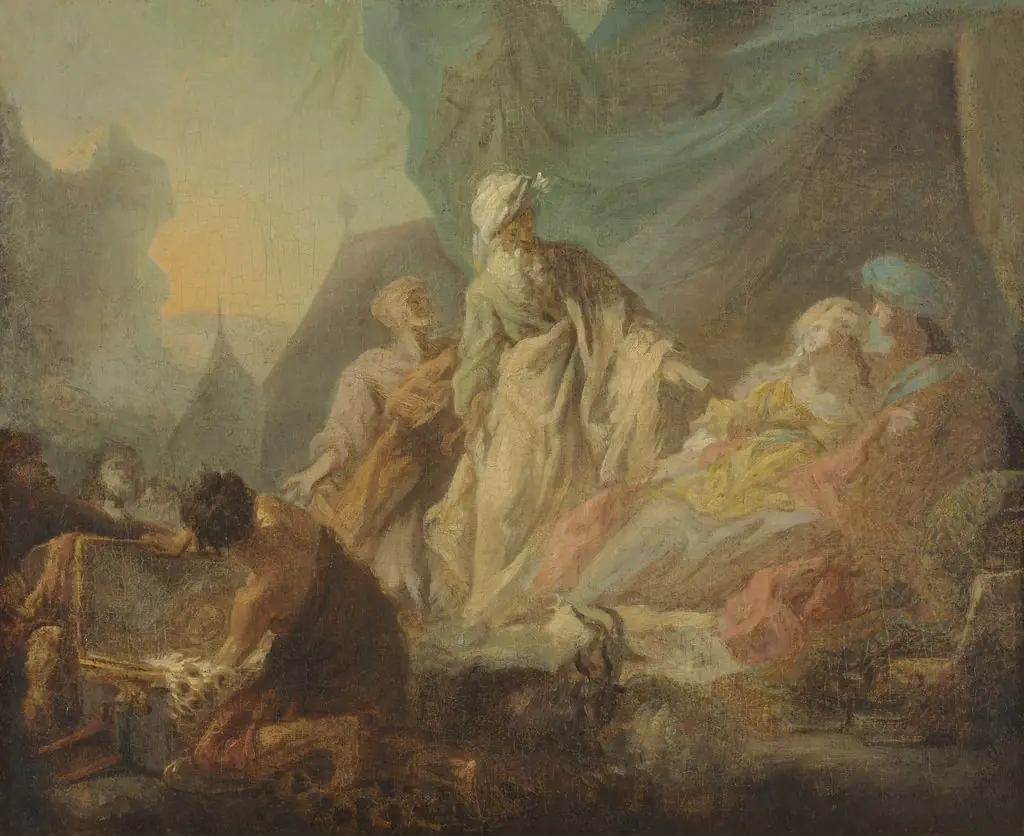 Laban Searching for His Stolen Gods
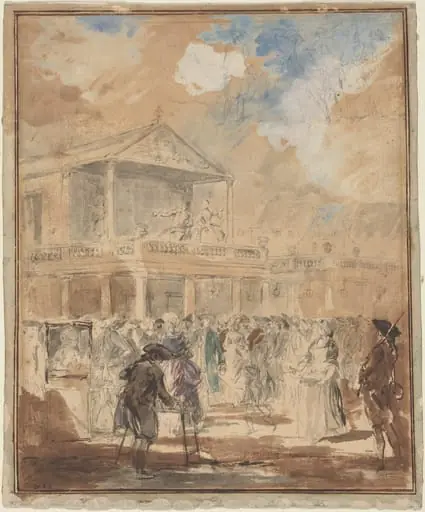 Parade (A Theatrical Procession in Paris)
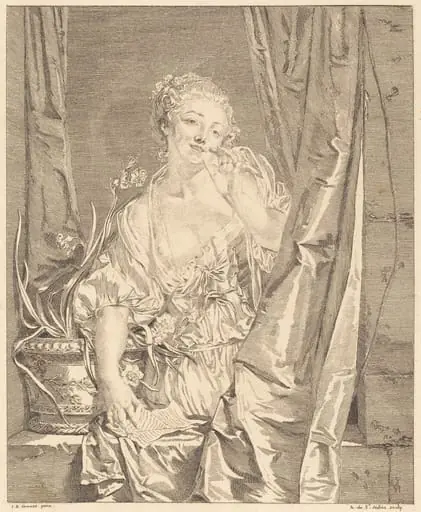 Le baiser envoyé
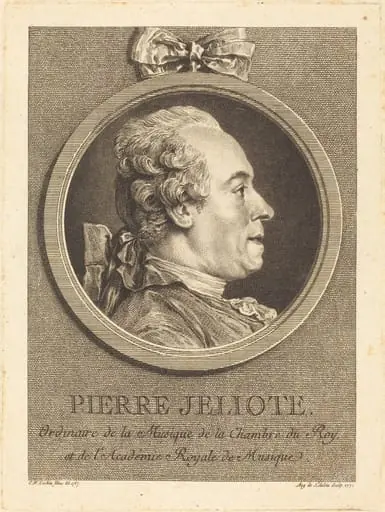 Pierre Jeliote
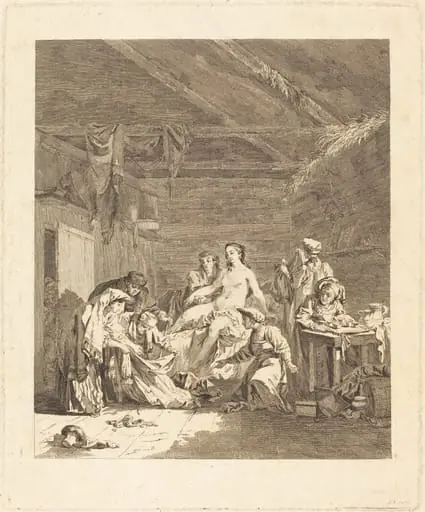 Le lever de la mariée russe (Custom of the Russians after the Marriage Ceremony and before the Wedding Feast)
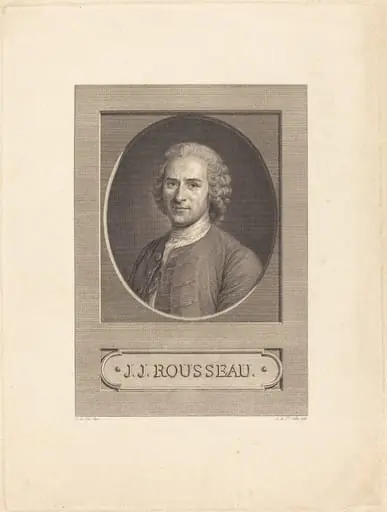 J.J. Rousseau
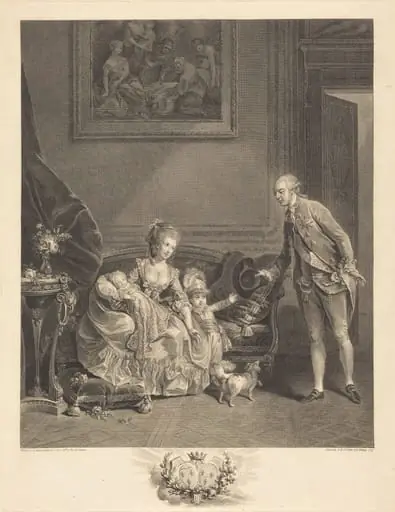 Le duc de Chartres, son epouse et ses enfants
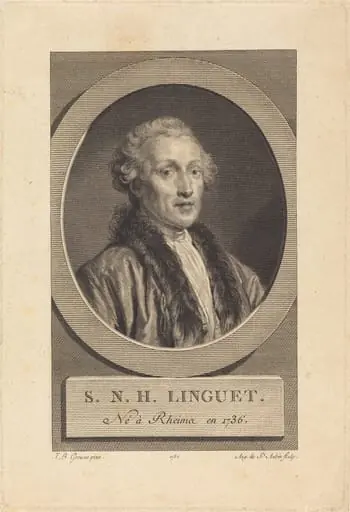 Simon-Nicolas-Henri Linguet