Artwork
Portrait of Zuzanna Poltz née Link, wife of Daniel – court painter of Augustus III
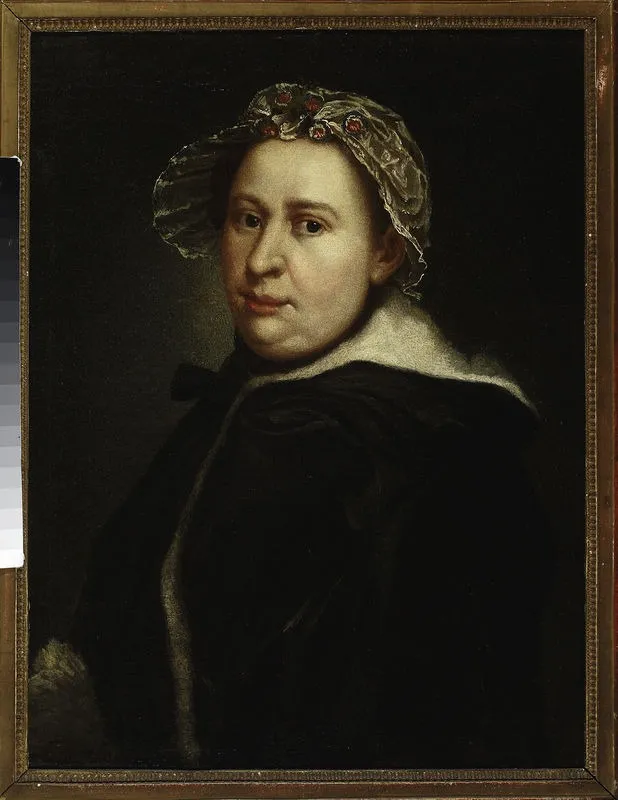
Portrait of Zuzanna Poltz née Link, wife of Daniel – court painter of Augustus III is an oil painting by the Rococo painting artist Augustyn Mirys. It dates from 1754 and is held in the collection of the National Museum in Warsaw.
About this work
Overview
Painted in 1754 by Augustyn Mirys, this oil portrait depicts Zuzanna Poltz, wife of Daniel Poltz, who served as court painter to Augustus III of Poland.
Painted in 1754 by Augustyn Mirys, this oil portrait depicts Zuzanna Poltz, wife of Daniel Poltz, who served as court painter to Augustus III of Poland. Mirys, of Scottish-French lineage and trained in Rome, worked within the Polish–Lithuanian Commonwealth’s aristocratic circles. The painting is part of the National Museum in Warsaw’s collection and exemplifies mid-18th-century portraiture in the region.
Subject & Meaning
Zuzanna Poltz is portrayed with quiet composure, her gaze meeting the viewer directly. Dressed in a dark gown and adorned with a white lace headdress set with red gemstones, her attire signals status without overt extravagance. The neutral expression and focused gaze convey dignity rather than sentiment, aligning with the restrained elegance expected of noblewomen in courtly portraiture of the period.
Technique & Style
Mirys employs a restrained Rococo sensibility, emphasizing texture and subtle light on the lace and fabric rather than ornamental flourish. The black background isolates the figure, directing attention to her face and attire. Brushwork is precise but not overly refined, balancing naturalism with the formal conventions of aristocratic representation common in Central European courts.
History & Provenance
Commissioned during Mirys’s tenure among Poland’s elite, the portrait reflects his position as a favored artist to court-connected families. After its creation, it remained within Polish collections, eventually entering the National Museum in Warsaw. Its survival through political upheavals underscores its enduring recognition as a document of noble identity in the Commonwealth.
Context
In mid-18th-century Poland, portraiture served as both personal record and social assertion. Mirys, trained in Italy and active in Warsaw, bridged Western European styles with local aristocratic tastes. This portrait reflects a broader trend where noblewomen were depicted with solemn grace, their identity tied to lineage and marital alliance rather than individual expression.
Legacy
The portrait remains a key example of Mirys’s mature style and the visual culture of the Polish–Lithuanian Commonwealth’s nobility. It contributes to the understanding of how foreign-trained artists adapted international trends to local contexts, preserving the appearance and status of a class whose political influence was waning by the century’s end.
Artist & collection
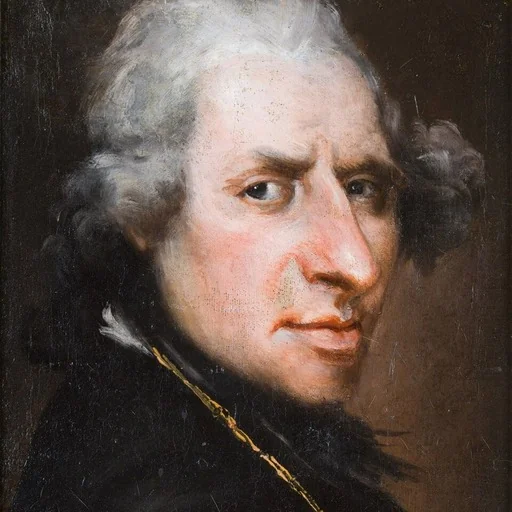
Artist
Augustyn Mirys (8 January 1700 – 8 March 1790) was a Polish painter of Scottish-French origin.

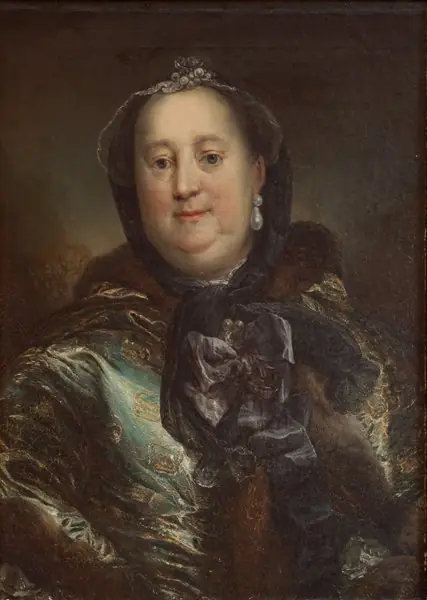 Portræt af hertuginde Antoinette Amalie af Braunschweig-Wolfenbüttel
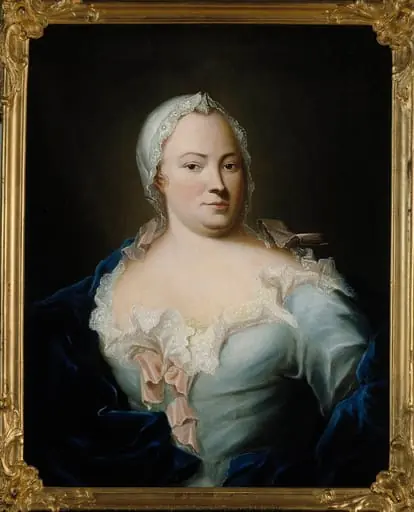 Naisen muotokuva
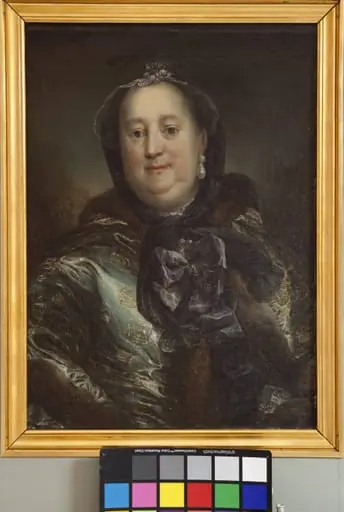 Portræt af hertuginde Antoinette Amalie af Braunschweig-Wolfenbüttel
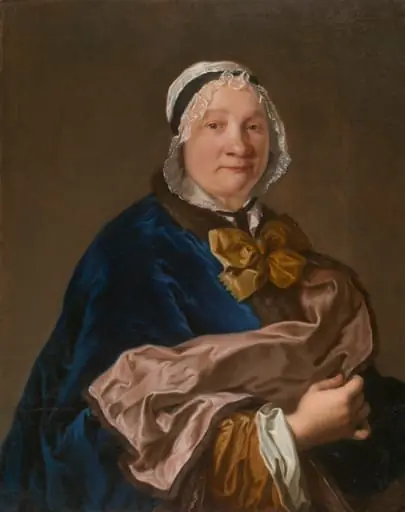 Portrait of a Lady
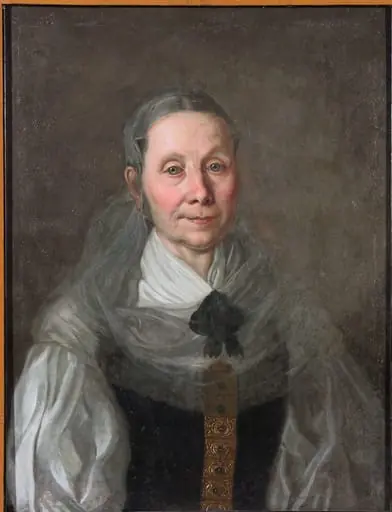 Soția lui J.G. Graf
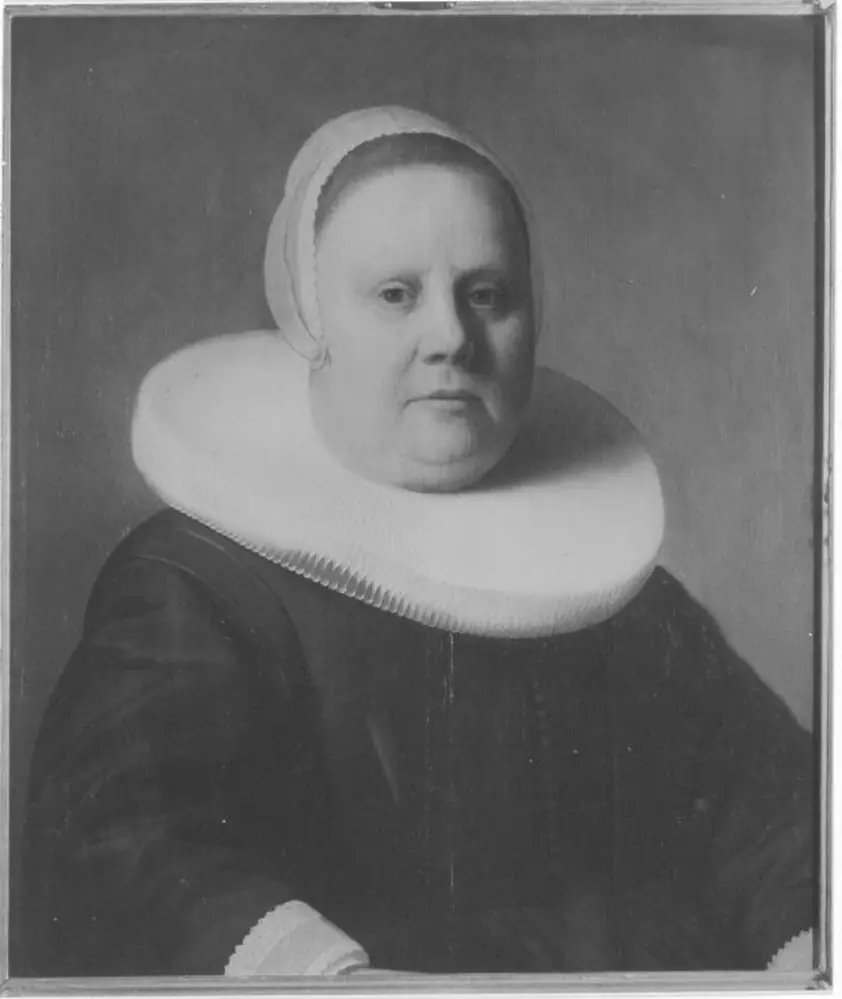 Portrait of a Woman
 Portrait of a Lady
 A Young Woman
 Portret van een vrouw
 Portrait of a Young Lady
 Portrait of a Woman
 Portrait of Frouck, Barones van Aylva, Wife of Hans Willem van Aylva after 1658