Artwork
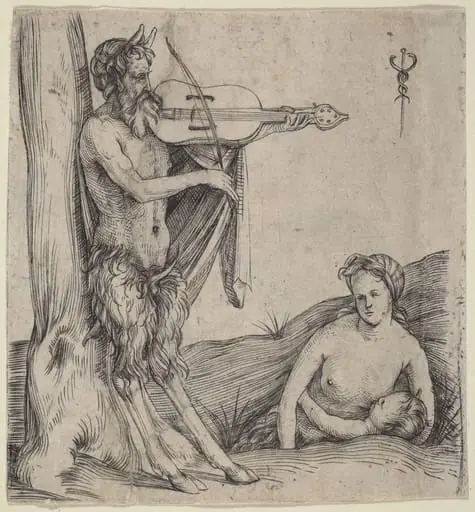
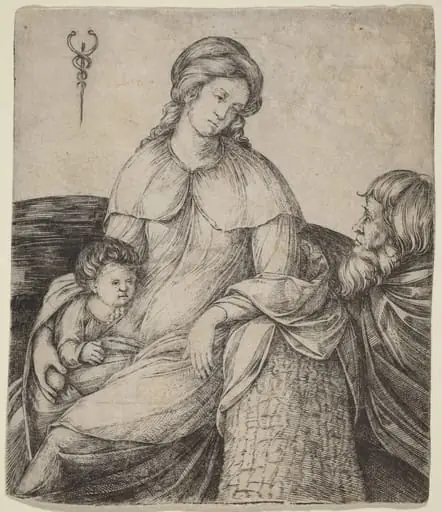
Woman and Child with Distaff
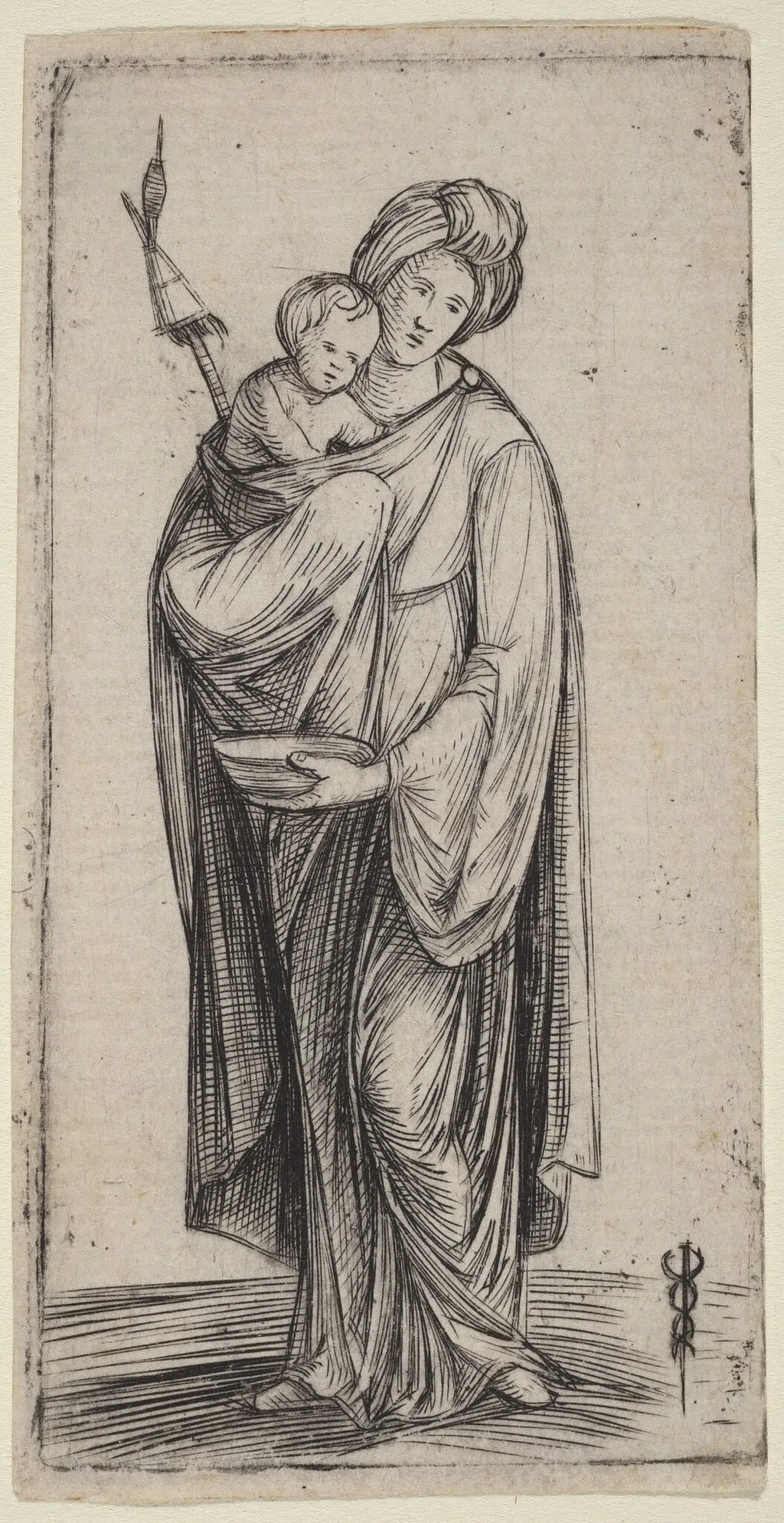
Woman and Child with Distaff is an ink print by the Renaissance artist Jacopo de' Barbari. It dates from 1488 and is held in the collection of the National Gallery of Art.
About this work
Overview
Woman and Child with Distaff is a 1488 engraving by Jacopo de' Barbari, an Italian Renaissance artist known for his technically precise prints. Executed before his relocation to Germany in 1500, this work exemplifies his distinctive style.
Subject & Meaning
The engraving portrays a serene domestic scene: a woman in traditional attire (long robe, covered hair, cloak) tenderly holds a distaff in one hand and a wrapped, resting child in the other, evoking themes of everyday life and maternal care prevalent during the period.
Technique & Style
Characterized by fine detail and cross-hatching, the engraving showcases de' Barbari's technical skill, achieving a sense of texture and depth. The composition conveys quiet intimacy through the subtle, calm expressions of the subjects.
History & Provenance
Created in 1488 while de' Barbari was still active in Venice, the engraving later became part of his influential body of work in Northern Europe after his 1500 relocation to Germany.
Context
Reflecting Renaissance artistic and cultural themes, the piece stands as an example of Italian Renaissance influence on Northern European art, facilitated by de' Barbari's pioneering presence.
Legacy
Woman and Child with Distaff, with its technical precision and intimate subject matter, contributed to de' Barbari's reputation as a leading engraver of his time, influencing the broader landscape of Renaissance printmaking.
Artist & collection
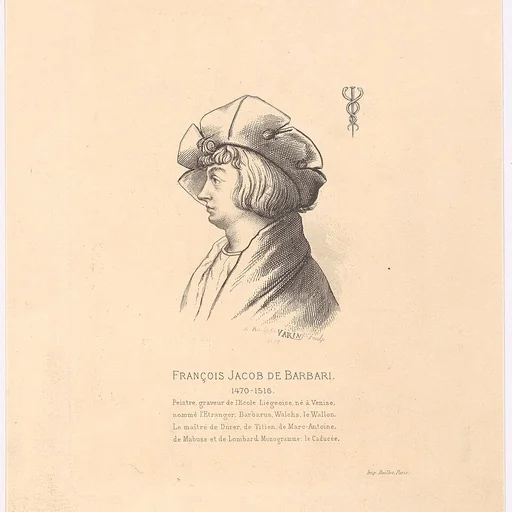
Artist
Jacopo de' Barbari, sometimes known or referred to as de'Barbari, de Barberi, de Barbari, Barbaro, Barberino, Barbarigo or Barberigo (c.

![View of Venice [lower right block], by Jacopo de' Barbari](https://artifactworldgallery.com/img/jacopo-de-barbari--view-of-venice-lower-right-block--371460ae957995b9-w320.webp)
 Virgin and Child with the Apple
 The Virgin on the Crescent
 The Small Madonna and Child
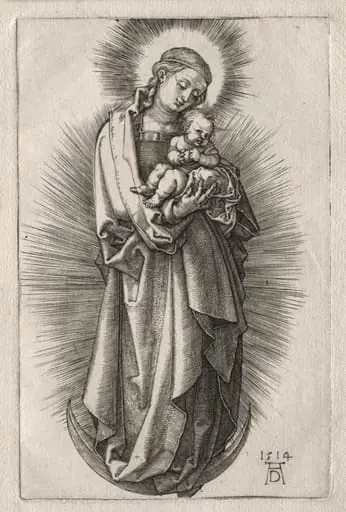 The Virgin with Hairband on a Crescent Moon
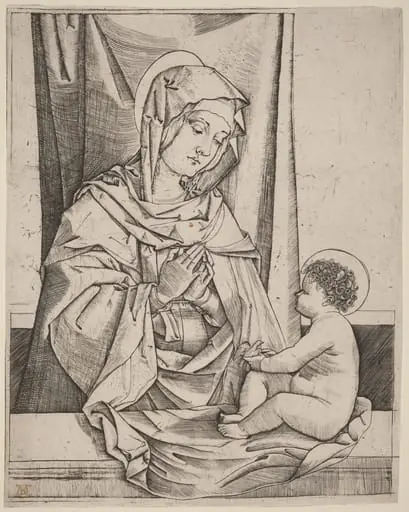 The Virgin and Child
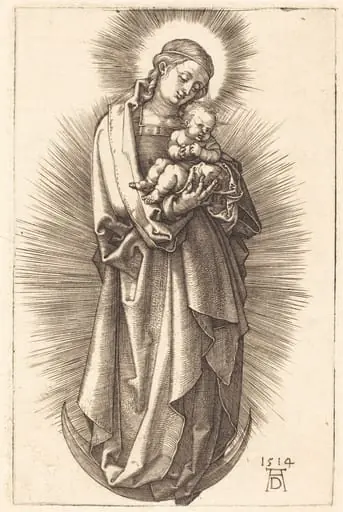 The Virgin and Child on a Crescent with a Diadem
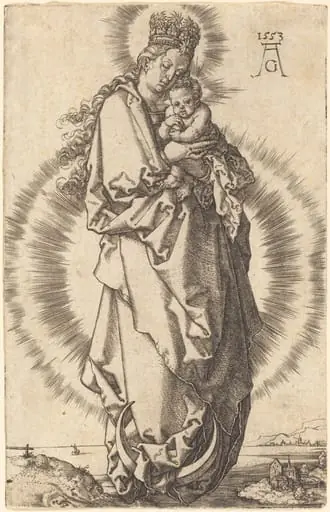 The Virgin with the Child on the Crescent
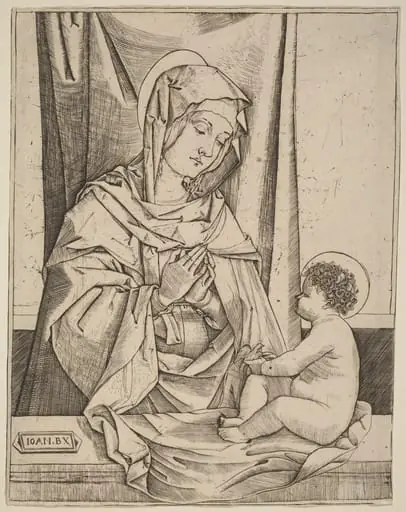 The Virgin and Child
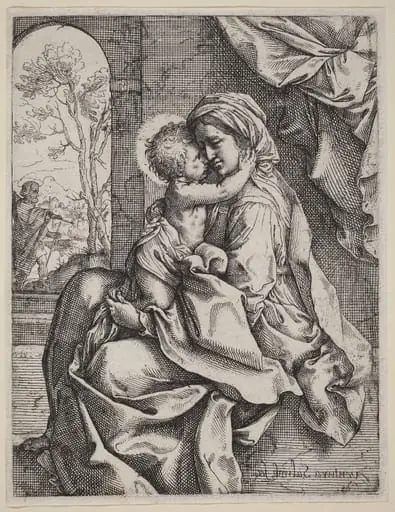 Virgin and Child
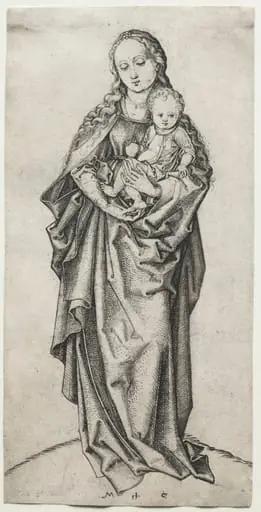 Virgin and Child with an Apple
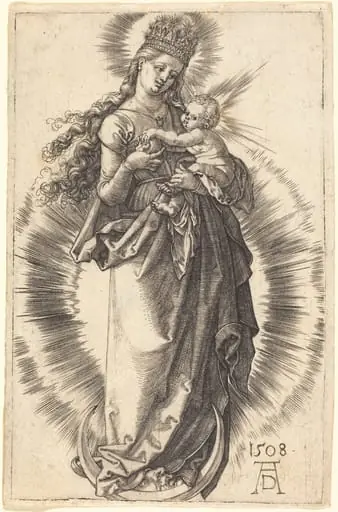 The Virgin and Child on a Crescent with a Starry Crown
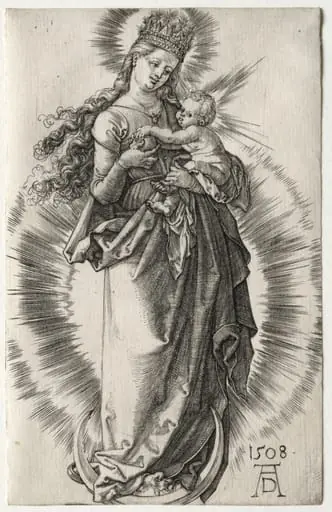 The Virgin with a Starry Crown