Artwork
Virgin and Child with the Apple
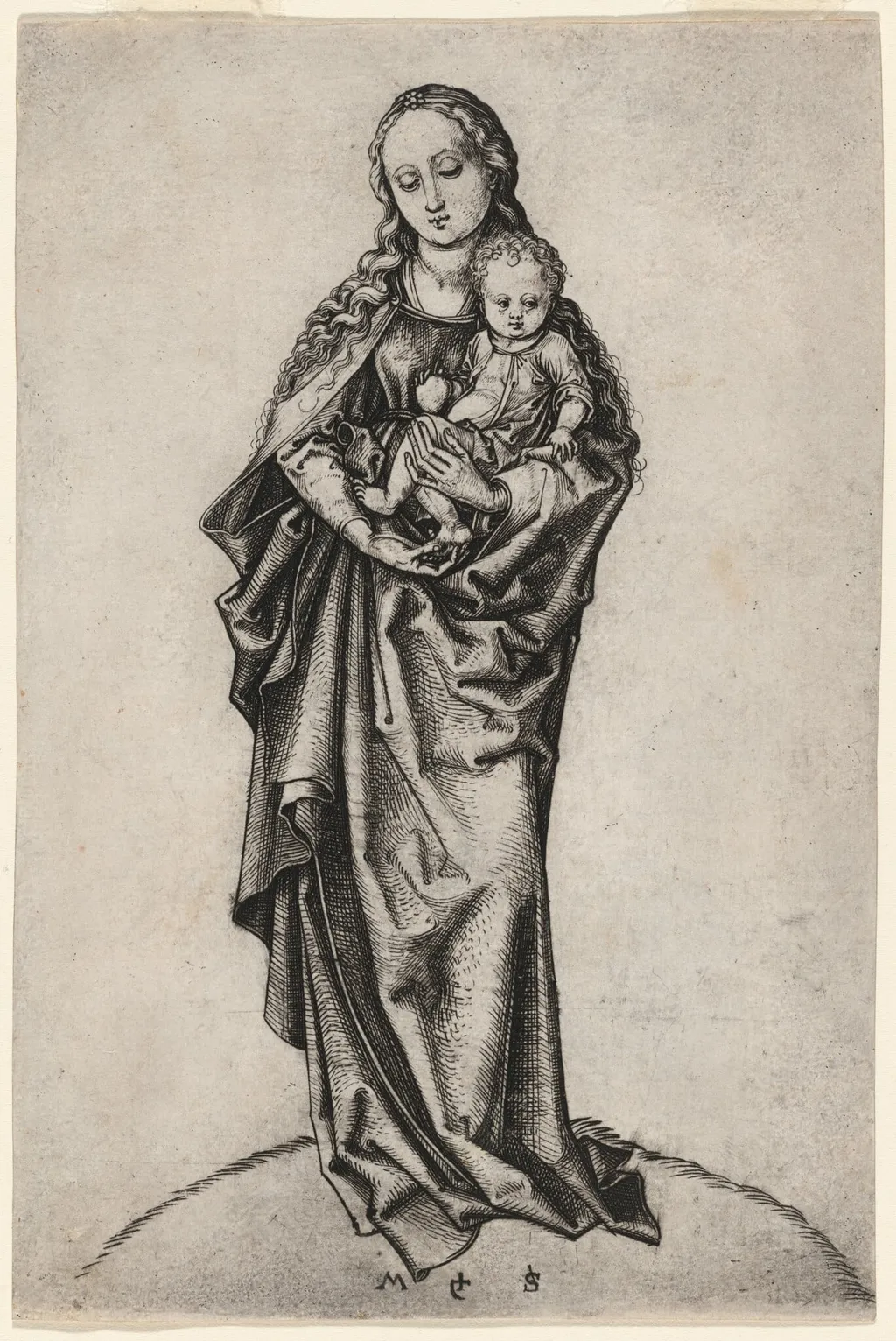
Virgin and Child with the Apple is an ink print by the Renaissance artist Martin Schongauer. It dates from 1472 and is held in the collection of the National Gallery of Art.
About this work
Overview
Created around 1472, this engraving by Martin Schongauer is one of 116 surviving prints by the Alsatian artist. Executed on laid paper, it exemplifies the precision and tonal nuance achievable in early Northern European printmaking. The composition centers on the Virgin and Child, rendered in fine linear detail without color, relying entirely on incised marks to convey form and atmosphere.
Subject & Meaning
The Virgin Mary holds the Christ Child, who reaches for an apple she offers. The fruit alludes to the Fall of Man, suggesting Christ’s role in redeeming humanity’s original sin. Their intimate gaze and tender posture emphasize maternal devotion, while the apple subtly shifts the scene from simple devotion to theological narrative, grounding the sacred in symbolic gesture.
Technique & Style
The plain background isolates the figures, directing attention to their interaction and the meticulous rendering of surfaces through line alone.
Schongauer employed fine, controlled engraving lines to model volume and texture, particularly in the folds of Mary’s robes. Cross-hatching and delicate parallel strokes create gradations of light and shadow, giving the fabric a sense of weight and movement. The plain background isolates the figures, directing attention to their interaction and the meticulous rendering of surfaces through line alone.
History & Provenance
As one of Schongauer’s earliest engravings, this work circulated widely in the late 15th century, influencing later printmakers across Europe. Its survival in multiple impressions attests to its popularity among collectors and religious patrons. Though no specific early ownership records are documented, its presence in major collections today reflects its enduring status in the history of print.
Context
Produced in the decades before Albrecht Dürer’s rise, Schongauer’s engravings defined the standards of Northern Renaissance printmaking. Working in Colmar, a cultural crossroads, he synthesized Gothic detail with emerging naturalism. This image reflects the period’s devotional focus, where religious imagery served both spiritual contemplation and the growing market for portable, reproducible sacred art.
Legacy
Schongauer’s technical mastery set a benchmark for engraving in Northern Europe. His use of line to suggest texture and emotion influenced generations, including Dürer, who studied his prints closely. This work remains a key reference for understanding how early printmakers translated complex theological ideas into intimate, visually rich compositions without color or large-scale support.
Artist & collection

Artist
Martin Schongauer, also known as Martin Schön or Hübsch Martin by his contemporaries, was an Alsatian engraver and painter.

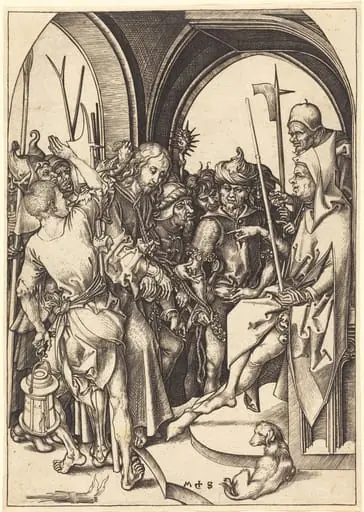
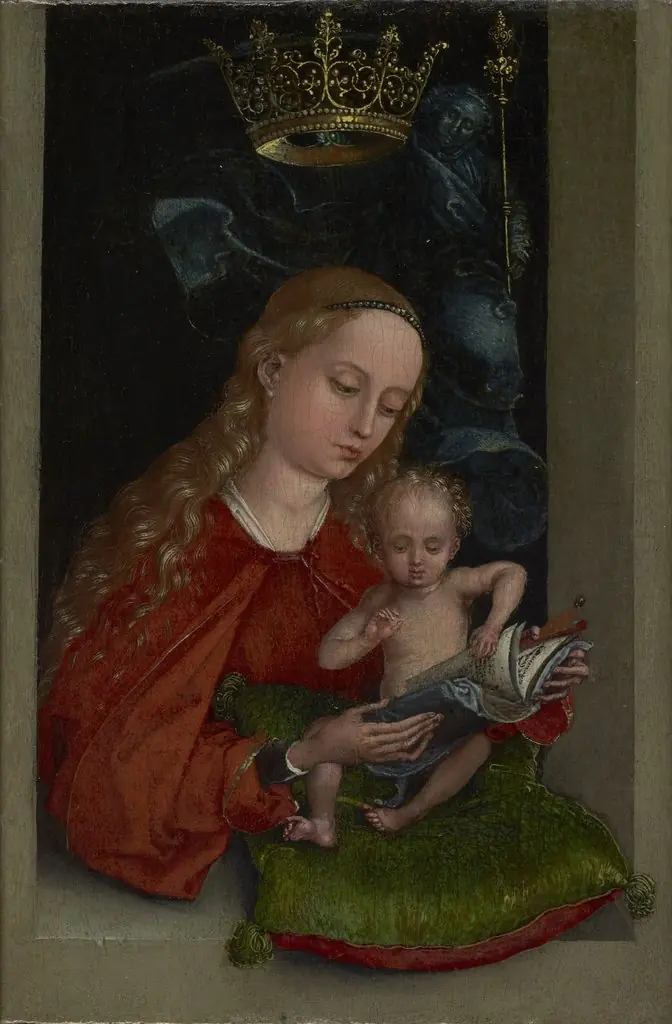
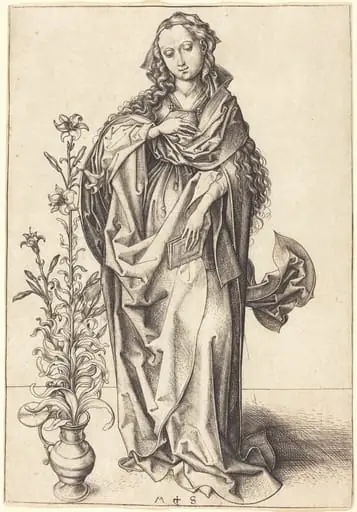
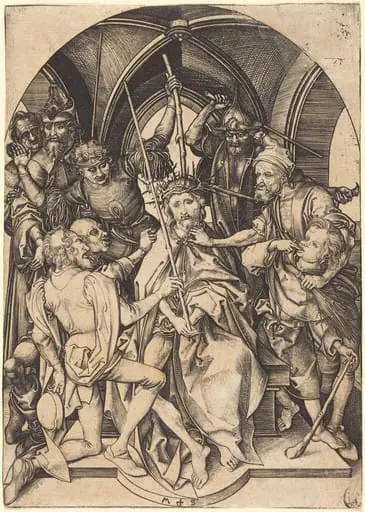
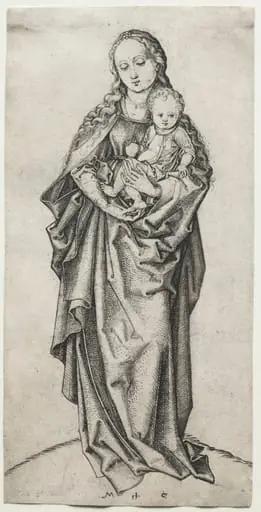 Virgin and Child with an Apple
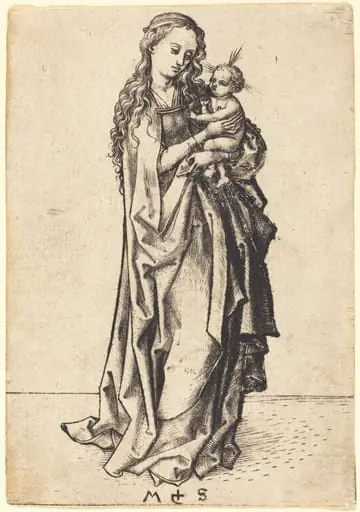 The Small Madonna and Child
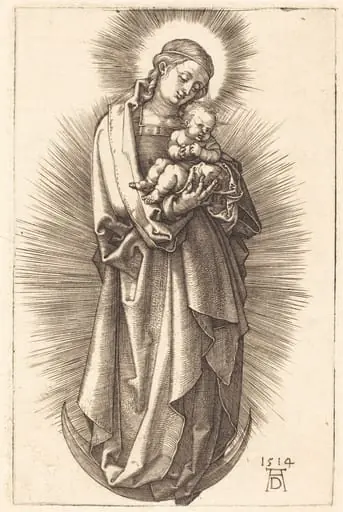 The Virgin and Child on a Crescent with a Diadem
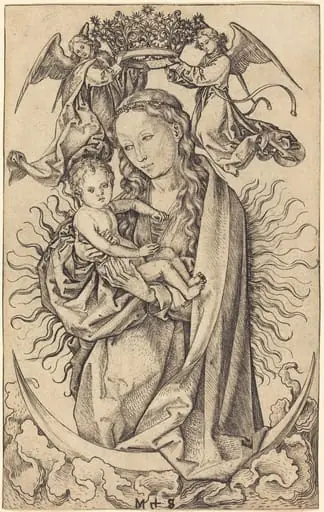 Madonna on the Crescent
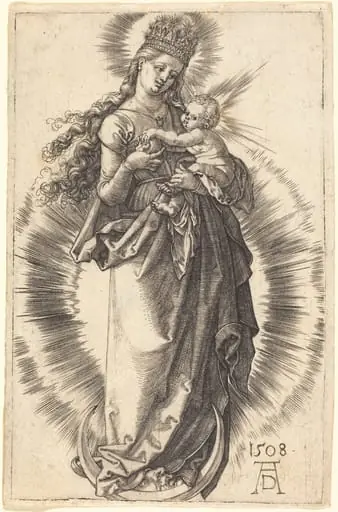 The Virgin and Child on a Crescent with a Starry Crown
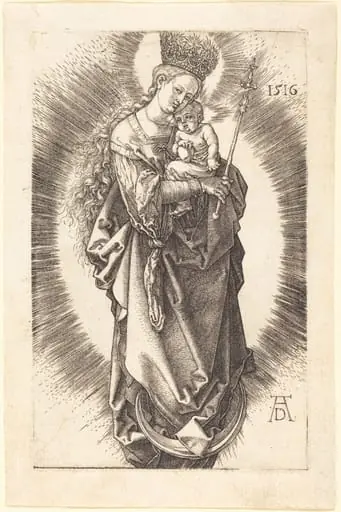 The Virgin and Child on a Crescent with a Sceptre and a Starry Crown
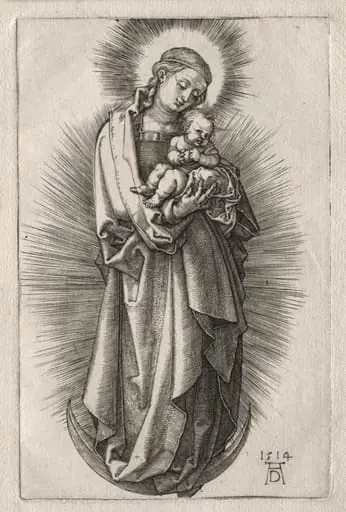 The Virgin with Hairband on a Crescent Moon
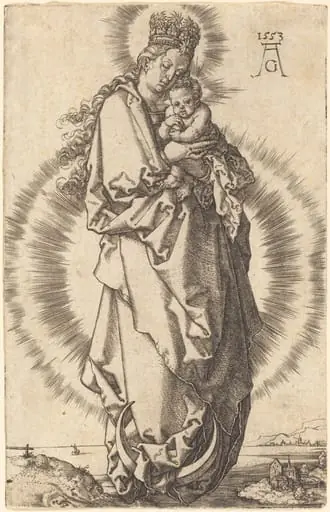 The Virgin with the Child on the Crescent
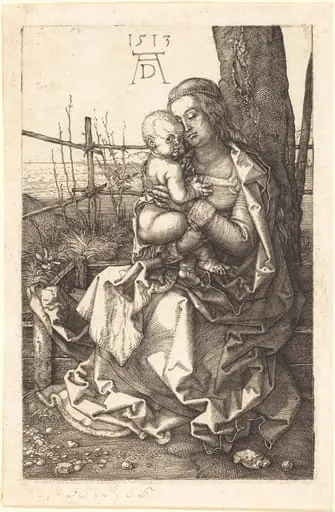 The Virgin and Child Seated by a Tree
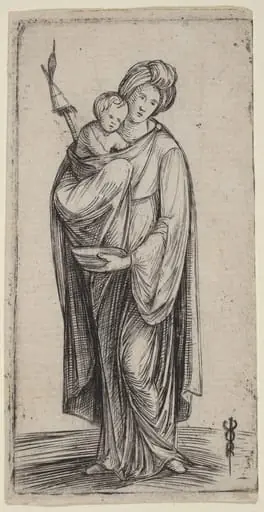 Woman and Child with Distaff
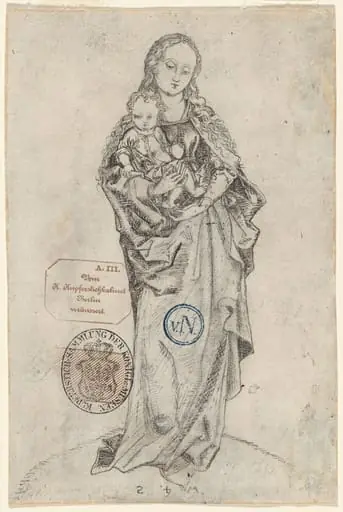 Virgin and Child with the Apple (verso)
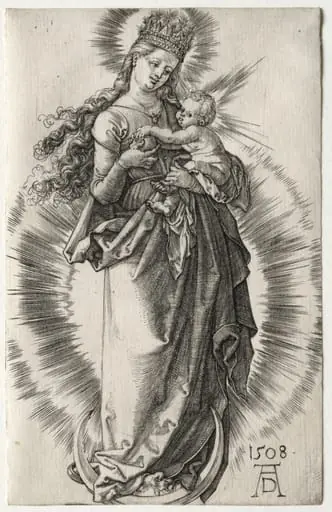 The Virgin with a Starry Crown