Artwork
Madonna des Bürgermeisters Meyer (Kopie)
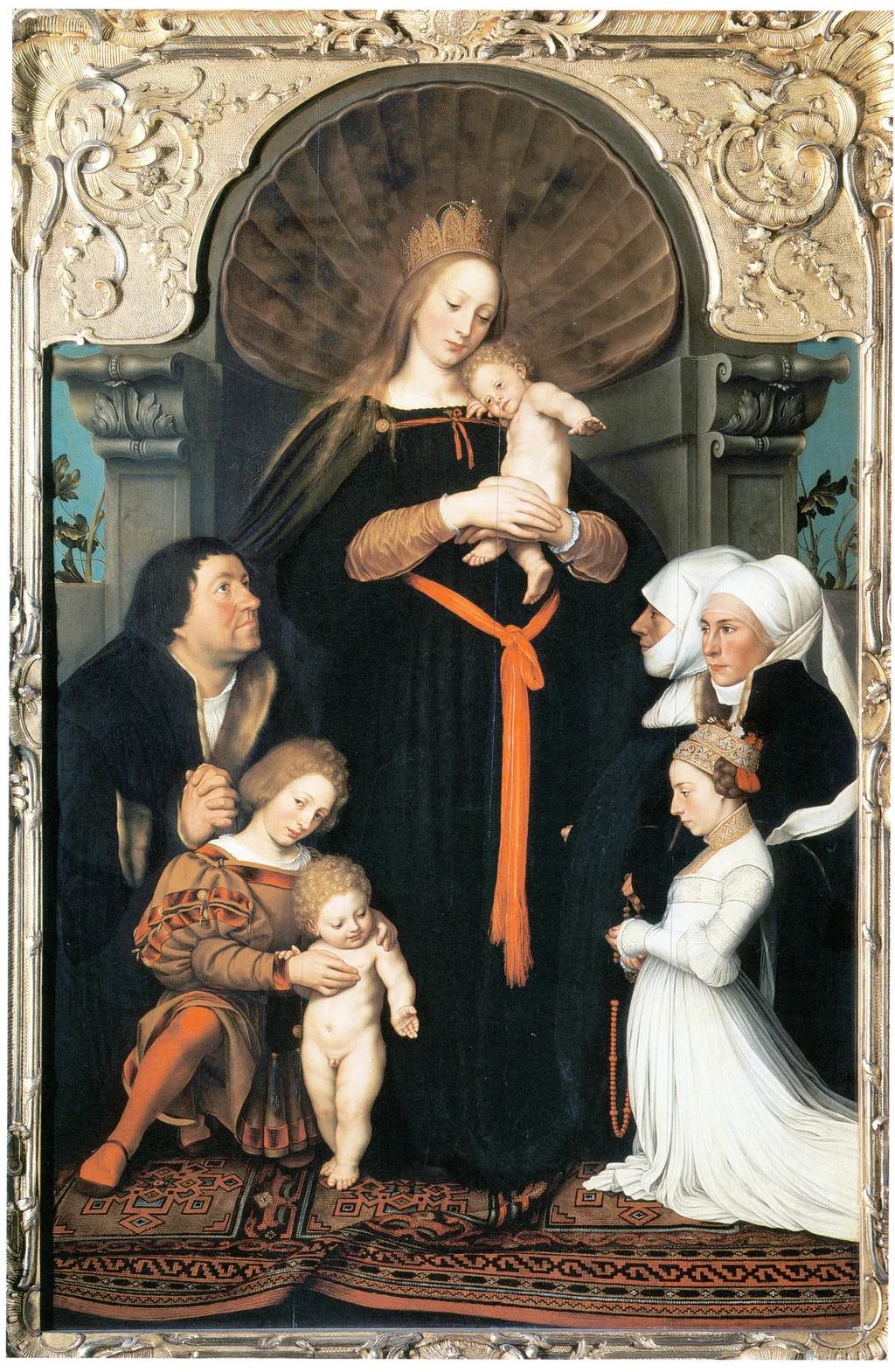
Madonna des Bürgermeisters Meyer (Kopie) is an unspecified painting by the Flemish Baroque painting artist Bartholomeaus Sarburgh. It dates from 1636 and is held in the collection of the Gemäldegalerie Alte Meister.
About this work
Overview
Created in 1636 by the German Baroque painter Bartholomäus Sarburgh, this oak‑panel painting is catalogued under the title *Madonna des Bürgermeisters Meyer (Kopie)*. It is part of the collection of the Gemäldegalerie Alte Meister, where it is displayed as a devotional image featuring the Virgin Mary and the infant Christ.
Subject & Meaning
The central figure is a crowned woman in a dark robe, holding the Christ Child. An orange sash encircles her waist, emphasizing her status. Flanking her are a kneeling man and woman, while two children stand nearby, suggesting a familial or civic dedication that underscores reverence toward the holy duo.
Technique & Style
Executed on oak, the work shows the characteristic chiaroscuro of Sarburgh’s early Baroque period: the deep, muted tones of the Virgin’s garment contrast with the lighter hues of the surrounding figures and the ornate archway behind them. The composition balances verticality and intimacy, guiding the viewer’s eye toward the infant.
History & Provenance
The panel is a copy of an earlier devotional image, likely commissioned by or for the mayor (Bürgermeister) Meyer, as indicated by the title. It entered the Gemäldegalerie Alte Meister’s holdings through acquisition in the 19th century, where it has remained in the museum’s German Baroque collection.
Context
Sarburgh’s oeuvre often revisited Marian themes, integrating local patronage with religious iconography. This piece reflects the 17th‑century practice of producing copies of popular devotional images for private or civic use, aligning personal piety with public display.
Artist & collection

 Holy Tribe
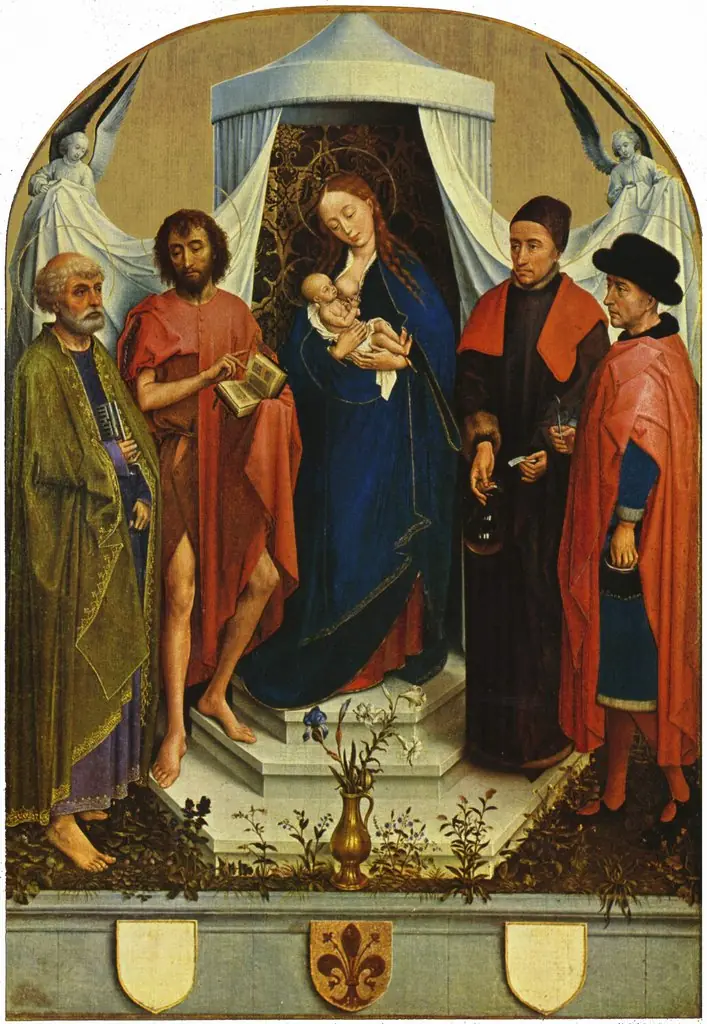 Medici Madonna
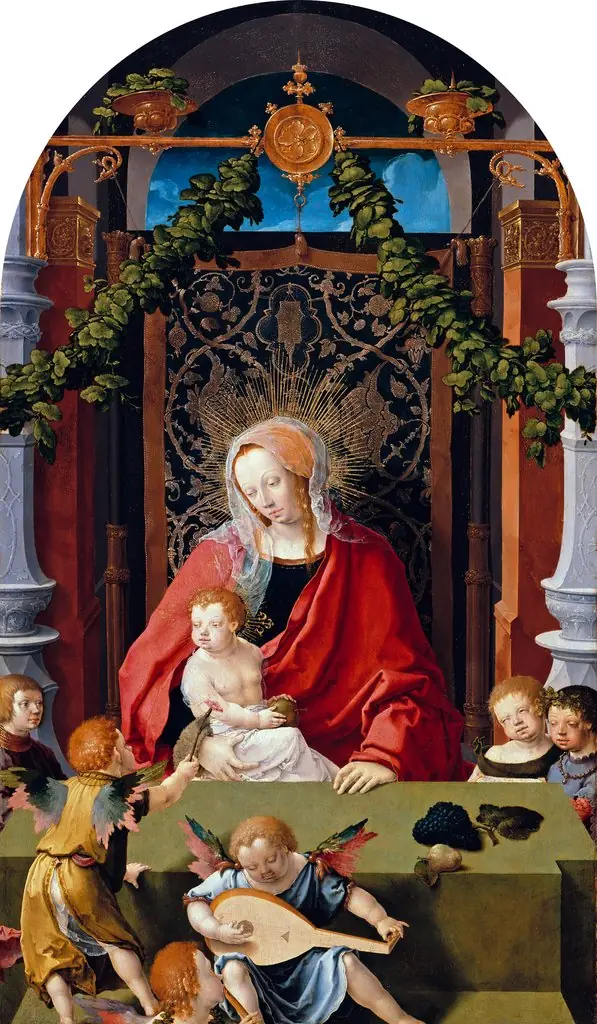 Virgin and Child with Angels
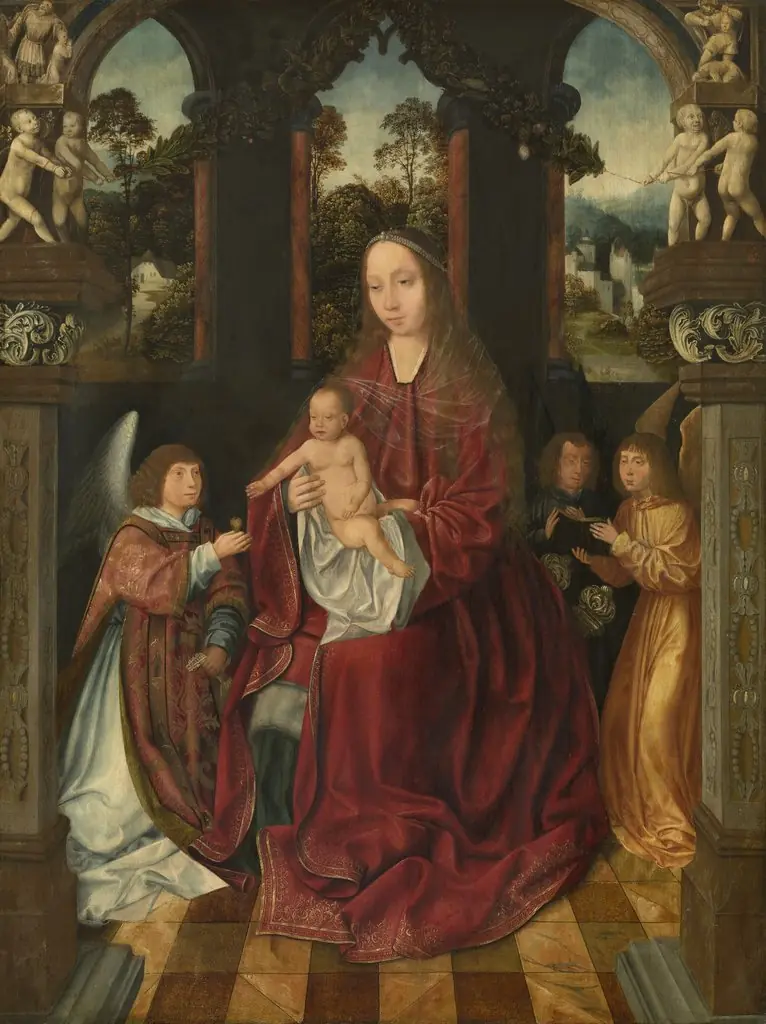 Madonna with Angels
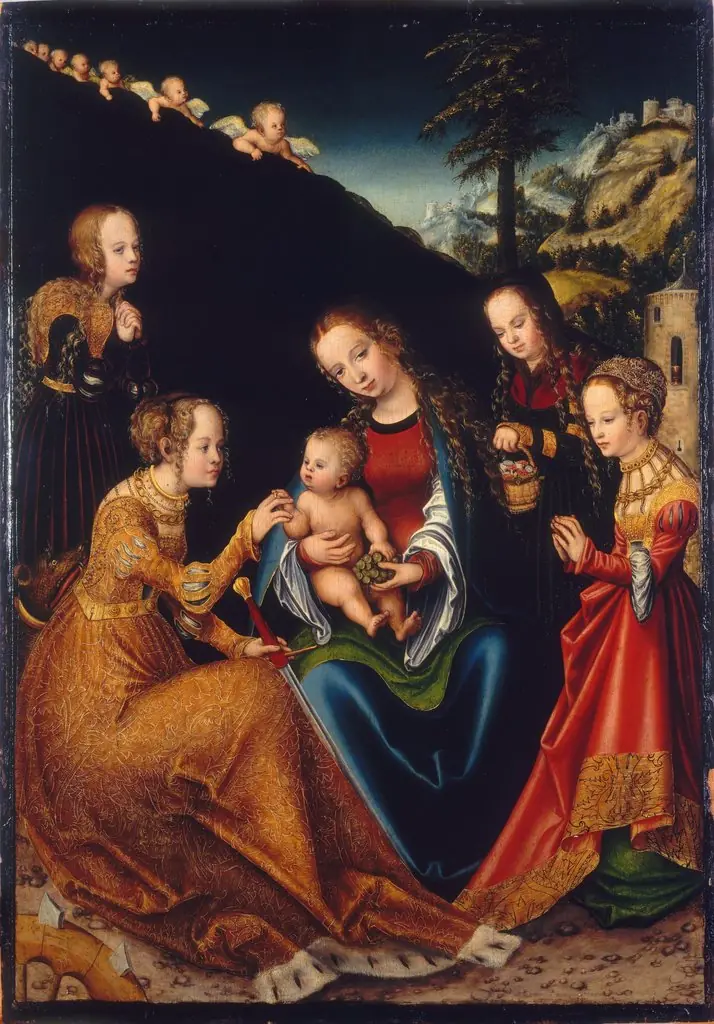 The Mystic Marriage of Saint Catherine of Alexandria with Saints Dorothy, Margaret and Barbara
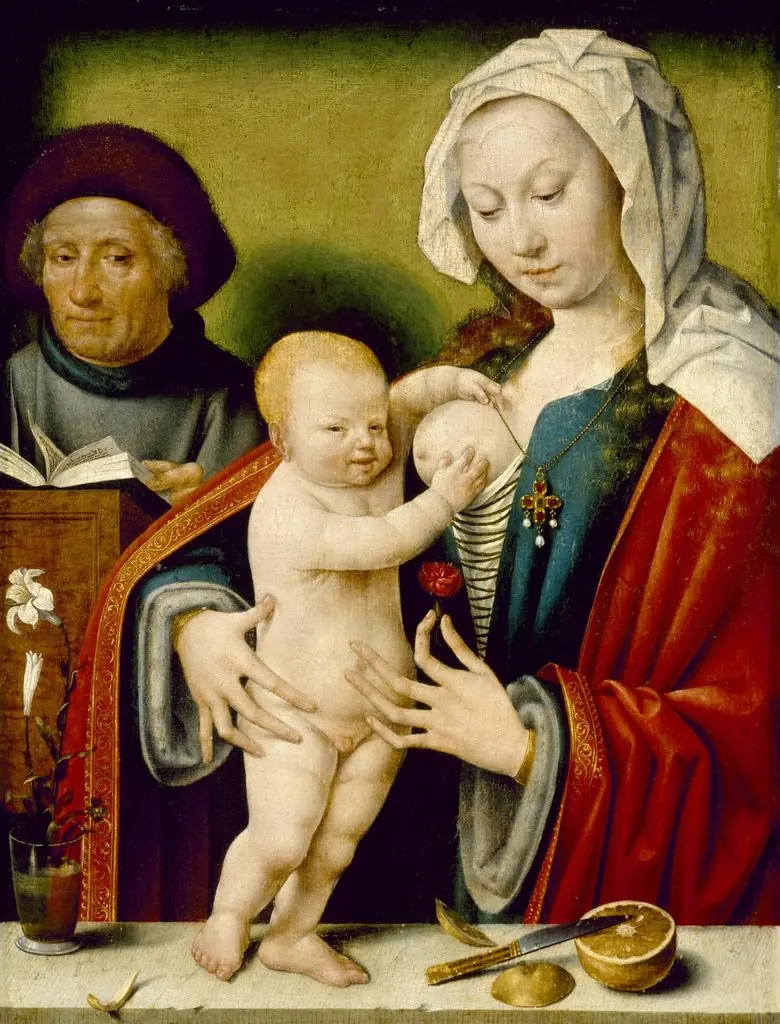 The Holy Family
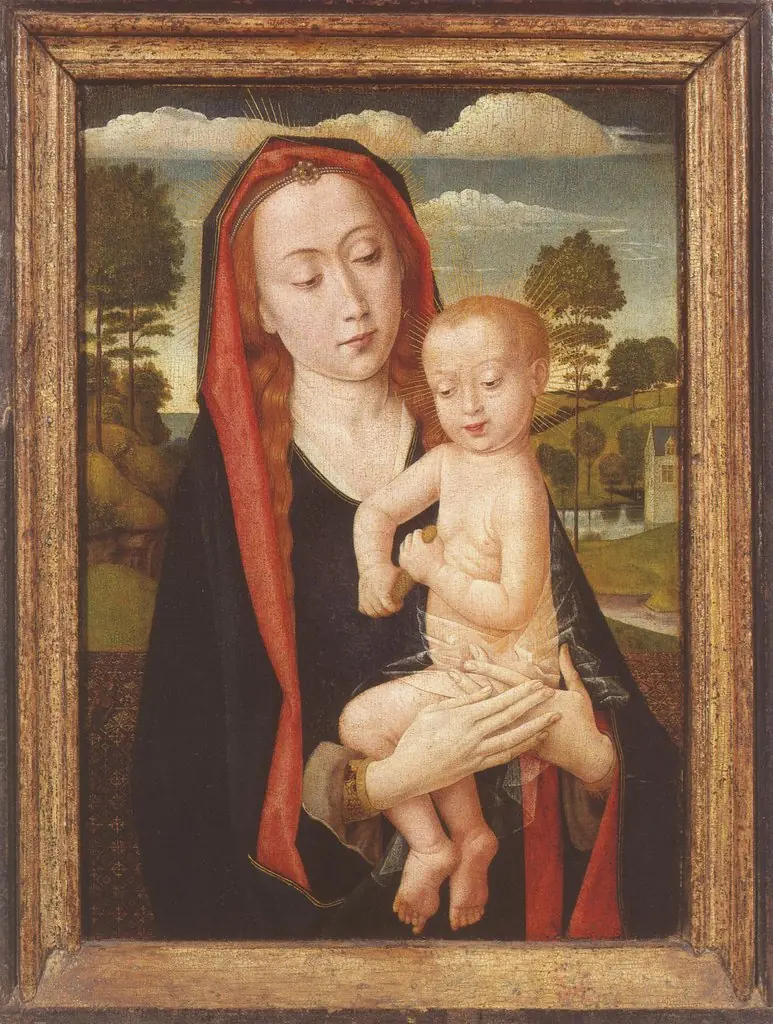 Maria met kind voor een borstwering met doorzicht naar een heuvellandschap
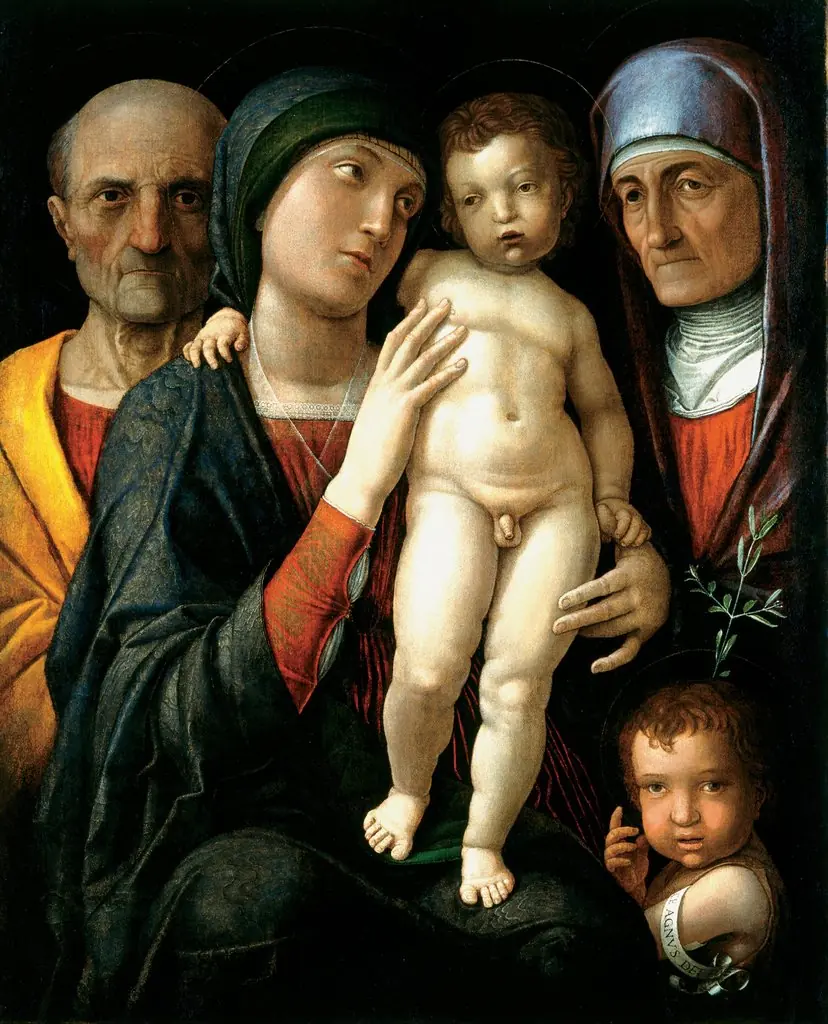 Holy Family with St. Elizabeth and St. John the Baptist as a Child
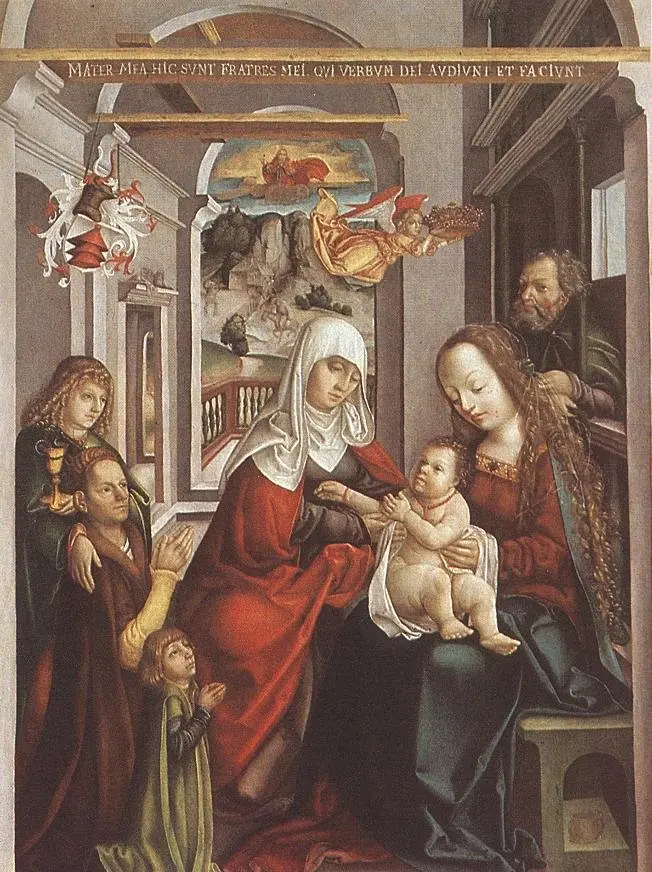 Virgin and Child with Saint Anne
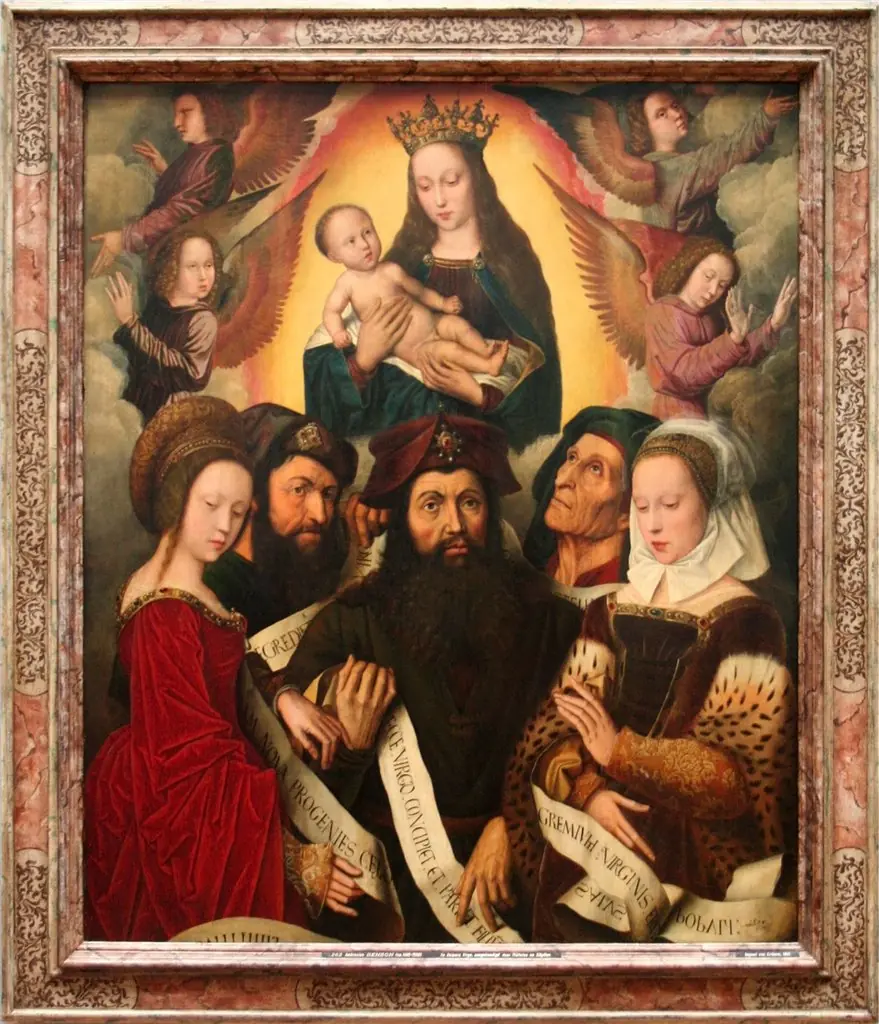 Deipara Virgo
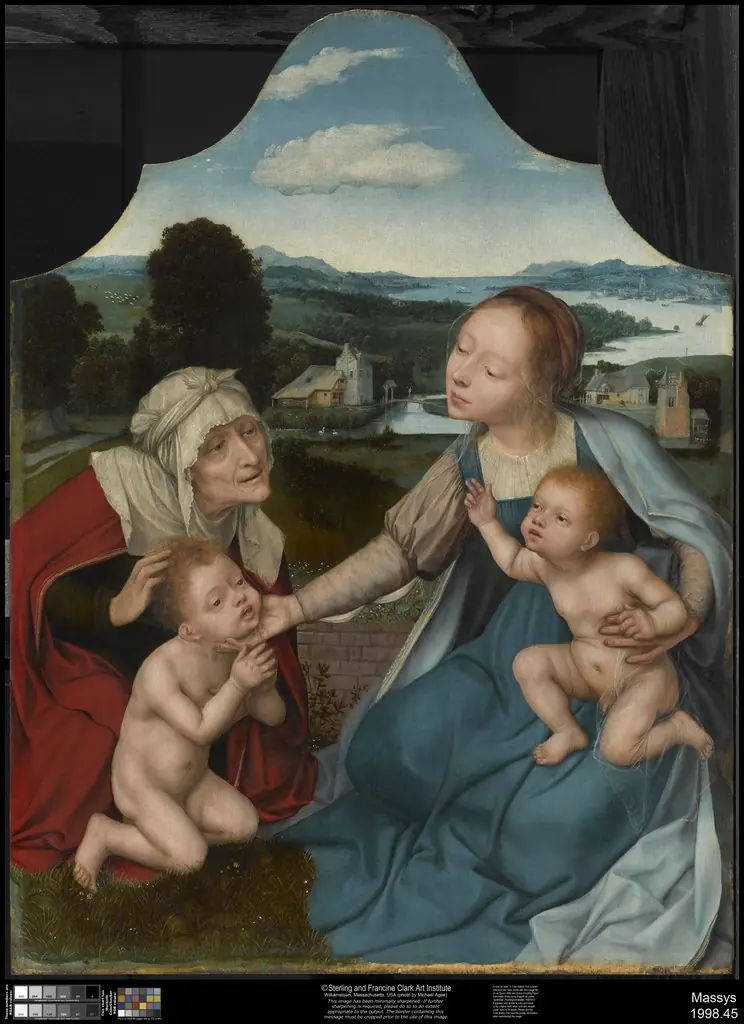 Virgin and Child with Saints Elizabeth and John the Baptist
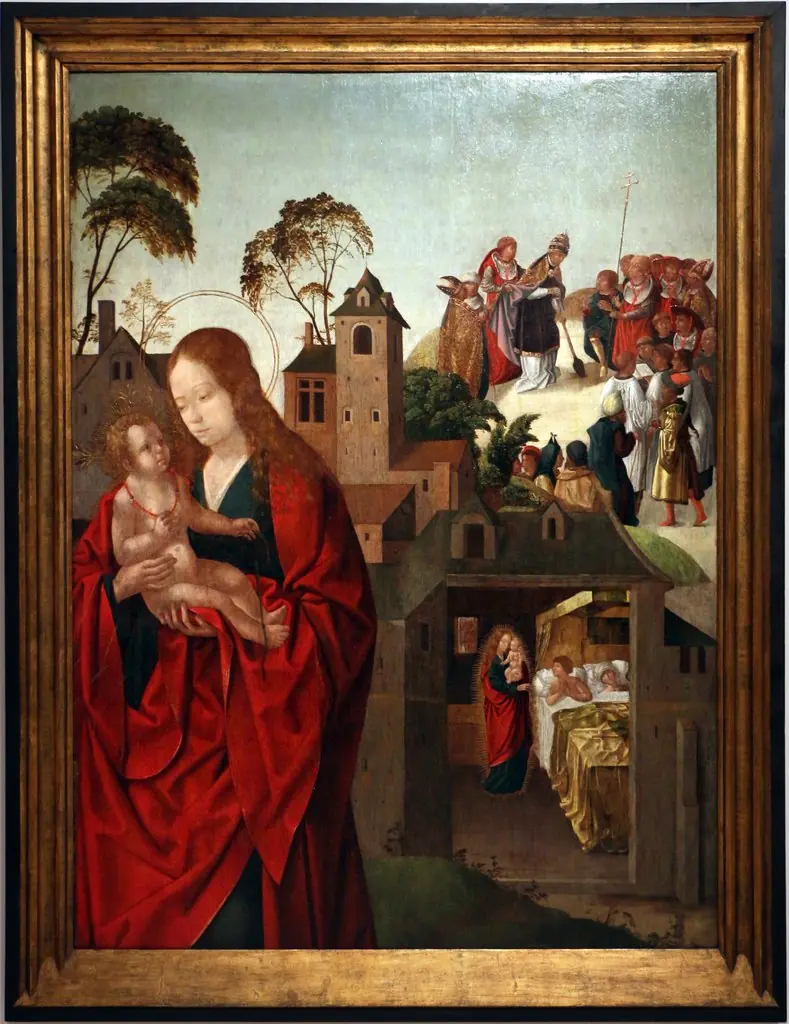 Our Lady of the Snows