Artwork
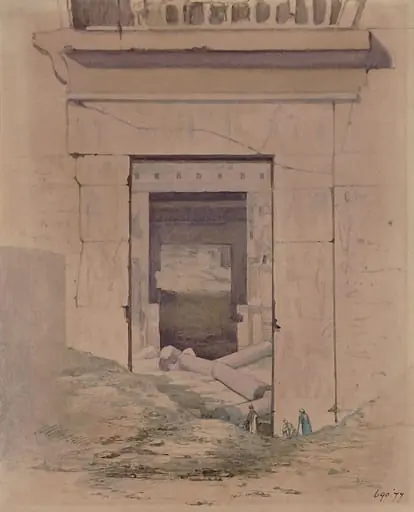
Entrance South West Palace Nimroud
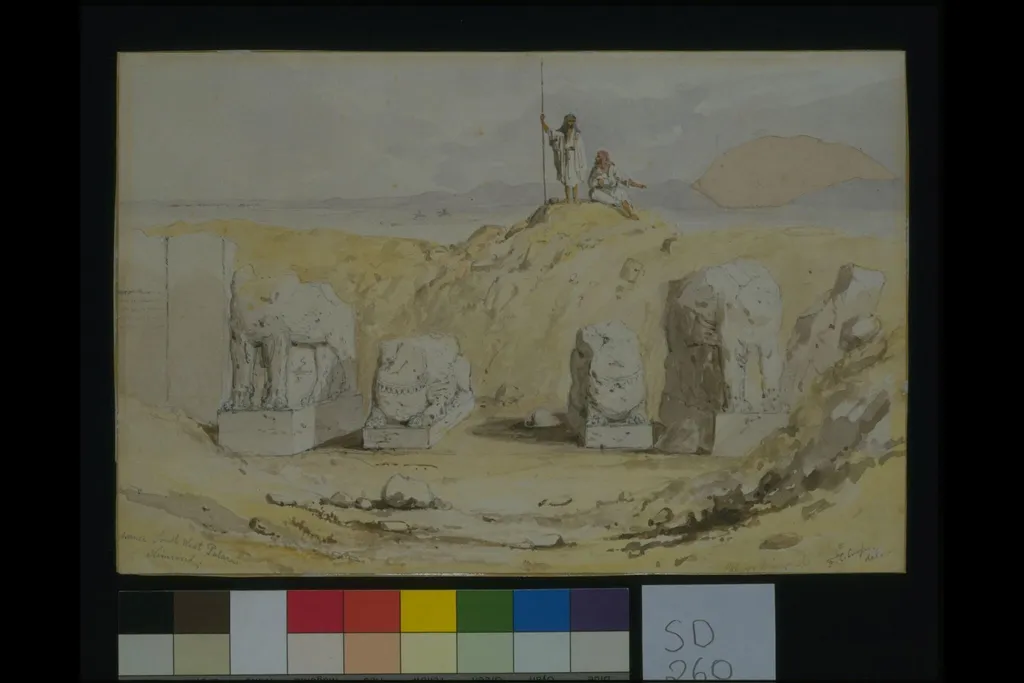
Entrance South West Palace Nimroud is a watercolor work on paper by the Romanticist artist Frederick Charles Cooper. It dates from 1850 and is held in the collection of the Victoria and Albert Museum.
About this work
Overview
Frederick Charles Cooper’s watercolour captures the southwest palace entrance at Nimrud during Austen Henry Layard’s 1849–1851 excavations.
Frederick Charles Cooper’s watercolour captures the southwest palace entrance at Nimrud during Austen Henry Layard’s 1849–1851 excavations. Created as part of a systematic effort to record Assyrian ruins, the work belongs to a group of topographical studies made on-site. Its modest scale and medium reflect its function as a documentary record rather than a finished artistic statement, aligning with the practical aims of 19th-century archaeological expeditions.
Subject & Meaning
The scene depicts the fragmented remains of a monumental Assyrian gateway, surrounded by arid terrain and isolated figures. The presence of two individuals—one standing with a surveying pole, the other seated—suggests the human dimension of excavation work. The distant landform on the horizon may reference the broader Mesopotamian landscape, grounding the ruin in its geographic context and emphasizing its isolation amid the desert.
Technique & Style
Cooper employed loose, sketch-like watercolour washes with minimal detail, suggesting rapid on-site execution. Pencil underdrawing is visible beneath the pigment, indicating a methodical yet expedient approach. The pale blue sky and dry, textured ground are rendered with restrained tonality, avoiding romantic embellishment. This restrained style prioritizes topographical accuracy over aesthetic flourish, consistent with archaeological documentation practices of the era.
History & Provenance
The watercolour originated during Layard’s second campaign at Nimrud and was later held by Cooper’s family, alongside his personal diary from 1850. It passed into the collection of Walter T. Spencer before being sold at auction in March 1961. Its survival as a physical artifact provides rare insight into the material culture of 19th-century archaeological fieldwork, complementing published accounts and museum holdings.
Context
Cooper’s work emerged amid a surge of European interest in Mesopotamian antiquities, fueled by Layard’s publications and the British Museum’s acquisitions. Similar watercolours by expedition artists were used to illustrate reports and inform public perception of ancient Assyria. These images served as both scientific records and cultural artifacts, bridging archaeology and visual representation in an era before photography became widely accessible in the field.
Legacy
Though not widely exhibited, Cooper’s watercolour contributes to a broader archive of early Assyrian documentation. Its existence alongside field diaries and museum collections allows scholars to trace the evolution of archaeological observation. The piece remains a quiet testament to the labor of 19th-century record-keepers, whose visual notes helped shape modern understanding of ancient Near Eastern civilizations.
Artist & collection
Artist
Frederick Charles Cooper painted watercolours of Ottoman-era landmarks he saw in 1849.

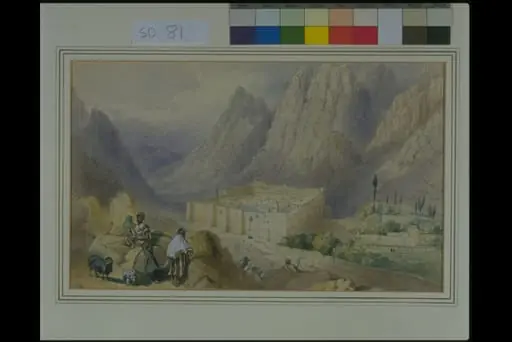 Convent of St. Catherine, Mount Sinai
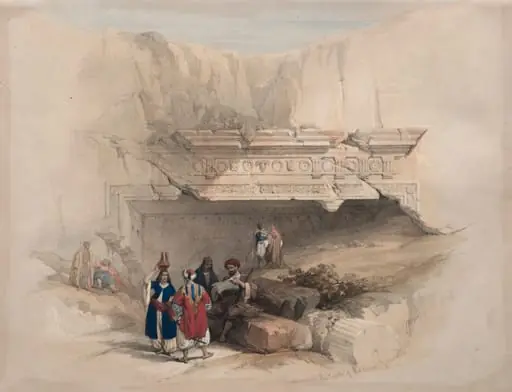 Entrance to the Tombs of the Kings, Jerusalem
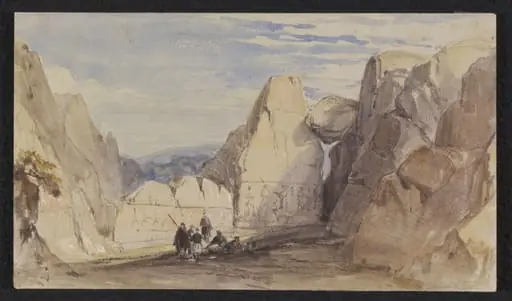 The Hittite rock sanctuary of Yazilikaya
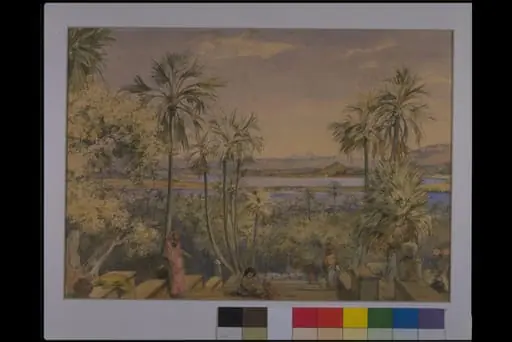 View eastwards from the steps behind Mount Mary Church, Bandra, Bombay
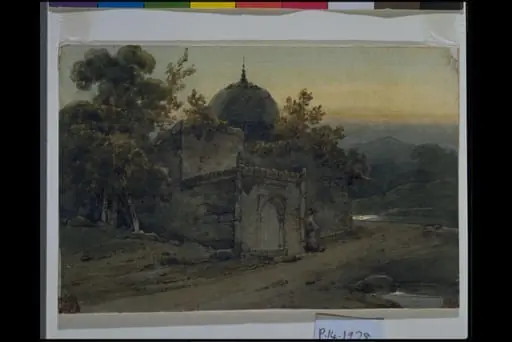 Chinese Temple, Evening
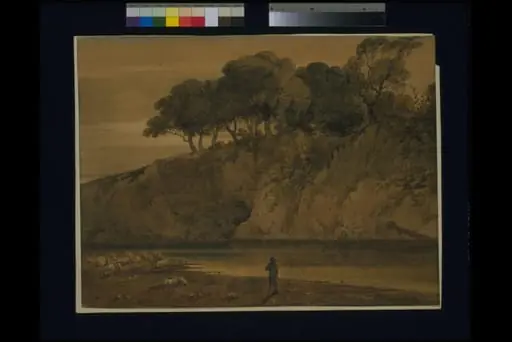 On the Wharfe, Yorkshire
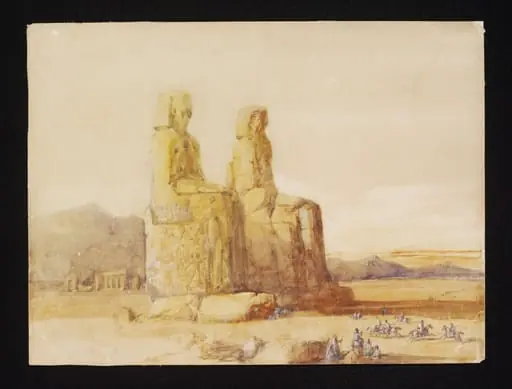 The Vocal Statue - Thebes, 1848
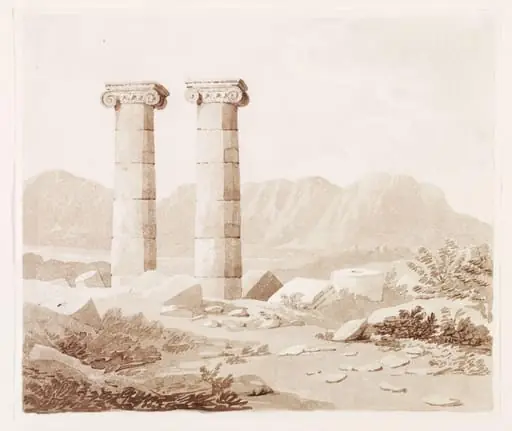 Sardis
 Djouni. The Residence of Lady Hester Stanhope
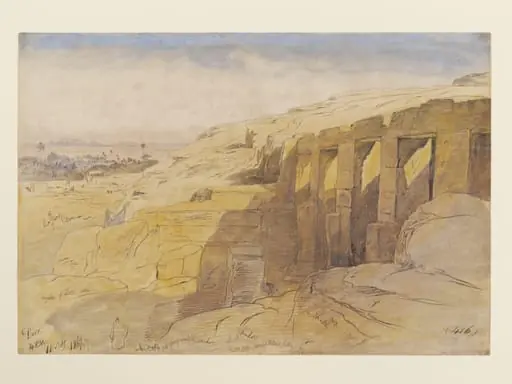 Temple at Derr, Nubia, Egypt
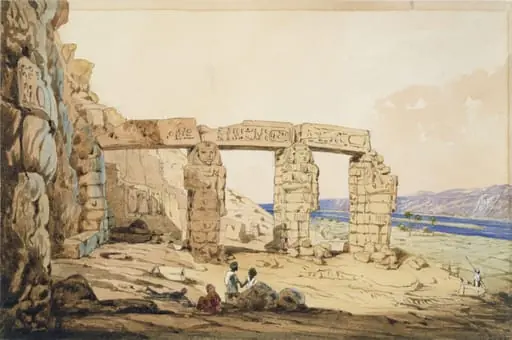 Guerfeh Hassan - Nubia
 Entrance to an Egyptian tomb