Artwork
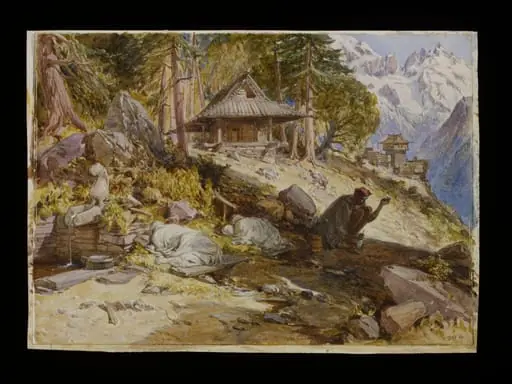
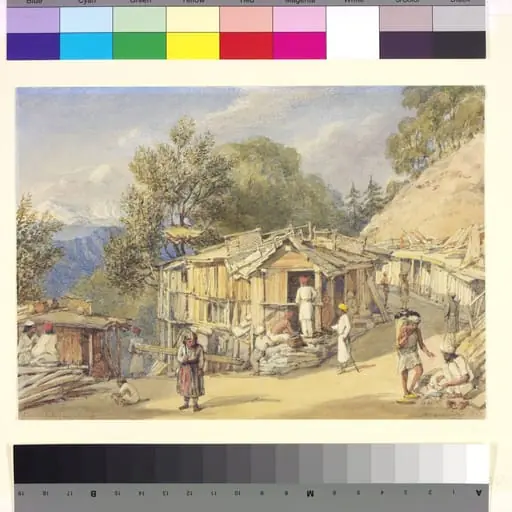
Praying cylinders at Soonum, Himalayas
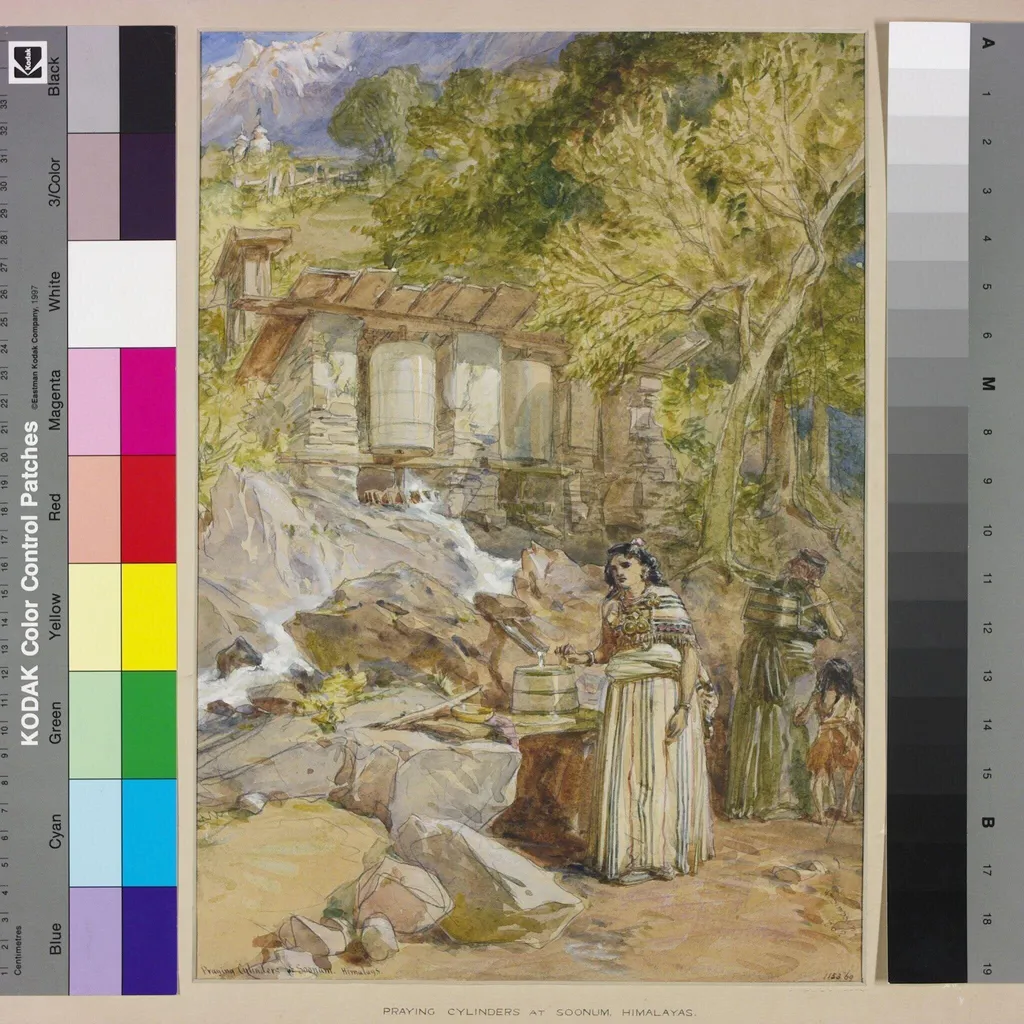
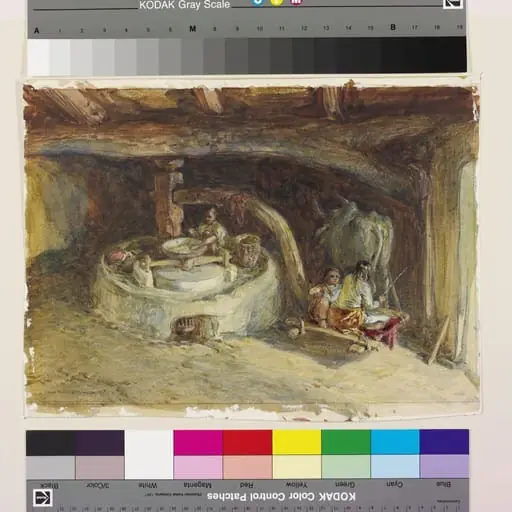
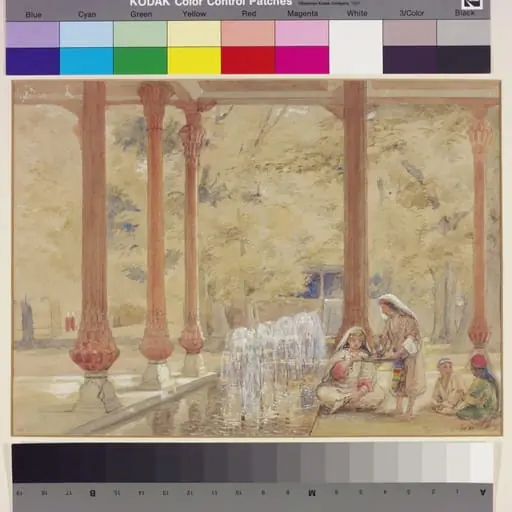
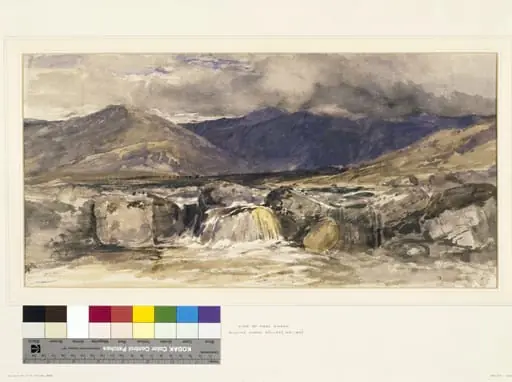
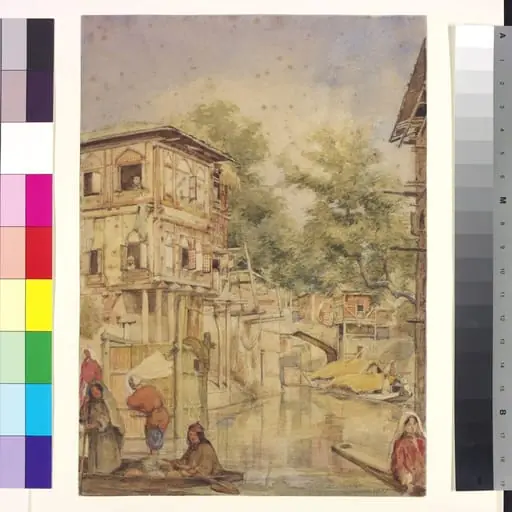
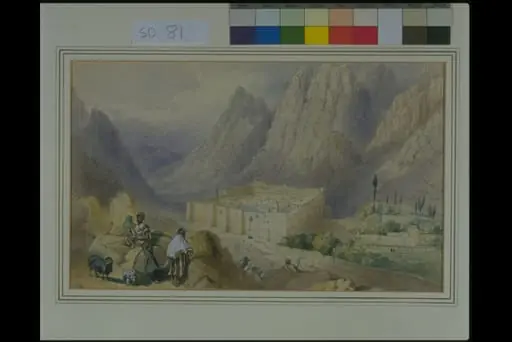
Praying cylinders at Soonum, Himalayas is a paint painting by the British Romanticist artist William Simpson. It dates from 1862 and is held in the collection of the Victoria and Albert Museum.
About this work
William Simpson painted cylindrical oil tanks at Soonum in the Himalayas in 1862. The tanks look like stacked barrels in bright light. A thin line of smoke curls from one.
Simpson worked fast to show details before light changed. He used oil paint on paper because it dried quicker.
Check out more of his sharp travel sketches at the Victoria and Albert Museum.
Overview
William Simpson painted this work in 1862 during a journey through the Himalayas, capturing a site near Soonum where water-powered prayer cylinders were in use.
William Simpson painted this work in 1862 during a journey through the Himalayas, capturing a site near Soonum where water-powered prayer cylinders were in use. Though known for watercolors, he employed oil on paper here for its faster drying time, allowing him to record fleeting light and detail. The piece stems from his broader documentation of South Asian sites following the 1857 Revolt, commissioned by the London firm Day and Sons.
Subject & Meaning
The painting depicts cylindrical prayer devices turned by flowing water, a practice rooted in Buddhist and Hindu traditions of devotional motion. Their arrangement suggests communal ritual, with smoke rising from one, possibly indicating incense or a nearby hearth. Simpson recorded these objects not as exotic curiosities but as active elements of local spiritual life, emphasizing their integration with natural forces.
Technique & Style
Simpson used oil paint on paper to capture rapid changes in mountain light, favoring speed over traditional watercolor’s slower process. His brushwork is precise, rendering the stacked cylindrical forms with clear tonal contrasts and sharp highlights. The composition focuses on structure and atmosphere, avoiding embellishment, reflecting his journalistic approach to visual documentation.
History & Provenance
Created during Simpson’s return to India after the Crimean War, this work was part of a larger project to record sites linked to the 1857 uprising. He traveled extensively from Calcutta, making on-site sketches later refined in London. The Soonum painting was completed during his 1862 visit and later entered institutional collections, including the Victoria and Albert Museum, where his Indian studies remain accessible.
Context
Simpson’s work emerged amid British imperial interest in documenting India’s cultural and architectural landscape. While his images were often romanticized, this piece avoids overt narrative, instead presenting the prayer cylinders as functional, integrated features of the environment. His focus on mechanical adaptation to nature reflects broader 19th-century curiosity about indigenous technology and spiritual practice.
Legacy
Simpson’s Himalayan sketches, including this one, contributed to European understanding of South Asian religious practices through visual evidence rather than textual interpretation. His method—rapid observation followed by careful studio refinement—set a precedent for travel art in the colonial era. The works remain valuable as historical records of sites and customs observed during a period of significant cultural transition.
Artist & collection