Artwork
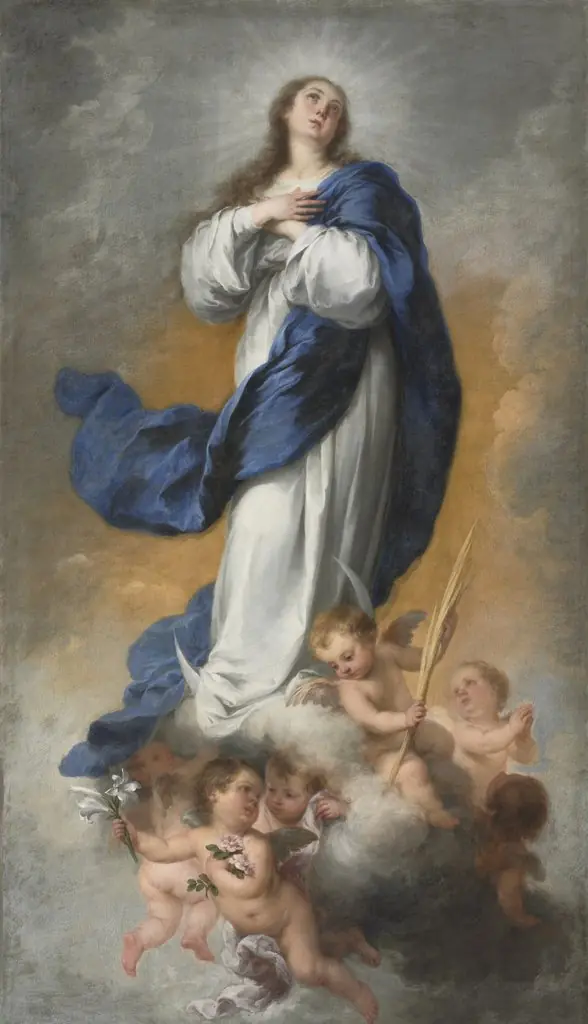
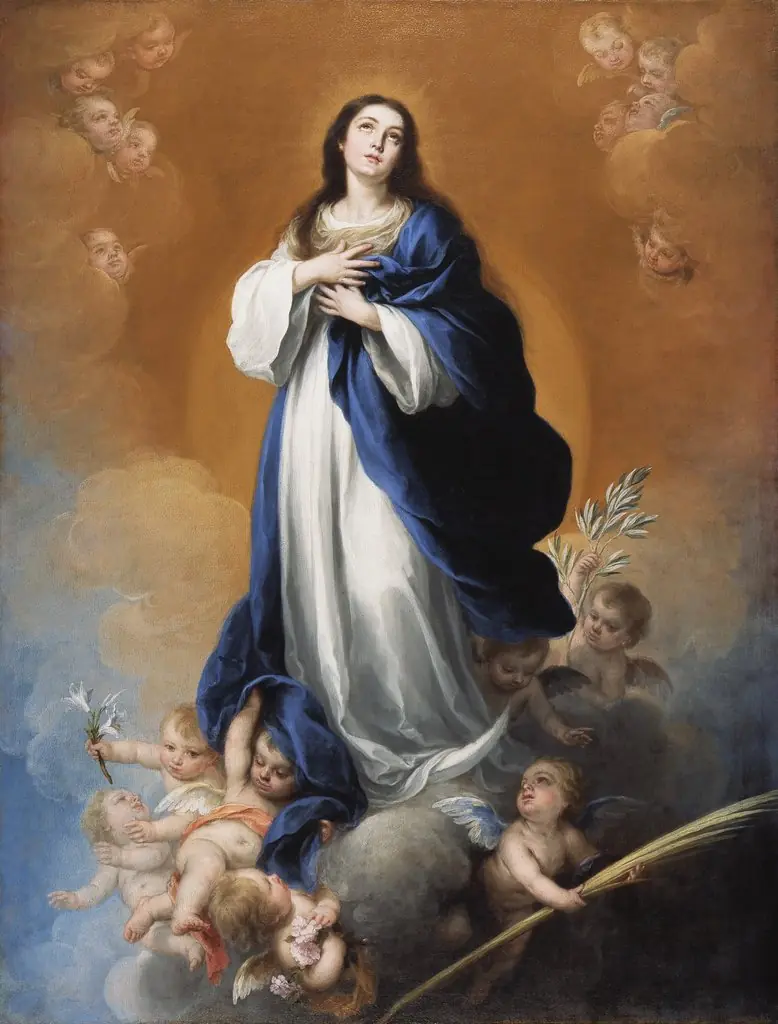
Walpole Immaculate Conception
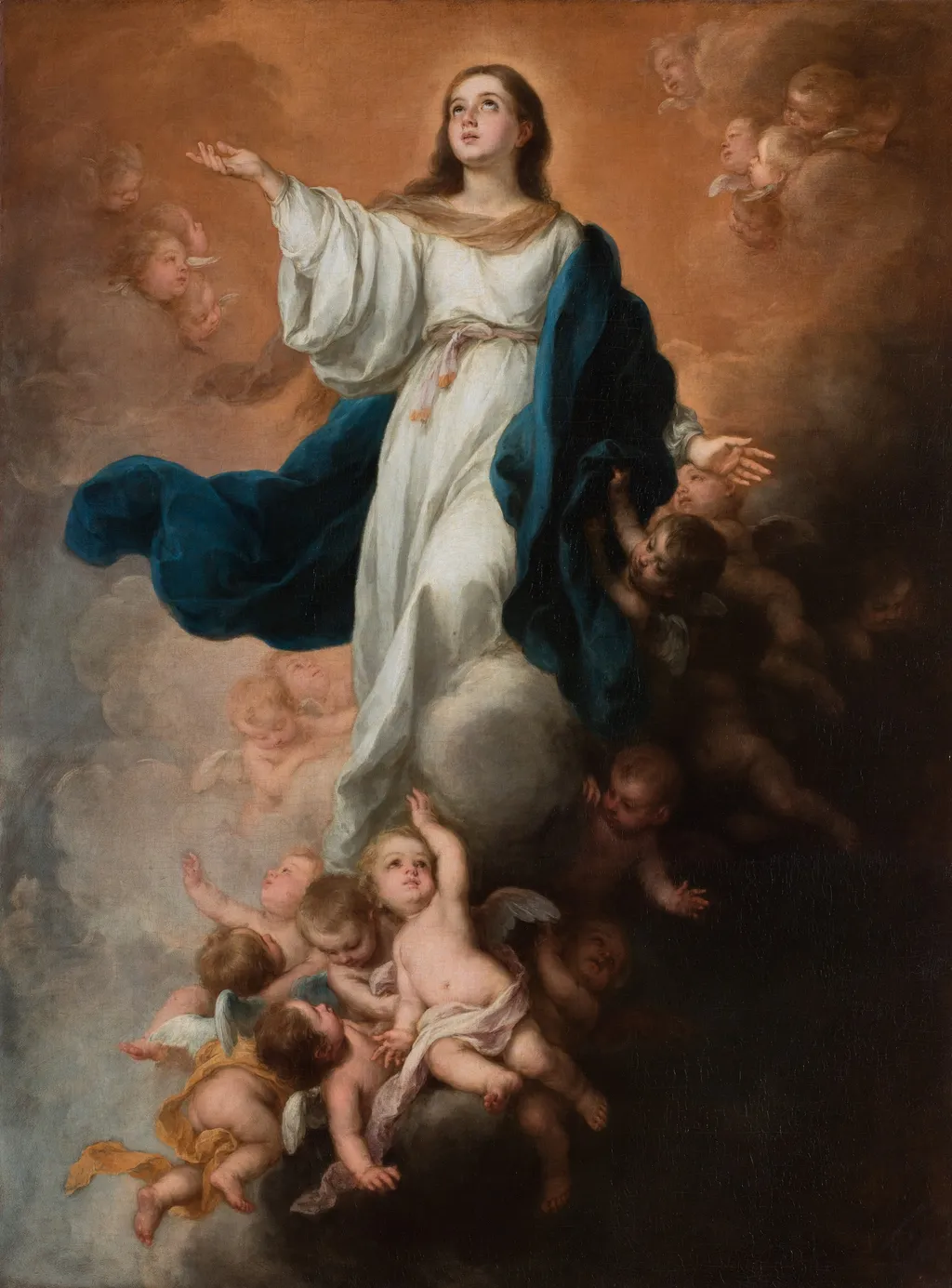
Walpole Immaculate Conception is an oil painting by Bartolomé Esteban Murillo. It is held in the collection of the Hermitage Museum.
About this work
Overview
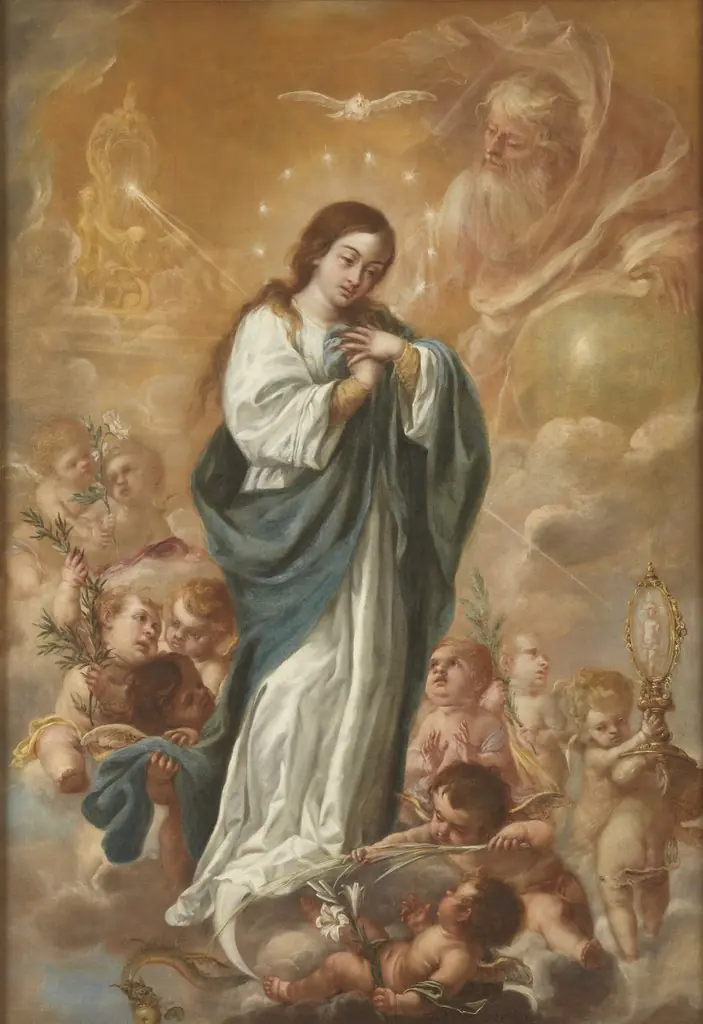
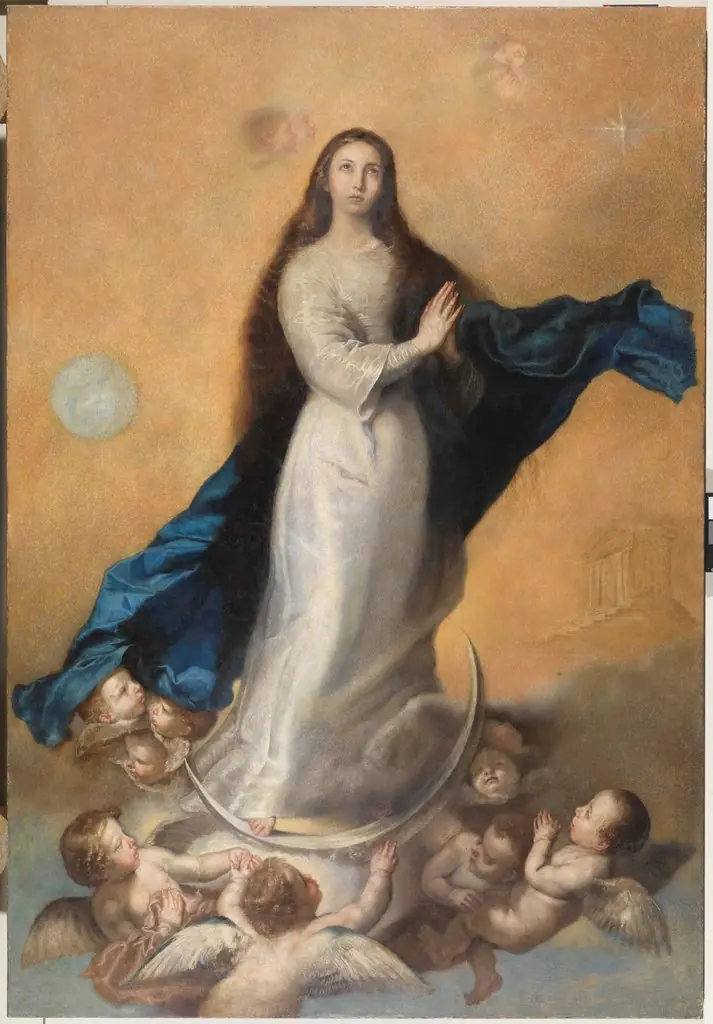
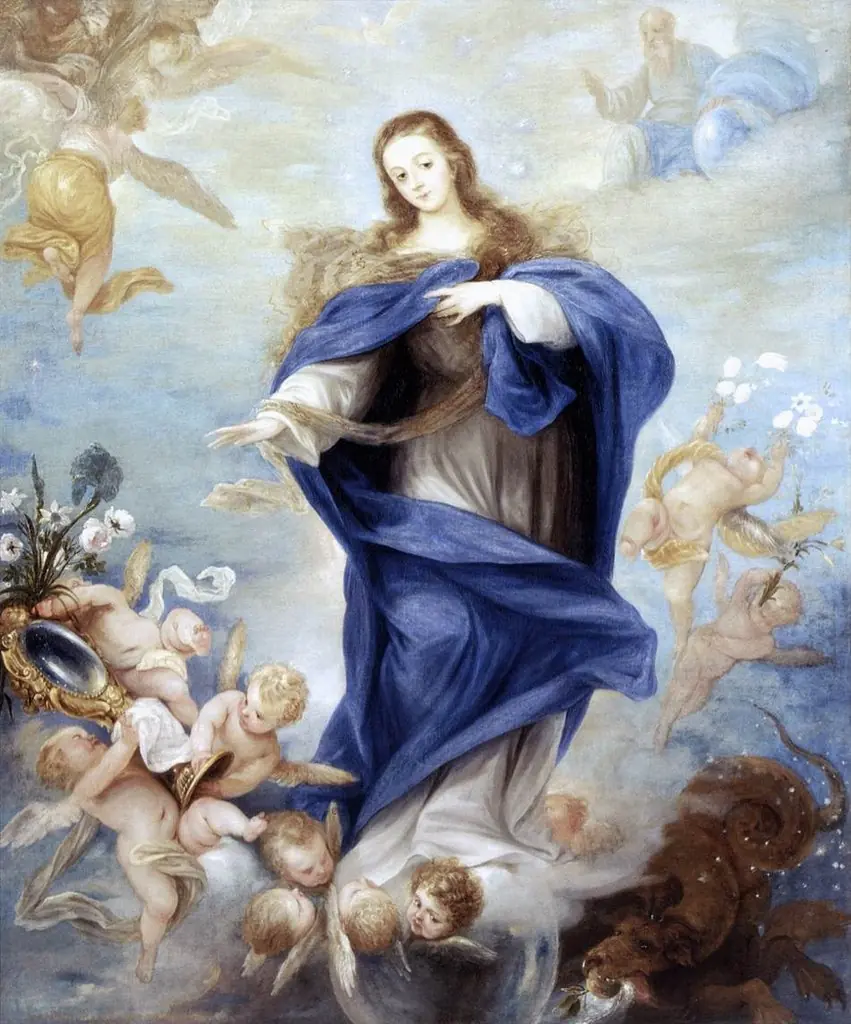
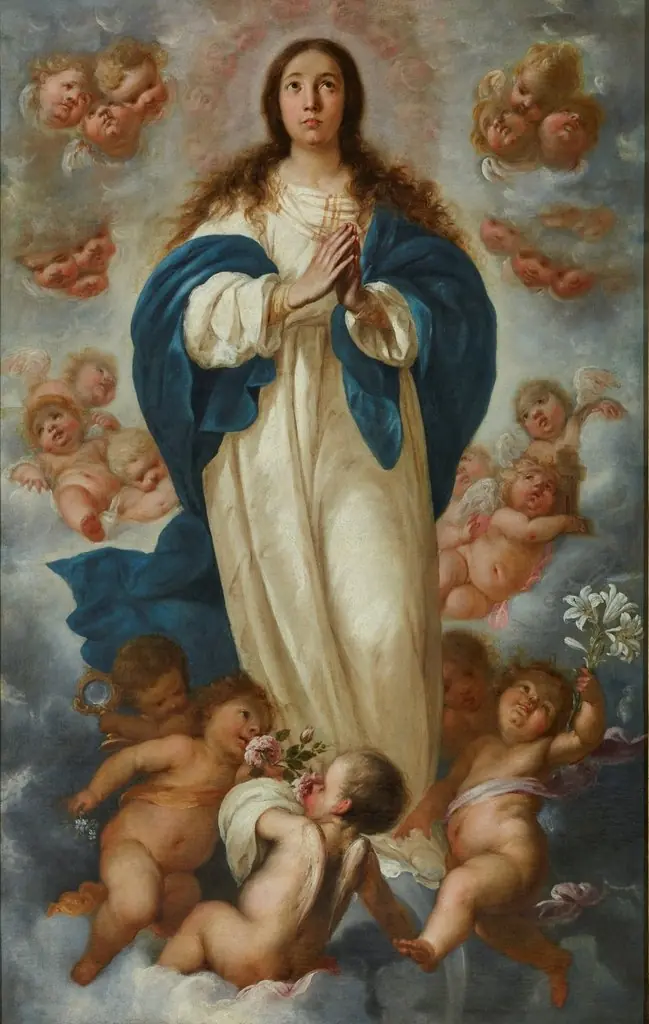
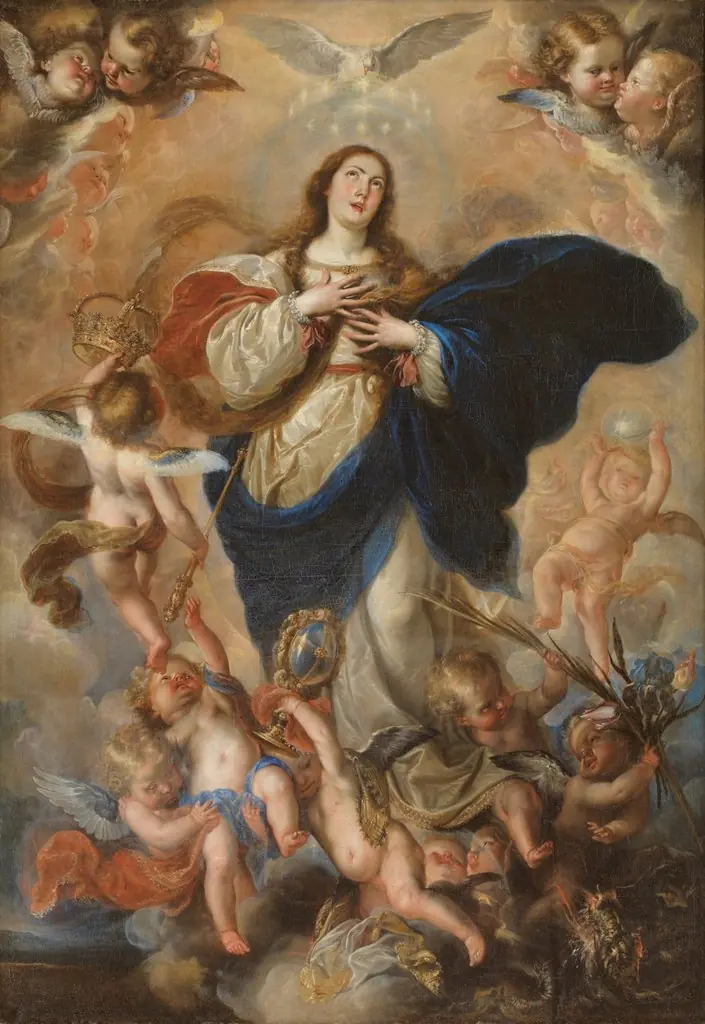
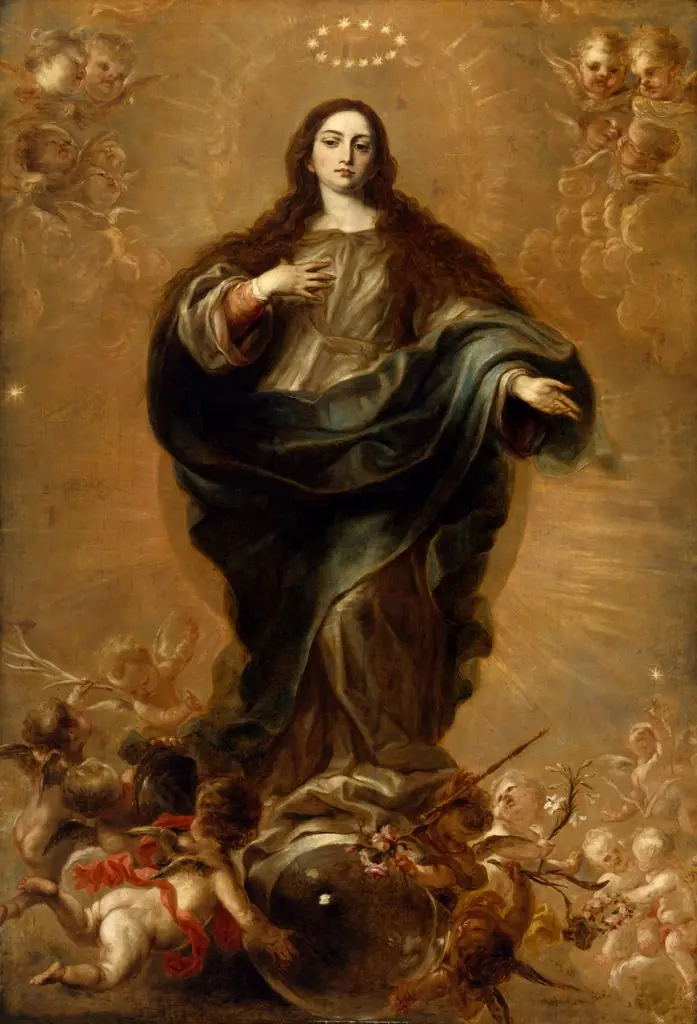
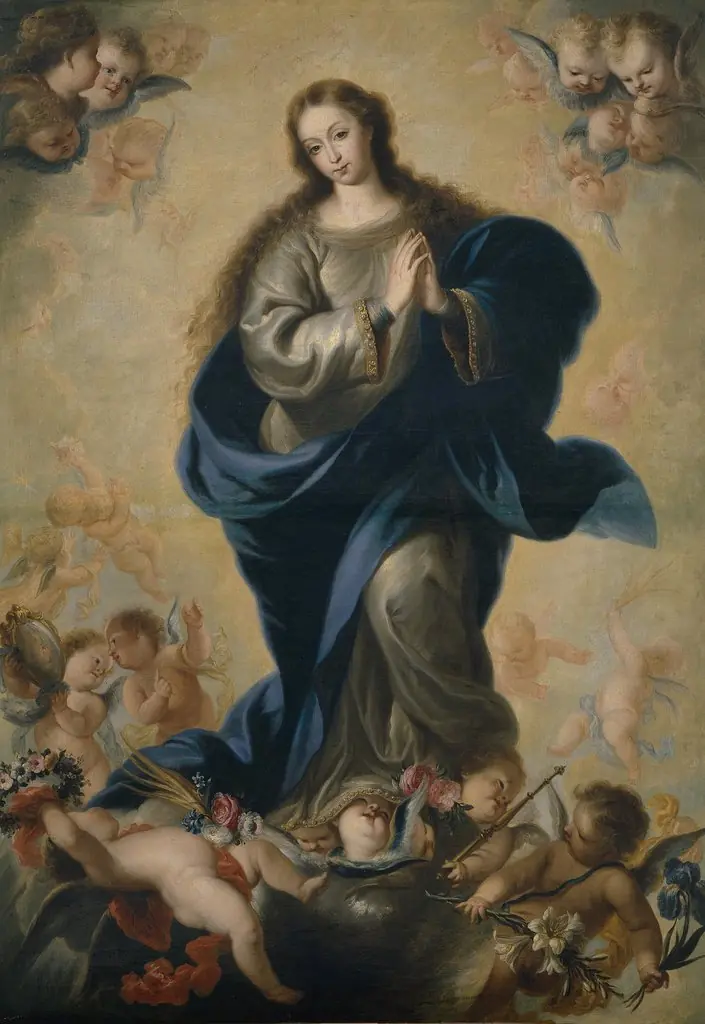
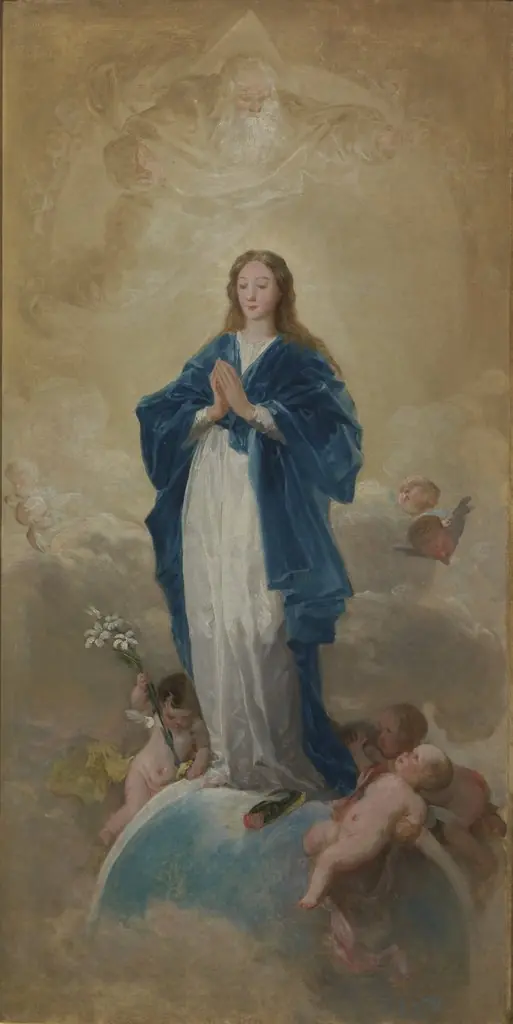
Created around 1680, the Walpole Immaculate Conception is an oil painting on canvas by the Spanish Baroque artist Bartolomé Esteban Murillo. The work depicts the Virgin Mary in a luminous white robe, hovering above a cluster of cherubic figures, set against a sky that shifts from soft clouds to deeper shadows.
Subject & Meaning
The central figure represents the Virgin Mary at the moment of the Immaculate Conception, her serene expression and outstretched hand suggesting divine grace. The surrounding cherubs, gazing upward, emphasize her celestial authority and the theological theme of purity and heavenly intercession.
Technique & Style
Murillo employs a chiaroscuro effect, contrasting bright illumination on the figures with darker atmospheric tones to give depth and volume. The delicate rendering of the drapery’s folds and the gentle modeling of the cherubs’ bodies reflect the artist’s characteristic softness within the Baroque visual language.
History & Provenance
The painting entered the collection of English statesman Robert Walpole at Houghton Hall, which is why it bears his name. In 1779 Catherine the Great purchased the entire Walpole collection, and the work has remained in the Hermitage Museum in Saint Petersburg ever since, with a temporary loan back to Houghton Hall in 2013.
Own this work as a print
Artist & collection

Artist
Bartolomé Esteban Murillo ( mure-IL-oh, m(y)uu-REE-oh, Spanish: ; late December 1617, baptised 1 January 1618 – 3 April 1682) was a Spanish Baroque painter.