Artwork
Francis of Assisi, St Herculanus, St Luke and Apostle Jacob the Elder
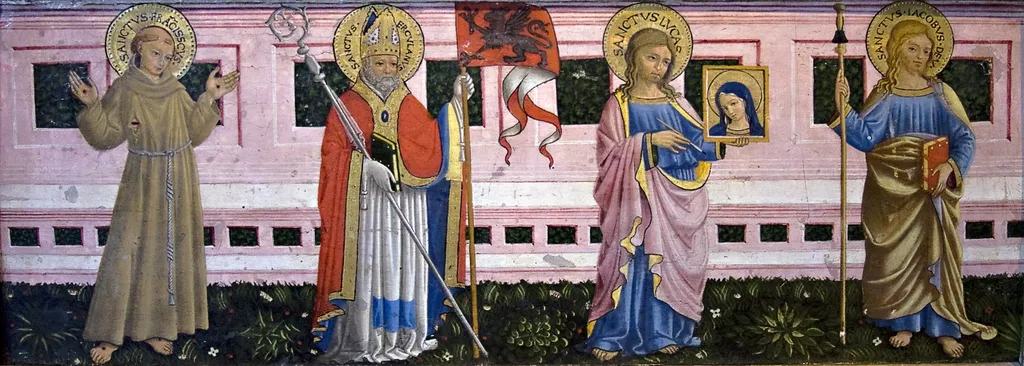
Francis of Assisi, St Herculanus, St Luke and Apostle Jacob the Elder is a tempera painting by the Early Renaissance artist Bartolomeo Caporali. It dates from 1452 and is held in the collection of the Hermitage Museum.
About this work
Overview
Painted in 1452 by Bartolomeo Caporali, this tempera work depicts four saints in a linear arrangement against a shallow architectural backdrop.
Painted in 1452 by Bartolomeo Caporali, this tempera work depicts four saints in a linear arrangement against a shallow architectural backdrop. Caporali, a Perugian artist known for both panel painting and manuscript illumination, executed this piece during the early Renaissance. Its composition reflects the devotional priorities of Umbrian religious art, blending figure-centered piety with decorative detail. The painting is now part of the State Hermitage Museum’s collection.
Subject & Meaning
The figures represent Saint Francis of Assisi, Saint Herculanus, Saint Luke, and the Apostle James the Elder. Each is identified by traditional attributes: Francis raises his hands in prayer, Herculanus holds a staff and banner, Luke holds a painted panel, and James bears a book and staff. Their placement in a single row suggests a collective veneration, common in altarpieces meant for private or monastic devotion. The halos affirm their sanctity, reinforcing the painting’s liturgical function.
Technique & Style
Executed in tempera on panel, the painting exhibits the meticulous brushwork typical of early Renaissance Umbrian art. Colors are subdued yet distinct, with delicate modeling of drapery and soft gradations in skin tones. The figures are arranged with formal symmetry, and the background’s pink wall with arched windows adds spatial suggestion without perspective depth. Caporali’s background in illumination is evident in the fine detailing of fabrics and halos.
History & Provenance
Commissioned in 1452, the painting likely originated in a religious context in Perugia, possibly for a chapel or convent. Caporali’s documented work in restoration and decorative arts suggests it may have been part of a larger ensemble. It entered the Hermitage collection in the 19th century, likely through European acquisitions, though its exact path from Umbria to St. Petersburg remains undocumented.
Context
Caporali worked in a region where artists like Benozzo Gozzoli and Bartolomeo Boccati influenced a style emphasizing clarity, serene expression, and ornamental richness. This painting aligns with local traditions of devotional panels that prioritized spiritual presence over narrative drama. Its production coincided with a broader shift in Umbria toward more humanized religious imagery, rooted in Franciscan piety and monastic culture.
Legacy
Though not widely known outside regional art history, Caporali’s work exemplifies the quiet refinement of mid-15th-century Umbrian painting. This piece contributes to understanding how smaller-scale religious panels functioned in daily devotion. Its preservation in the Hermitage ensures continued study of provincial Renaissance practices distinct from Florentine or Venetian trends.
Artist & collection
Artist
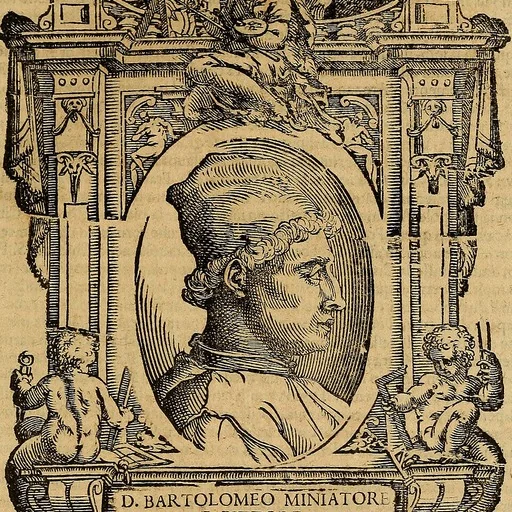
Bartolomeo (di Segnolo) Caporali (Perugia, c. 1420 – Perugia, c. 1503–1505) was an Italian painter and miniaturist in Perugia, Umbria during the early Renaissance period. His style was influenced by Umbrian artists…

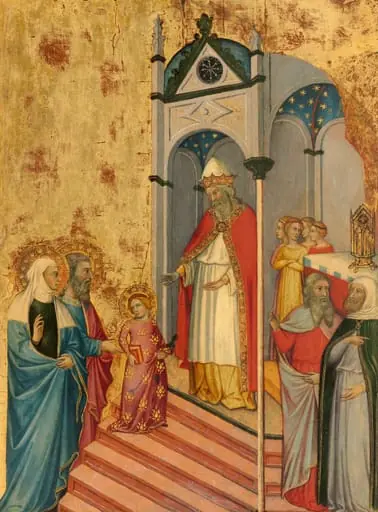 The Presentation of the Virgin in the Temple
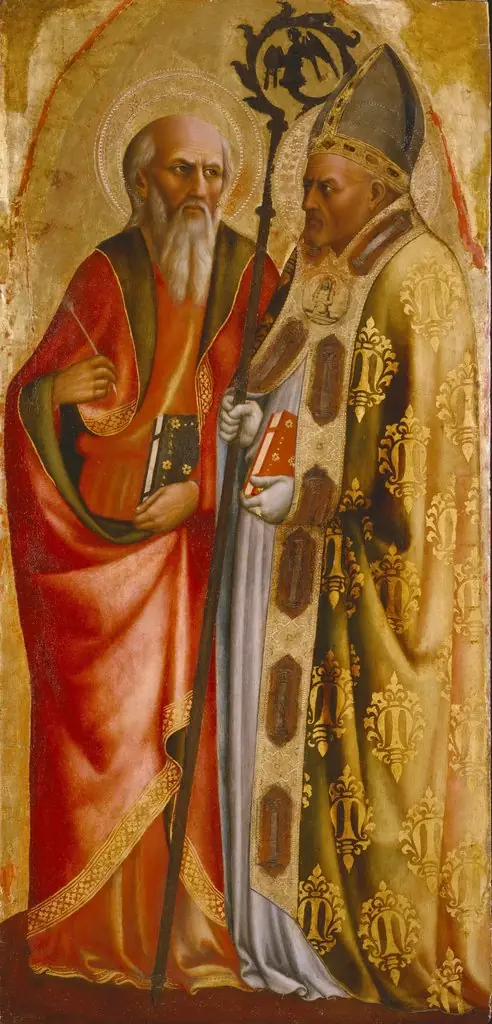 Saints John the Evangelist(?) and Martin of Tours
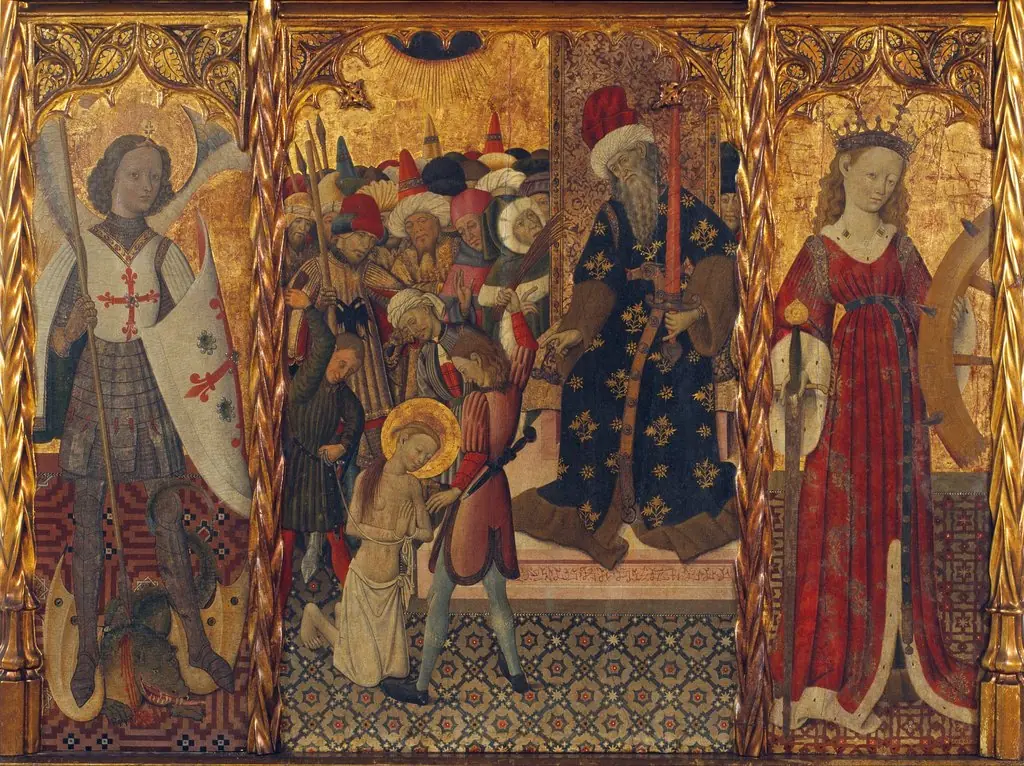 Saint Michael, Martyrdom of Saint Eulalia and Saint Catherine
 Jabach Altar: Saints Simeon and Lazarus
 Die vierzehn Nothelfer
 Saint John the Baptist, Saint Fabian and Saint Sebastian
 Purification of the Virgin
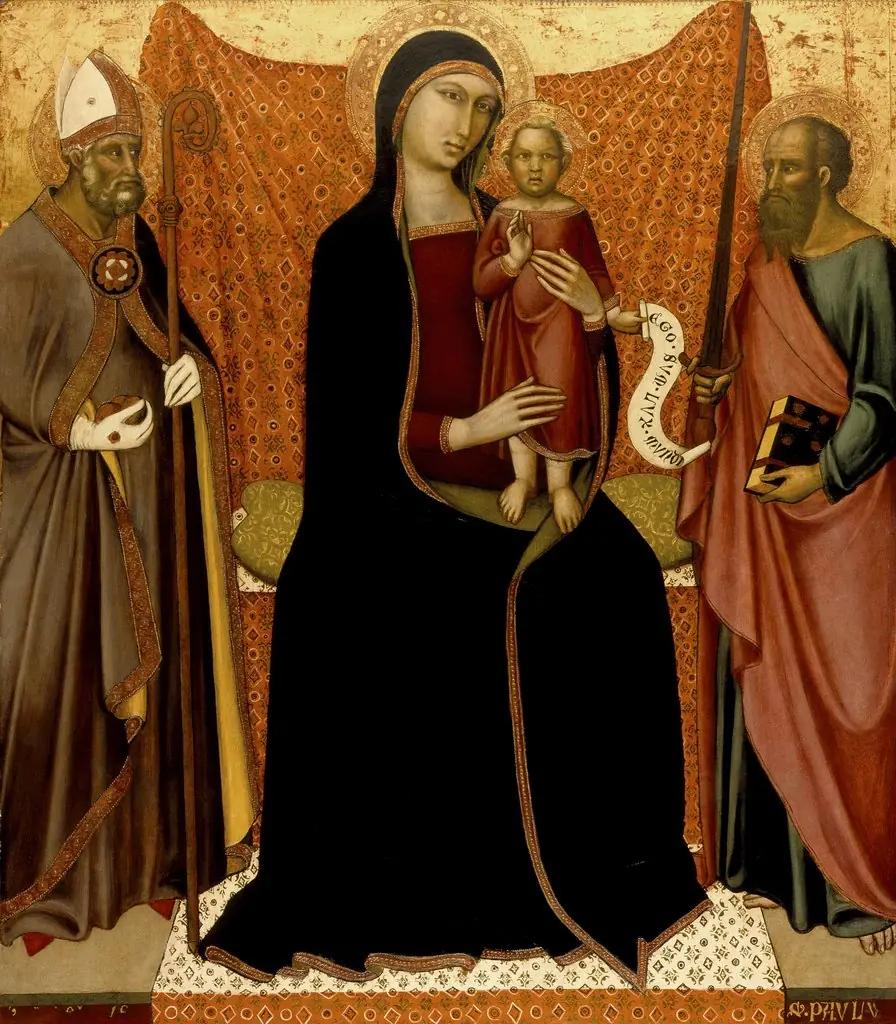 Madonna and Child with Sts. Nicholas and Paul
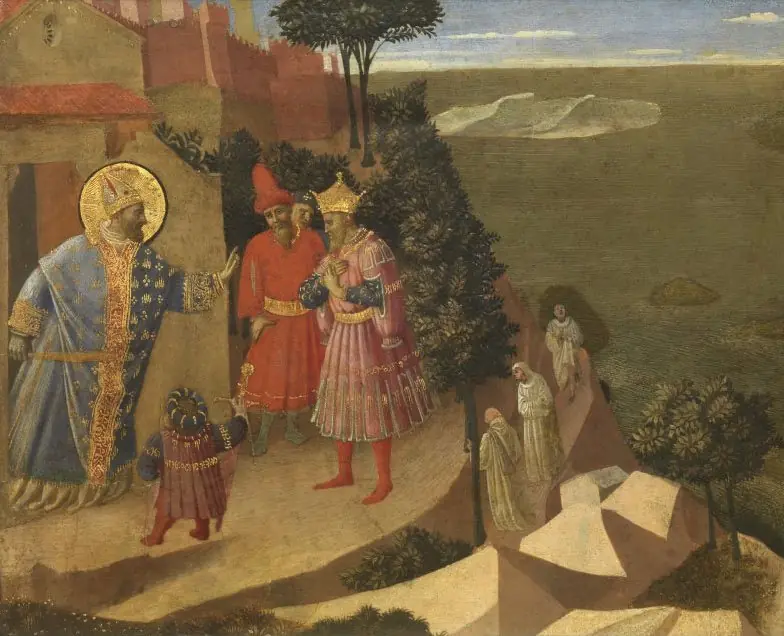 Saint Romuald Forbidding Entry to the Monastery to Emperor Otton III
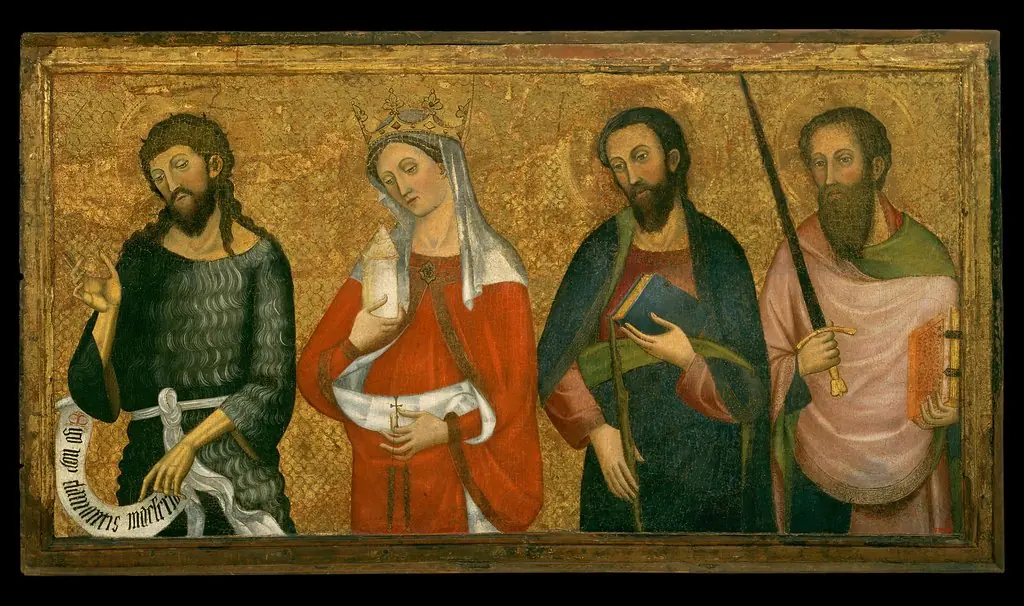 Saint John the Baptist, Saint Mary Magdalene, Saint James the Minor, Saint Paul
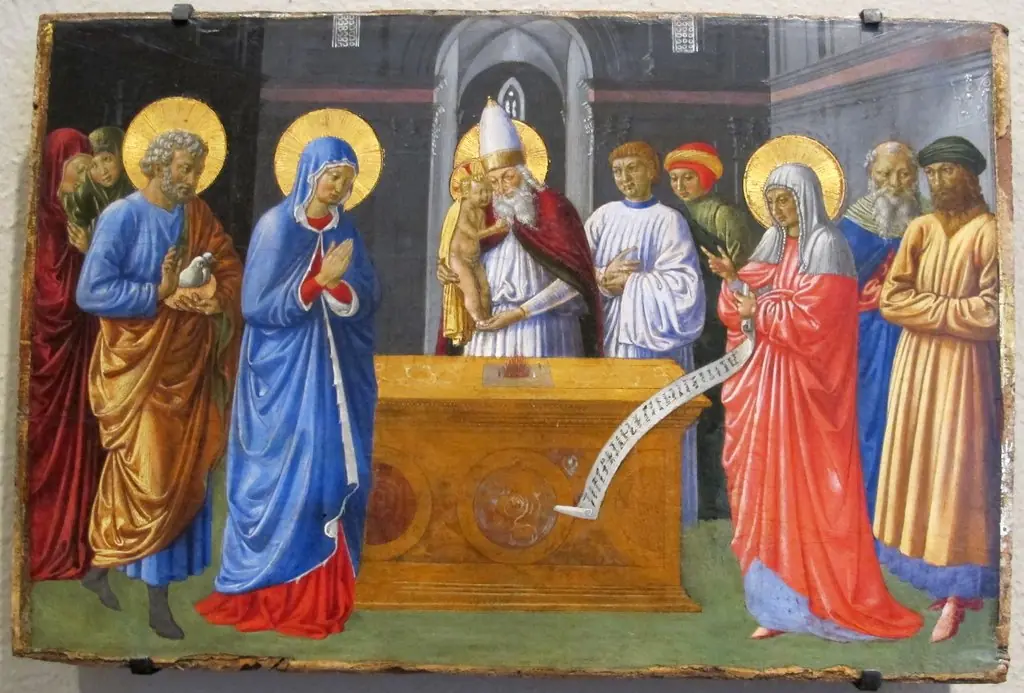 Presentation at the Temple
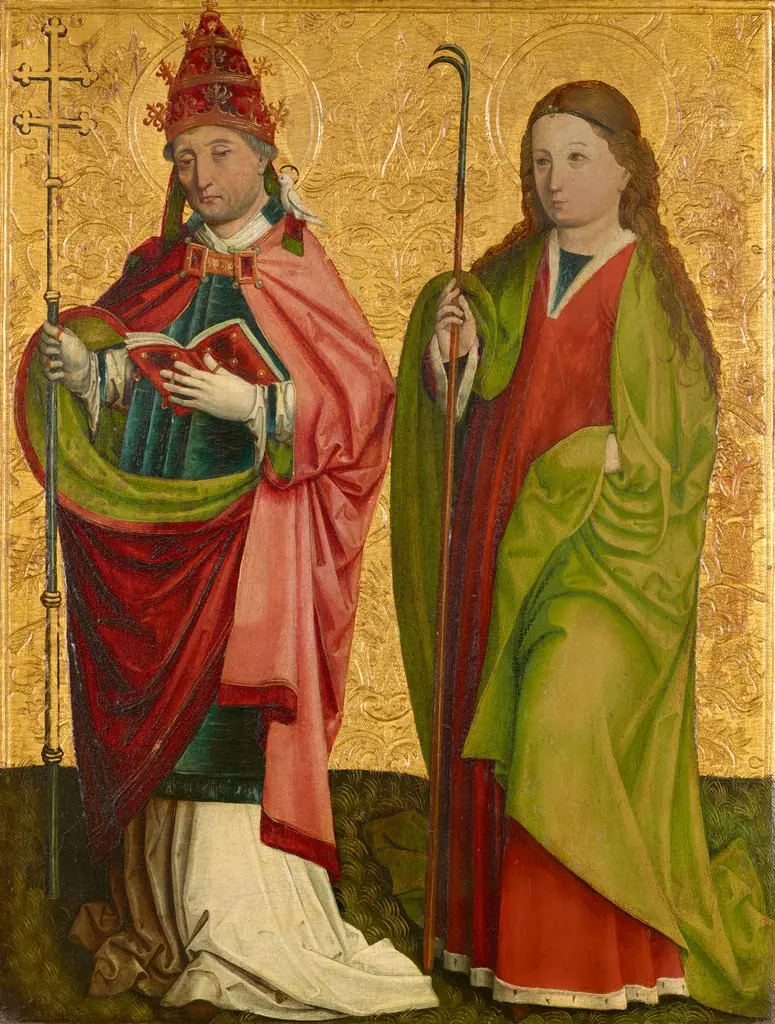 Rechter Flügel des sog. Pretschlaipfer-Triptychons: Hll. Gregor und Agathe (Innenseite); Hll. Erasmus und Barbara (Außenseite)