Artwork
Homer’s Riddle
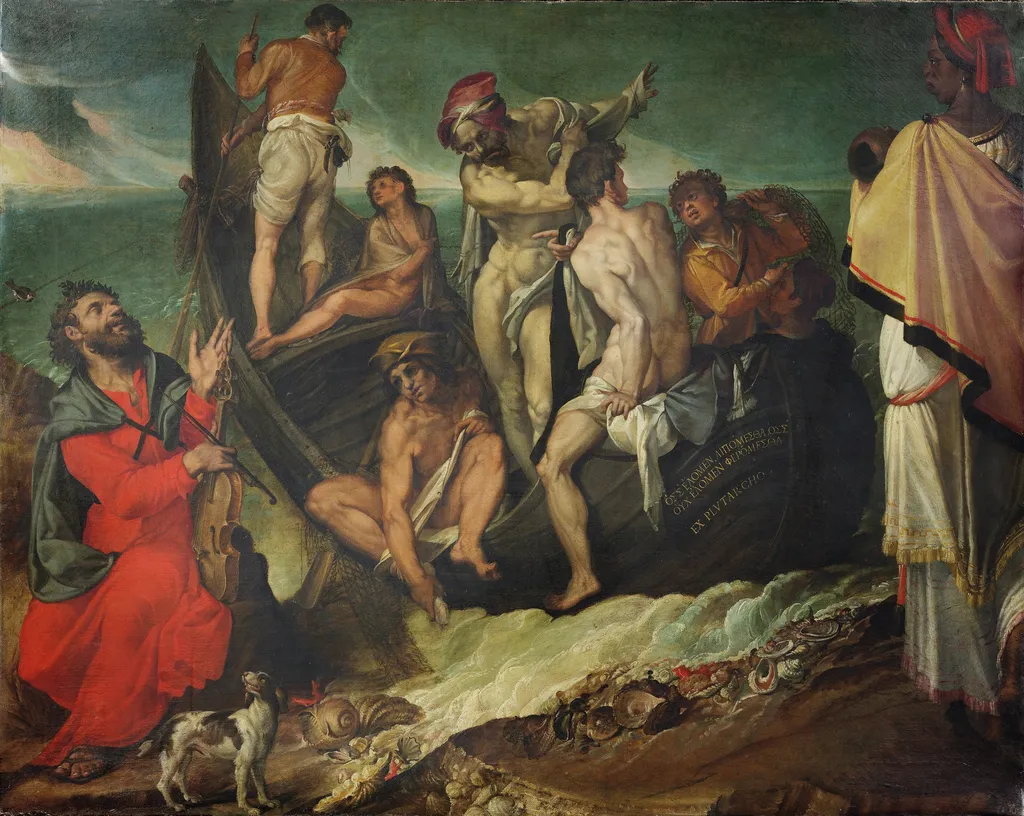
Homer’s Riddle is an oil painting by the Mannerist artist Bartolomeo Passarotti. It dates from 1575 and is held in the collection of the Uffizi Gallery.
About this work
Overview
Executed in the Mannerist idiom, the work merges mythological reference with allegorical suggestion.
Bartolomeo Passarotti’s 1575 oil painting, titled *Homer’s Riddle*, presents a narrative scene centered on the ancient Greek poet, set against a coastal horizon. Executed in the Mannerist idiom, the work merges mythological reference with allegorical suggestion. It resides in the Uffizi Gallery, Florence, and reflects Passarotti’s engagement with literary themes during the late Renaissance, a period marked by intellectual curiosity and stylistic experimentation.
Subject & Meaning
The painting alludes to the legend of Homer’s death on the island of Ios, symbolized by the figure labeled Ios. A central figure holds a violin, gazing skyward, possibly representing poetic inspiration or the unresolved mystery of Homer’s demise. Surrounding figures, dressed in varied attire, observe him, suggesting contemplation or inquiry. The scene functions as a visual riddle, inviting interpretation of poetry’s enduring enigma rather than depicting a literal historical moment.
Technique & Style
Passarotti employs Mannerist conventions through elongated forms, nuanced gestures, and a deliberate asymmetry in composition. Chiaroscuro modulates light to define volume and spatial depth, enhancing the emotional resonance of the figures. Textures in fabric, skin, and water are rendered with meticulous attention, while the coastal backdrop—blue sky, drifting clouds—offers a serene counterpoint to the figures’ introspective postures, reinforcing the painting’s contemplative tone.
History & Provenance
Created in 1575 in Bologna, the painting entered the Medici collection and later became part of the Uffizi’s holdings. Passarotti, a Bolognese artist known for his intellectual approach to painting, produced few large-scale mythological works, making this piece a rare example of his engagement with classical literature. Its survival and documented provenance reflect its early recognition within elite artistic circles of late 16th-century Italy.
Context
During the late Renaissance, Bologna was a hub for humanist scholarship and artistic innovation. Passarotti’s work reflects the era’s fascination with ancient texts and allegory, where painters were expected to convey complex ideas beyond mere representation. *Homer’s Riddle* aligns with contemporaneous efforts to visualize poetic and philosophical themes, bridging literary tradition with visual culture in a period rich with scholarly revival.
Legacy
Though not widely reproduced or celebrated in popular discourse, *Homer’s Riddle* remains a significant example of Mannerist narrative painting in northern Italy. It exemplifies how artists of the time translated classical myths into intimate, psychologically inflected scenes. Its presence in the Uffizi ensures continued scholarly attention, preserving its role as a quiet but thoughtful meditation on the intersection of poetry, death, and artistic legacy.
Own this work as a print
Artist & collection
Artist
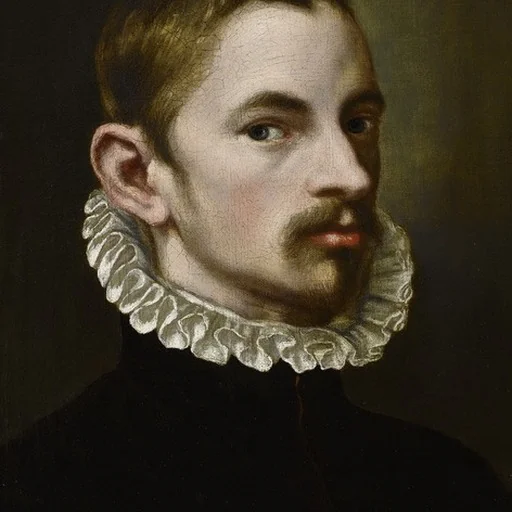
Bartolomeo Passarotti or Passerotti (1529–1592) was an Italian painter of the mannerist period, who worked mainly in his native Bologna. His family name is also spelled Passerotti or Passarotto.

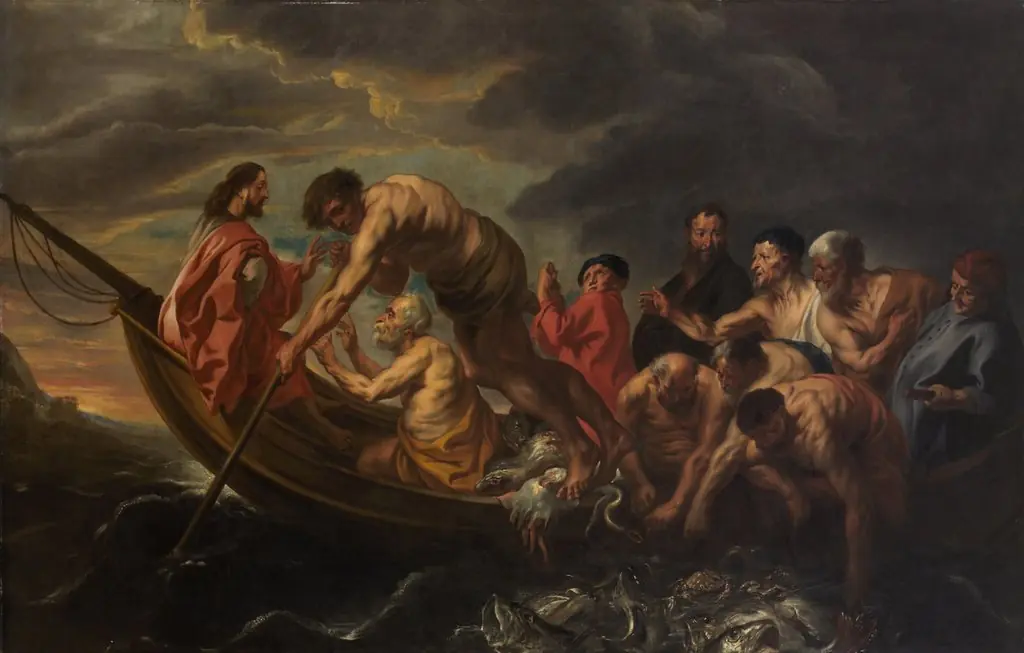 Miraculous draught of fish
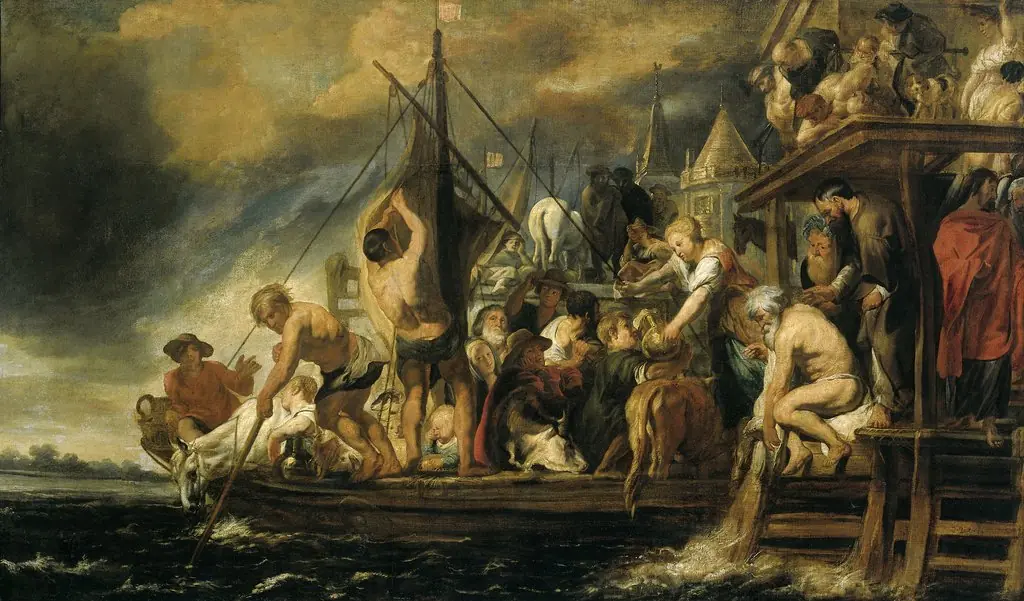 The Tribute Money - Peter Finding the Silver Coin in the Mouth of the Fish
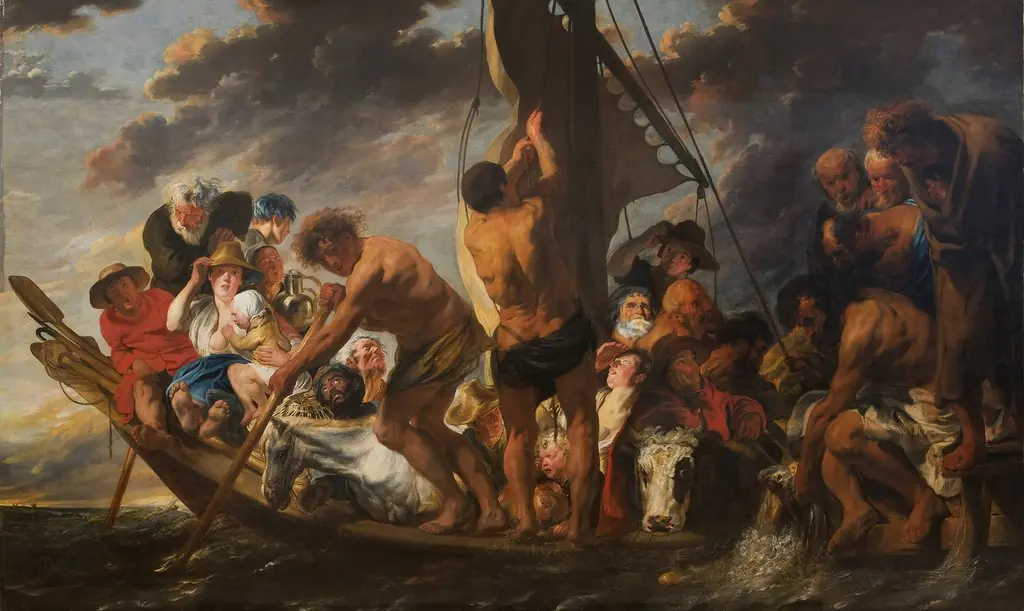 The Tribute Money. Peter Finding the Silver Coin in the Mouth of the Fish. Also called "The Ferry Boat to Antwerp"
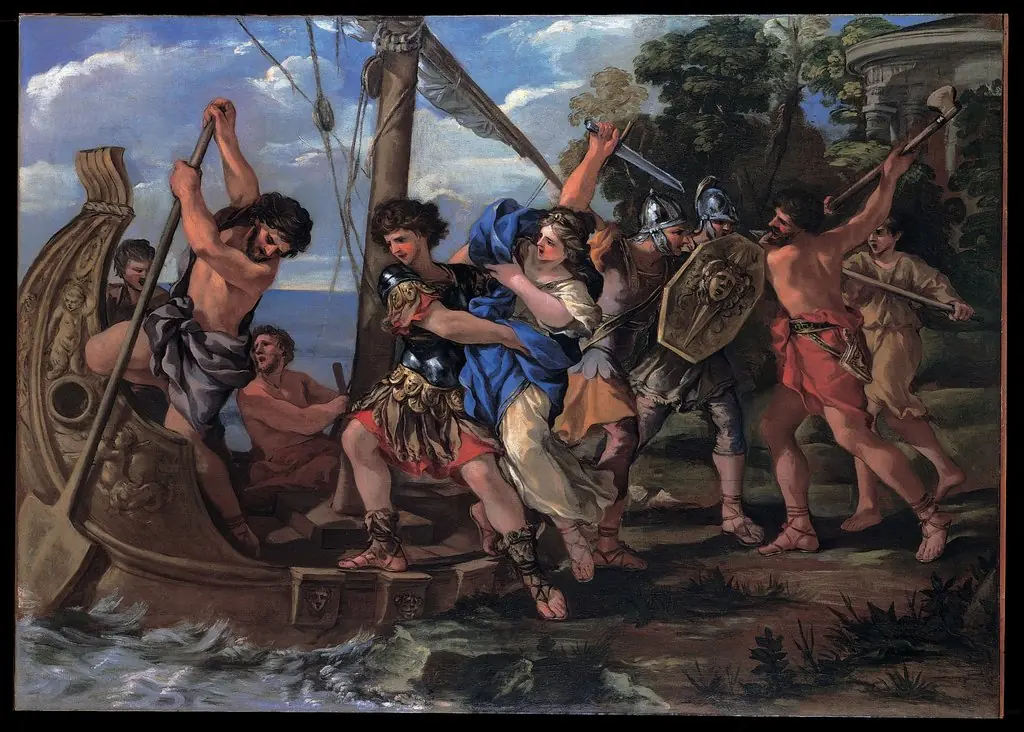 The Elena kidnapping
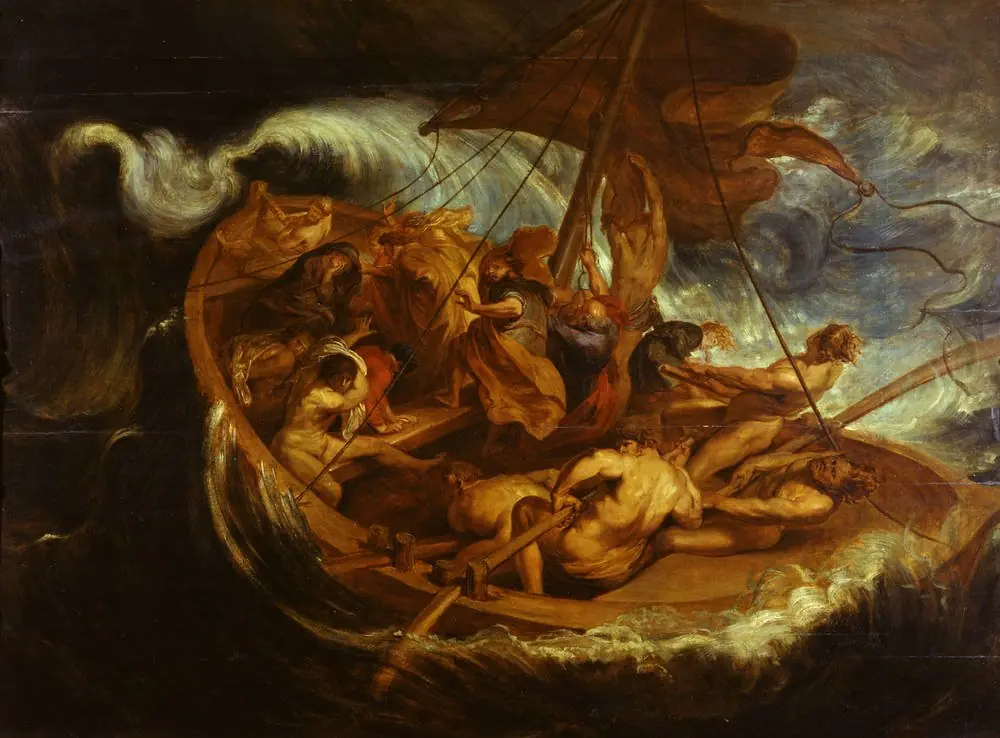
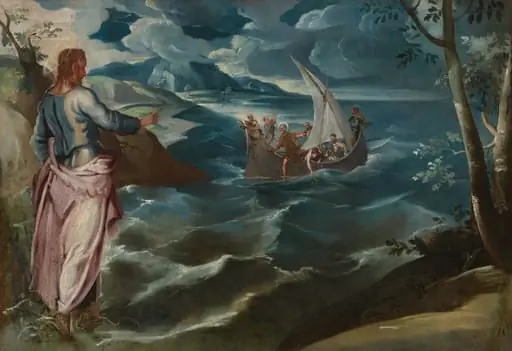 Christ at the Sea of Galilee
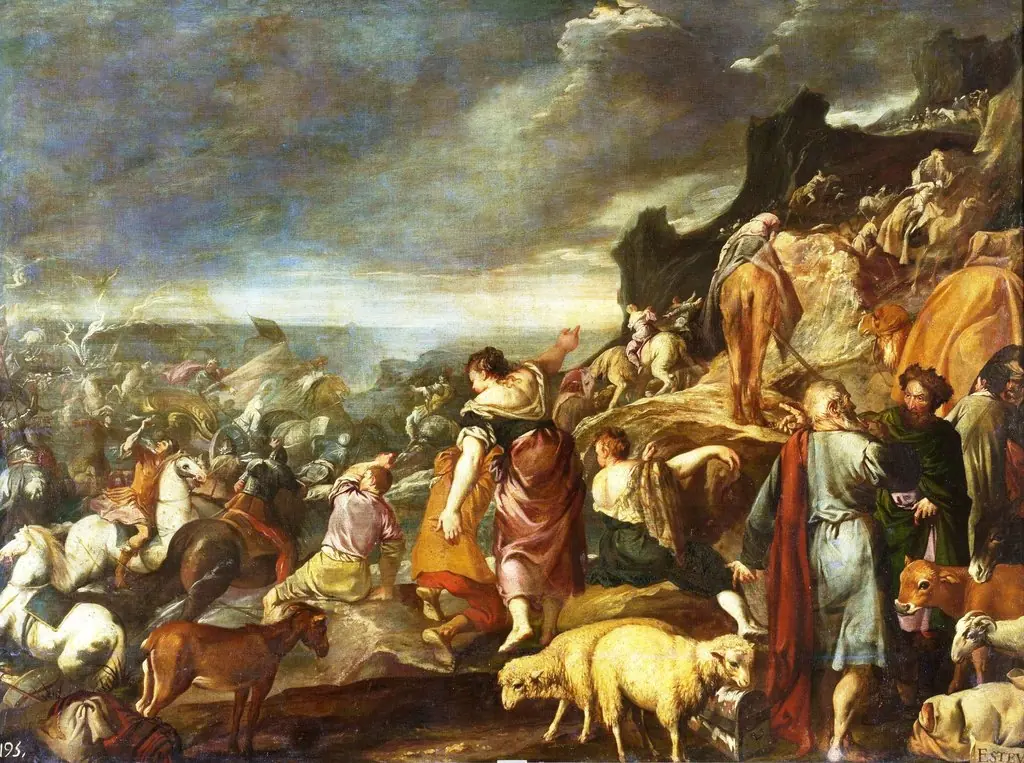
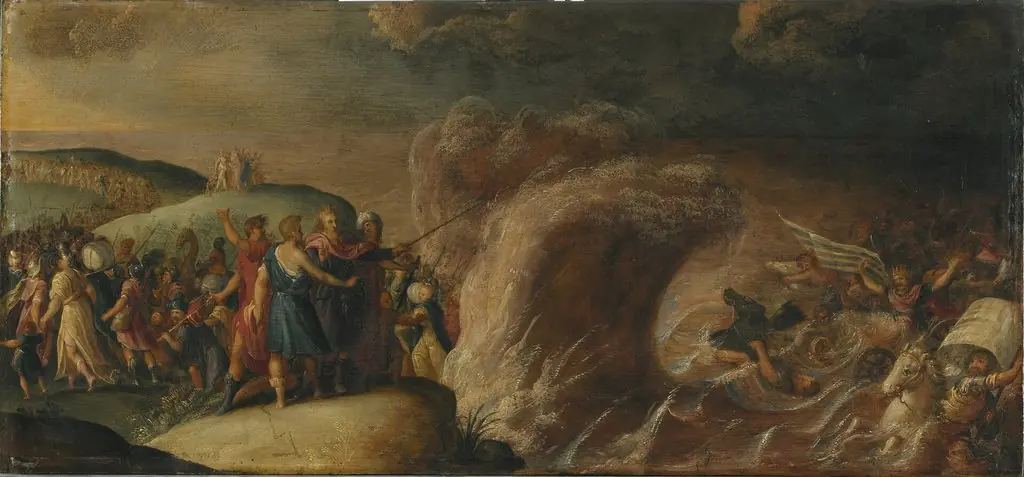 The Crossing of the Red Sea
 David and Abigail
 Christ Asleep during the Tempest
 Neptun und Amphitrite
 The last appearance of Christ to his disciples
 El paso del mar Rojo
 Christ on the Sea of Galilee