Artwork
Pietro Berrettini da Cortona
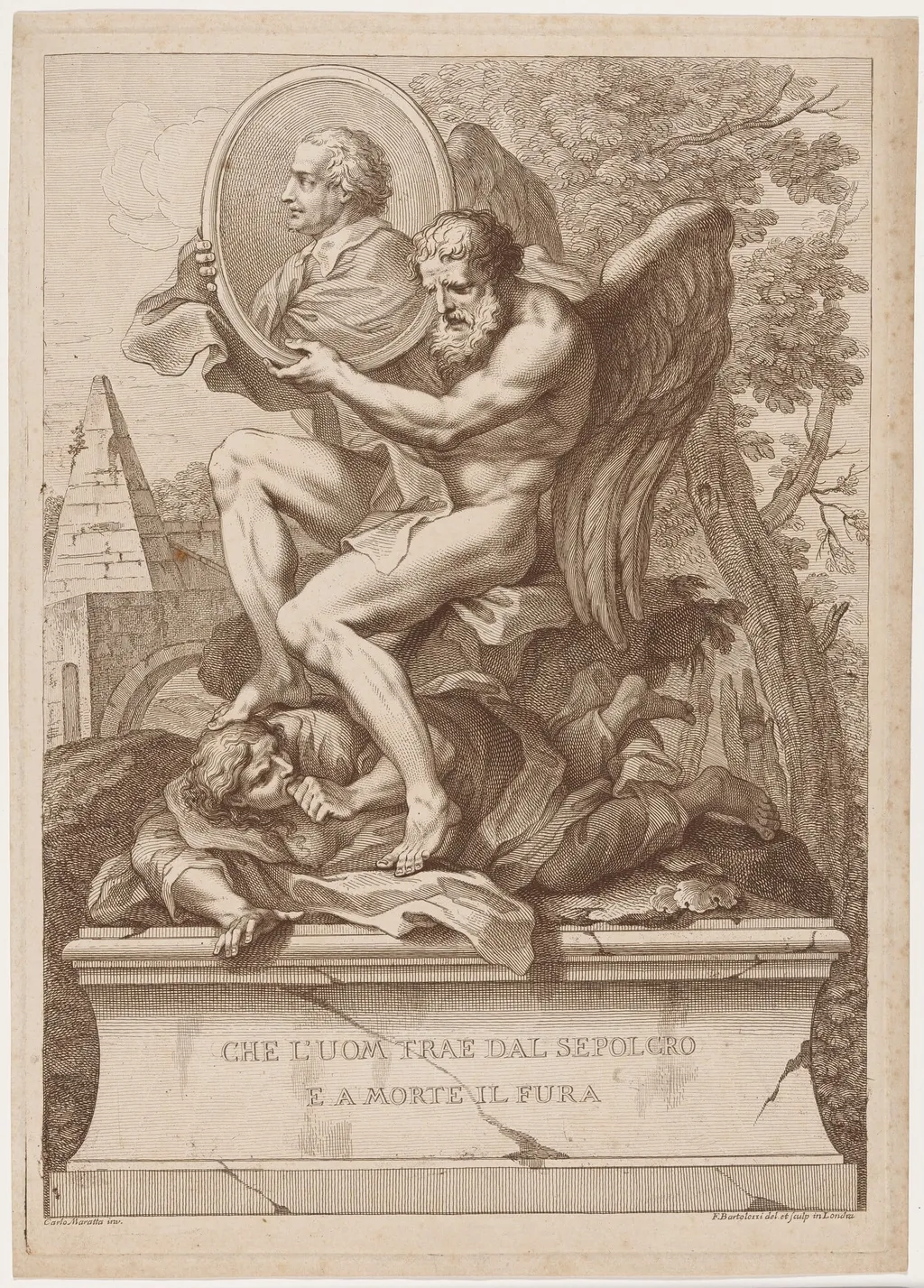
Pietro Berrettini da Cortona is an ink print by the Romanticist artist Francesco Bartolozzi. It dates from 1767 and is held in the collection of the National Gallery of Art.
About this work
Overview
This 1767 etching with engraving by Francesco Bartolozzi depicts a portrait of Pietro Berrettini da Cortona, a renowned Italian Baroque painter and architect. The work is part of the National Gallery of Art in Washington.
Subject & Meaning
The print shows Cortona in a contemplative scene: dressed in a robe, he gazes into a mirror with his right leg raised, while an angel looks on from behind and a figure lies at his feet, possibly asleep or deceased. The setting blends natural elements (trees) with architecture.
Technique & Style
Bartolozzi employed his signature crayon-style engraving technique, combined with etching, to achieve a depth of expression. The interplay of light and shadow enhances the emotional intensity of the contemplative mood.
History & Provenance
Created in 1767 by Italian engraver Francesco Bartolozzi, primarily active in London, the etching is now held in the collection of the National Gallery of Art, Washington.
Context
The work reflects Bartolozzi's ability to capture the essence of notable figures of the time, in this case, honoring Cortona's contributions to Baroque art and architecture through a nuanced, symbolic portrait.
Legacy
As a representation of Cortona by a prominent engraver, the piece contributes to the visual record of Baroque artists and the evolution of engraving techniques in the 18th century.
Artist & collection
Artist
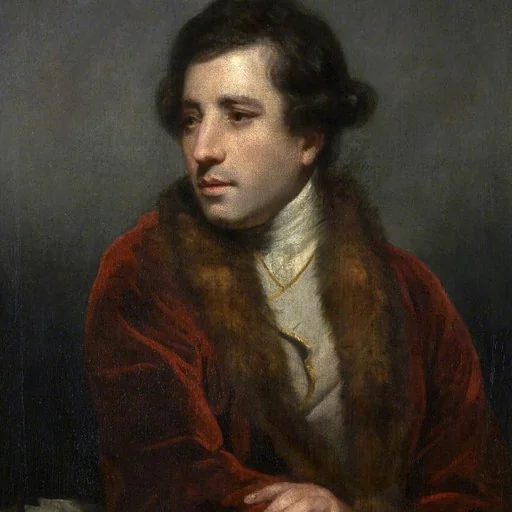
Francesco Bartolozzi (21 September 1727 – 7 March 1815) was an Italian engraver, whose most productive period was spent in London. He is noted for popularizing the "crayon" method of engraving.

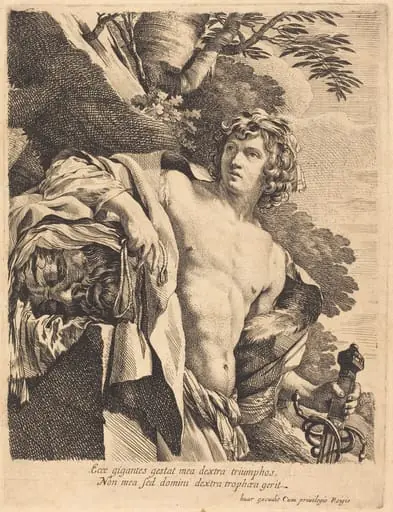 David with the Head of Goliath
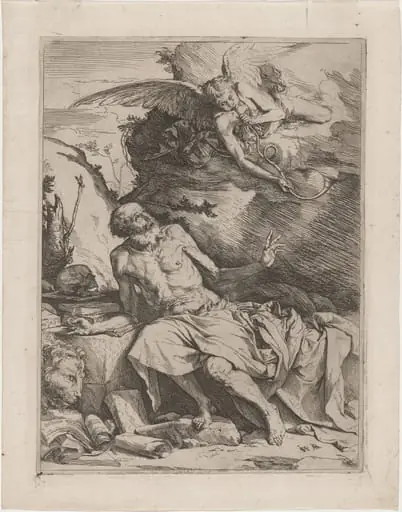 Saint Jerome Hearing the Trumpet of the Last Judgment
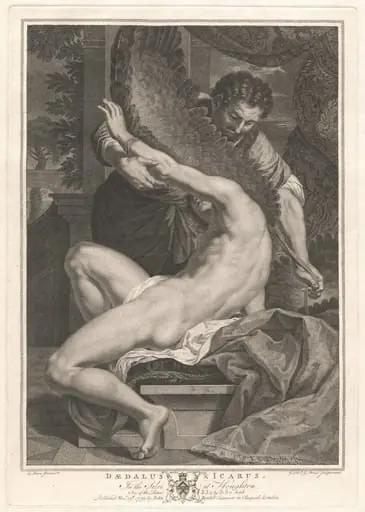 Daedalus and Icarus
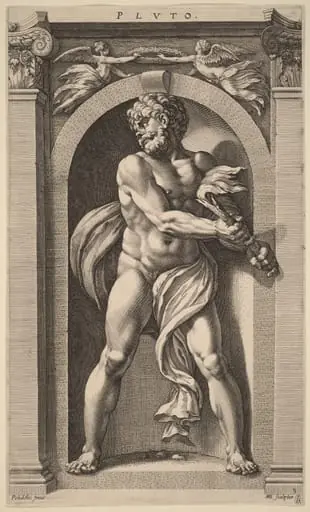 Pluto
Pluto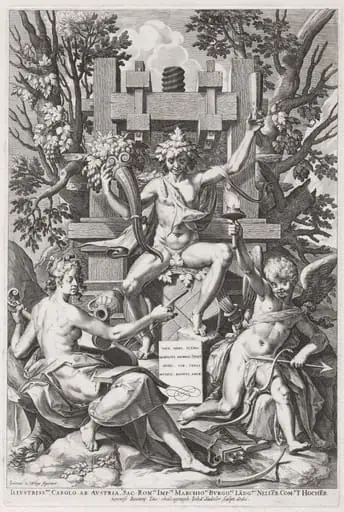 Bacchus Seated on a Barrel between Amor and Music
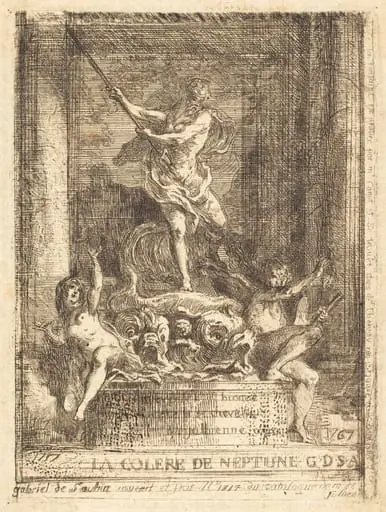 La Colère de Neptune (The Wrath of Neptune)
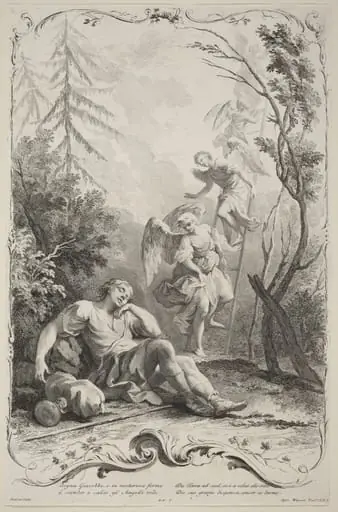 Jacob's Ladder
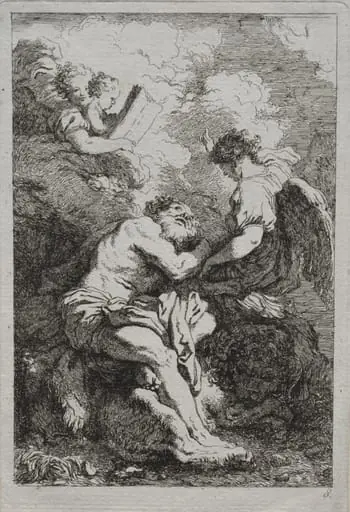 Saint Jerome
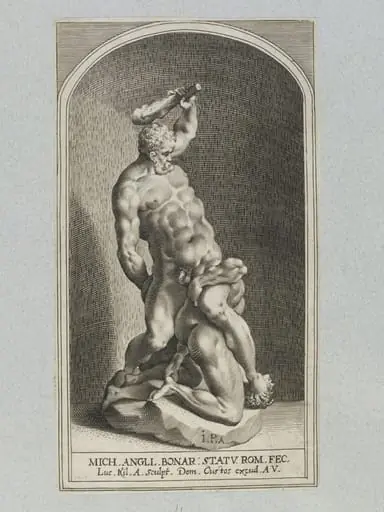 Hercules Killing Cacus
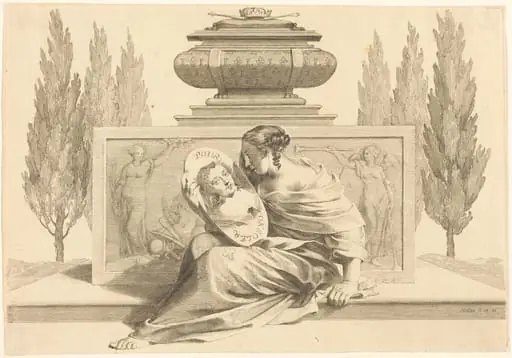 Allegory in Honor of Anne of Austria
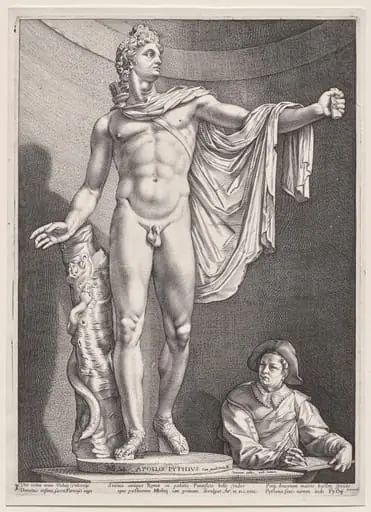 Apollo Belvedere
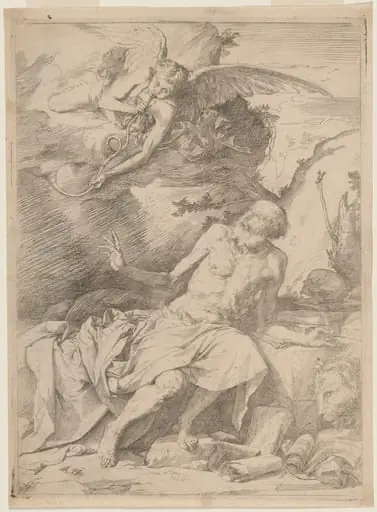 Saint Jerome Hearing the Trumpet of the Last Judgement