Artwork
The Celebrated Vincent Lunardi Esq. Accompanied by Two Friends in His Third Aerial Excursion, Taken from St. George's Fields, in London
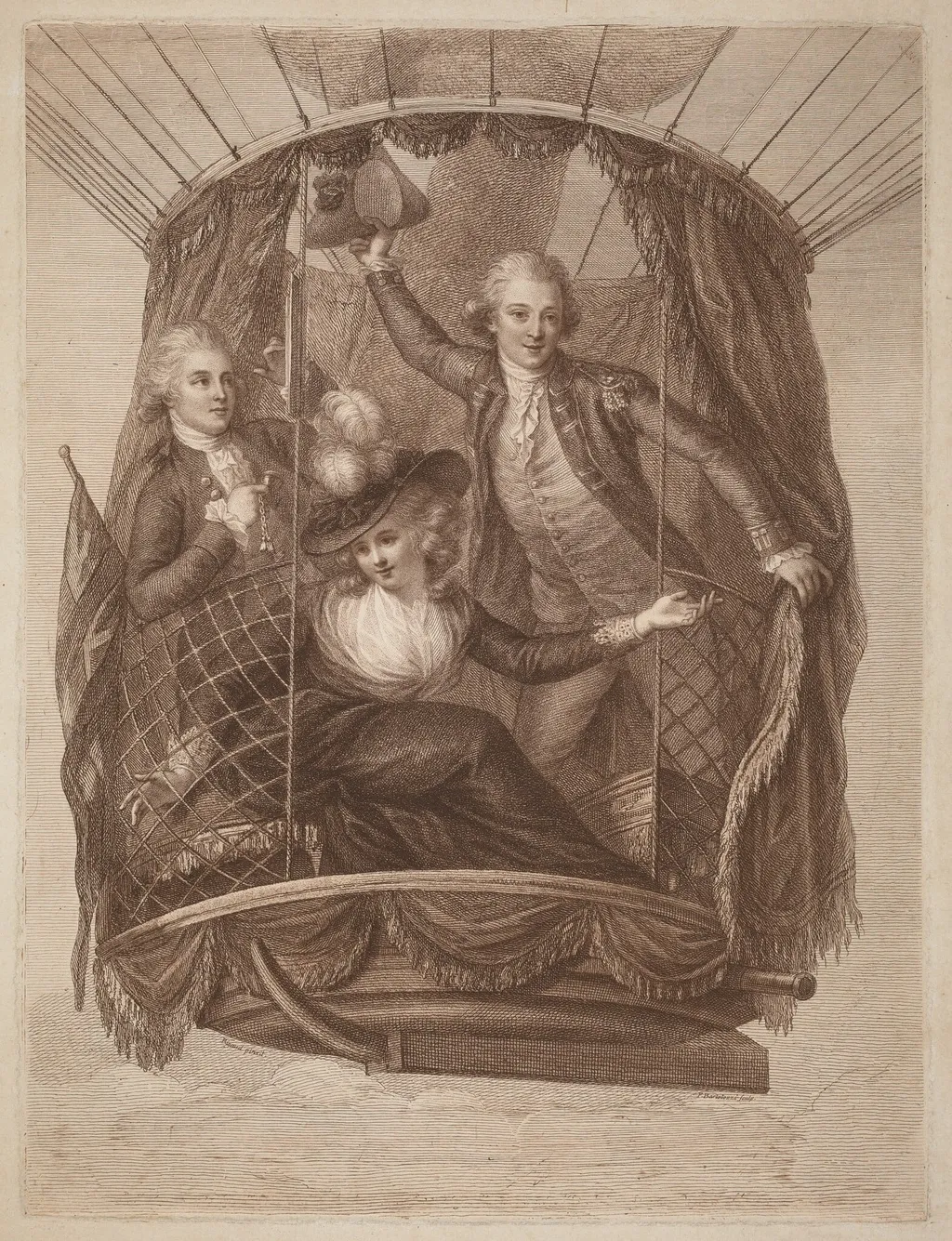
The Celebrated Vincent Lunardi Esq. Accompanied by Two Friends in His Third Aerial Excursion, Taken from St. George's Fields, in London is an ink print by the Romanticist artist Francesco Bartolozzi. It dates from 1784 and is held in the collection of the National Gallery of Art.
About this work
The artist used a mix of fine lines and shading to show texture, like the fabric and ropes.
This print shows three people in a hot-air balloon. The man in the front holds the ropes, wearing a fancy coat and a serious look. Behind him, a woman sits with a child, both dressed in simple but neat clothes. The balloon’s basket is made of wicker, and the ropes crisscross above them. The sky is dark, but the balloon seems steady.
The artist used a mix of fine lines and shading to show texture, like the fabric and ropes. This was a big deal in 1784—balloon rides were brand-new and exciting.
Next, check out etching to see how artists like this made detailed prints.
Overview
Francesco Bartolozzi, an Italian engraver active in London, produced a complex print in 1784 that records an early hot‑air balloon ascent over the city. The work combines several printmaking techniques—etching, line engraving, stipple engraving and aquatint—applied in brown ink on a sheet of heavy laid paper. It captures a moment when the sky over St. George’s Fields was filled with a pioneering aeronautic venture.
Subject & Meaning
The image presents the celebrated balloonist Vincent Lunardi together with two companions—a woman and a child—suspended in a wicker basket as they glide above London. Lunardi, positioned at the front, grips the rigging with a composed expression, while the passengers sit calmly, underscoring the novelty and confidence associated with these early aerial excursions.
Technique & Style
Bartolozzi employed a layered approach: fine etched lines define the figures and basket, stipple engraving creates soft tonal transitions for fabric and sky, and aquatint adds broad washes of brown that suggest atmospheric depth. The interplay of line and tone renders textures such as rope, cloth and wicker with remarkable clarity for a mid‑18th‑century print.
History & Provenance
Created in 1784, the print was issued during the height of public fascination with ballooning, a technology only a few years old. Bartolozzi, then a leading printmaker in London, marketed the image as a souvenir of Lunardi’s third flight, capitalising on contemporary news of his aerial exploits.
Context
The work reflects the broader Enlightenment interest in scientific spectacle and the growing culture of mass‑produced visual news. Ballooning tours became public events, and prints like this served both as documentation and as a means of disseminating the excitement of technological progress to a wider audience.
Legacy
Bartolozzi’s print stands as an early visual record of human flight, illustrating how printmaking could capture and circulate contemporary achievements. It remains a valuable reference for scholars studying the intersection of art, science, and popular culture in late‑18th‑century Britain.
Artist & collection
Artist
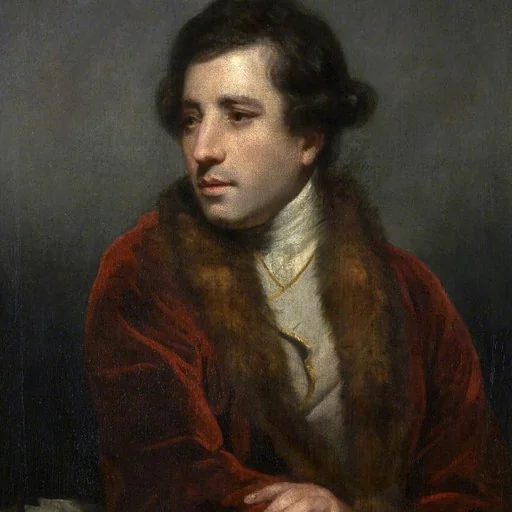
Francesco Bartolozzi (21 September 1727 – 7 March 1815) was an Italian engraver, whose most productive period was spent in London. He is noted for popularizing the "crayon" method of engraving.