Artwork
Christ as Man of Sorrows at the Foot of the Cross
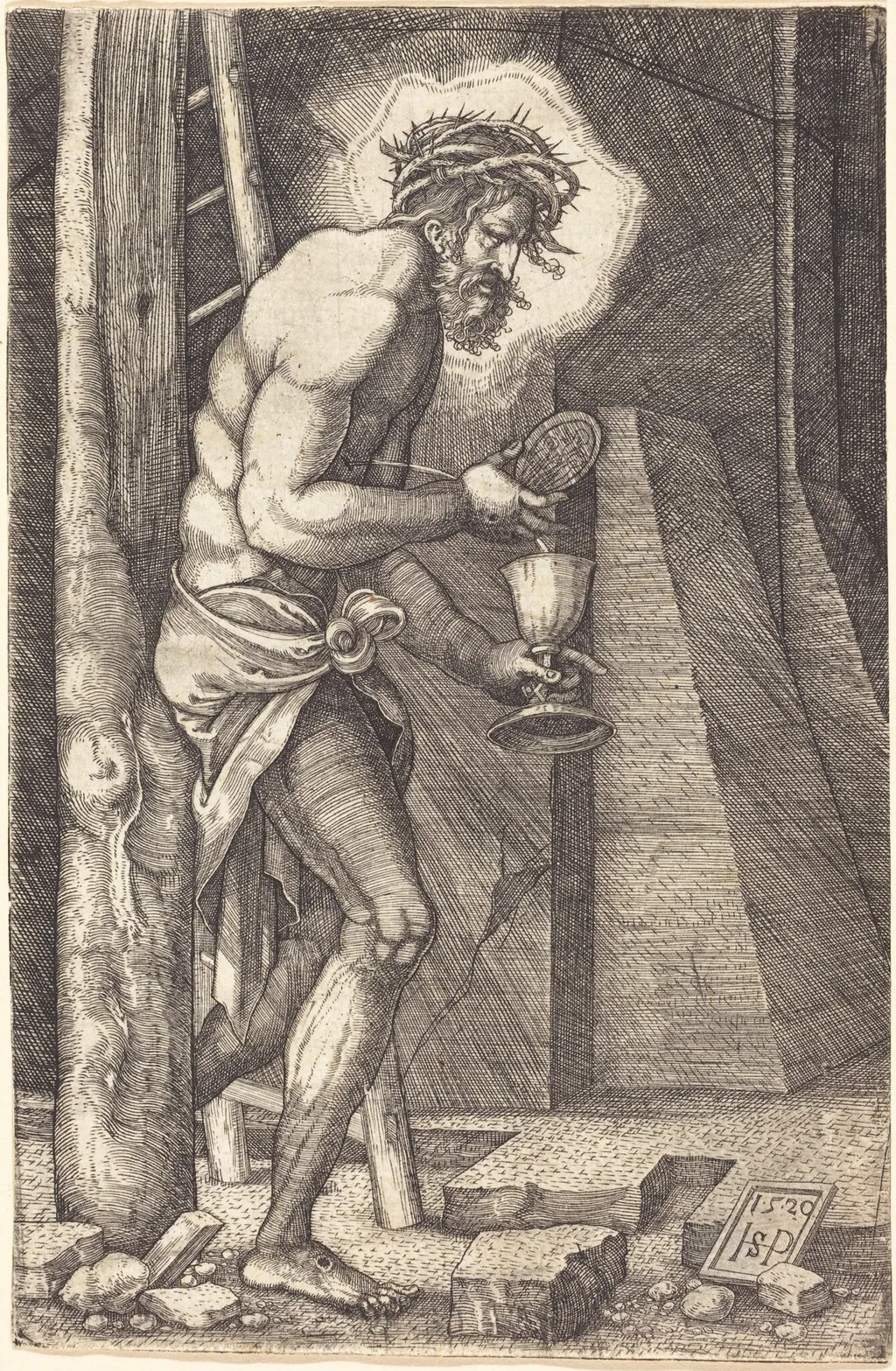
Christ as Man of Sorrows at the Foot of the Cross is an ink print by the Renaissance artist Sebald Beham. It dates from 1520 and is held in the collection of the National Gallery of Art.
About this work
Overview
Christ as Man of Sorrows at the Foot of the Cross is a 1520 engraving by Sebald Beham, a prominent German printmaker of the early 16th century. This work exemplifies his expertise in intricate, small-scale prints.
Subject & Meaning
The engraving portrays a poignant religious scene: a weary Christ, identifiable by his crown of thorns, slumped against a tree trunk, holding a nail and a cup. The composition conveys profound exhaustion and sorrow, emphasizing Christ's human suffering.
Technique & Style
Beham utilized sharp, detailed lines to render the musculature and folds of Christ's clothing, achieving a sense of realism. Strategic contrasts of light and dark guide the viewer's focus towards Christ's face and hands, heightening emotional impact.
History & Provenance
Created in 1520, this engraving is part of Beham's extensive output of engravings, etchings, and woodcuts. As one of the 'Little Masters,' Beham contributed significantly to the evolution of printmaking in Germany following Albrecht Dürer.
Context
Beham's work reflects the religious and artistic climate of post-Dürer Germany. Active in Nuremberg and later Frankfurt, he played a role in shaping the country's printmaking landscape during this period.
Legacy
While specific legacy details of this piece are not highlighted, as a 'Little Master,' Beham's overall body of work has had a lasting influence on the development of European printmaking, particularly in the tradition of small, detailed prints.
Artist & collection
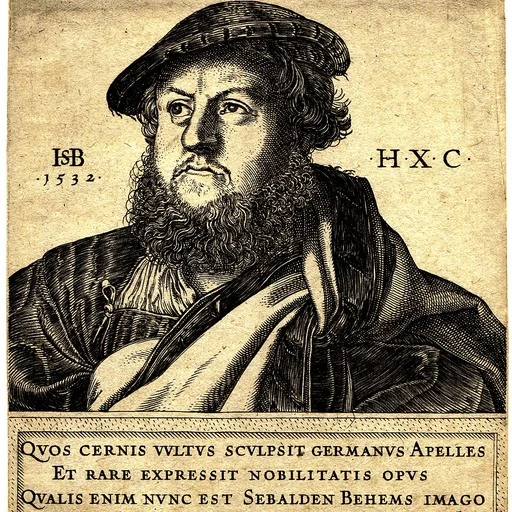
Artist
Sebald Beham (1500–1550) was a German painter and printmaker, mainly known for his very small engravings.


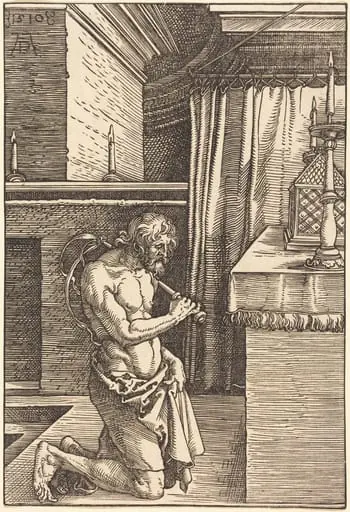 King David Doing Penance
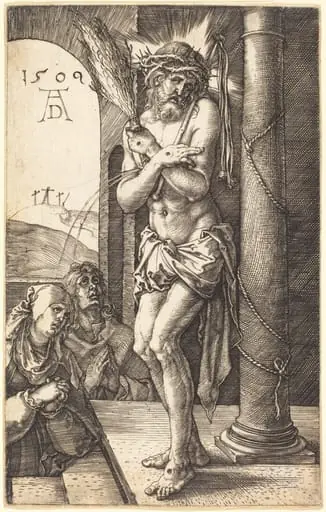 The Man of Sorrows Standing by the Column
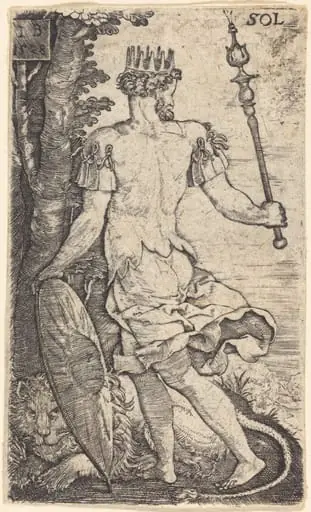 Sol (The Sun)
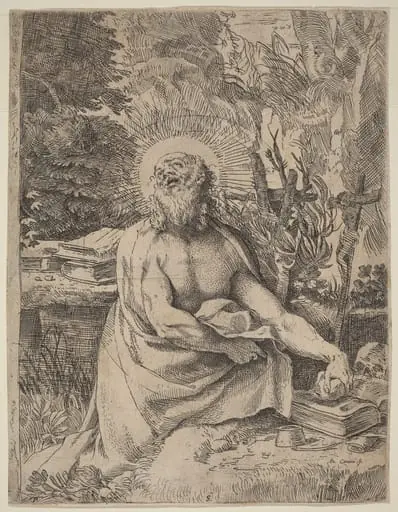 Saint Jerome in the Wilderness
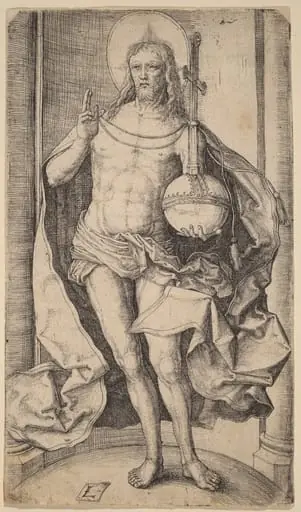 The Savior Standing with the Globe and Cross in His Left Hand
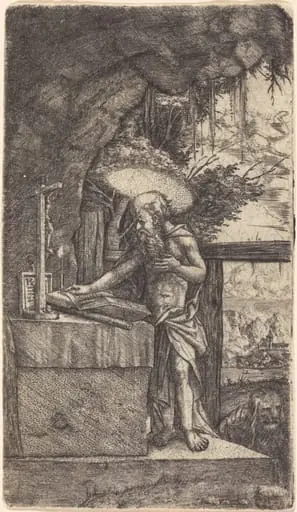 Saint Jerome Reading
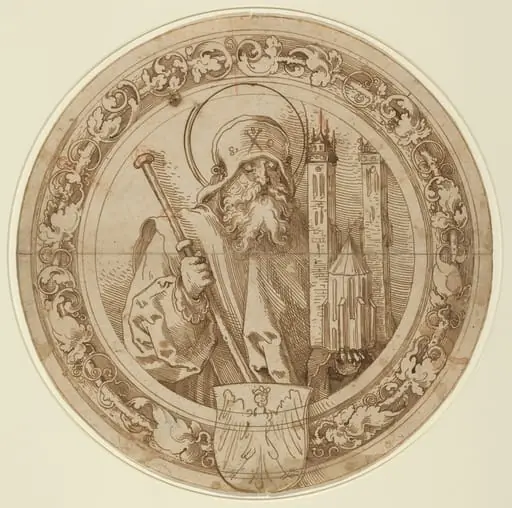
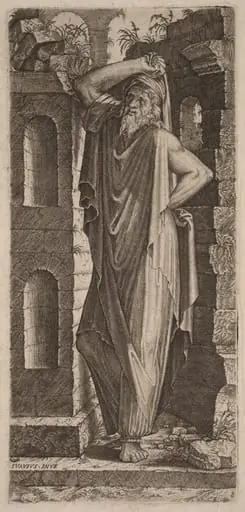 Saint Philip
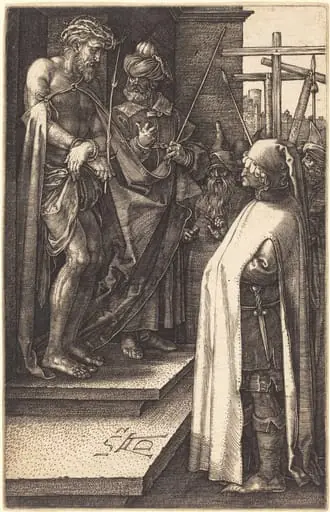 Ecce Homo
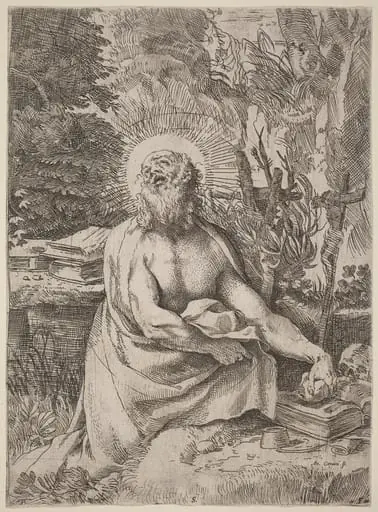 Saint Jerome in the Wilderness
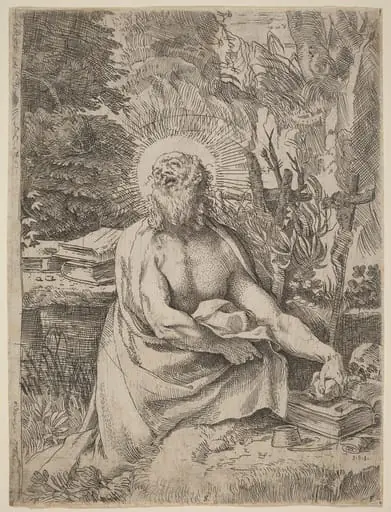 Saint Jerome in the Wilderness
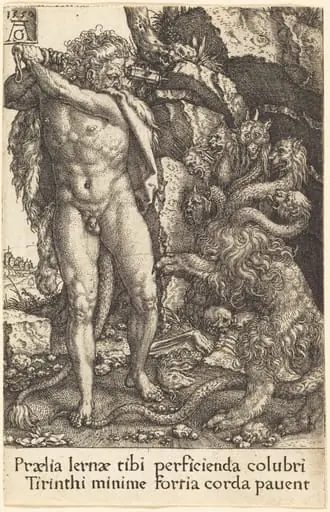 Hercules Fighting with the Hydra of Lernea
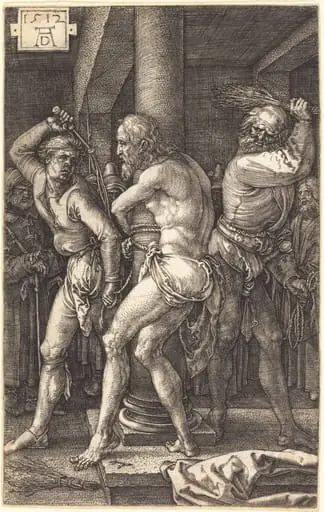 The Flagellation