Artwork
Saint Philip
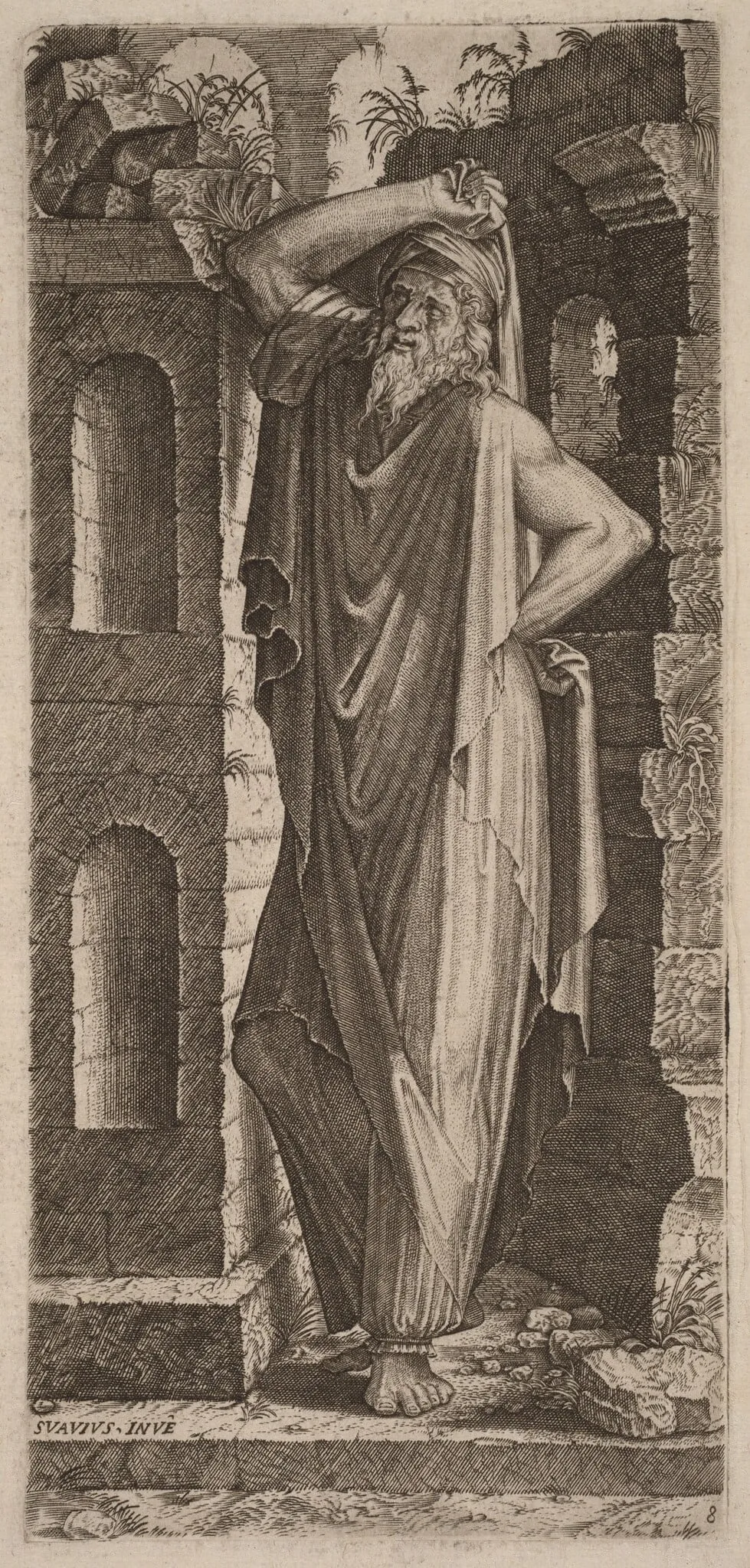
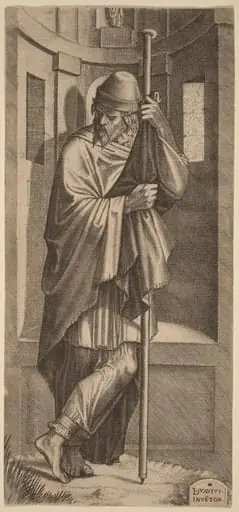
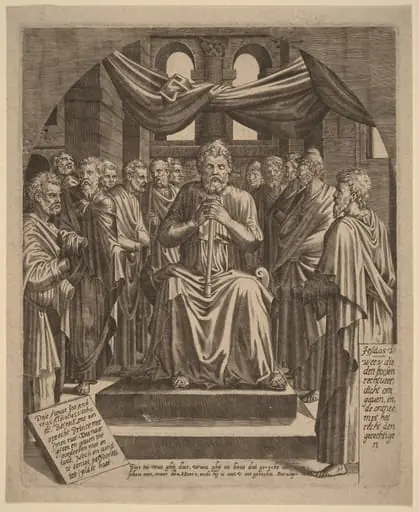
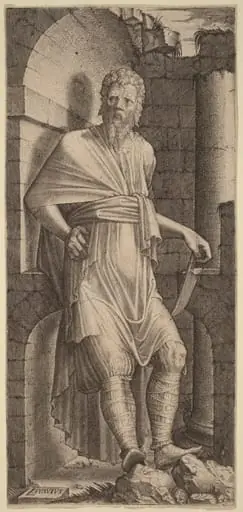
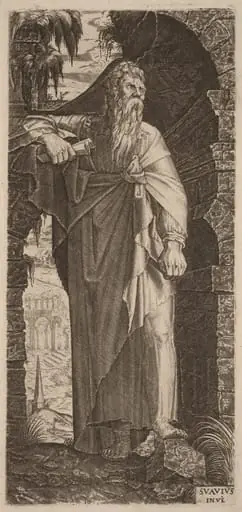
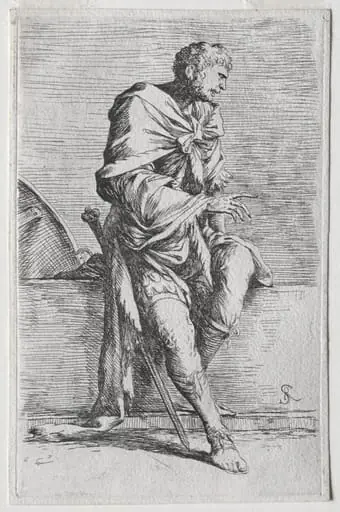
Saint Philip is an ink print by the Renaissance artist Lambert Suavius. It dates from 1545 and is held in the collection of the National Gallery of Art.
About this work
Overview
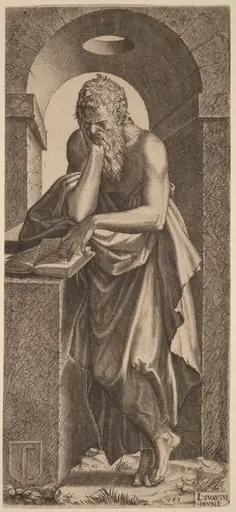
Lambert Suavius's engraving Saint Philip, dated circa 1545, is a religious print depicting the apostle in a contemplative pose.
Subject & Meaning
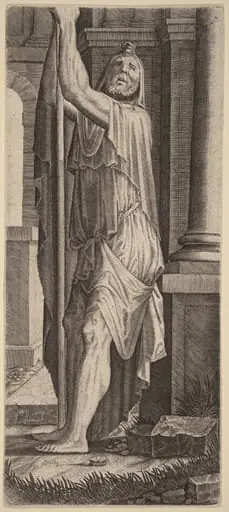
The figure, identified as Saint Philip, stands in introspective solitude, his raised right hand and contemplative expression conveying a sense of quiet reflection and spiritual introspection. His traditional attire—a long robe, head covering, and long white beard—aligns with conventional religious iconography of the time.
Technique & Style
Executed on laid paper, the engraving showcases Suavius's mastery of the medium, characterized by intricate line work that defines the subject's posture, facial expression, and the simple, yet detailed, stone wall and foliage in the background.
History & Provenance
Created around 1545, Saint Philip reflects Suavius's contribution to the religious engraving tradition of his era. Specific provenance details are not provided.
Context
This work situates itself within the broader context of 16th-century religious art, where engravings served as a popular medium for disseminating religious imagery. Suavius's style, while distinct, resonates with the engraving practices of his contemporaries.
Legacy
Saint Philip, as part of Suavius's oeuvre, contributes to the historical record of religious engraving in the 16th century, offering insights into the artistic and devotional practices of the time.
Artist & collection