Artwork
Fool and Two Bathing Women
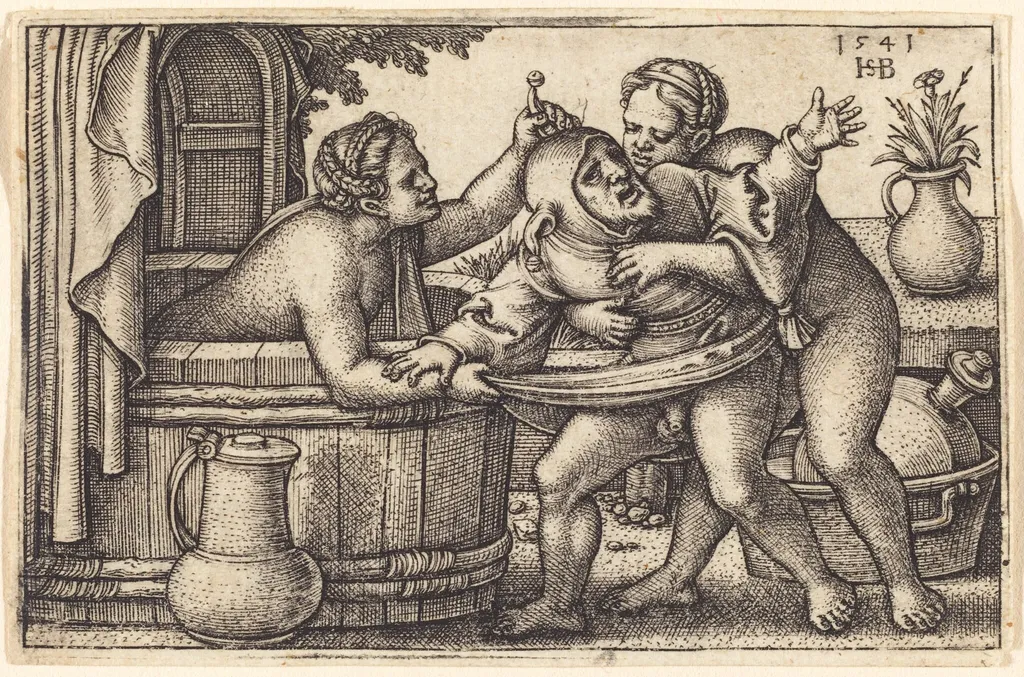
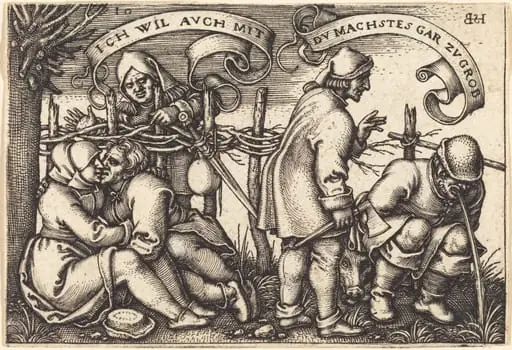
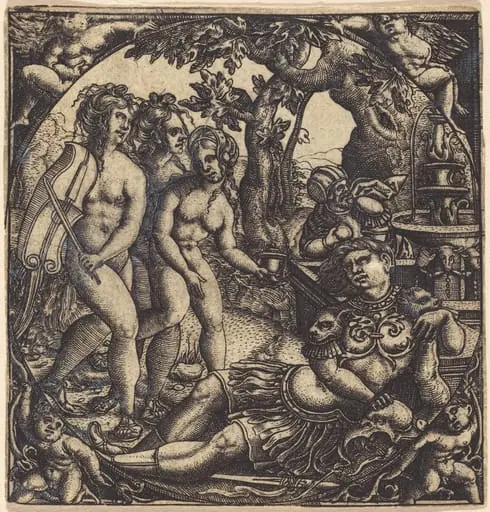
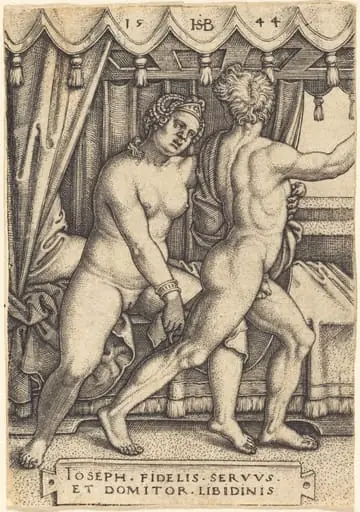
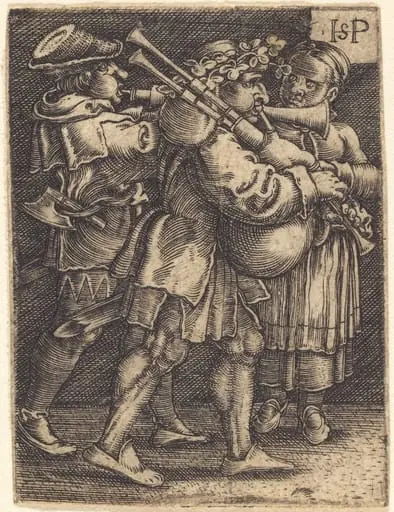
Fool and Two Bathing Women is an ink print by the Renaissance artist Sebald Beham. It dates from 1541 and is held in the collection of the National Gallery of Art.
About this work
Overview
Fool and Two Bathing Women is a 1541 engraving by German artist Sebald Beham, associated with the 'Little Masters' for his small, detailed prints. The work showcases a nude genre scene, characteristic of Beham's technical precision and compositional refinement.
Subject & Meaning
The engraving depicts a serene river scene with a naked woman bathing, observed by a jester and accompanied by another woman wading in the background. The contrast between the fool's intense gaze and the women's calm demeanor creates an intriguing blend of humor and solemnity.
Technique & Style
Executed with meticulous cross-hatching, the engraving highlights Beham's mastery of intricate line work, where fine, layered strokes achieve nuanced shading and depth. The technique emphasizes the interplay of light and shadow across the figures.
History & Provenance
Created during Beham's period in Nuremberg, before his later move to Frankfurt, the engraving reflects his established style and thematic preferences during this time. Specific provenance details are not provided.
Context
As part of the 'Little Masters' group, Beham's work, including *Fool and Two Bathing Women*, contributed to the popularity of small, highly detailed prints in 16th-century Germany, catering to a growing market for affordable, intricate artworks.
Legacy
This engraving, with its blend of genre scene, technical skill, and subtle humor, represents Beham's contribution to the printmaking traditions of his era, encouraging viewers to appreciate both its thematic nuances and technical achievements.
Artist & collection
Artist
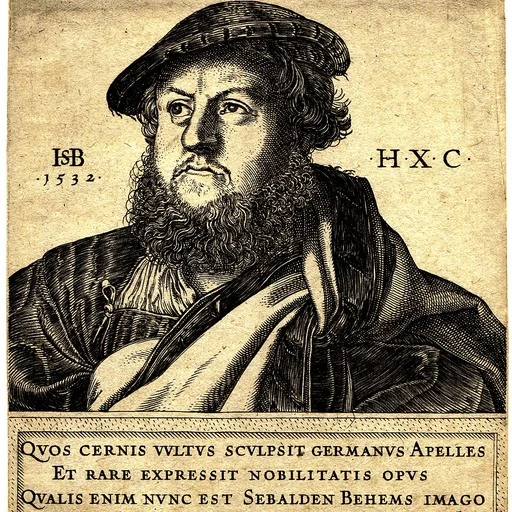
Sebald Beham (1500–1550) was a German painter and printmaker, mainly known for his very small engravings.