Artwork
Hercules Killing Antaeus
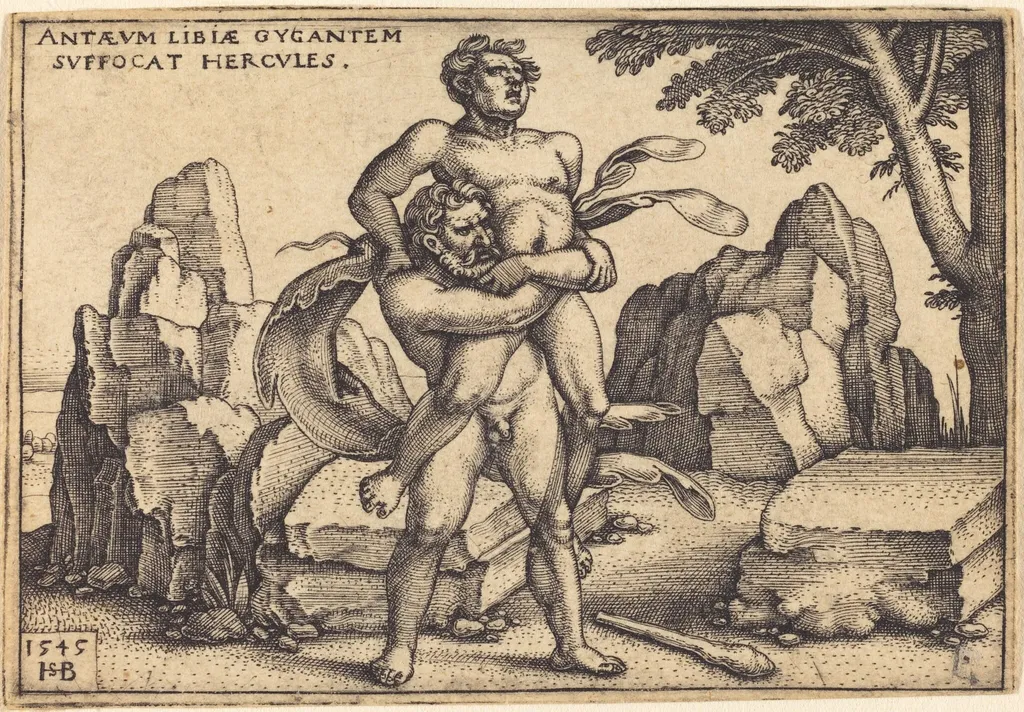
Hercules Killing Antaeus is an ink print by the Renaissance artist Sebald Beham. It dates from 1545 and is held in the collection of the National Gallery of Art.
About this work
Overview
Sebald Beham, a German printmaker of the early sixteenth century, produced the engraving *Hercules Killing Antaeus* in 1545.
Sebald Beham, a German printmaker of the early sixteenth century, produced the engraving *Hercules Killing Antaeus* in 1545. Executed as a small, meticulously rendered print, it captures a moment from the classical myth in which the hero Hercules confronts the earth‑derived giant Antaeus. The work exemplifies the detailed, compact format that defined Beham’s output as a member of the so‑called “Little Masters.”
Subject & Meaning
The image portrays the decisive episode in which Hercules, aware that Antaeus draws his power from contact with the ground, lifts the giant off the earth and drives his fingers into the giant’s side. Antaeus’s contorted expression and the scattered stones at their feet emphasize the struggle and the hero’s strategic triumph over a seemingly invincible foe.
Technique & Style
Beham employs a dense network of fine lines to model musculature, drapery and the surrounding terrain, creating a subtle chiaroscuro that suggests volume within the limited scale of the print. The engraving’s intricate hatching and cross‑hatching convey both the tension of the combat and the texture of the rocky ground, hallmarks of the “Little Masters” emphasis on precision.
History & Provenance
Created in the mid‑sixteenth century, the print reflects the flourishing of German engraving after Albrecht Dürer’s innovations. Beham’s reputation as a prolific producer of small, highly detailed prints ensured the work’s circulation among collectors of the period, though specific ownership records for this particular plate remain scarce.
Context
The choice of a Hercules myth aligns with the Renaissance fascination for classical antiquity and the moral exemplars it offered. By depicting Hercules’ clever use of intellect over brute force, the engraving resonated with contemporary humanist ideals that prized wit and strategy as virtues alongside physical strength.
Artist & collection
Artist
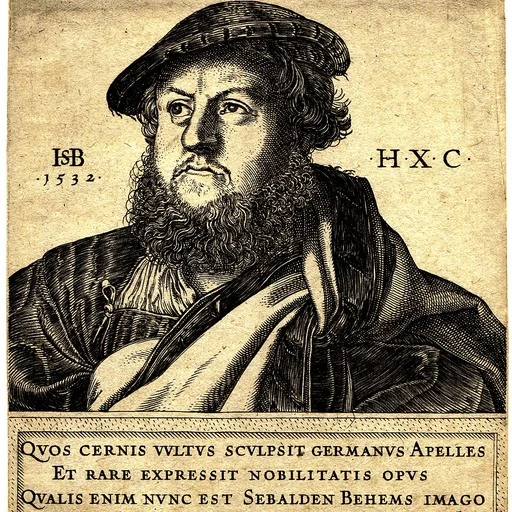
Sebald Beham (1500–1550) was a German painter and printmaker, mainly known for his very small engravings.


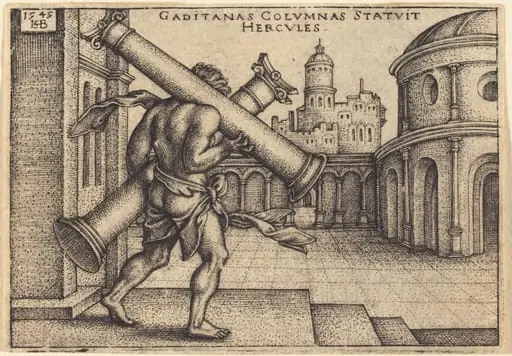
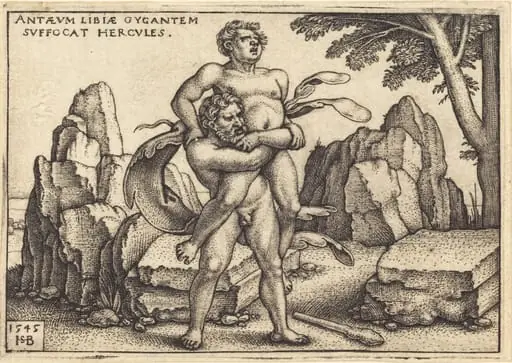 Hercules Killing Antaeus
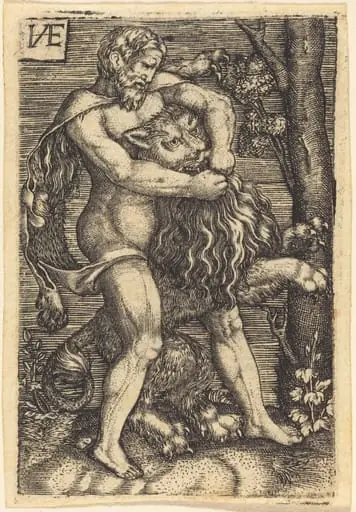 Hercules Killing the Lion
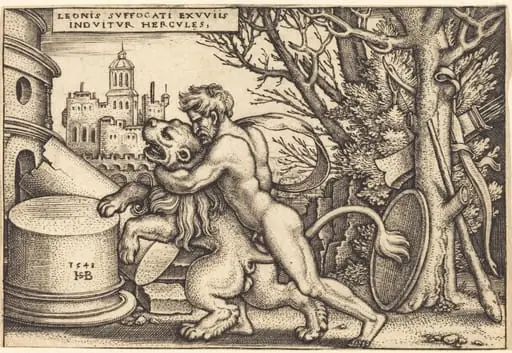 Hercules Killing the Nemean Lion
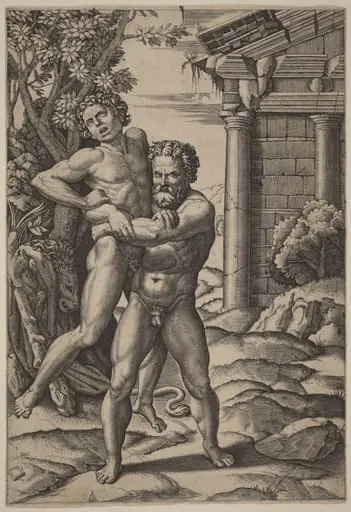 Hercules and Antaeus
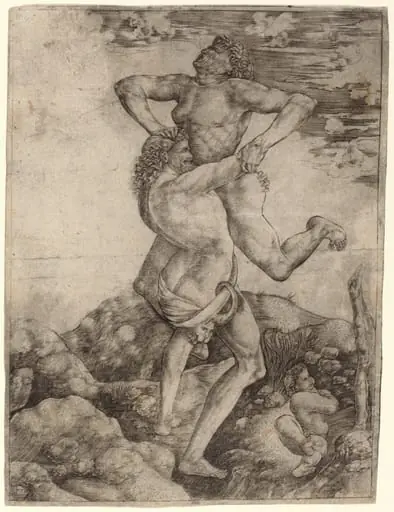 Hercules and Antaeus
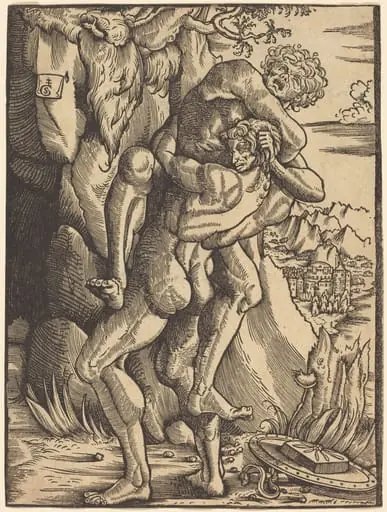 Hercules and Antaeus
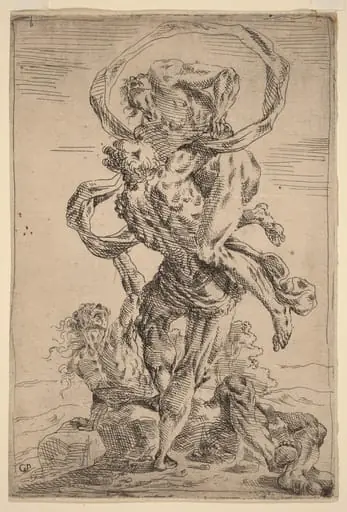 Hercules and Antaeus
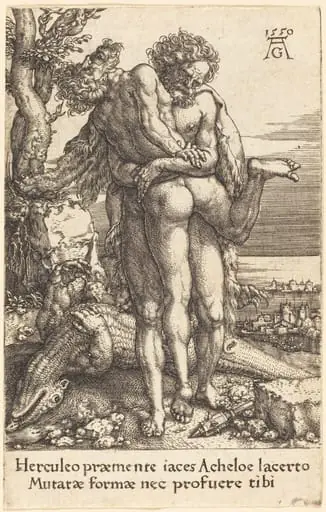 Hercules Fighting the Rivergod Achelus
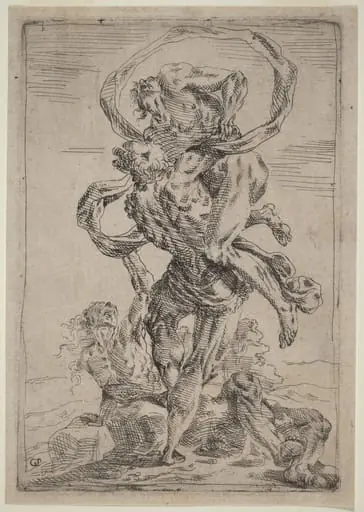 Hercules and Antaeus
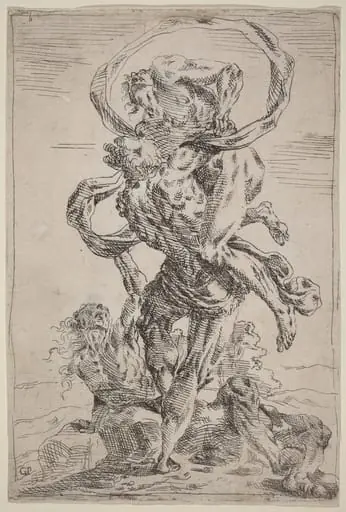 Hercules and Antaeus
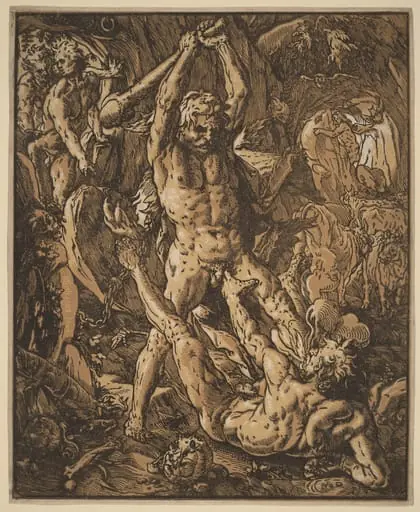 Hercules Killing Cacus
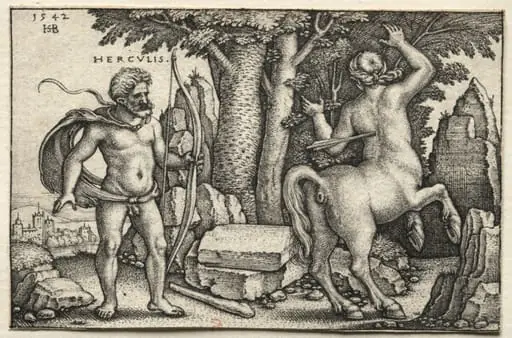 The Labors of Hercules: Hercules Shooting Nessus