Artwork
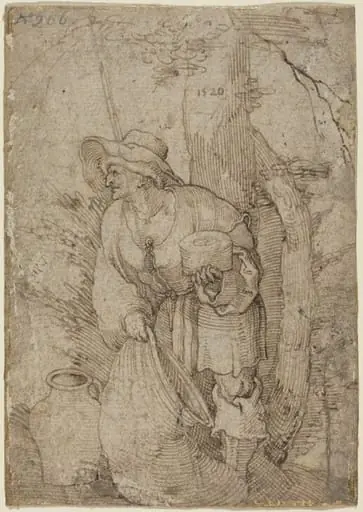
Peasant Woman at Market
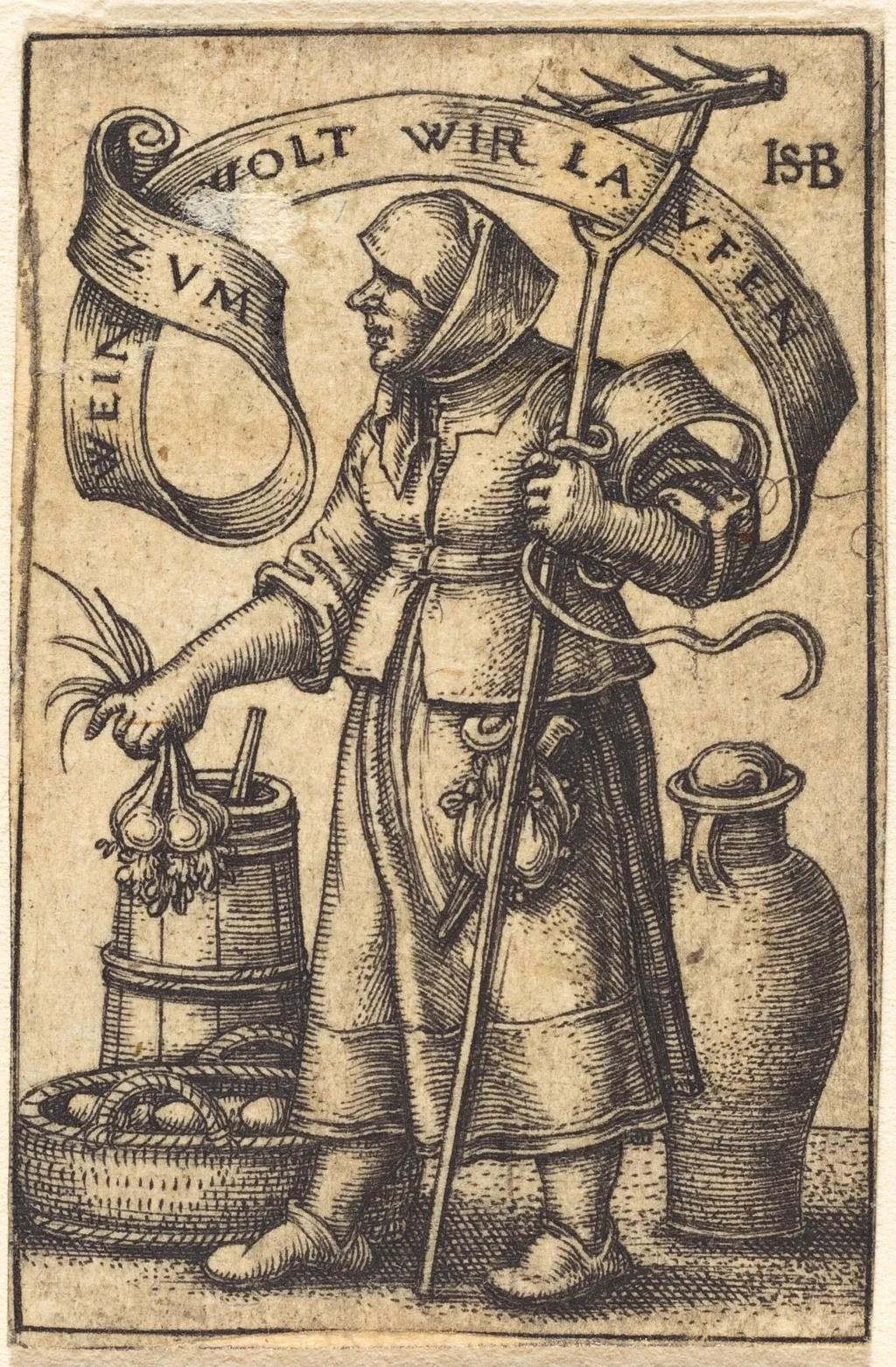
Peasant Woman at Market is an ink print by the Renaissance artist Sebald Beham. It dates from 1542 and is held in the collection of the National Gallery of Art.
About this work
Overview
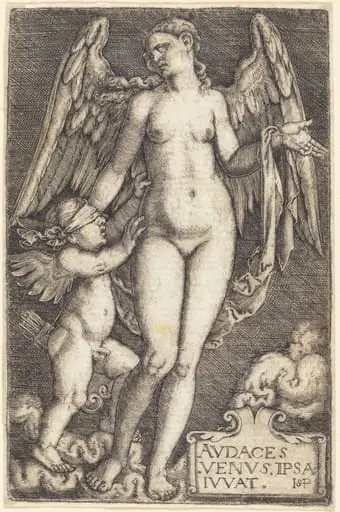
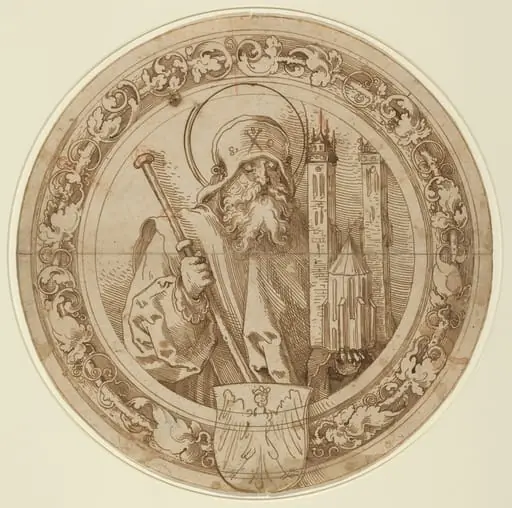
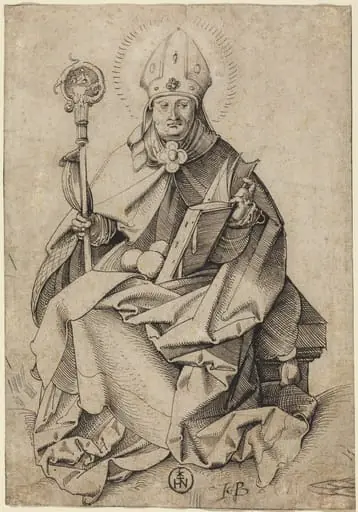
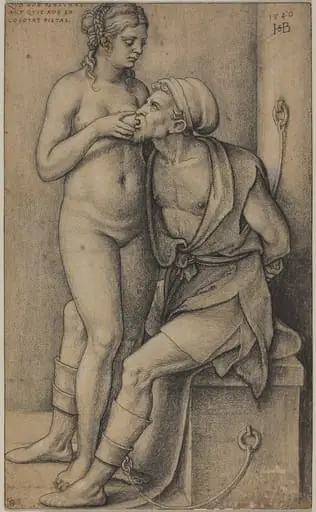
Peasant Woman at Market is an engraving created by German artist Sebald Beham around 1542. Characterized by fine detail, it exemplifies the intricate style of the 'Little Masters,' a group of German printmakers influenced by Albrecht Dürer.
Subject & Meaning
The engraving portrays a peasant woman at market, highlighting everyday life. She is depicted with a basket of onions, a large bunch of garlic, a nearby pitcher, and hat, conveying her role in daily commerce. A banner above her displays partial text ('Eva' and 'Volt Wir Laff'), which may allude to the subject’s identity or a thematic element.
Technique & Style
Executed with sharp tools, the engraving showcases Beham’s mastery of line work, typical of his detailed printmaking approach. The medium itself—engraving—emphasizes meticulous craftsmanship, distinguishing it from painting.
History & Provenance
Sebald Beham, a prolific Nuremberg-born artist, later based in Frankfurt, produced this work during his prolific career spanning hundreds of engravings, etchings, and woodcuts.
Context
Created in the mid-16th century, Peasant Woman at Market reflects the 'Little Masters' focus on small, meticulously detailed prints, situating Beham within a post-Dürer German artistic tradition.
Artist & collection
Artist
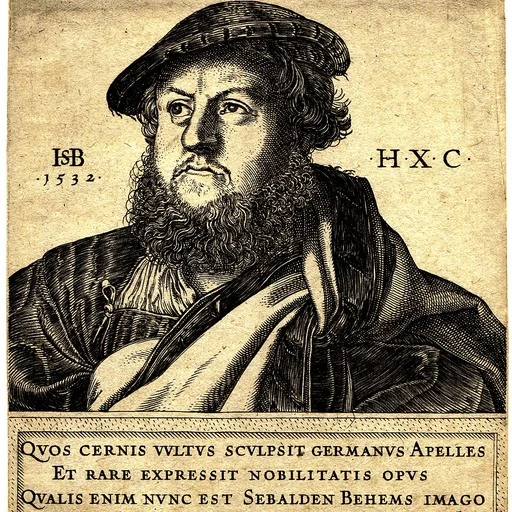
Sebald Beham (1500–1550) was a German painter and printmaker, mainly known for his very small engravings.