Artwork
Saint Barbara
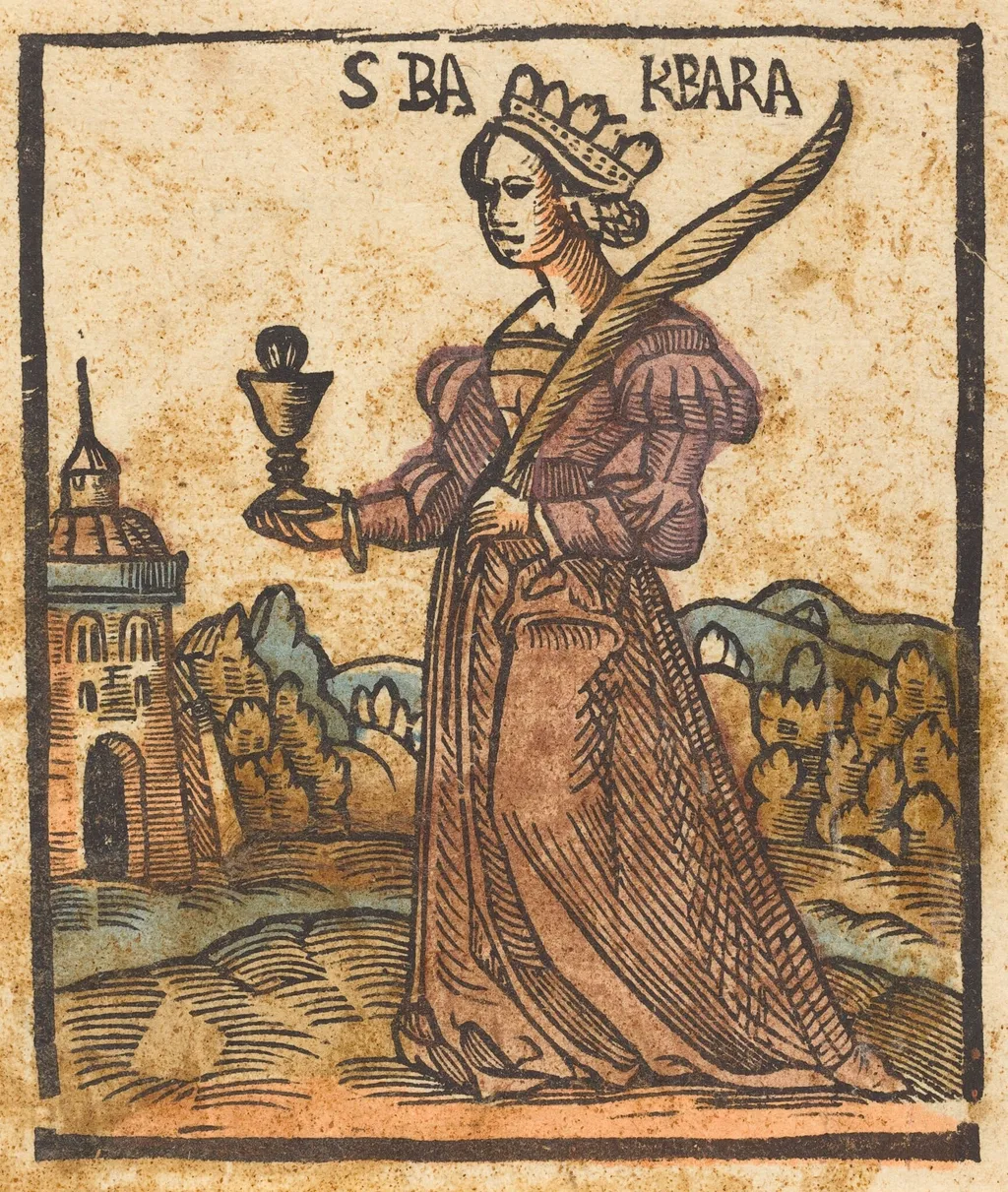
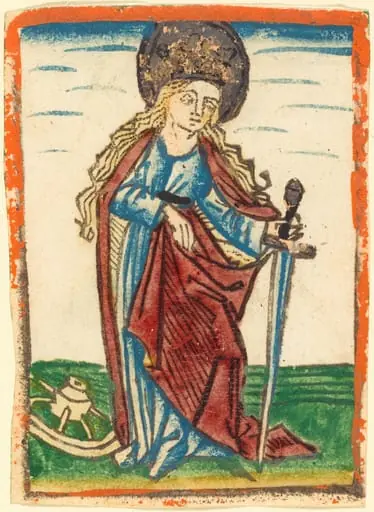
Saint Barbara is an ink print by the Renaissance artist German 15th Century. It dates from 1500 and is held in the collection of the National Gallery of Art.
About this work
Overview
The composition centers on a winged woman in a regal robe, standing before a fortified town with a church spire and figures near a river.
This hand-colored woodcut depicts Saint Barbara, a Christian martyr, rendered in ink pressed from a carved wooden block. Subtle tones of brown, lavender, and blue were applied manually after printing, enhancing the figure’s presence. The composition centers on a winged woman in a regal robe, standing before a fortified town with a church spire and figures near a river. The inscription 'S BA O K B A R A' identifies her, reflecting a common medieval abbreviation for her name.
Subject & Meaning
Saint Barbara is shown with wings, symbolizing divine protection and her ascension to heavenly grace. She holds a tower, referencing the legend that her father imprisoned her in a tower to shield her from the world. The presence of a church spire and townspeople suggests her role as a patron of those in danger, particularly linked to sudden death and fortifications. Her crown signifies her spiritual sovereignty over earthly threats.
Technique & Style
The image was produced using a woodcut technique, where lines were carved into a wooden block, inked, and pressed onto paper. The bold, linear quality of the print reflects the constraints and strengths of the medium. Hand-coloring with limited pigments—brown, lavender, and blue—adds emotional nuance without obscuring the graphic clarity. The style is schematic yet expressive, typical of late medieval devotional prints aimed at widespread distribution.
History & Provenance
This print likely originated in the late 15th or early 16th century, a period when devotional woodcuts were mass-produced for private worship. Its survival suggests it was valued by a private owner or religious community. The use of hand-coloring indicates a higher-tier production, possibly commissioned or purchased by someone of modest means seeking a personal relic. No documented ownership chain is known, but similar prints circulated widely across German-speaking regions.
Context
Saint Barbara was venerated as a protector against sudden death, especially from fire and explosions, making her popular among miners and artillerymen. Her iconography—tower, crown, and wings—became standardized in Northern European art during the late Middle Ages. This print aligns with a broader trend of portable religious imagery, used in homes and chapels to invoke divine aid, reflecting the intersection of faith, craft, and daily life before the Reformation.
Legacy
Though unsigned and unattributed, this woodcut exemplifies the accessibility of religious imagery in pre-modern Europe. Its survival offers insight into how devotional subjects were visually encoded for lay audiences. The combination of print and hand-coloring bridges the gap between mass production and personal devotion, influencing later traditions of illustrated saints in popular prints and broadsheets across Central Europe.
Artist & collection

Artist
This 15th-century German artist carved vivid religious scenes into metal and wood, then hand-painted them in bright, symbolic colors.

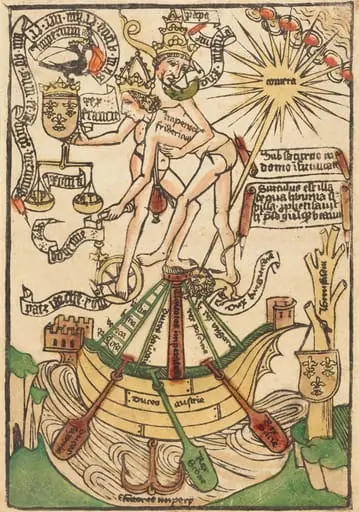 Allegory of the Meeting of Pope Paul II and Emperor Frederick III
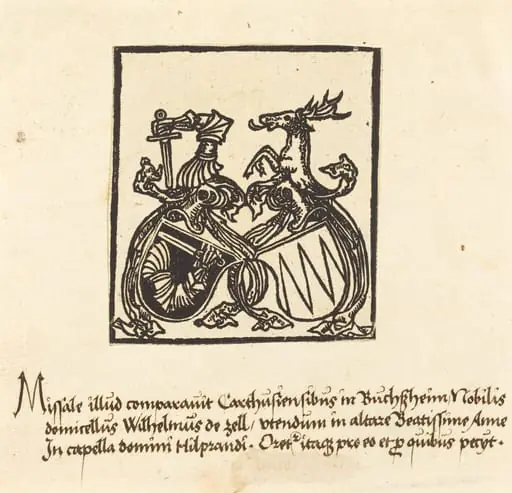 Bookplate of Wilhelm von Zell
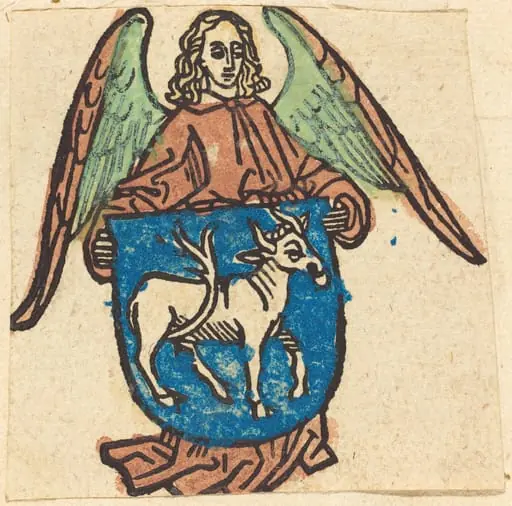 Bookplate of Hilprand Brandenburg of Bibrach
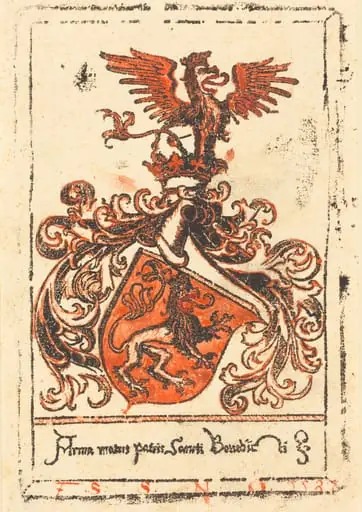 Bookplate of the Abbey of Ottobeuren
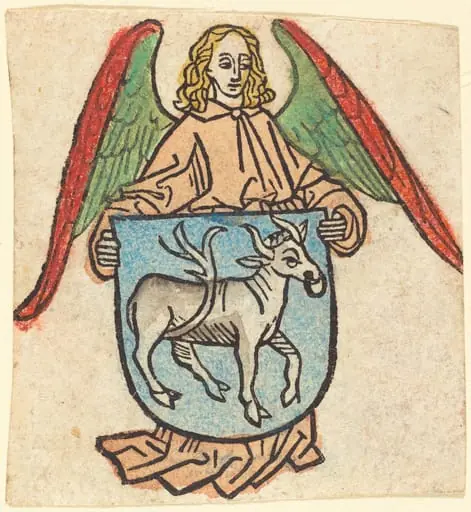 Bookplate of Hilprand Brandenburg of Bibrach
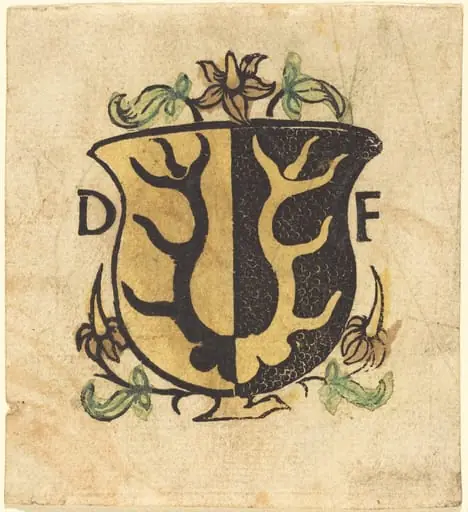 Bookplate of Dominicus Frauenfelder
![Studies for Six Figures (sheet from a model book) [recto], by German 15th Century](https://artifactworldgallery.com/img/german-15th-century--studies-for-six-figures-sheet-from-a-model-book-recto--4837429e0755bc3f-w320.webp) Studies for Six Figures (sheet from a model book) [recto]
Studies for Six Figures (sheet from a model book) [recto]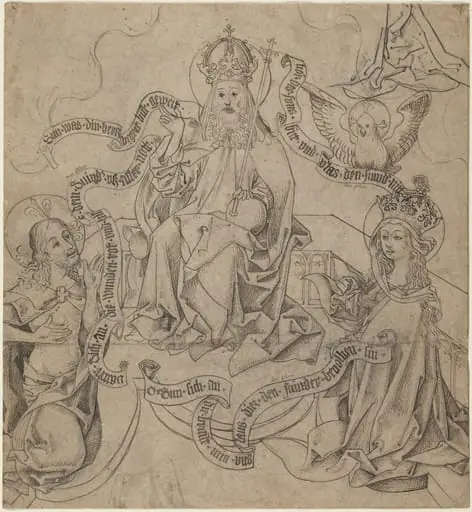 Christ and Mary Interceding with God the Father