Artwork
Temperancia (Temperance)
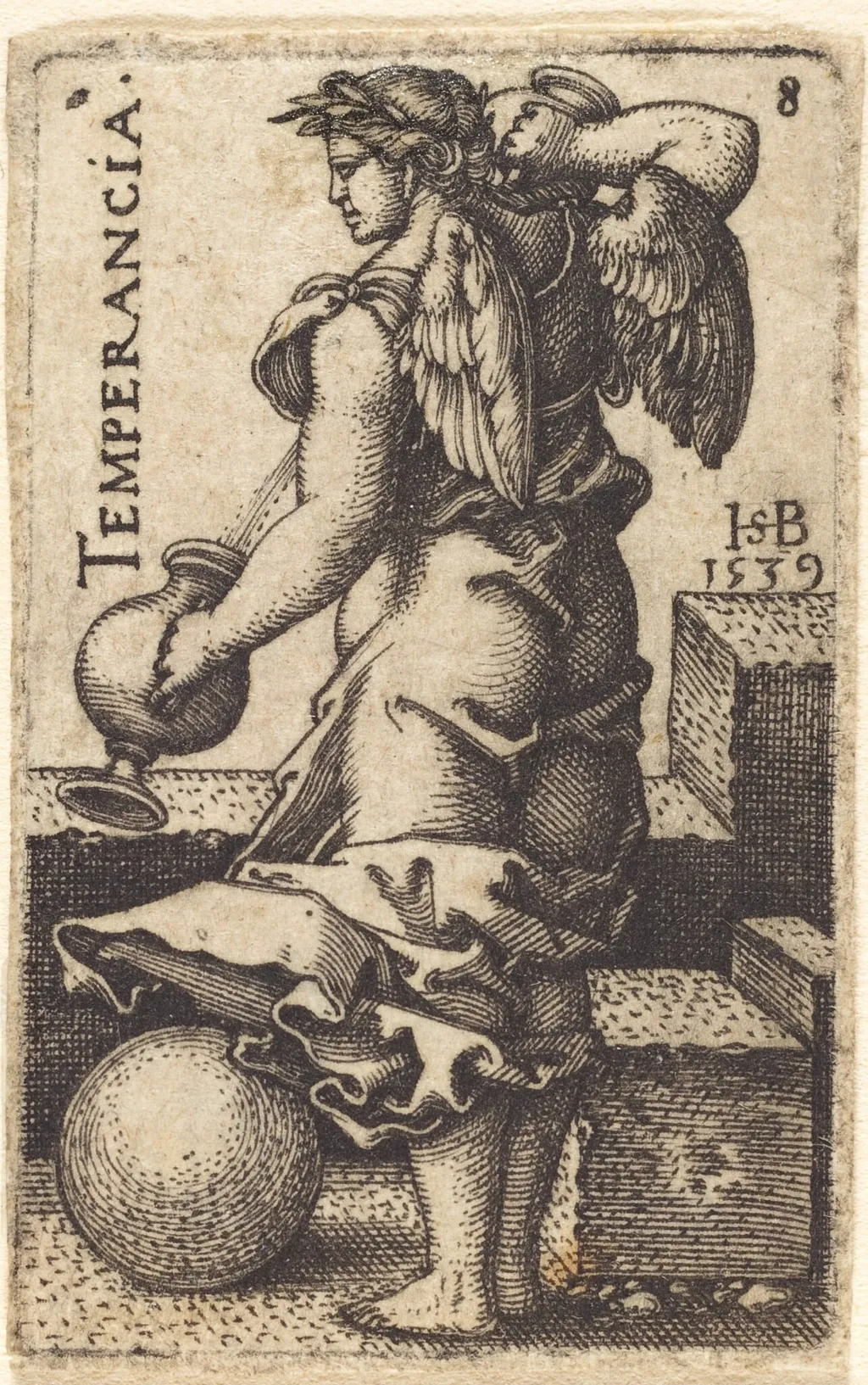
Temperancia (Temperance) is an ink print by the Renaissance artist Sebald Beham. It dates from 1539 and is held in the collection of the National Gallery of Art.
About this work
Overview
Sebald Beham’s 1539 engraving *Temperancia* presents a compact, meticulously rendered scene in black and white. The image centers on a woman transferring liquid from a jug into a bowl, observed by a winged figure holding a staff. Objects such as a barrel and a sack suggest a domestic or workshop setting, while the title points to an allegorical interpretation.
Subject & Meaning
The composition juxtaposes everyday labor with a moralizing theme. The act of pouring, performed by the female figure, is overseen by the winged attendant, traditionally associated with virtues. The title, the Spanish term for temperance, signals that the work functions as a visual reminder of self‑restraint and moderation, using a familiar kitchen scene to convey ethical instruction.
Technique & Style
Executed as an intaglio engraving, Beham incised fine lines into a copper plate, achieving a high level of detail within a modest format. The print exemplifies the “Little Masters” approach: precise, densely packed imagery rendered at a scale suitable for private collection. Contrast between light and shadow is created through varied hatching, enhancing the three‑dimensional illusion of objects.
History & Provenance
The work reflects the post‑Dürer German print market, which favored affordable, highly finished images for a burgeoning middle‑class audience.
Sebald Beham, a native of Nuremberg, produced *Temperancia* early in his career before relocating to Frankfurt, where he continued to specialize in small prints. The work reflects the post‑Dürer German print market, which favored affordable, highly finished images for a burgeoning middle‑class audience. Surviving copies are held in several European museum collections, attesting to its circulation in the 16th‑century print trade.
Context
The engraving belongs to a broader wave of moralizing genre scenes popular in Northern Renaissance art. By embedding an ethical lesson within a domestic tableau, Beham aligns with contemporary humanist ideals that linked everyday conduct to virtuous living. The presence of a winged figure also echoes earlier allegorical conventions, bridging classical symbolism with the emerging Protestant emphasis on personal discipline.
Artist & collection
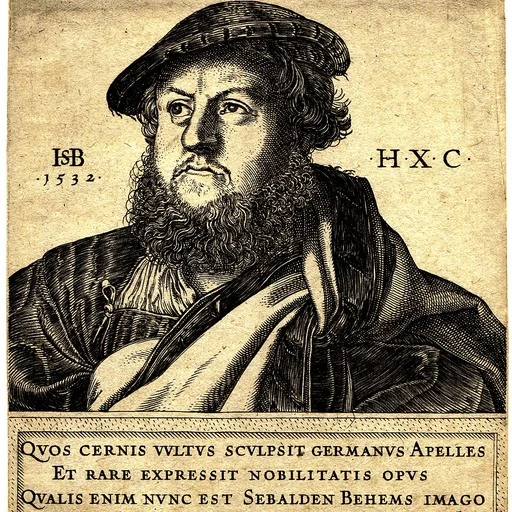
Artist
Sebald Beham (1500–1550) was a German painter and printmaker, mainly known for his very small engravings.


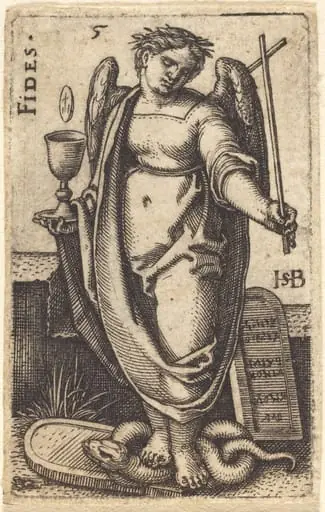 Fides (Faith)
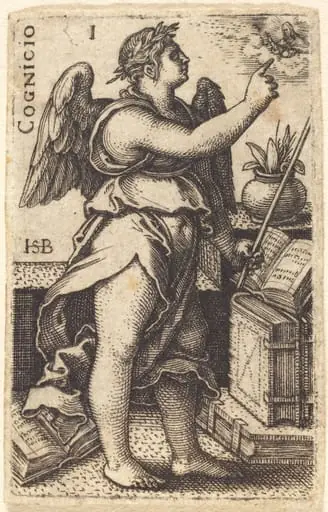 Cognicio (Cognition)
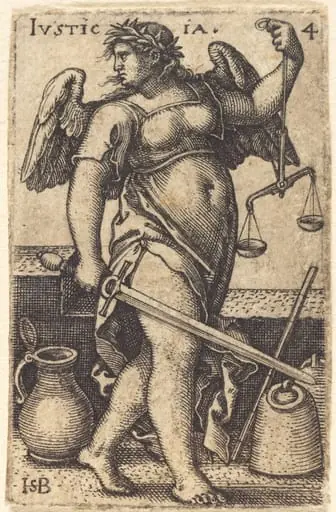 Justicia (Justice)
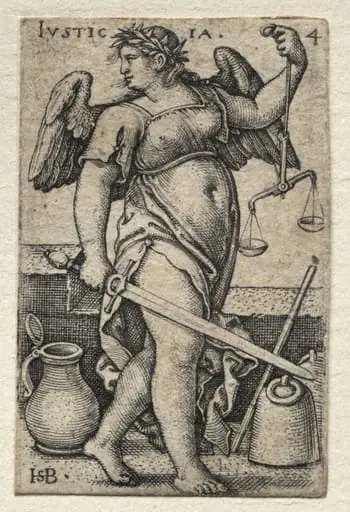 The Knowledge of God and the Seven Cardinal Virtues: Justice - Justicia
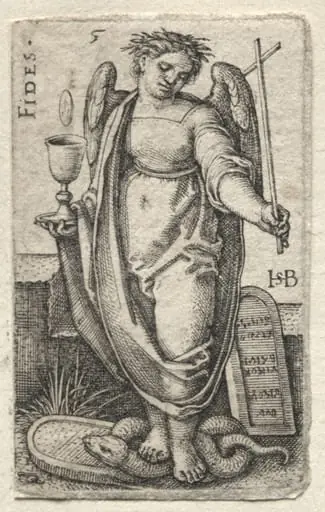 The Knowledge of God and the Seven Cardinal Virtues: Fidelity - Fides
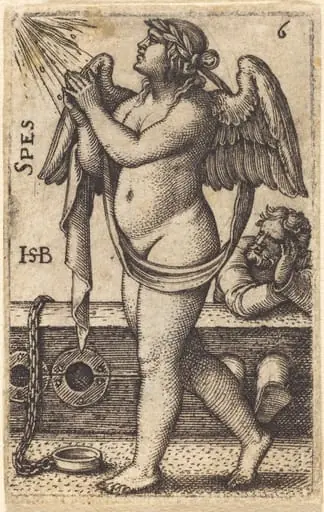 Spes (Hope)
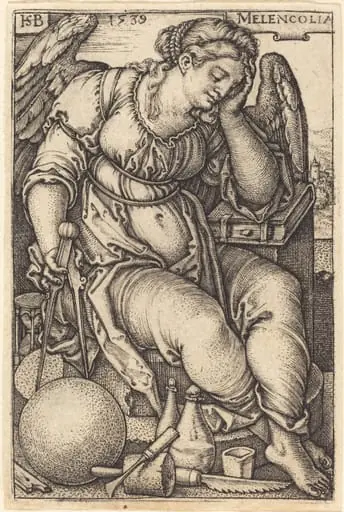 Melencolia (Melancholy)
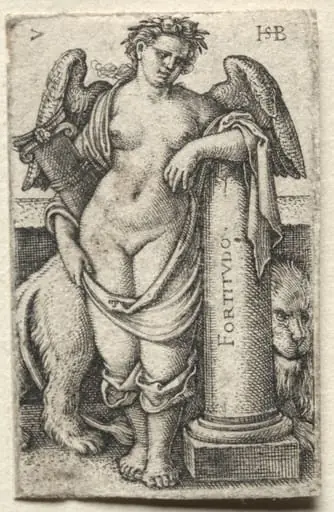 The Knowledge of God and the Seven Cardinal Virtues: Fortitude - Fortitudo
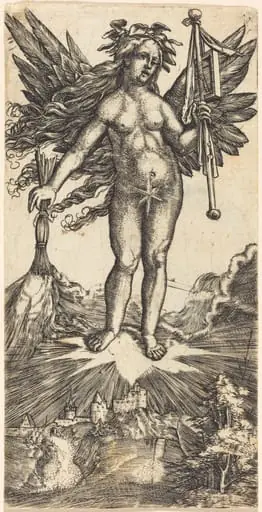 Winged Woman on a Star
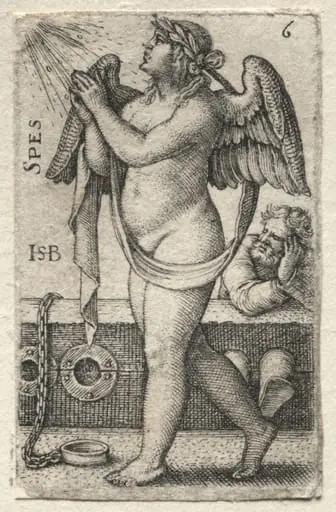 The Knowledge of God and the Seven Cardinal Virtues: Hope - Spes