Artwork
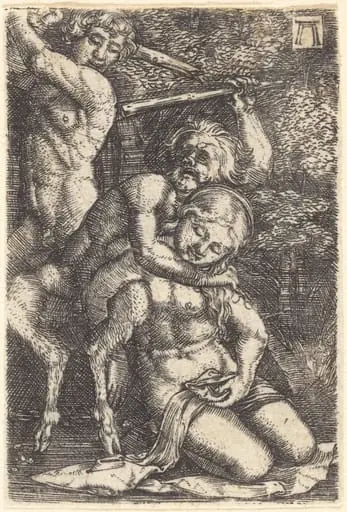
Fighting Beggars
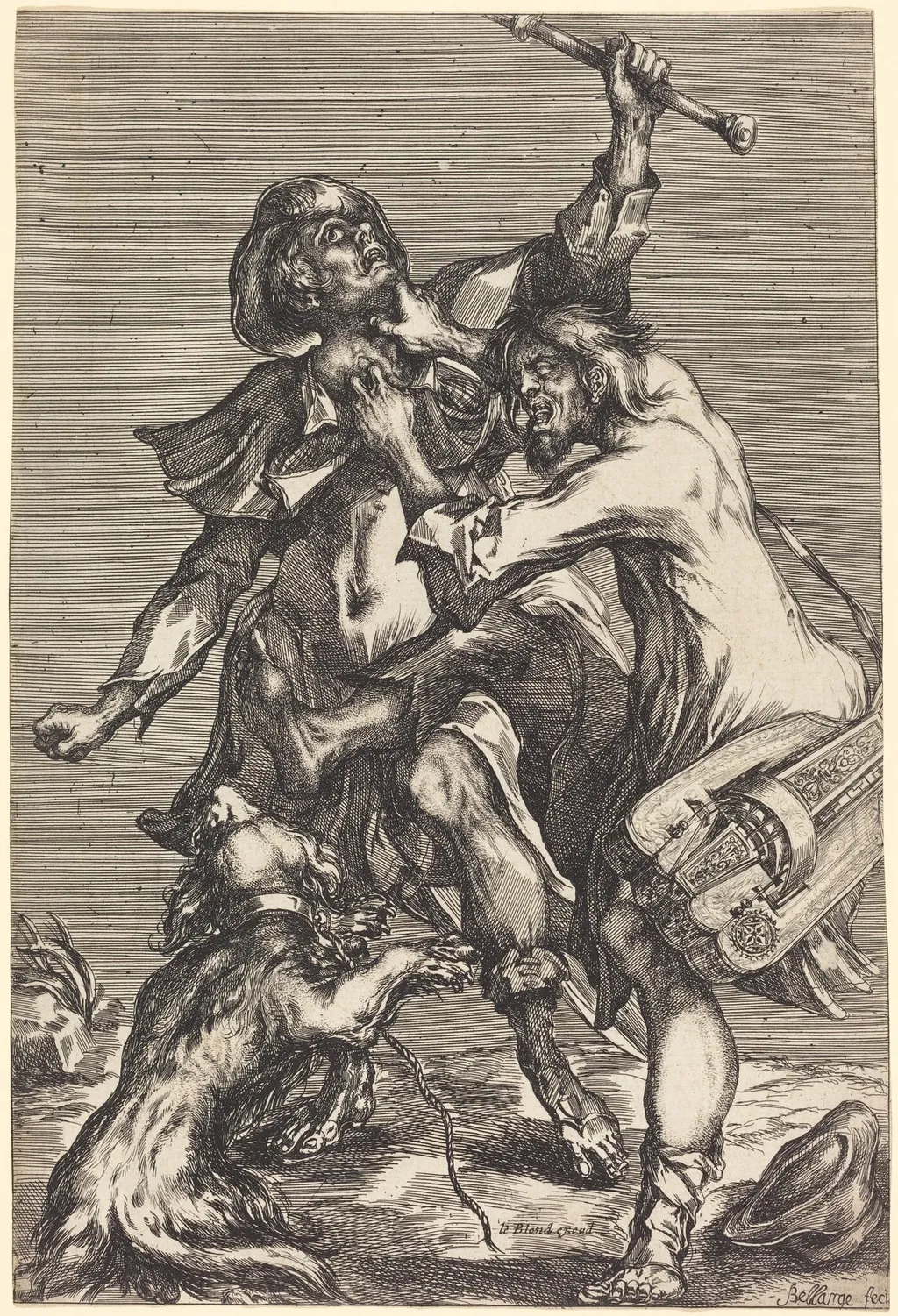
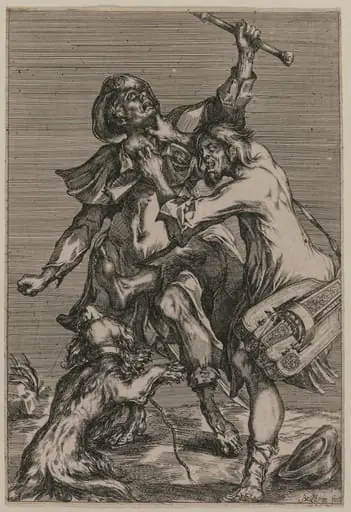
Fighting Beggars is an ink print by the Renaissance artist Jacques Bellange. It dates from 1605 and is held in the collection of the National Gallery of Art.
About this work
Overview
Jacques Bellange’s 1605 etching *Fighting Beggars* presents a violent encounter between two ragged figures, one wielding a club and the other a sword, while a dog bites at one combatant’s leg. The scene unfolds against a muted rural landscape, emphasizing the chaos and desperation of the struggle.
Subject & Meaning
The composition captures a moment of raw conflict, likely intended as an allegorical or moral illustration of human aggression and survival. The disheveled attire and fierce expressions suggest poverty and desperation, while the attacking dog intensifies the sense of danger and disorder.
Technique & Style
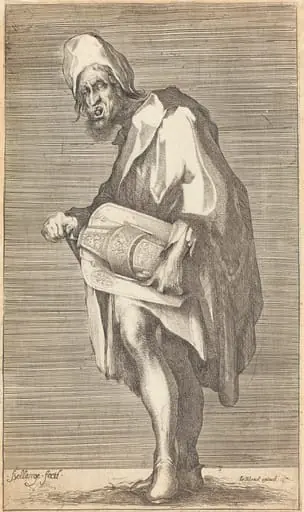
Executed in fine etching, Bellange employs intricate line work and cross‑hatching to render texture in clothing, flesh, and the surrounding terrain. The sharp contrasts and exaggerated gestures reflect the Northern Mannerist aesthetic that characterizes his late‑career prints, emphasizing drama over naturalism.
History & Provenance
Bellange, a court painter from Nancy in the Duchy of Lorraine, produced a limited series of prints in the final years of his life, of which *Fighting Beggars* is a representative example. The work has been documented in collections of early 17th‑century French prints and remains a key piece for studying his brief but influential printmaking output.
Context
Created during a period when religious and allegorical subjects dominated visual culture, the etching reflects contemporary concerns with moral instruction and the depiction of human folly. Bellange’s Northern Mannerist approach aligns him with artists who favored stylized forms and heightened emotional expression.
Artist & collection
Artist
Jacques Bellange (c. 1575–1616) was an artist and printmaker from the Duchy of Lorraine (then independent but now part of France) whose etchings and some drawings are his only securely identified works today. They are…