Artwork
The Road to Calvary
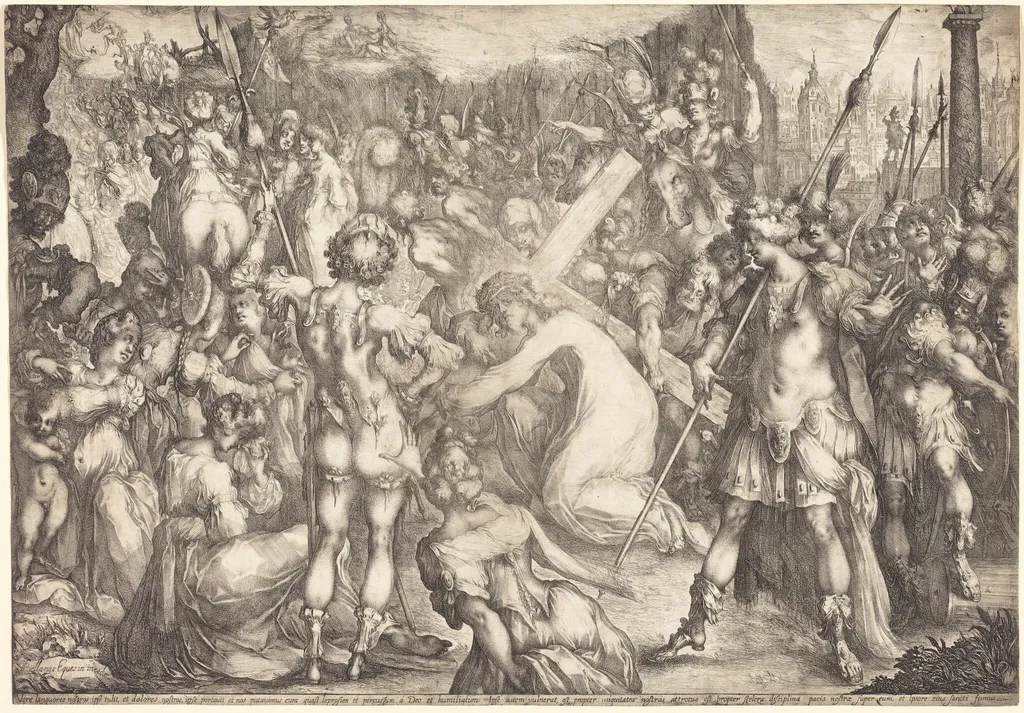
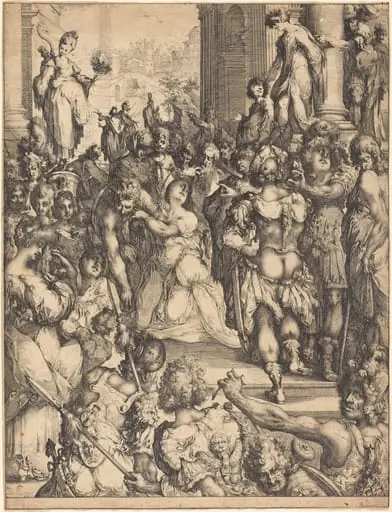
The Road to Calvary is an ink print by the Renaissance artist Jacques Bellange. It dates from 1605 and is held in the collection of the National Gallery of Art.
About this work
Overview
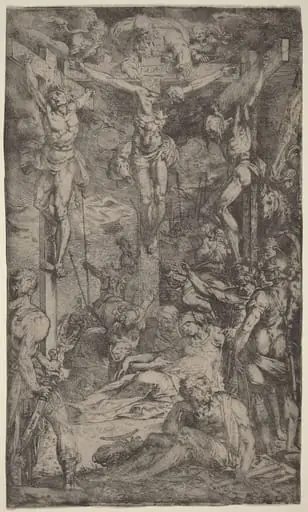
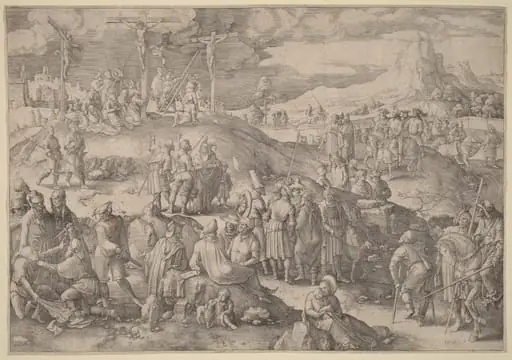
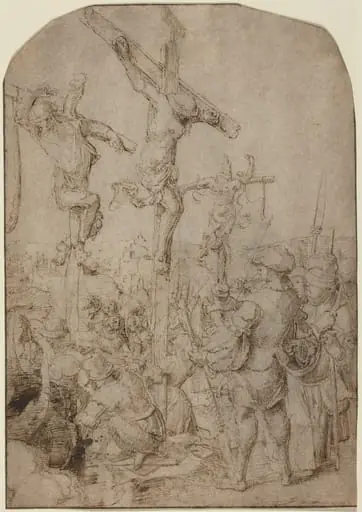
Jacques Bellange’s *The Road to Calvary* is an early‑17th‑century etching that portrays the biblical episode of Christ’s journey to his crucifixion.
Jacques Bellange’s *The Road to Calvary* is an early‑17th‑century etching that portrays the biblical episode of Christ’s journey to his crucifixion. Executed on a metal plate, the print presents a densely populated scene in stark black‑and‑white, where figures bearing crosses intermingle with armed men, horses, and a distant cityscape. The composition is marked by vigorous, irregular lines that convey a sense of agitation and movement.
Subject & Meaning
The image interprets the Passion narrative by emphasizing the chaotic atmosphere surrounding Christ’s procession. Bellange populates the foreground with a multitude of individuals—some kneeling, others falling, many armed—suggesting the turmoil of a world caught in the moment of sacrifice. The juxtaposition of religious symbols with contemporary weaponry hints at a broader commentary on the intersection of spiritual suffering and earthly conflict.
Technique & Style
Created through the etching process, Bellange incised the design into a copper plate, producing rough, scratchy lines that translate into a textured surface on paper. This method allows for fine detail while preserving a raw, almost frantic energy. The work exemplifies Northern Mannerist tendencies: elongated figures, exaggerated poses, and a complex, crowded composition that heightens visual intensity.
History & Provenance
Bellange, a court painter for the Dukes of Lorraine, likely produced this print around 1605 while based in Nancy. Although most of his surviving prints date from the final years of his life (1613‑1616), *The Road to Calvary* stands among his earlier output. The work has passed through several European collections before entering a public museum, where it is catalogued as a representative example of his printmaking.
Context
The early 1600s in Lorraine were marked by a strong Catholic identity, and court artists such as Bellange were often commissioned to create devotional imagery. This print reflects that climate, merging a traditional biblical scene with the artist’s personal, highly stylized visual language. Its dramatic rendering aligns with contemporary Counter‑Reformation efforts to evoke emotional engagement with sacred narratives.
Own this work as a print
Artist & collection
Artist
Jacques Bellange (c. 1575–1616) was an artist and printmaker from the Duchy of Lorraine (then independent but now part of France) whose etchings and some drawings are his only securely identified works today. They are…