Artwork
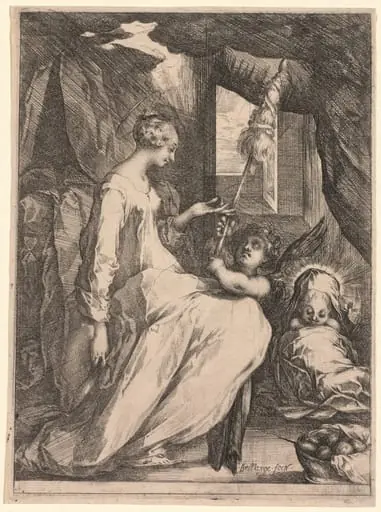
The Madonna Spinning
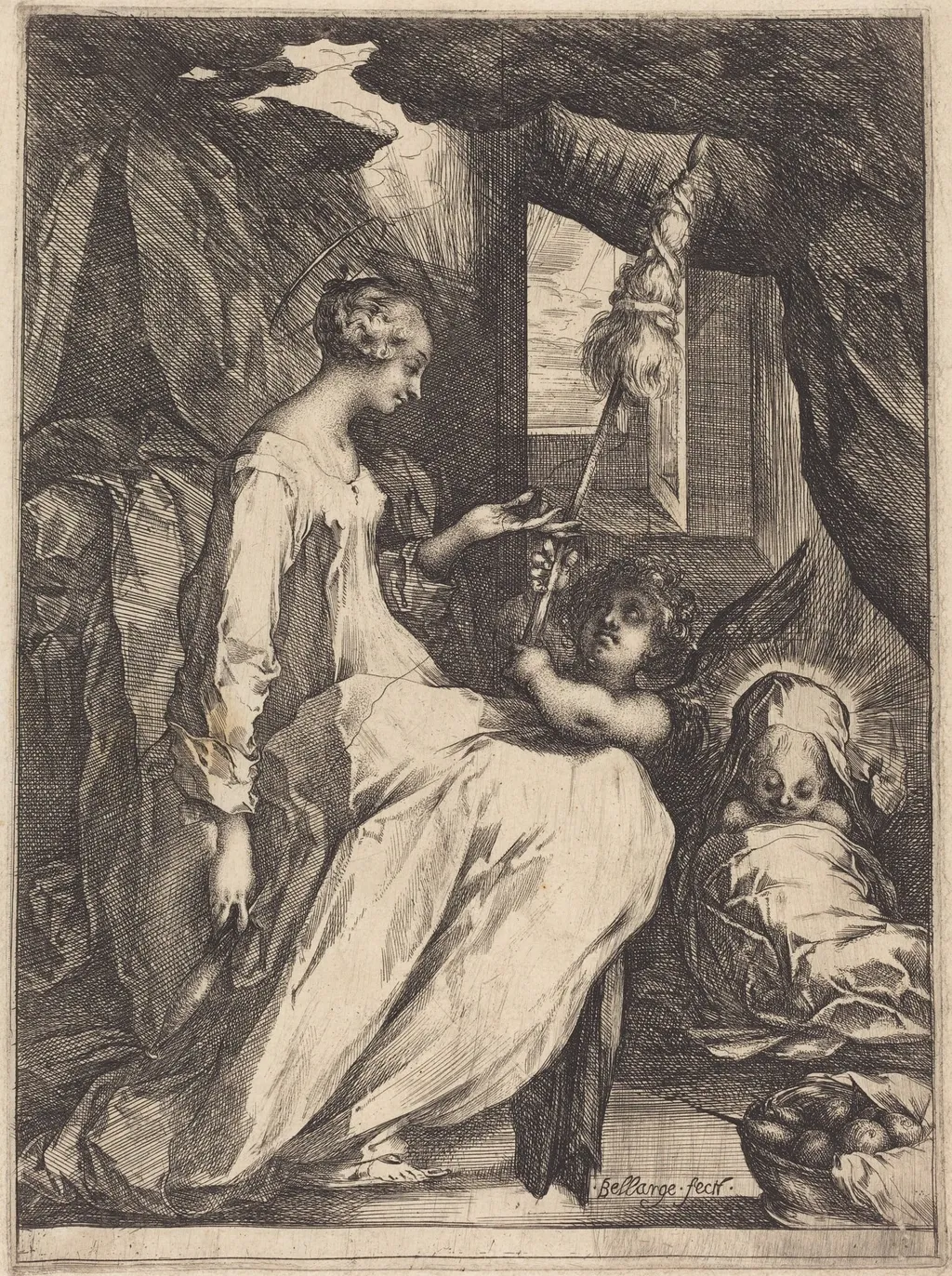
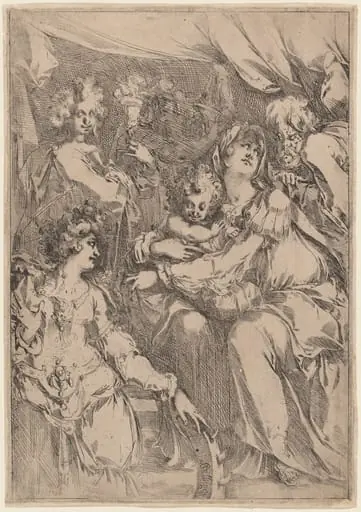
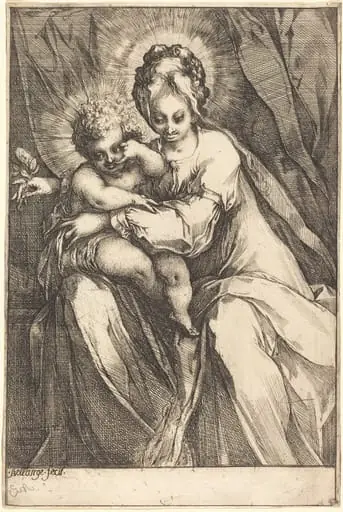
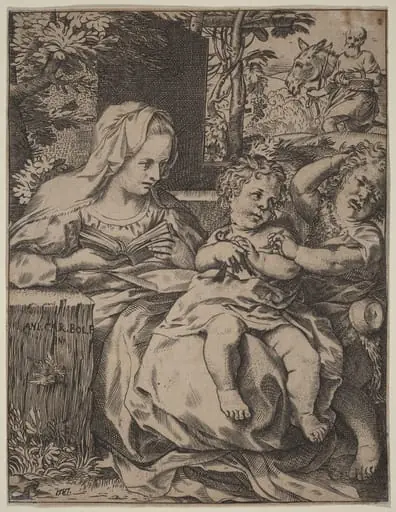
The Madonna Spinning is an ink print by the Baroque artist Jacques Bellange. It dates from 1615 and is held in the collection of the National Gallery of Art.
About this work
Overview
The Madonna Spinning is a 1615 etching by Jacques Bellange, a court painter to the Dukes of Lorraine, created during the last years of his life. Characterized by a distinct Northern Mannerist style, this religious print reflects the Catholic themes prevalent in his late-period works.
Subject & Meaning
The print depicts a serene religious scene of a woman, identified as the Madonna, sitting on a rock with a spindle, accompanied by a sleeping infant and a kneeling figure in the background, conveying a quiet, contemplative atmosphere.
Technique & Style
Bellange employed etching to achieve sharp lines, emphasizing textured details in the woman's loosely draped clothing and the rugged rock, exemplifying his mastery of the medium in capturing intricate, high-contrast visuals.
History & Provenance
Created in 1615, near the end of Bellange's life (c. 1575-1616), the etching is part of his prolific late output of religious prints, distinguished by their Northern Mannerist characteristics.
Context
Produced within the Duchy of Lorraine, the work reflects the region's strong Catholic influences, with Bellange's style blending Northern European artistic tendencies with the devout themes of his patronage.
Legacy
While specific long-term impacts of *The Madonna Spinning* are not detailed, it contributes to the understanding of late Northern Mannerism in printmaking and Bellange's unique contribution to religious art in early 17th-century Europe.
Artist & collection
Artist
Jacques Bellange (c. 1575–1616) was an artist and printmaker from the Duchy of Lorraine (then independent but now part of France) whose etchings and some drawings are his only securely identified works today. They are…