Artwork
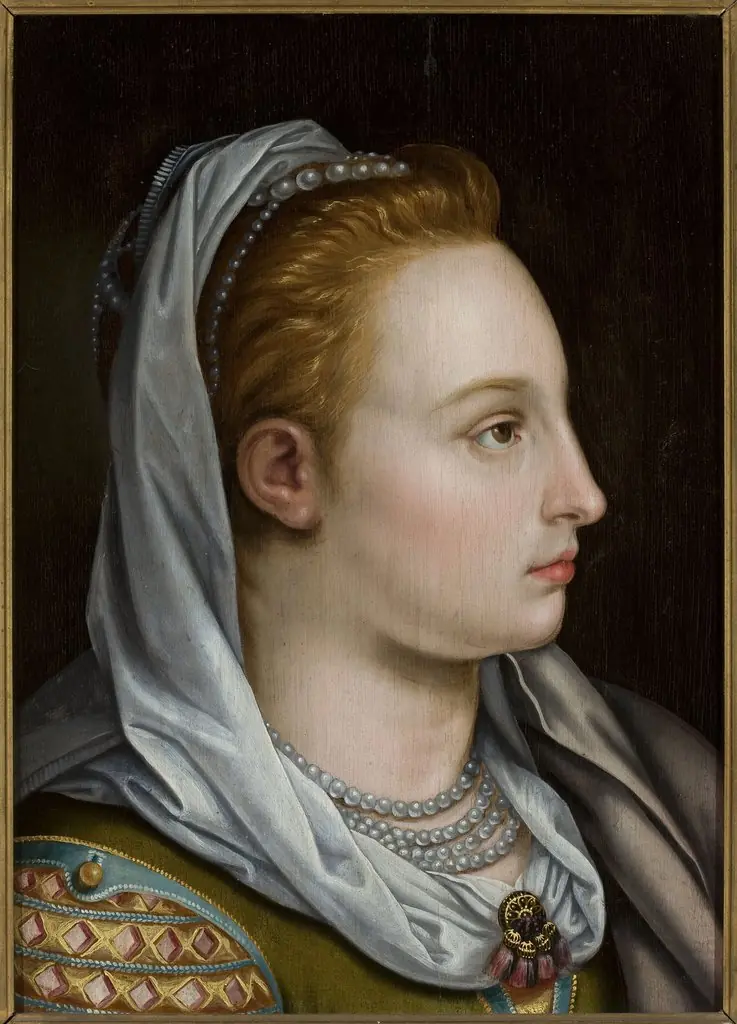
Head of a woman with eyes looking up
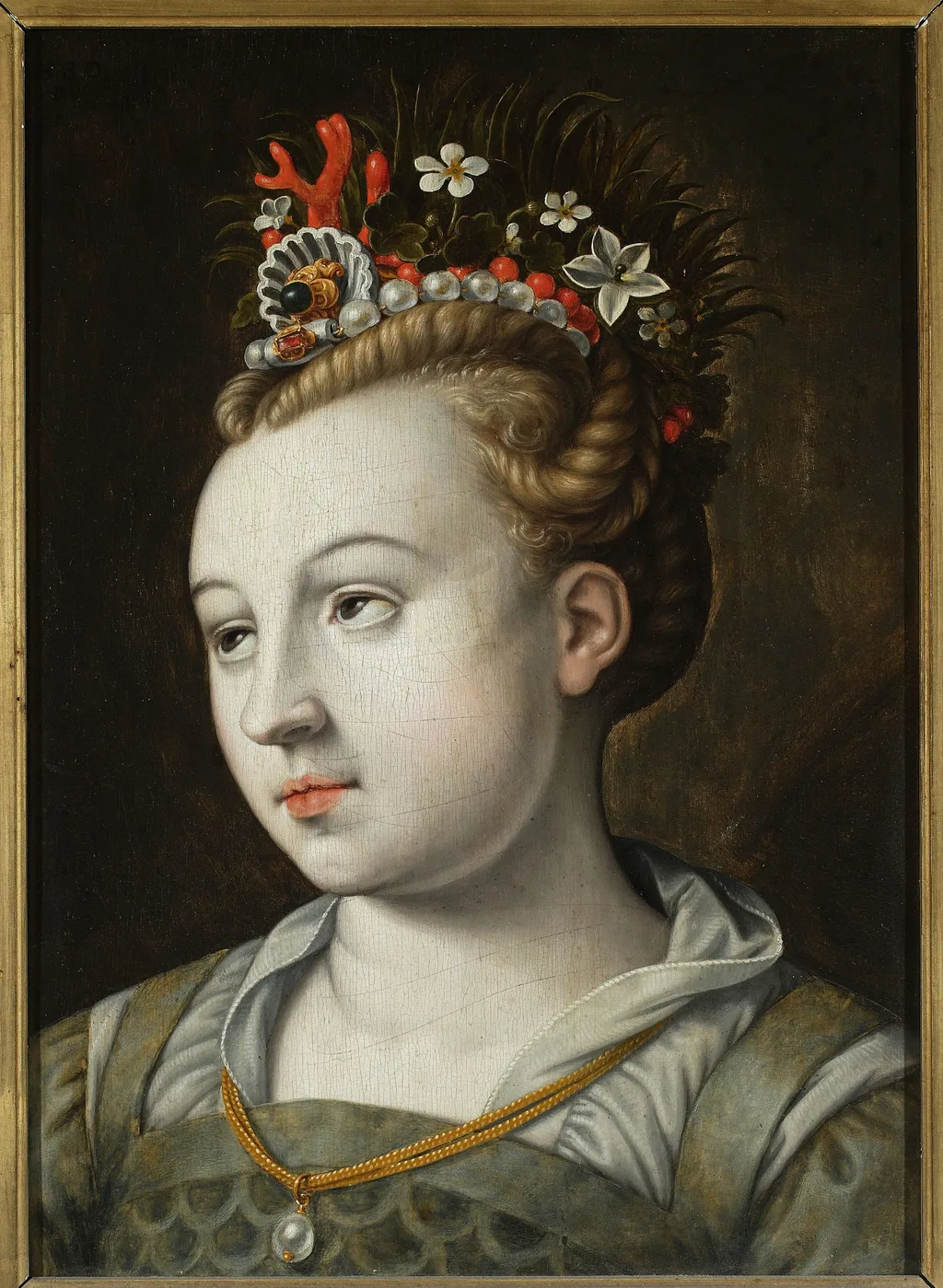
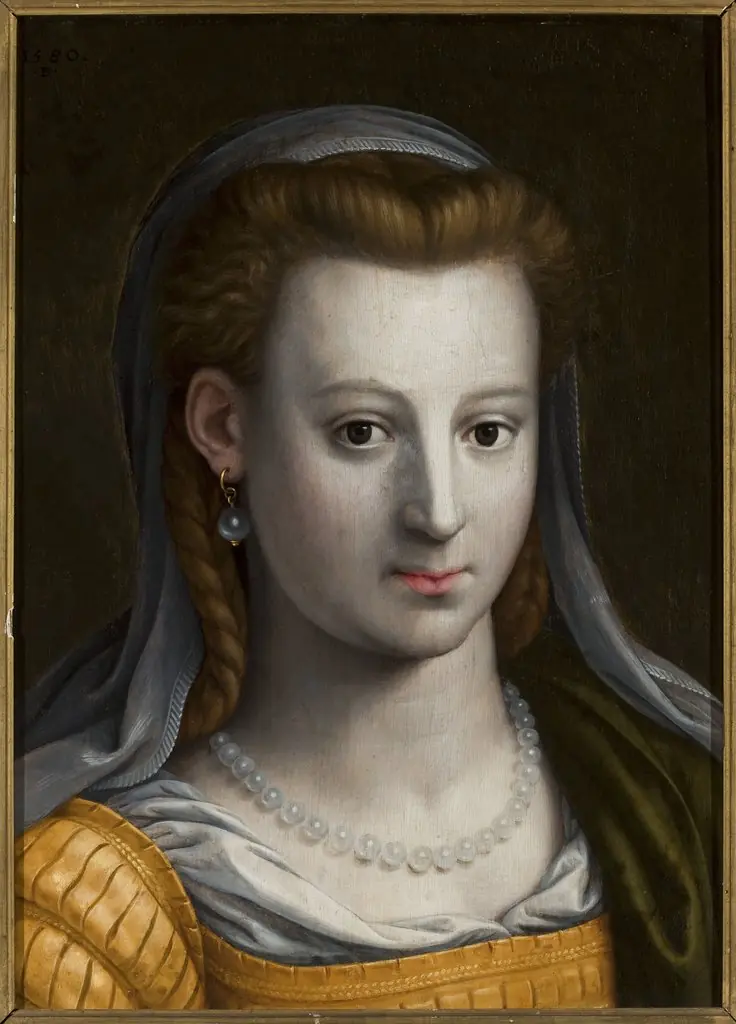
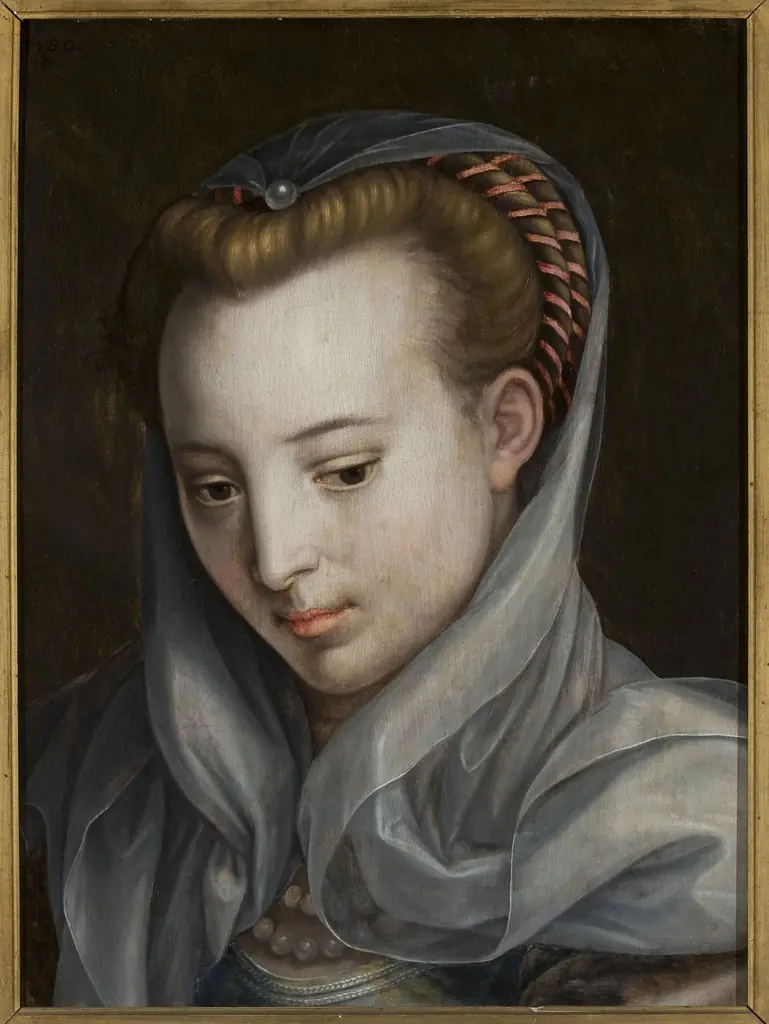
Head of a woman with eyes looking up is an oil painting by the Mannerist artist Bernaert de Rijckere. It dates from 1590 and is held in the collection of the National Museum in Warsaw. This oil painting, dated around 1590, depicts a woman’s head in profile, turned slightly to the right with her gaze directed upward.
About this work
Overview
This oil painting, dated around 1590, depicts a woman’s head in profile, turned slightly to the right with her gaze directed upward. Executed by Bernaert de Rijckere, it is a small-scale portrait notable for its restrained composition and intimate focus. The work resides in the National Museum in Warsaw, where it is preserved as an example of late 16th-century Northern European portraiture.
Subject & Meaning
The subject is a woman of modest attire, her expression calm and inward. Her upward gaze suggests reflection, prayer, or quiet devotion, common themes in devotional portraiture of the period. The absence of identifying symbols or elaborate background emphasizes her inner state over social status, inviting contemplation rather than narrative.
Technique & Style
The artist employs subtle gradations of tone to model the face, using soft transitions between light and shadow to define the contours of the brow, cheek, and chin. Hair is tightly bound and rendered with fine brushwork, while the dark dress merges into the background, isolating the face. The handling reflects a Northern tradition of meticulous detail and restrained chromatic range.
History & Provenance
The painting entered the collection of the National Museum in Warsaw in the early 20th century, though its earlier ownership remains undocumented. It has been consistently attributed to Bernaert de Rijckere based on stylistic parallels with his known works. No significant restoration or alteration has been recorded, preserving its original surface and tonal integrity.
Context
Created during the late Renaissance, this portrait aligns with the Northern European trend of intimate, psychologically nuanced depictions of individuals, often women, in private moments. Unlike grand courtly portraits, it avoids ostentation, reflecting a growing interest in personal piety and quiet dignity among the urban middle classes in the Low Countries.
Legacy
Though not widely exhibited, the painting contributes to scholarly understanding of small-format portraiture in the late 1500s. Its quiet intensity exemplifies how artists conveyed inner life through minimal means, influencing later generations who valued psychological depth over external grandeur in figurative work.
Artist & collection