Artwork
Laundry (La Lessive)
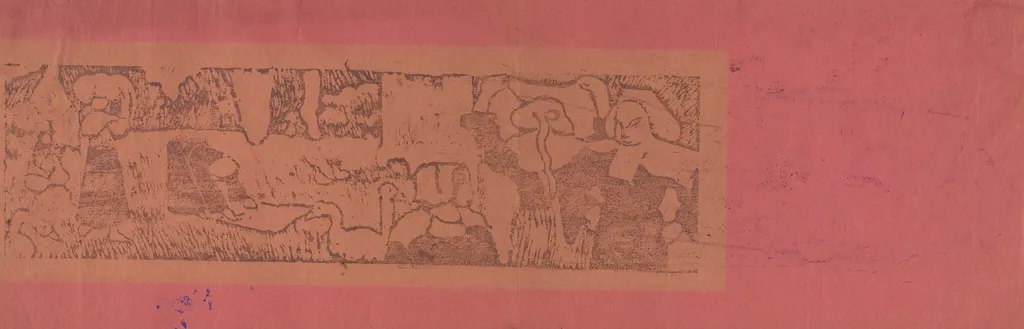
Laundry (La Lessive) is an ink print by the Impressionist artist Émile Bernard. It dates from 1889 and is held in the collection of the National Gallery of Art.
About this work
Overview
The choice of colored paper as a ground was unconventional, integrating tone into the composition rather than treating it as mere background.
Created in 1889, *Laundry (La Lessive)* is a woodcut print by French artist Émile Henri Bernard on dark pink wove paper. It belongs to a brief but significant phase in his career when he explored printmaking alongside painting, producing works that reflected his engagement with Post-Impressionist innovations. The choice of colored paper as a ground was unconventional, integrating tone into the composition rather than treating it as mere background.
Subject & Meaning
The scene depicts a bustling urban street during daily activity—figures walk, ride horses, and move between buildings, suggesting ordinary life in a French town. There is no single focal point; instead, the composition captures the rhythm of public space. The title hints at domestic labor, yet the image emphasizes communal movement, subtly linking private routines with the public sphere without overt narrative.
Technique & Style
Bernard employed woodcut printing, carving lines into a wooden block to create bold, simplified forms. The dark pink paper serves as a mid-tone base, reducing the need for full shading and enhancing the flatness of the design. Edges are sharp, forms are reduced to essential contours, and light is suggested through contrast rather than gradation—hallmarks of Cloisonnism, which prioritized structural clarity over naturalism.
History & Provenance
Bernard produced this print during a period of intense artistic exchange with Gauguin and van Gogh, who were also experimenting with non-traditional techniques. Though not widely exhibited in his lifetime, *Laundry* survives as part of a small body of his printed work, likely circulated among avant-garde circles. Its survival in private and institutional collections reflects its role as a quiet but deliberate contribution to late 19th-century print reform.
Context
In 1889, Bernard was moving away from Impressionist spontaneity toward structured, symbolic compositions. His woodcuts emerged alongside the broader Symbolist interest in simplification and emotional resonance over realism. The use of colored paper aligned with contemporary experiments in Japanese prints and the Nabis’ decorative aesthetics, positioning his work at the intersection of tradition and modernity in French art.
Legacy
Though less known than his paintings, Bernard’s woodcuts influenced later artists exploring the expressive potential of printmaking. *Laundry* exemplifies how early modernists used technical constraints—like the woodcut’s bold lines—to distill visual experience into essential forms. Its restrained palette and quiet dynamism anticipate the formal economy of 20th-century graphic art, quietly expanding the boundaries of the medium.
Artist & collection
Artist
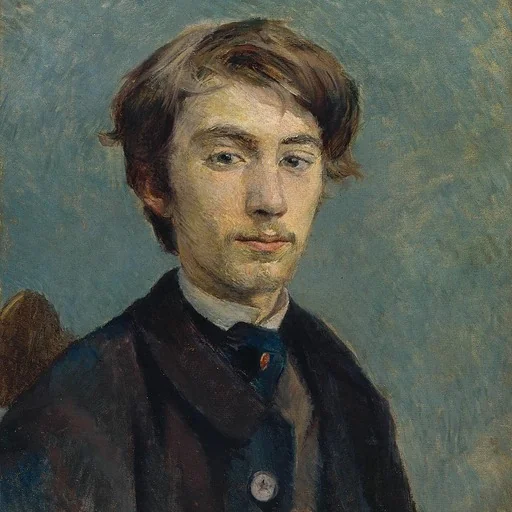
Émile Henri Bernard (French pronunciation: ; 28 April 1868 – 16 April 1941) was a French Post-Impressionist painter and writer, who had artistic friendships with Vincent van Gogh, Paul Gauguin and Eugène Boch, and at a later time, Paul…

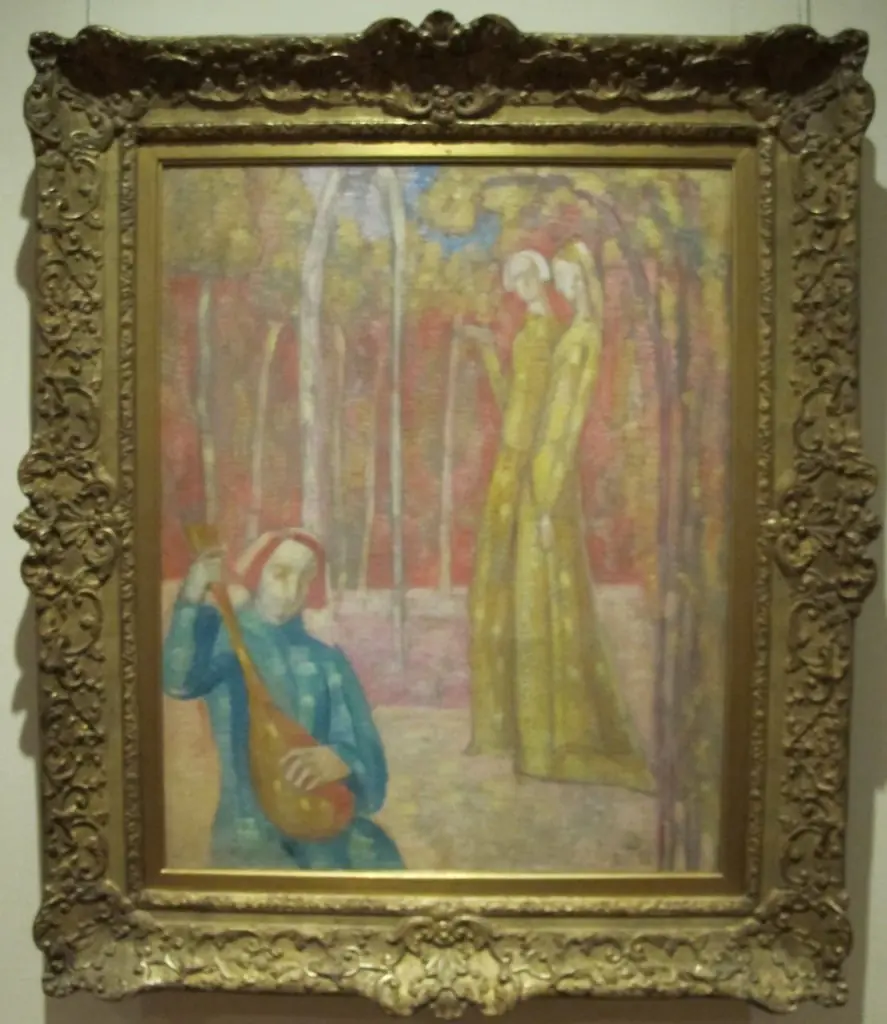
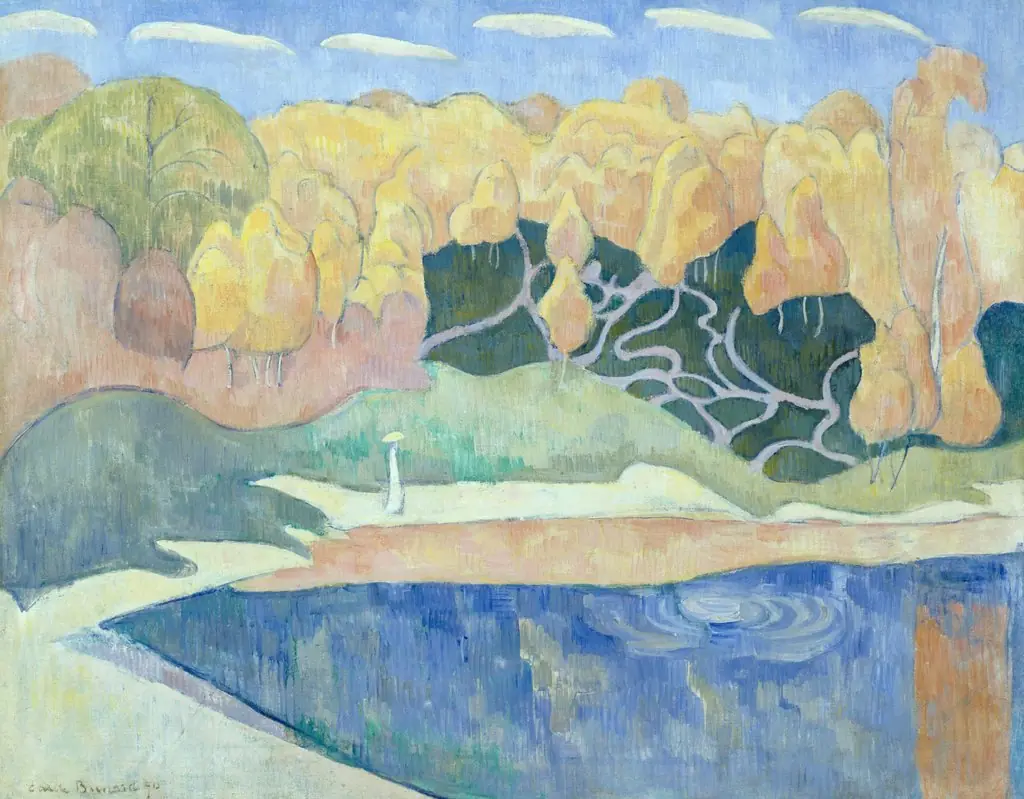
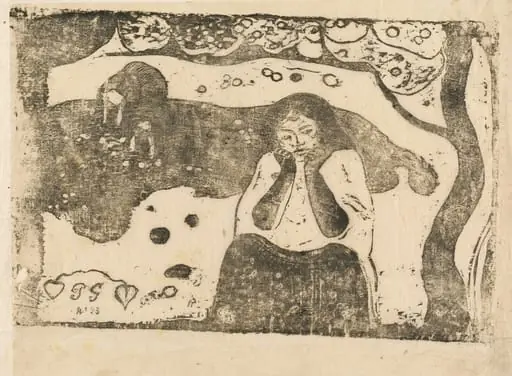 Human Misery (Misères humaines)
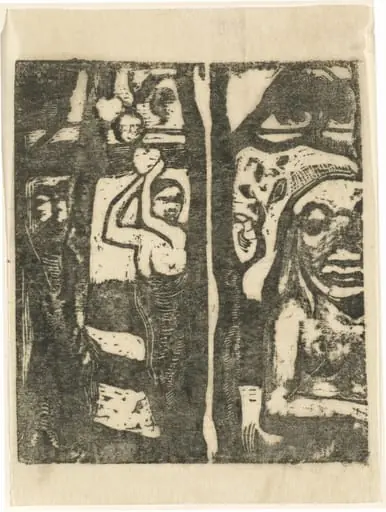 Woman Picking Fruit and the Savage (Femme cueillant des fruits et oviri)
 Interior of a Hut (Interieur de case)
 Untitled
 Untitled
 Compoziție cu personaje (2)
 Untitled
 Les Bretonneries: Breton Women Making Haystacks (Bretonnes Faisant les Foins) and Wedding in Brittany (La Noce en Bretange)
 Untitled
 Untitled
 Untitled
 Woman with a Muff (La Dame au Manchon)