Artwork
The Porgy (Sparus chrysops)
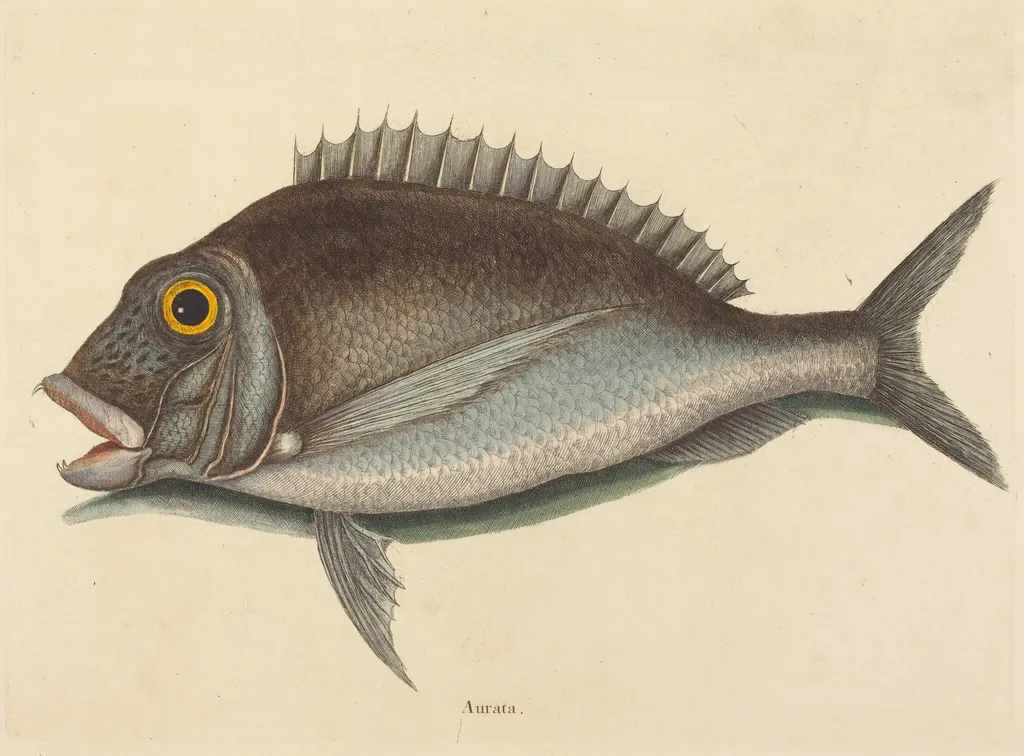
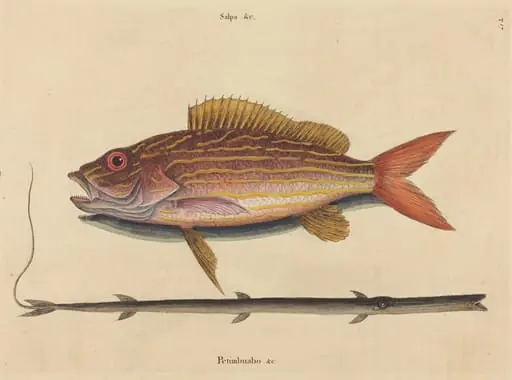
The Porgy (Sparus chrysops) is an ink print by the Romanticist artist Mark Catesby. It is held in the collection of the National Gallery of Art.
About this work
Overview
The Porgy (Sparus chrysops) is an etching and engraving with hand coloring on laid paper, created by English naturalist Mark Catesby in 1754. It represents a single fish specimen against a plain background, emphasizing the subject through simplicity.
Subject & Meaning
The artwork depicts a porgy fish (Sparus chrysops), accurately rendered with brown and gray scales and a distinctive yellow ring around its eye. The open mouth and visible fins provide detailed anatomical representation, aligning with Catesby’s scientific documentation goals.
Technique & Style
The piece combines etching and engraving techniques with meticulous hand coloring, characteristic of 18th-century illustrated natural history works. The absence of background elements reflects a focus on precise species representation.
History & Provenance
Created in 1754, The Porgy was part of Mark Catesby’s landmark publication, *Natural History of Carolina, Florida and the Bahama Islands* (1729-1747), which included 220 illustrated plates documenting North American wildlife.
Context
This work is situated within the broader context of 18th-century natural history illustration, where accurate depiction of species was paramount. Catesby’s work contributed significantly to the field, being the first illustrated account of the region’s fauna.
Legacy
As part of *Natural History of Carolina, Florida and the Bahama Islands*, The Porgy contributes to Catesby’s enduring legacy in natural history and early American scientific illustration, influencing subsequent generations of naturalists and illustrators.
Artist & collection

Artist
Mark Catesby (24 March 1683 – 23 December 1749) was an English naturalist who studied the flora and fauna of the New World.

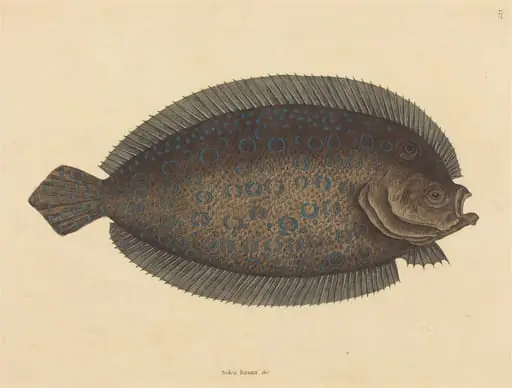 The Sole (Pleuronectes lunatus)
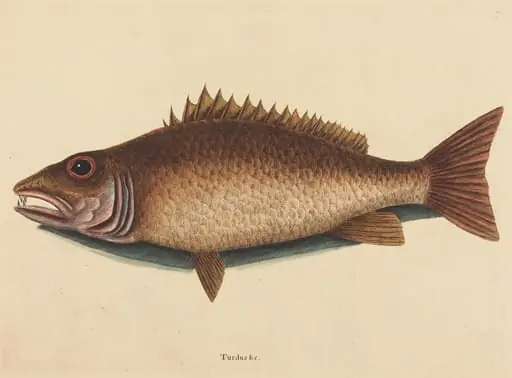 The Mangrove Snapper (Labrus griseus)
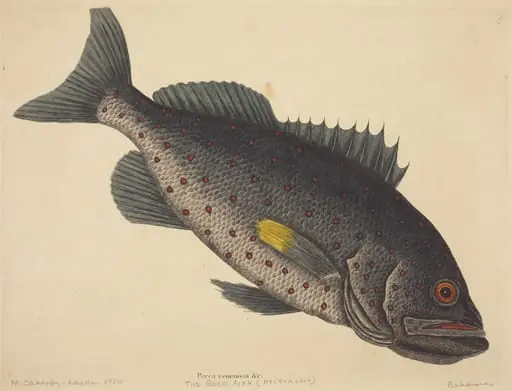 The Rock Fish (Perca venenosa)
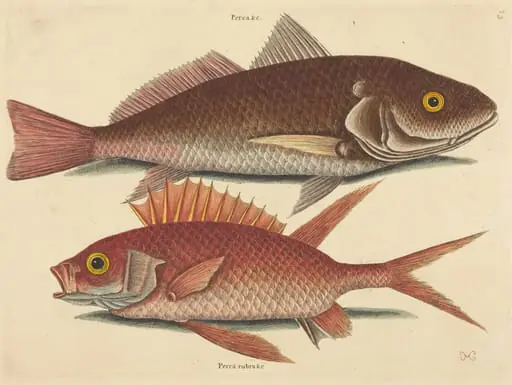 The Croker (Perca undulata)
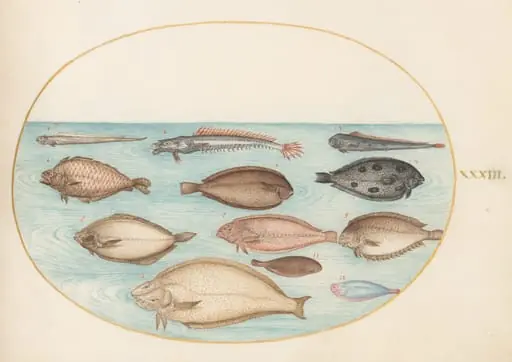 Plate 33: Sole and Other Flatfish with Bandfish(?)
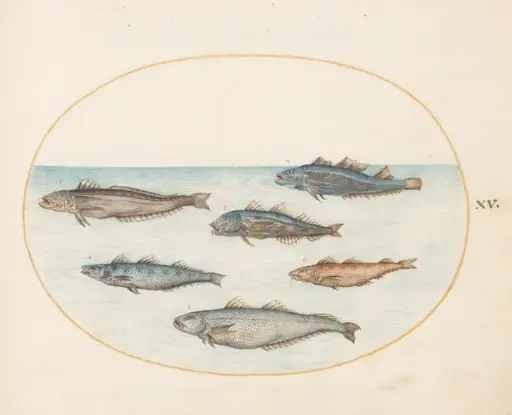 Plate 15: Six "Asellorum" Fish (Cod?)
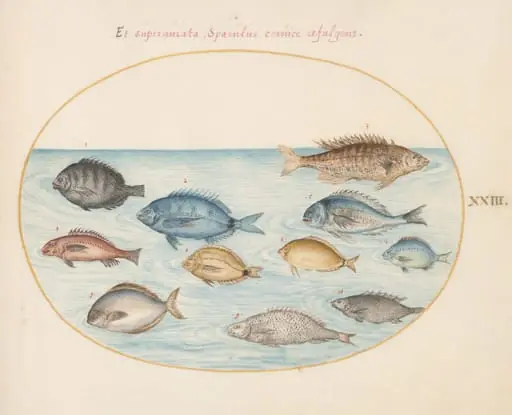 Plate 23: Bream(?) and Other Fish
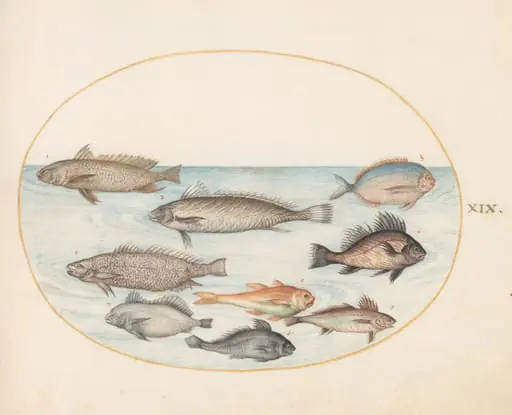 Plate 19: A Damselfish and Other Fish, Including Two "Coracinis"
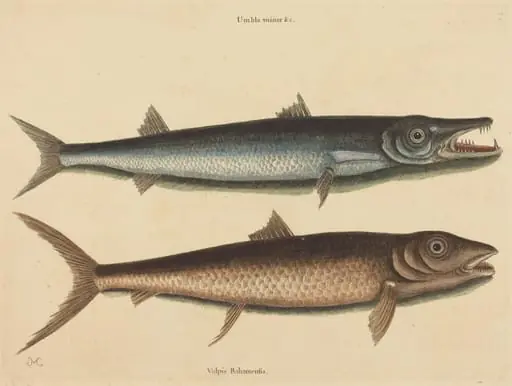 The Barracuda (Esox barracuda)
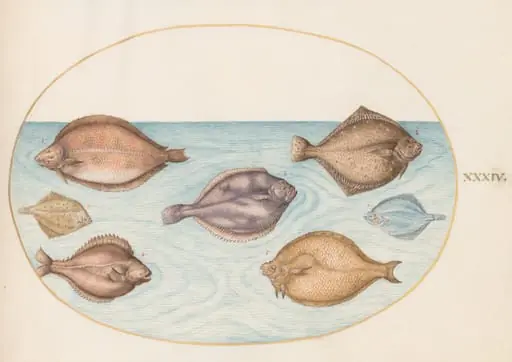 Plate 34: Seven Flatfish
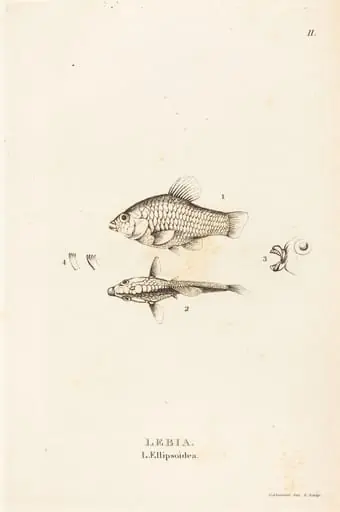 Lebia (L'Ellipsoidea)
 The Lane-snapper (Sparus synagris)