Artwork
Group of Negros, as imported to be sold for Slaves
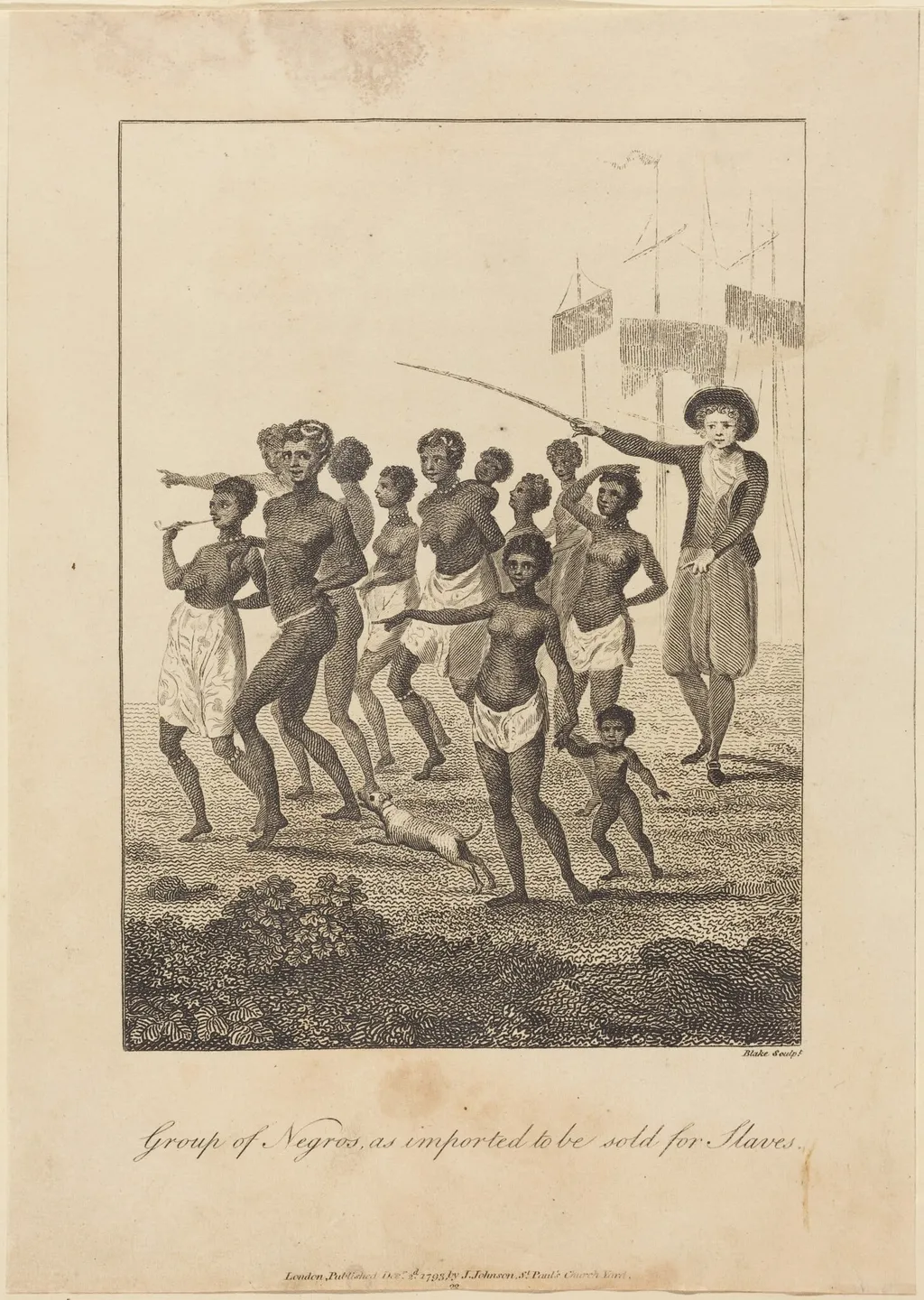
Group of Negros, as imported to be sold for Slaves is an ink print by the Romanticist artist William Blake. It dates from 1793 and is held in the collection of the National Gallery of Art.
About this work
Overview
Created in 1793, this engraving by William Blake confronts the transatlantic slave trade through a stark, linear composition.
Created in 1793, this engraving by William Blake confronts the transatlantic slave trade through a stark, linear composition. It depicts a group of enslaved Africans gathered for sale, observed by a figure in formal attire gesturing toward them. Rendered with fine cross-hatching, the print reflects Blake’s technical precision as a printmaker and his moral engagement with the human cost of slavery during a time when abolitionist sentiment was growing in Britain.
Subject & Meaning
The figures, partially clothed and arranged in a passive line, are presented not as individuals but as commodities under scrutiny. The man in the hat, likely a slave trader or overseer, points with a stick—an instrument of control—emphasizing their dehumanization. Behind them, a ship with flags suggests the arrival from Africa and the commercial machinery of slavery. Blake’s composition evokes unease, framing the scene as a moral indictment rather than a neutral record.
Technique & Style
Blake employed intaglio engraving with meticulous cross-hatching to render textures of skin, fabric, and wood. The detailed rendering of clothing and background elements contrasts with the flat, unadorned expressions of the enslaved, heightening the emotional distance between observer and observed. His linear style, influenced by Renaissance draftsmanship, is stripped of ornament, reinforcing the grim clarity of the subject.
History & Provenance
The engraving was produced during Blake’s period of relative obscurity, when his visionary works found limited public recognition. It was likely created as a standalone print, possibly intended for circulation among abolitionist circles. No known original impressions survive in major institutional collections, and its early distribution remains undocumented, suggesting it was privately circulated rather than widely published.
Context
In late 18th-century Britain, public debate over slavery intensified following the 1772 Somersett ruling and the rise of the abolitionist movement. Blake, though not a formal activist, aligned with radical thinkers who condemned slavery as a moral crime. His imagery draws from contemporary accounts of slave auctions and ship transports, transforming them into symbolic scenes of injustice within a broader critique of institutional power.
Legacy
Though little known during Blake’s lifetime, this engraving now stands as a rare visual document of his social conscience. It contributes to a broader understanding of how artists engaged with abolitionism outside mainstream channels. Its restrained aesthetic and unflinching subject matter have since been recognized as part of a quiet but potent tradition of protest art in British visual culture.
Artist & collection
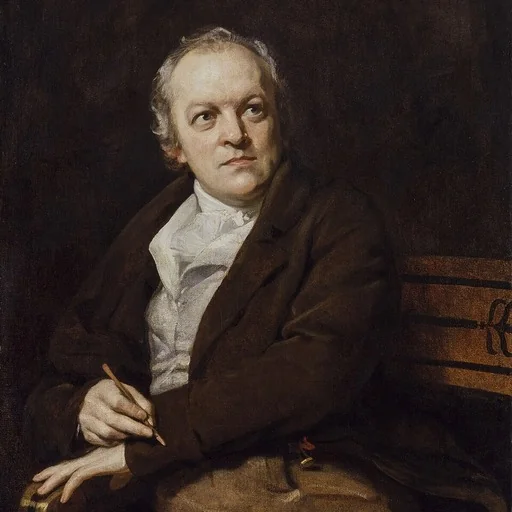
Artist
William Blake (28 November 1757 – 12 August 1827) was an English poet, painter and printmaker.