Artwork
March thro' a swamp or Marsh in Terra-firma
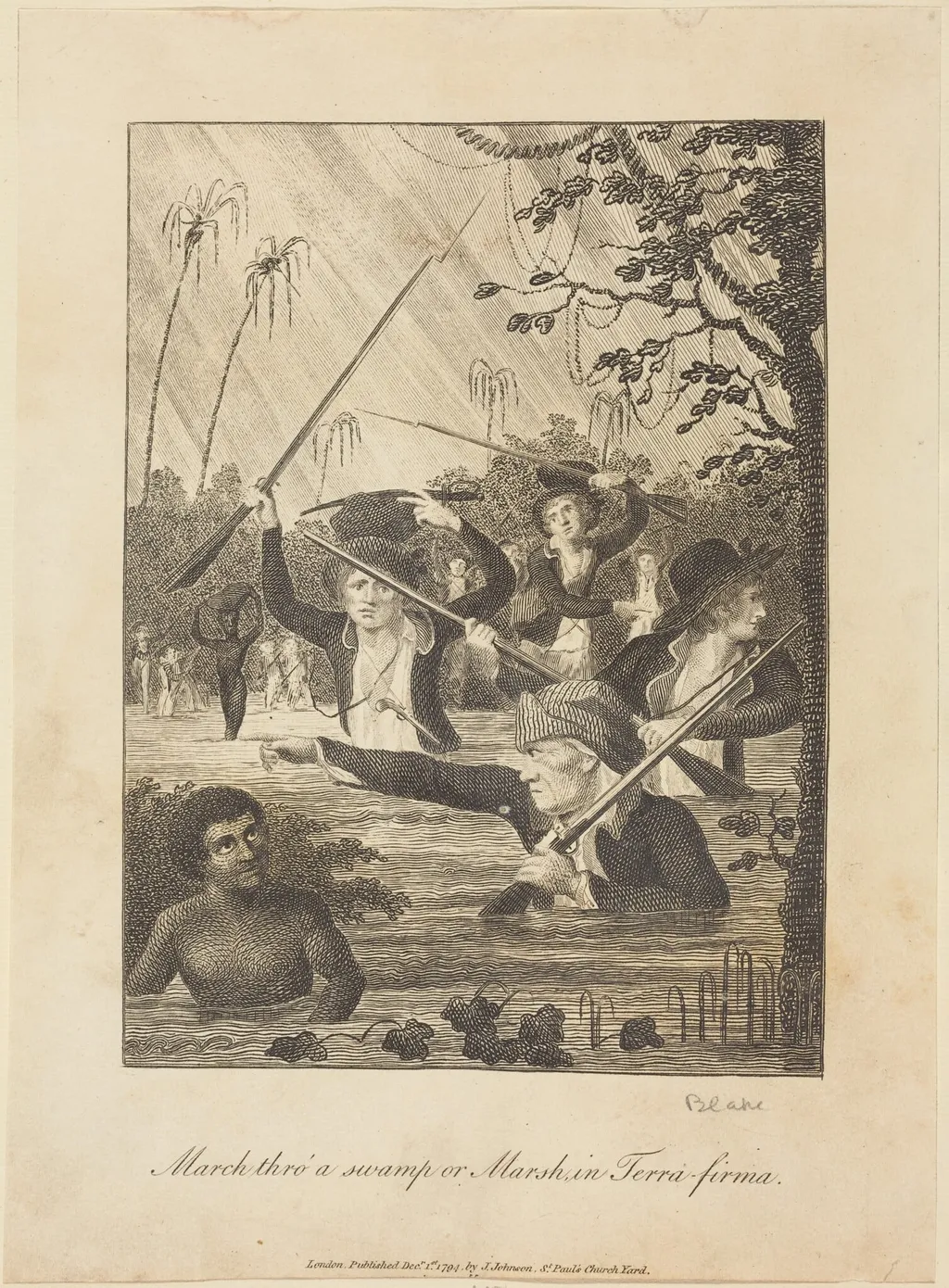
March thro' a swamp or Marsh in Terra-firma is an ink print by the Romanticist artist William Blake. It dates from 1793 and is held in the collection of the National Gallery of Art.
About this work
Overview
Created in 1793, this engraving by William Blake is one of many prints produced during his early period of experimental printmaking. It belongs to a series of works that blend poetic vision with graphic art, reflecting his rejection of conventional artistic norms. The image is not a painting but a hand-engraved print, made using intaglio techniques common in 18th-century book illustration.
Subject & Meaning
Blake often used such imagery to represent the arduous path toward enlightenment, aligning the physical landscape with inner turmoil or moral trial.
The scene depicts a group of figures struggling through a marsh, armed with staffs, their bodies bent under physical strain. Their disheveled attire and strained expressions suggest a journey of endurance, possibly symbolic of spiritual or intellectual labor. Blake often used such imagery to represent the arduous path toward enlightenment, aligning the physical landscape with inner turmoil or moral trial.
Technique & Style
Blake employed fine, linear engraving to render texture and movement, using cross-hatching to model forms and suggest depth. The figures are rendered with exaggerated musculature and angular poses, emphasizing tension. The dark, muted tones result from inked etching lines rather than color, reinforcing a somber atmosphere. Light is implied through contrast, not chiaroscuro, distinguishing it from contemporary painting practices.
History & Provenance
The print was produced during Blake’s collaboration with publisher Joseph Johnson, who supported radical thinkers of the time. It likely illustrated a literary or philosophical text, though no known accompanying text survives. The work remained obscure during Blake’s lifetime, circulating only among small circles of patrons and fellow artists before gaining scholarly attention in the 19th century.
Context
Created amid the political upheavals of the French Revolution and rising industrialization, Blake’s imagery responded to contemporary anxieties about human endurance and societal decay. His vision diverged from the prevailing Neoclassical style, favoring personal symbolism over idealized forms. This print reflects his broader critique of rationalism, positioning imagination as a necessary force against material oppression.
Legacy
Though not widely recognized in his own time, this engraving contributes to Blake’s posthumous reputation as a pioneer of Romantic visual language. His fusion of text and image, along with his emphasis on inner experience, influenced later Symbolist and modernist artists. Scholars now view such works as early experiments in the integration of poetry and graphic art, anticipating 20th-century interdisciplinary practices.
Artist & collection
Artist
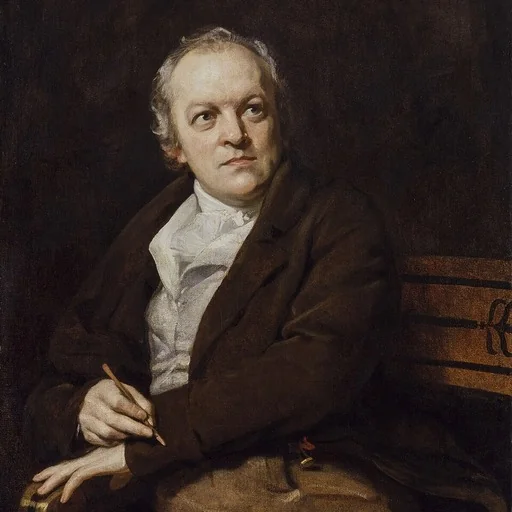
William Blake (28 November 1757 – 12 August 1827) was an English poet, painter and printmaker.

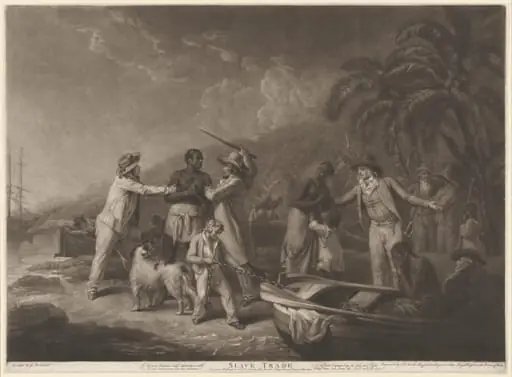 Slave Trade
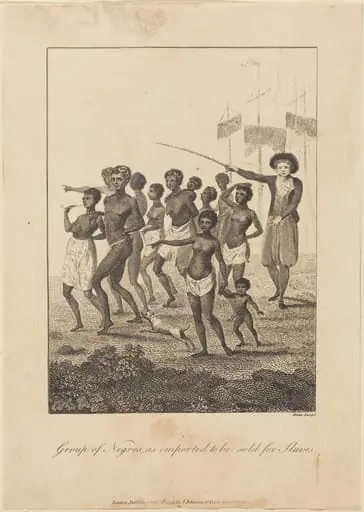 Group of Negros, as imported to be sold for Slaves
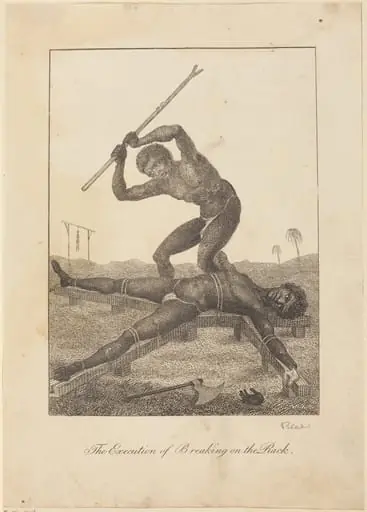 The Execution of Breaking on the Rack
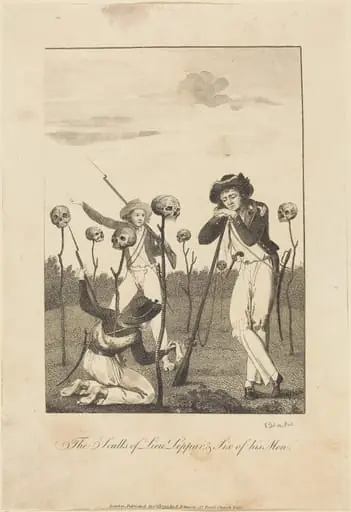 The Sculls of Lieut Leppar, & Six of his Men
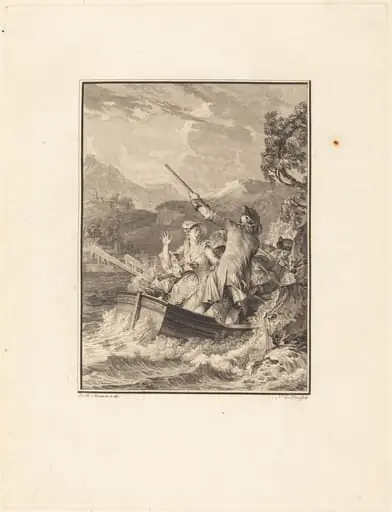 La barque
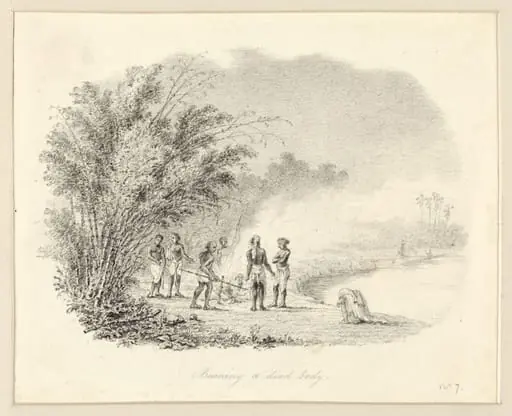 Burning a dead body
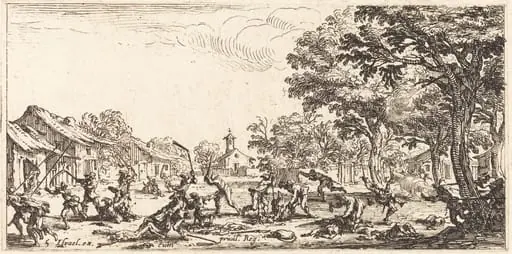 The Peasants' Revenge
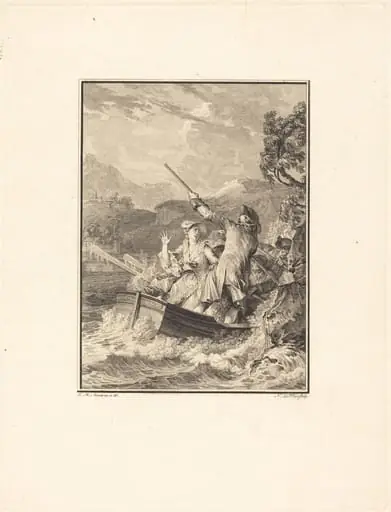 La barque
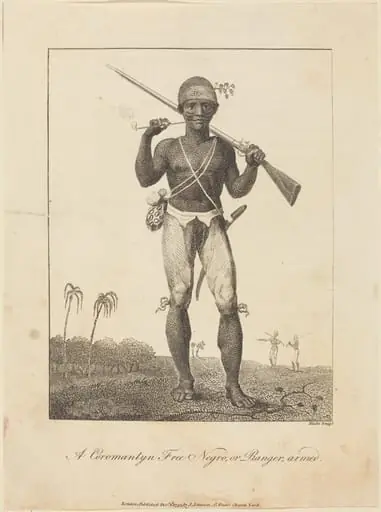 A Coromantyn Free Negro, or Ranger, armed
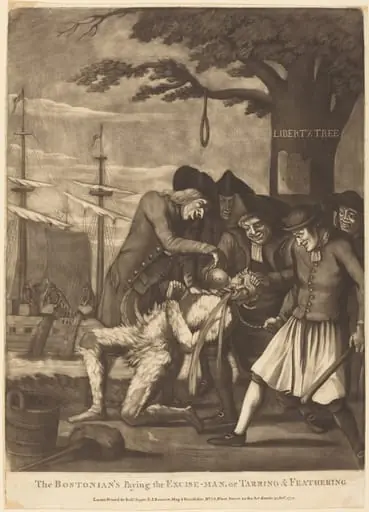 The Bostonian's Paying the Excise-Man, or Tarring & Feathering
 The Followers of Solon Defending the Temple of Venus
 A Surinam Planter in his Morning Dress