Artwork
Salvia
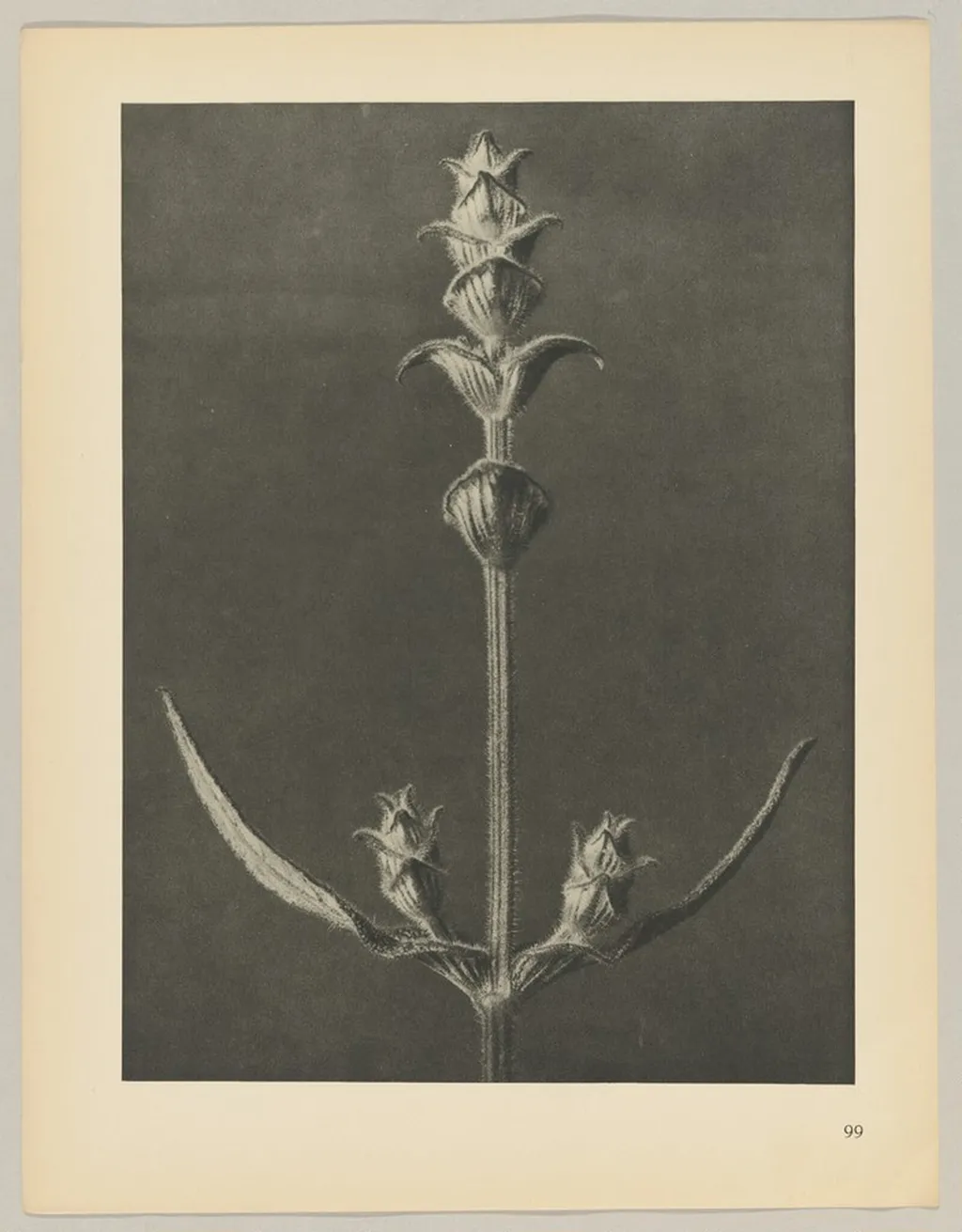
Salvia is a print by Karl Blossfeldt. It dates from 1928 and is held in the collection of the National Gallery of Art.
About this work
Overview
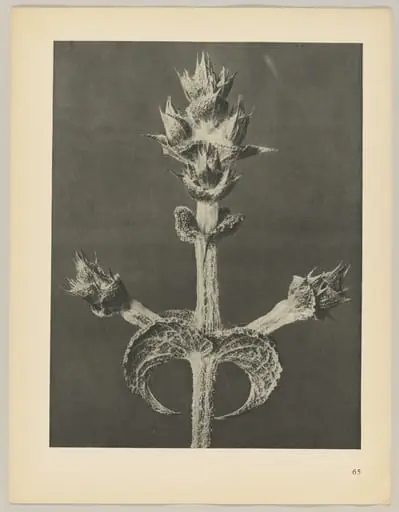
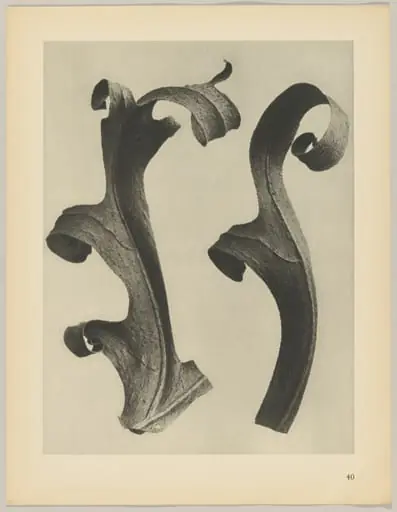
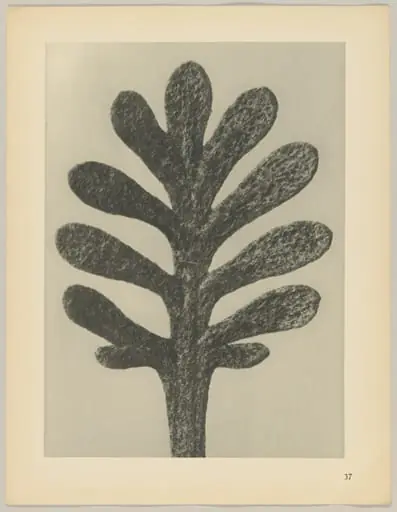
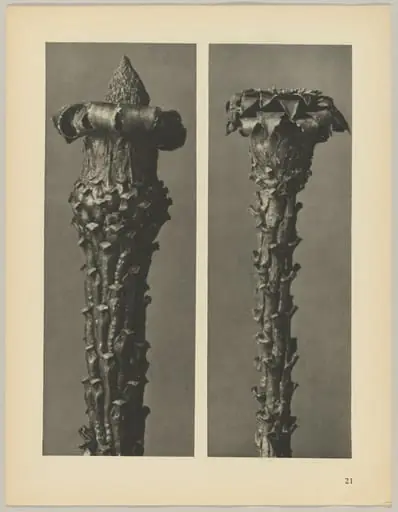
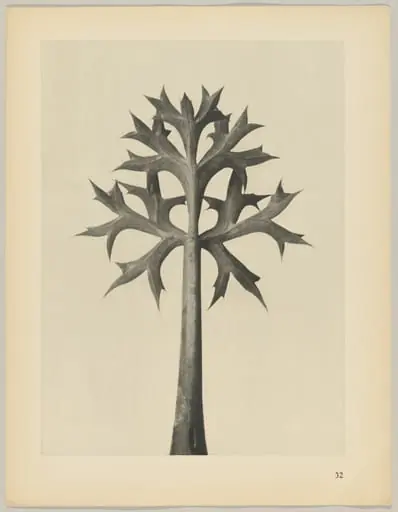
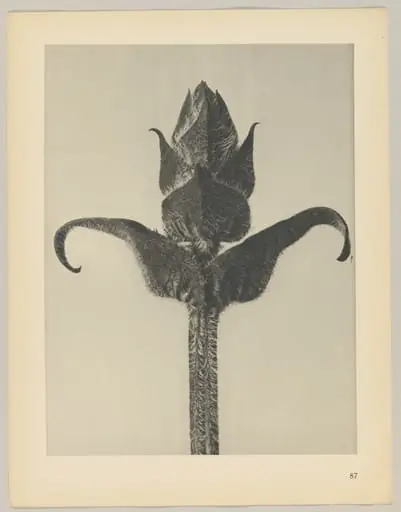
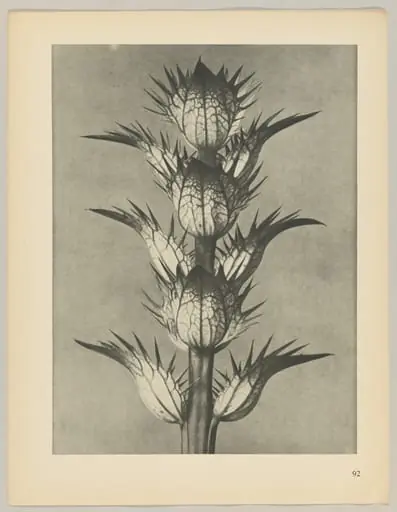
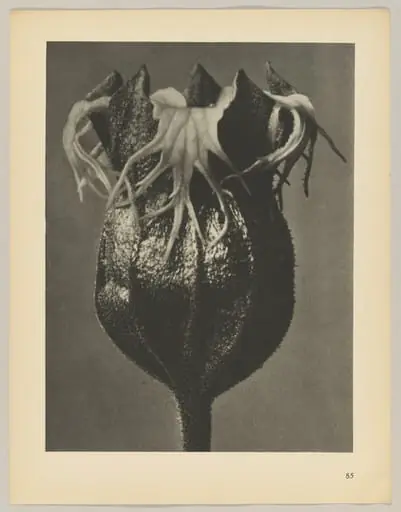
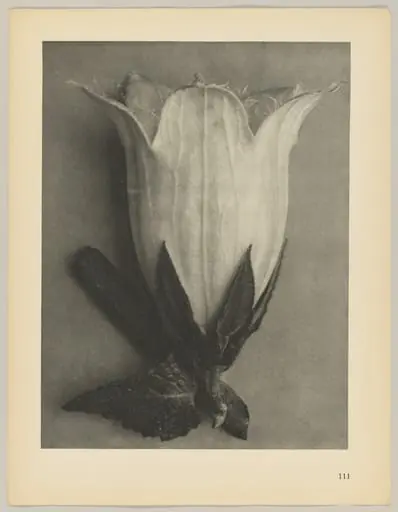
Created in 1928, *Salvia* is a photogravure print by German photographer and sculptor Karl Blossfeldt. The image isolates a single salvia flower against a stark black field, rendering the plant’s stem, buds and wilted petals in crisp white lines. The composition highlights the delicate geometry of the flower’s parts, presenting the specimen as both botanical record and visual study.
Subject & Meaning
The work concentrates on the structural details of a salvia plant, emphasizing the elongated stem, three lower buds and the open blossom at the top. By rendering the foliage and petals with precise line work, Blossfeldt draws attention to the inherent sculptural qualities of botanical growth, inviting viewers to consider the plant as a natural form of design.
Technique & Style
Blossfeldt employed the photogravure process, transferring a photographic image onto a copper plate that was then etched and printed.
Blossfeldt employed the photogravure process, transferring a photographic image onto a copper plate that was then etched and printed. This method allowed him to achieve fine tonal contrast and sharp delineation of texture, rendering the narrow, pointed leaves and subtle surface details in stark white against a dark background. The result is a graphic, almost diagrammatic representation rather than a painterly rendering.
History & Provenance
*Salvia* was produced during the period when Blossfeldt was assembling material for his influential 1929 volume *Urformen der Kunst* (The Primitive Forms of Art). The print exemplifies the series of close‑up plant studies that formed the core of that publication, reflecting his lifelong interest in documenting natural forms with scientific precision and artistic intent.
Artist & collection
Artist
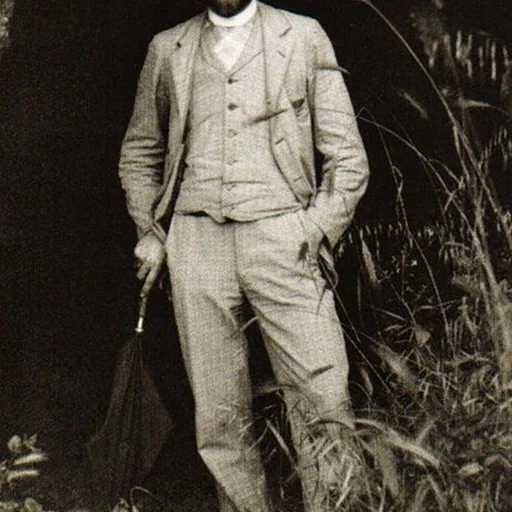
Karl Blossfeldt (13 June 1865 – 9 December 1932) was a German photographer and sculptor.