Artwork
The Steamer Yellow-stone
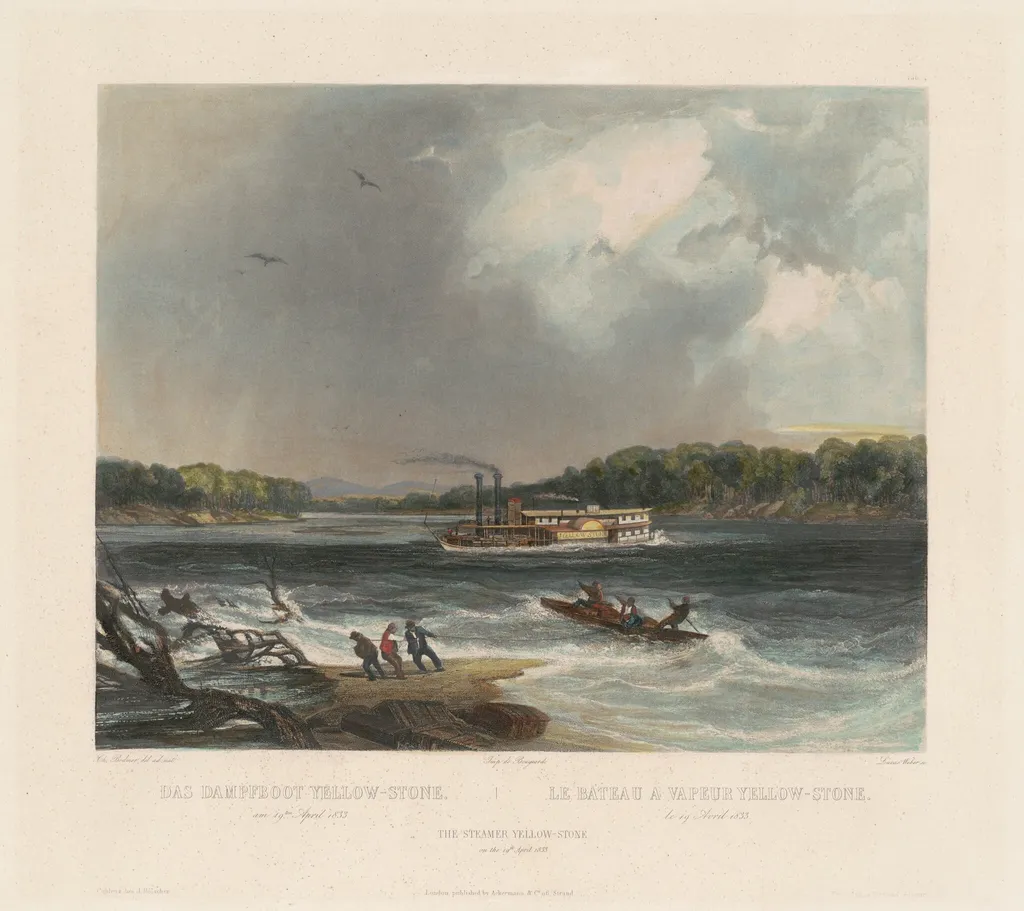
The Steamer Yellow-stone is an ink print by the Romanticist artist Karl Bodmer. It dates from 1839 and is held in the collection of the National Gallery of Art.
About this work
This 1839 print shows a steamboat named *Yellow-stone* on a river. The sky is dark. Steam rises from the boat’s smokestack. Trees line the far bank.
Karl Bodmer made this with etching and aquatint. He added color by hand. The river looks calm but the sky feels stormy.
The boat was new then. Big paddle wheels push it forward. Look up the artist Bodmer, Karl.
Overview
Created around 1839, *The Steamer Yellow-stone* is a hand-colored etching and aquatint on wove paper by Swiss-French artist Karl Bodmer.
Created around 1839, *The Steamer Yellow-stone* is a hand-colored etching and aquatint on wove paper by Swiss-French artist Karl Bodmer. The print captures a steamboat navigating a river under a brooding sky, combining technical precision with atmospheric tone. Bodmer, known for his detailed landscape and architectural studies, used traditional printmaking methods to document the emerging industrial landscape of North America during his expedition with Prince Maximilian of Wied.
Subject & Meaning
The print centers on the steamboat *Yellow-stone*, a symbol of 19th-century technological advancement in river transport. Its prominent paddle wheels and rising steam contrast with the quiet, tree-lined banks, suggesting the intrusion of industry into natural environments. The dark, unsettled sky adds tension, hinting at the unpredictability of both nature and progress. The vessel, newly operational at the time, represents the expanding reach of commerce and exploration along the Missouri River.
Technique & Style
Bodmer employed etching and aquatint to achieve fine linear detail and tonal gradations in the black ink base. Hand-coloring was applied selectively to enhance realism—likely in watercolor or gouache—accentuating the steam, water, and foliage. The composition balances sharp architectural rendering of the boat with softer, atmospheric backgrounds. The contrast between the mechanical form of the steamer and the organic riverbank reflects a deliberate aesthetic tension between industry and wilderness.
History & Provenance
Bodmer produced this print during his 1832–1834 journey up the Missouri River with Prince Maximilian of Wied, documenting Native American life and the American frontier. Though the expedition ended in 1834, Bodmer continued working on his sketches and prints in Europe, publishing *The Steamer Yellow-stone* in 1839 as part of a larger illustrated volume. The work was likely printed in Germany, where Bodmer had established a reputation for topographical prints and was supported by patrons interested in ethnographic and geographic documentation.
Context
In the late 1830s, steam navigation was transforming river trade and exploration in the American West. The *Yellow-stone* was among the first steamers to operate on the upper Missouri, enabling more consistent travel and supply routes. Bodmer’s print reflects European fascination with American expansion and technological innovation. His work contributed to a broader visual record of the frontier, blending scientific observation with artistic interpretation for audiences unfamiliar with the region.
Legacy
Bodmer’s prints, including *The Steamer Yellow-stone*, remain among the most accurate visual records of the American West before widespread photography. His attention to detail and commitment to documenting real subjects elevated his work beyond mere illustration. Though not widely known during his lifetime outside German-speaking regions, his prints are now valued for their historical precision and their role in shaping European perceptions of 19th-century North America.
Artist & collection
Artist
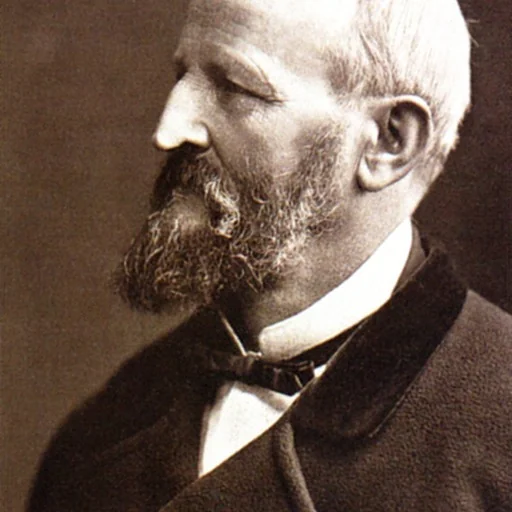
Johann Carl Bodmer (11 February 1809 – 30 October 1893) was a Swiss-French printmaker, etcher, lithographer, zinc engraver, draughtsman, painter, illustrator, and hunter.

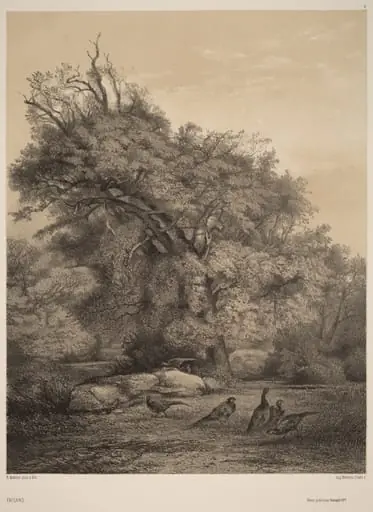
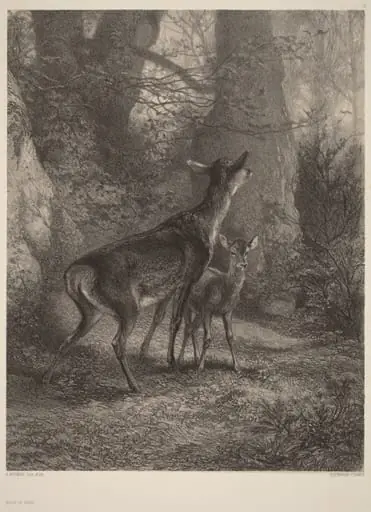
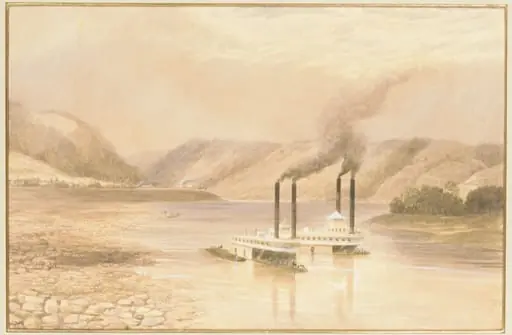 The Ohio River near Wheeling, West Virginia
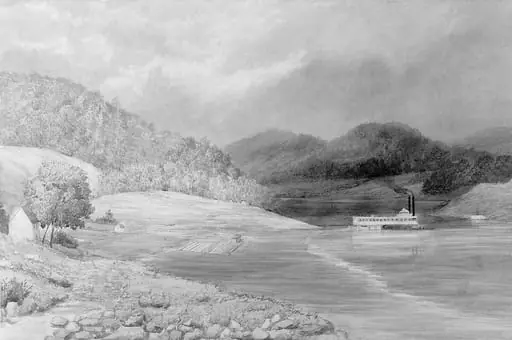 The Ohio River near Wheeling, West Virginia
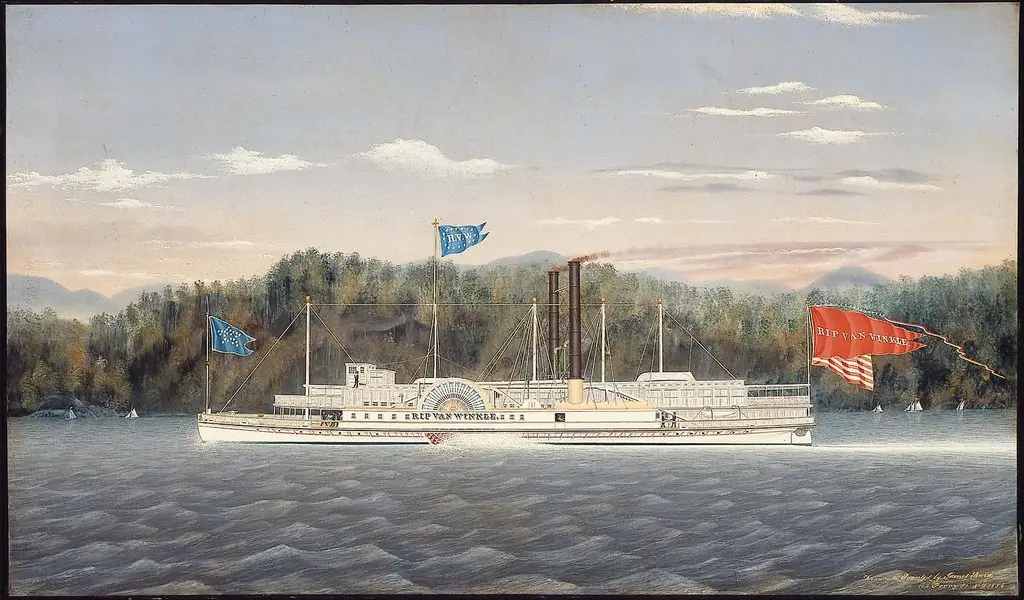 The Hudson River Steamboat "Rip van Winkle"
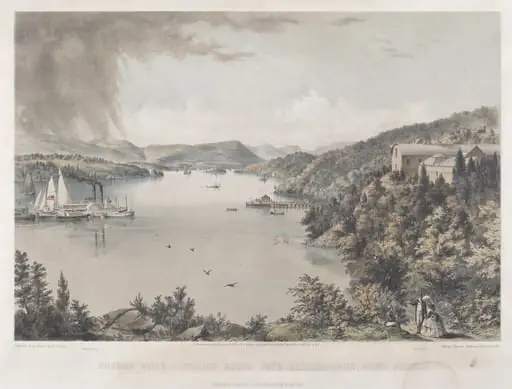 Hudson River Portfolio: Looking South from Battery Knox, West Point
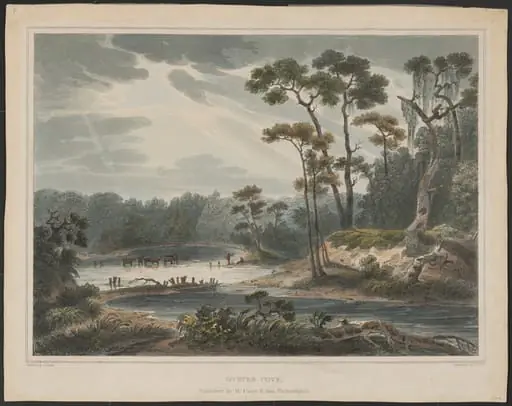 Oyster Cove
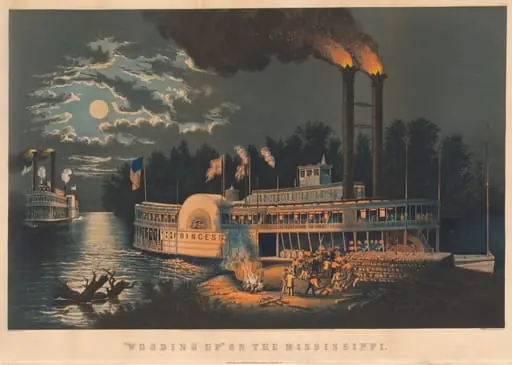 "Wooding Up" on the Mississippi
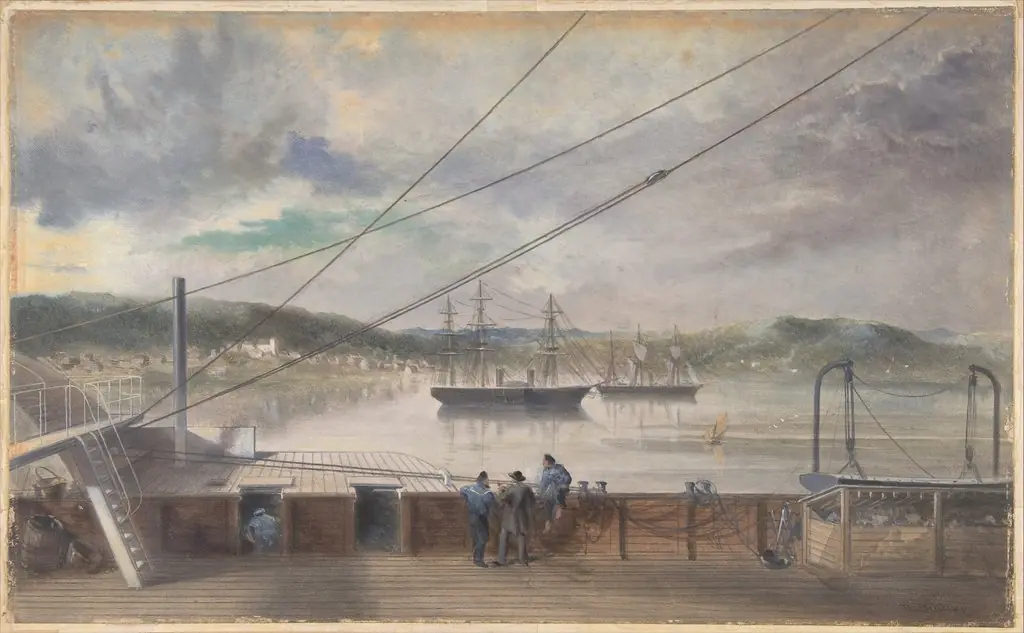 The Settlement and Church of Heart's Content, Newfoundland
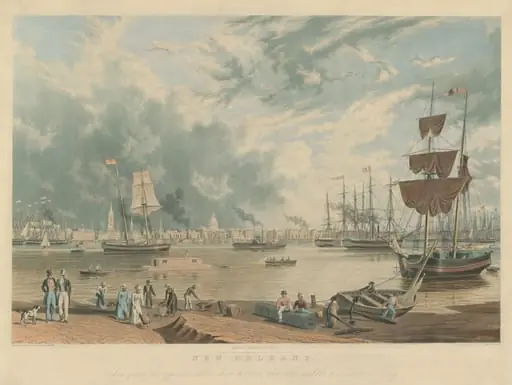 New Orleans: Taken from the Opposite Side, a Short Distance above the Middle or Picayyune Ferry
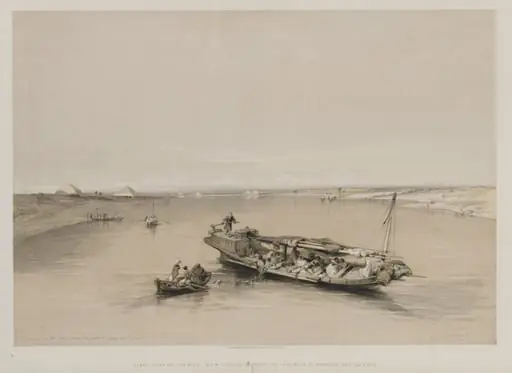 Egypt and Nubia, Volume I: View on the Nile Looking Towards the Pyramids of Dashour and Saccara
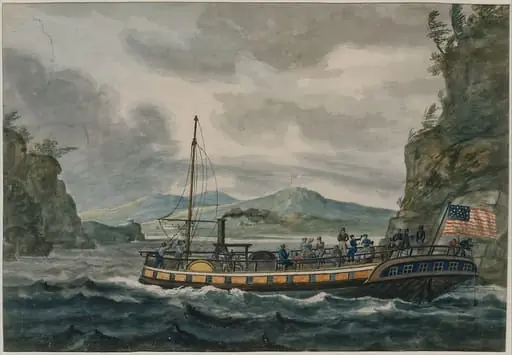 Steamboat Travel on the Hudson River
 Steamship "Erie"
 Steamer "St. Lawrence"