Artwork
The Spring at l'Orsière
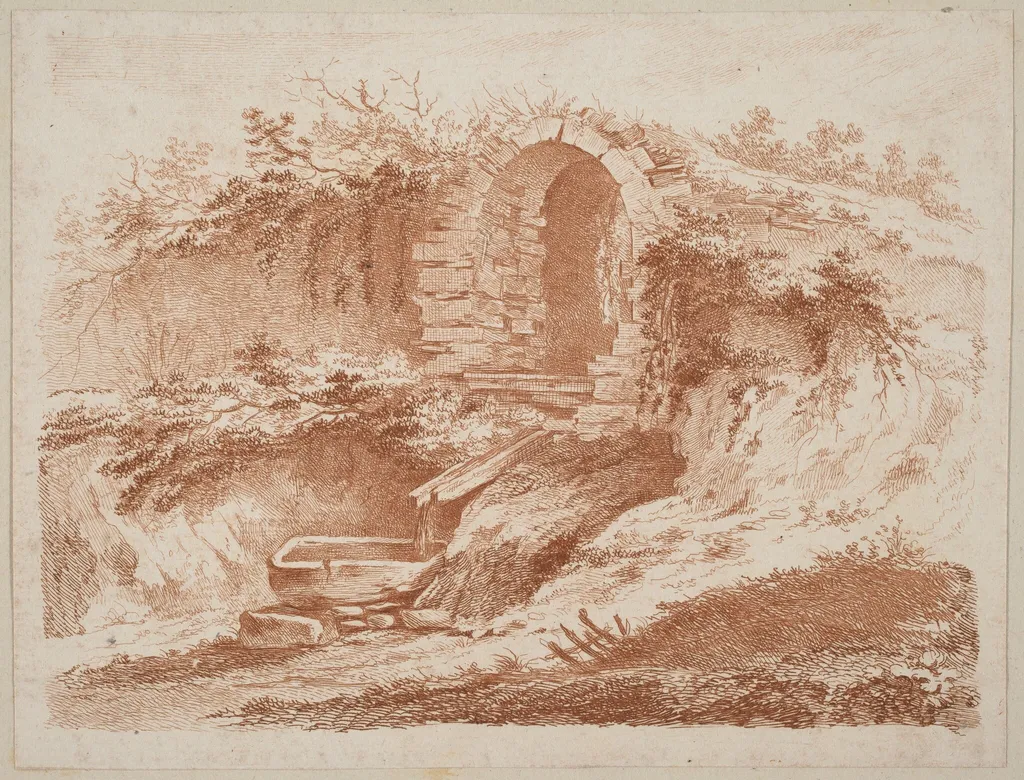
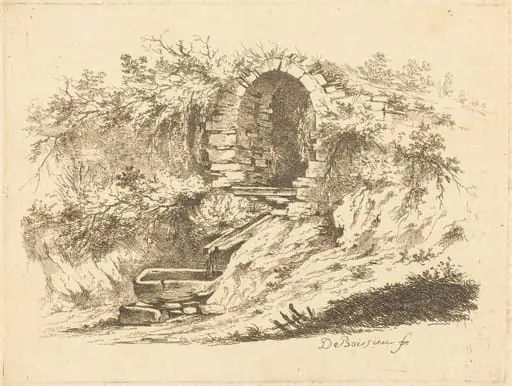
The Spring at l'Orsière is an ink print by the Romanticist artist Jean-Jacques de Boissieu. It dates from 1759 and is held in the collection of the National Gallery of Art.
About this work
Overview
The Spring at l'Orsière is a sepia etching by Jean-Jacques de Boissieu, dated to 1759, depicting a serene, mist-shrouded landscape.
Subject & Meaning
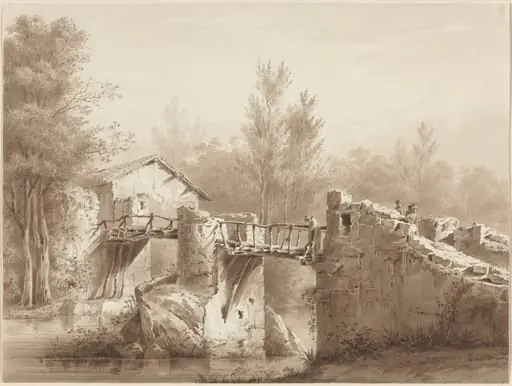
The scene features a small stone bridge over a narrow river, flanked by dense, heavily branched trees, with a distant, partially fogged hillside village. The composition conveys a sense of tranquility and natural solitude.
Technique & Style
Boissieu employed fine etching lines to achieve textured, lifelike renderings of trees and water. The use of sepia tone imbues the work with a soft, dreamy quality.
History & Provenance
Created in 1759, specific provenance details are not provided in the available information.
Context
This etching reflects 18th-century European artistic interests in capturing serene, natural environments, often with distant architectural elements, emphasizing mood and atmosphere.
Legacy
The Spring at l'Orsière demonstrates Boissieu's contribution to the etching tradition, particularly in capturing nuanced, contemplative landscapes that invite the viewer's reflection.
Artist & collection
Artist
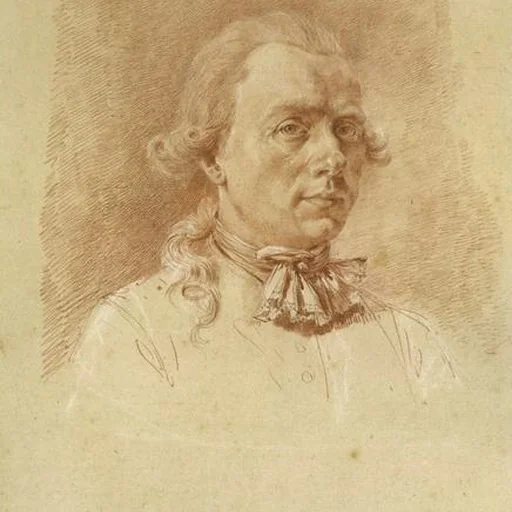
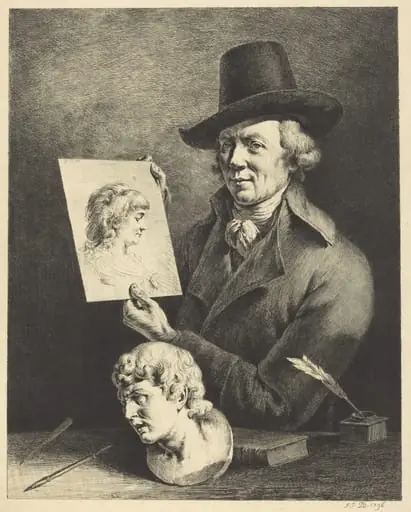
Jean-Jacques de Boissieu (1736–1810) was a French artist, born in Lyon.

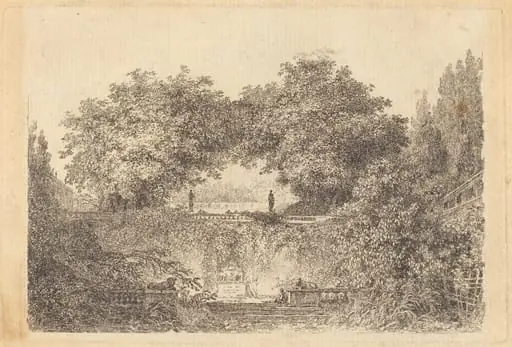 Le Petit Parc
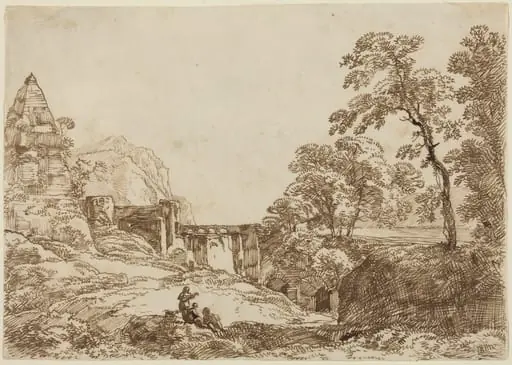 Landscape with a Pyramid and Classical Ruins
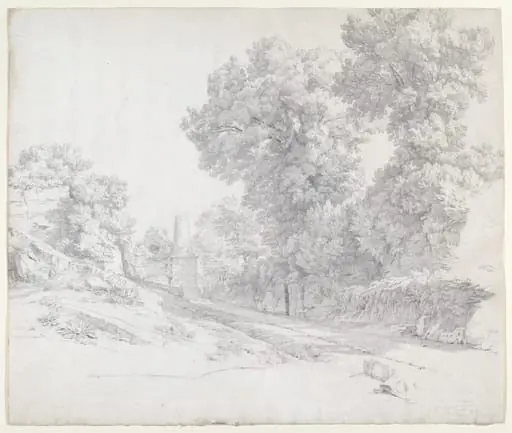 Oaks along the Appian Way near Albano
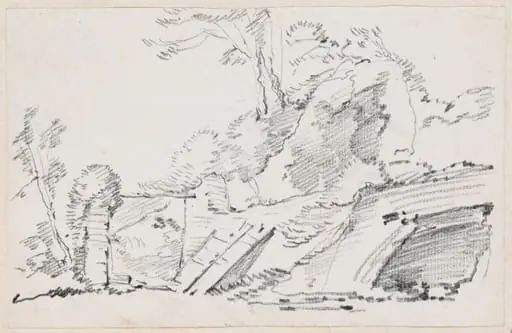 An Ancient Wall with a Ruined Gate
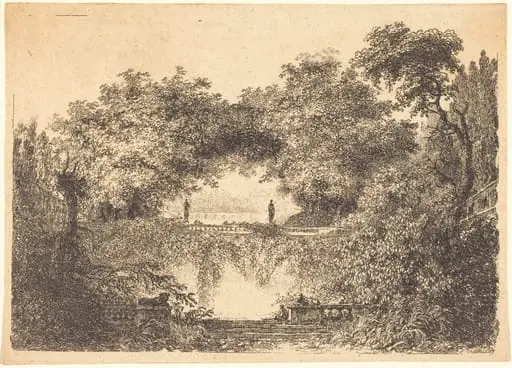 Le Petit Parc
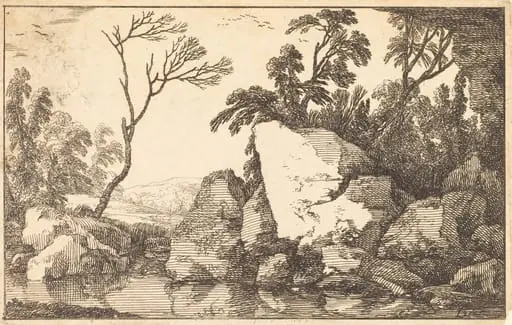 A Rocky Pond
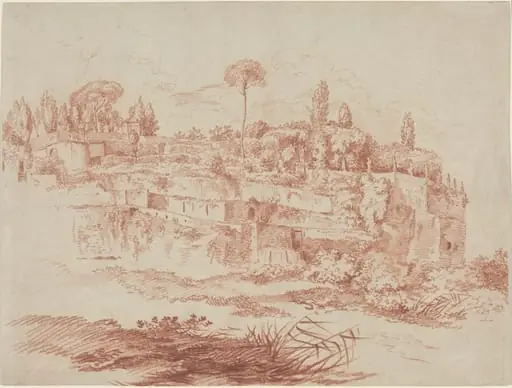 Gardens of the Villa Mattei
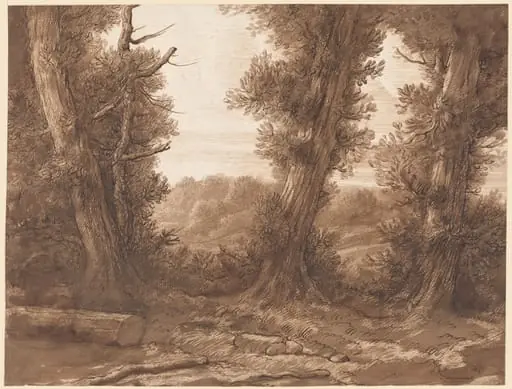 The Big Trees
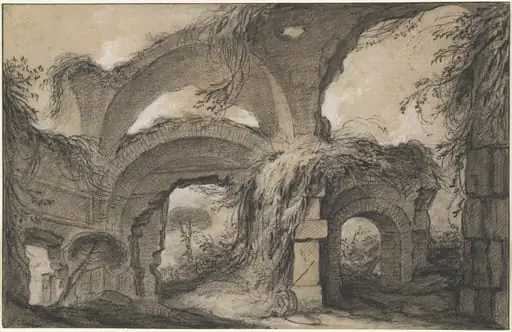 Arches of the Larger Baths at Hadrian's Villa
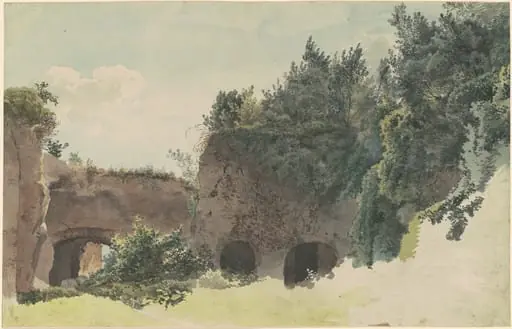 Ancient Roman Ruins Overgrown with Trees and Bushes
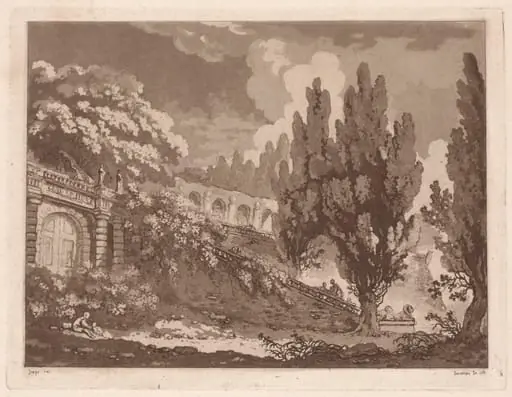 Stairs in an Italian Garden
 The Spring at l'Orsière