Artwork
Bologna
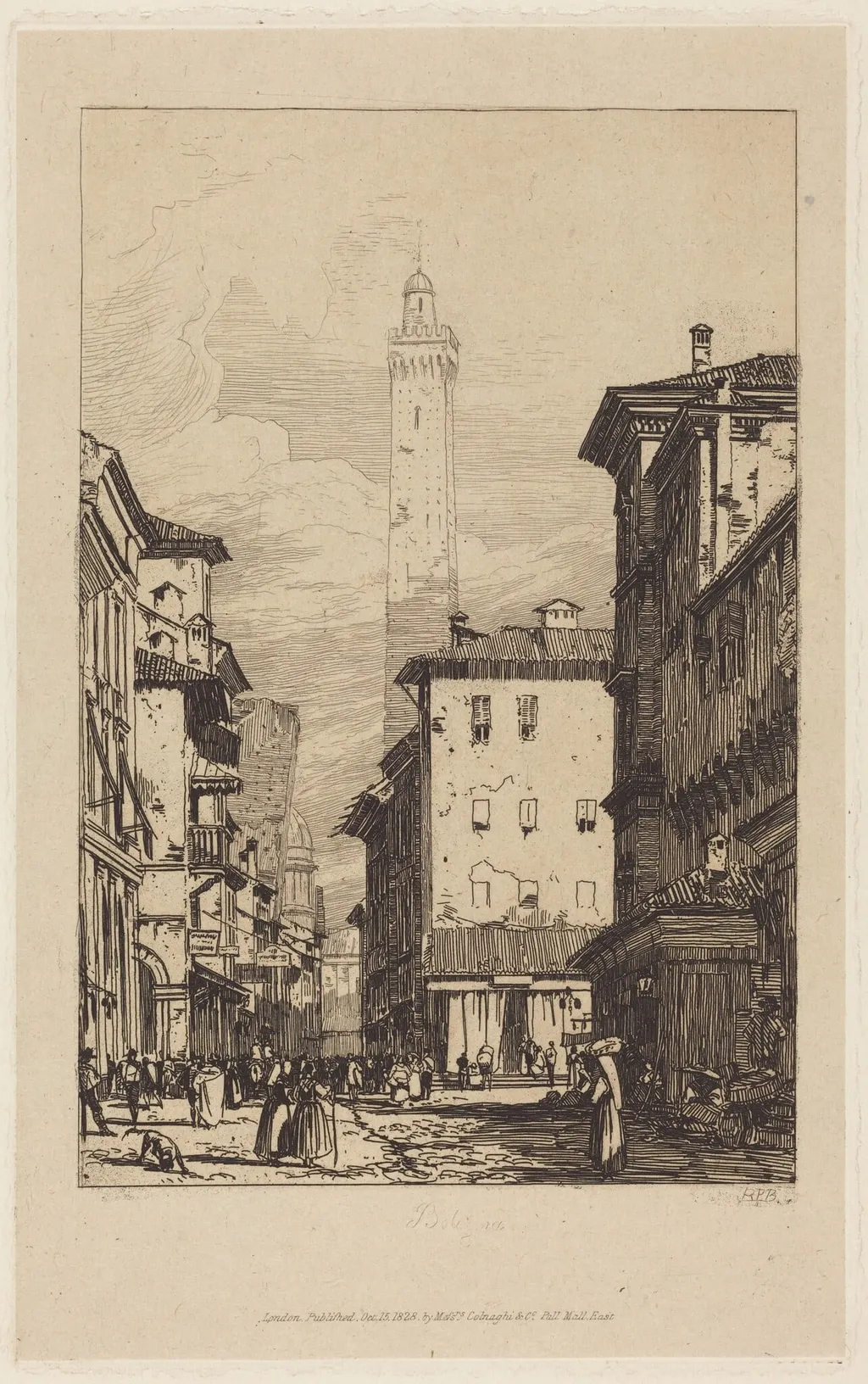
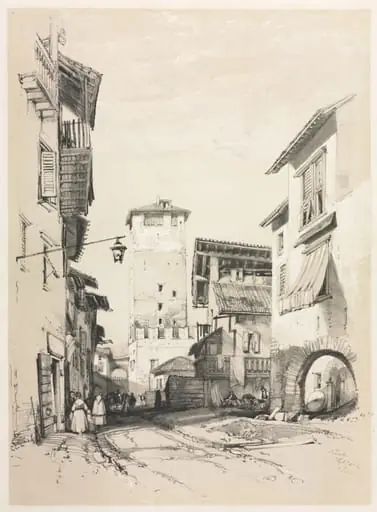
Bologna is an ink print by the Romanticist artist Richard Parkes Bonington. It dates from 1826 and is held in the collection of the National Gallery of Art.
About this work
Overview
Created in 1826, *Bologna* is an etching by the English Romantic landscape artist Richard Parkes Bonington. The print depicts a narrow street in the Italian city, flanked by tall, shadowed buildings and a distant tower that pierces the sky. Figures populate the thoroughfare, lending a sense of everyday activity to the composition.
Subject & Meaning
The work presents an urban scene rather than Bonington’s more typical coastal vistas, focusing on the interplay of architecture and atmosphere. The cramped street, the rising tower, and the scattered pedestrians convey a moment of ordinary life while emphasizing the depth of the cityscape and the subtle drama of light and shadow.
Technique & Style
Bonington employed the etching process to achieve fine linear detail and a range of tonal contrasts. Dark, precise lines define the structures, while lighter washes suggest sky and cloud. This combination of crisp contour and atmospheric shading reflects his admiration for older masters and his own modern sensibility toward light effects.
History & Provenance
Although Bonington spent much of his career in France, he produced *Bologna* during a period of travel in Italy. The print was issued shortly after its creation and entered collections that valued his ability to render European cityscapes. Its provenance traces through several private holdings before being acquired by the museum that now displays it.
Artist & collection
Artist
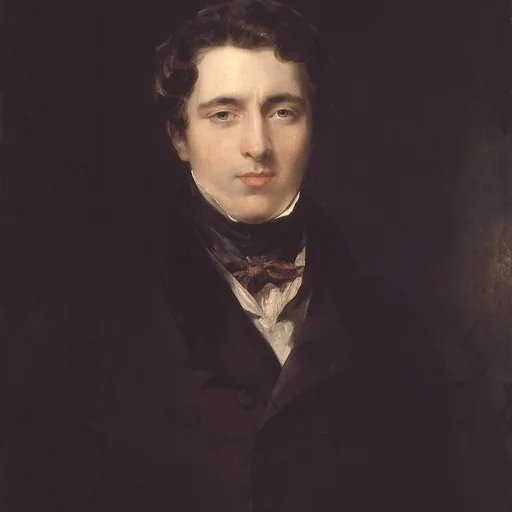
Richard Parkes Bonington (25 October 1802 – 23 September 1828) was an English Romantic landscape painter.

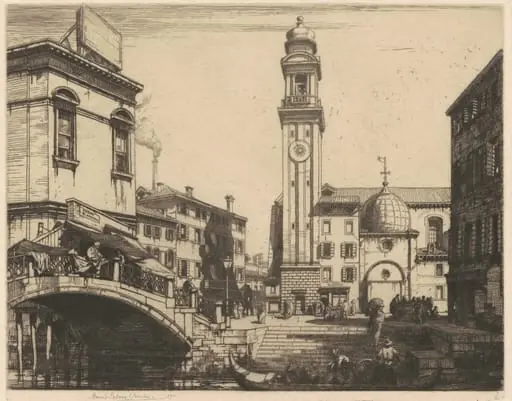 S.S. Apostoli, Venice
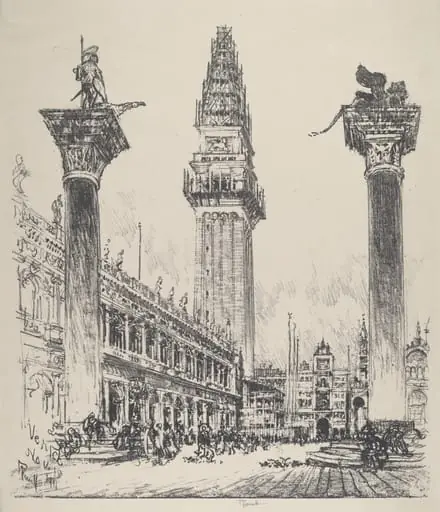 Venice, Rebuilding the Campanile
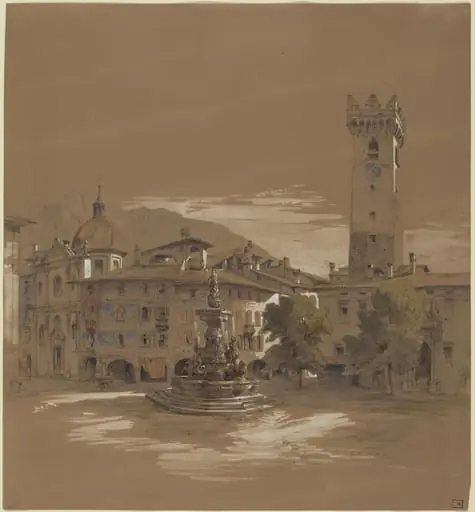 View of Trento
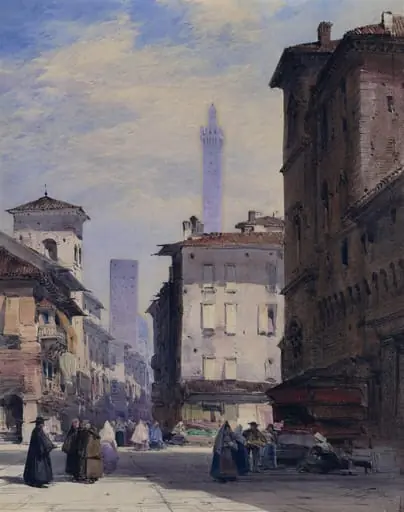 The leaning tower of Bologna
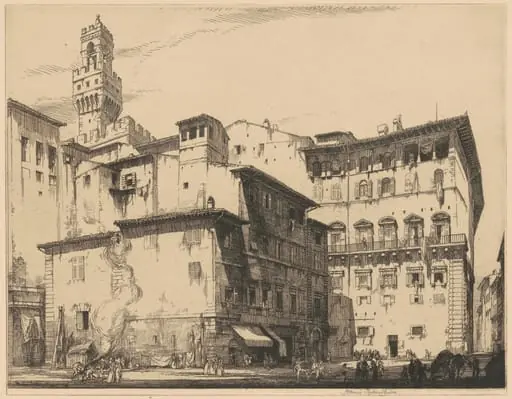 The Municipio, Florence
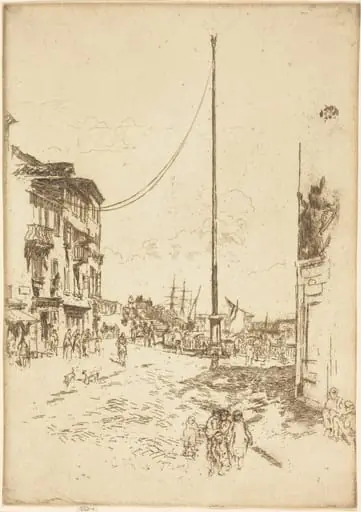 The Little Mast
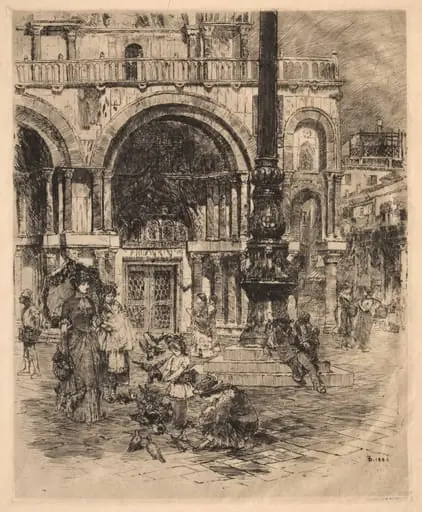 Piazza San Marco, Venice
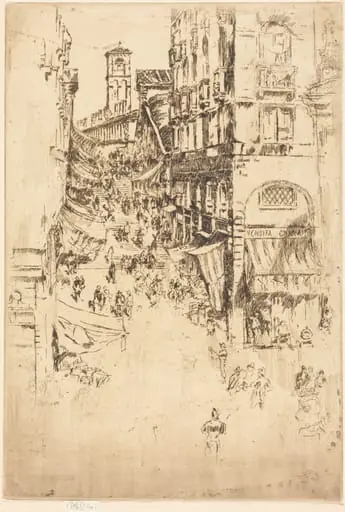 The Rialto
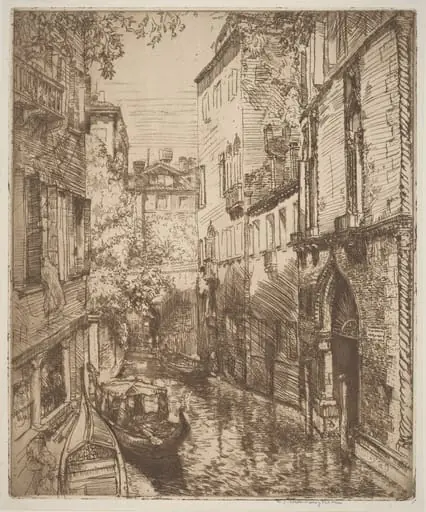 Rio delle Verona, Venice
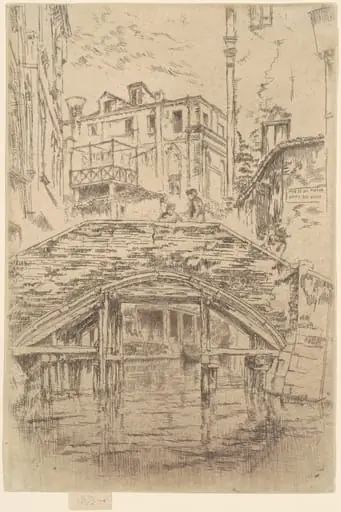 Ponte del Piovan
 Sketches at Home and Abroad: Trento
 Saint-Etienne-du-Mont, Paris (Church of St. Stephen of the Mount, Paris)