Artwork
Saint-Etienne-du-Mont, Paris (Church of St. Stephen of the Mount, Paris)
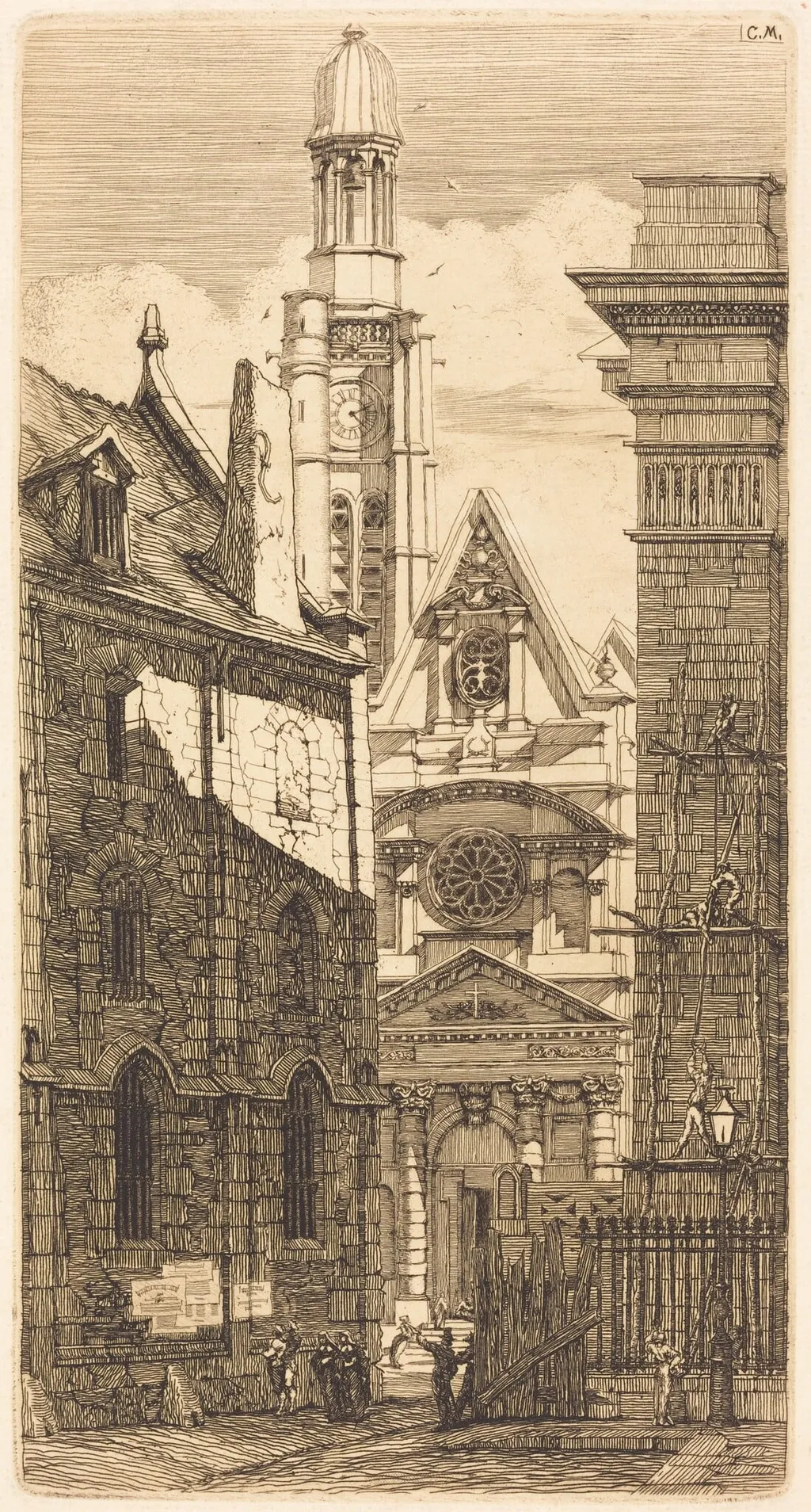
Saint-Etienne-du-Mont, Paris (Church of St. Stephen of the Mount, Paris) is an ink print by the Impressionist artist Charles Meryon. It dates from 1852 and is held in the collection of the National Gallery of Art.
About this work
Overview
Charles Meryon’s 1852 etching captures the Church of Saint-Etienne-du-Mont in Paris, one of many urban views he produced during the mid-nineteenth century.
Charles Meryon’s 1852 etching captures the Church of Saint-Etienne-du-Mont in Paris, one of many urban views he produced during the mid-nineteenth century. Executed on laid paper, the work reflects his singular focus on etching as a medium, a choice influenced by his color blindness. His prints are distinguished by meticulous line work and a somber, introspective tone that transforms architectural subjects into quiet meditations on space and time.
Subject & Meaning
The church, a Gothic structure in central Paris, is rendered with precise attention to its ornate façade and soaring spire. Meryon avoids human figures, emphasizing the building’s isolation and permanence against a muted, overcast sky. The composition suggests reverence for architectural heritage, yet also conveys a sense of solitude—perhaps mirroring the artist’s own withdrawal from society and his growing preoccupation with the passage of time.
Technique & Style
Meryon employed fine, controlled etching lines to build texture and depth, using cross-hatching and varied ink density to model stone surfaces and shadow. The paper’s laid texture enhances the tactile quality of the print, while the absence of color directs focus to tonal gradations. His technique avoids romanticized drama, instead favoring a restrained, almost clinical precision that lends the scene a haunting stillness.
History & Provenance
Created in 1852, this print belongs to Meryon’s broader series of Parisian views, produced during his most active years. He worked largely in isolation, and few of his prints were widely distributed in his lifetime. After his death in an asylum in 1868, his work gained recognition among collectors and artists for its emotional gravity and technical mastery, though it remained outside mainstream artistic circles during his lifetime.
Context
Meryon’s etchings emerged during a period of rapid urban transformation in Paris, as Haussmann’s renovations reshaped the city’s medieval fabric. While others documented progress, Meryon turned to older structures like Saint-Etienne-du-Mont, preserving their presence through ink and line. His work stands as a counterpoint to modernization, offering a contemplative record of buildings destined to be overshadowed or altered.
Legacy
Though largely overlooked in his lifetime, Meryon’s etchings influenced later generations of printmakers and urban observers. His ability to convey atmosphere through line alone set a precedent for artists seeking emotional resonance in architectural subjects. Today, his works are held in major collections as important documents of 19th-century Paris, valued for their quiet intensity and technical discipline.
Artist & collection
Artist
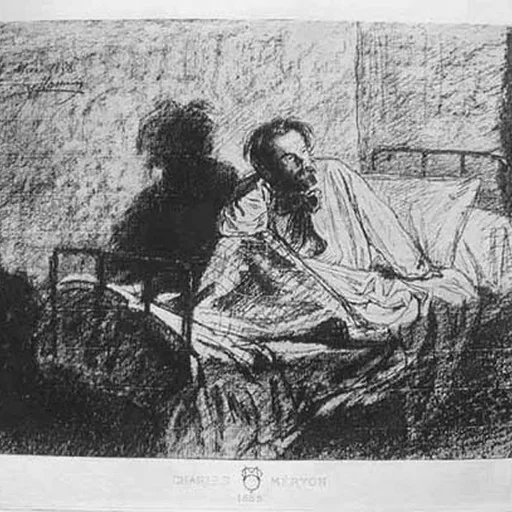
Charles Meryon (sometimes Méryon, 23 November 1821 – 14 February 1868) was a French artist who worked almost entirely in etching, as he had colour blindness.

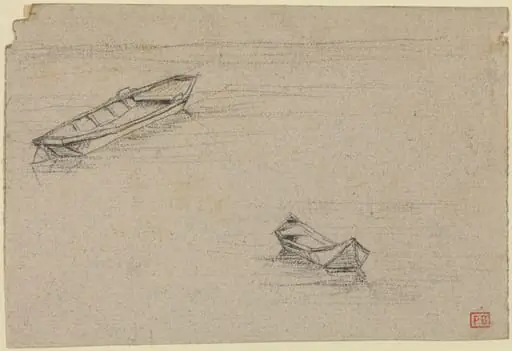
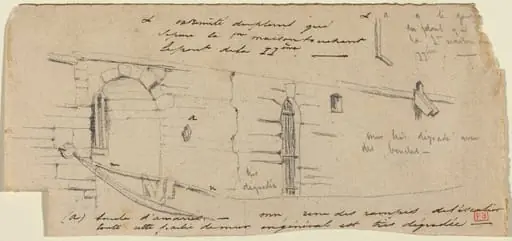
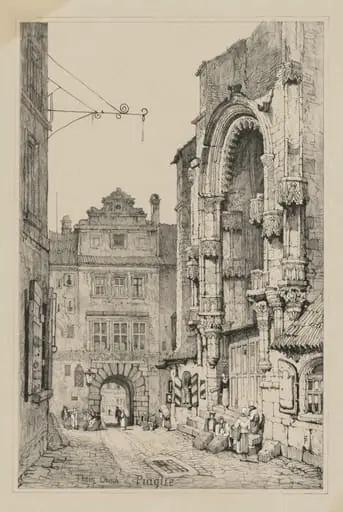 Facisimilies of Sketches made in Flanders and Germany: Thein Church, Prague
![The House with the Inscription [left], by Canaletto](https://artifactworldgallery.com/img/canaletto--the-house-with-the-inscription-left--c8e9fad25fb271b4-w320.webp) The House with the Inscription [left]
The House with the Inscription [left]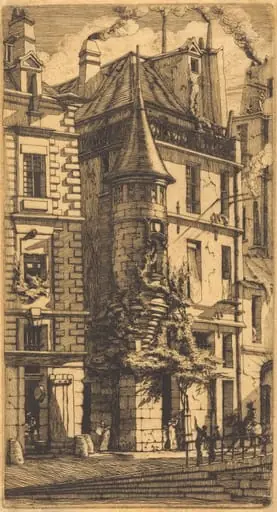 Tourelle de la Rue de la Tixéranderie, Paris (House with a Turret, Weavers' Street, Paris)
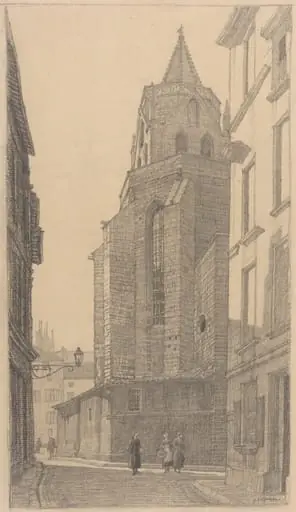 Apse of St.-Didier, Avignon
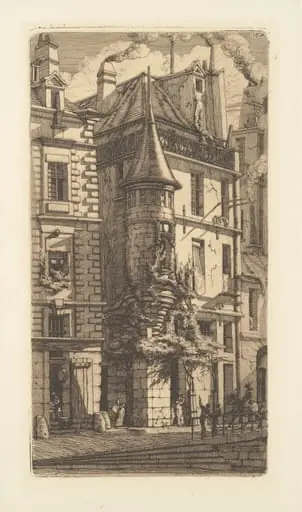 Tourelle, Rue de la Tixeranderie
![The House with the Inscription [left], by Canaletto](https://artifactworldgallery.com/img/canaletto--the-house-with-the-inscription-left--004a53931bcd41d0-w320.webp) The House with the Inscription [left]
The House with the Inscription [left]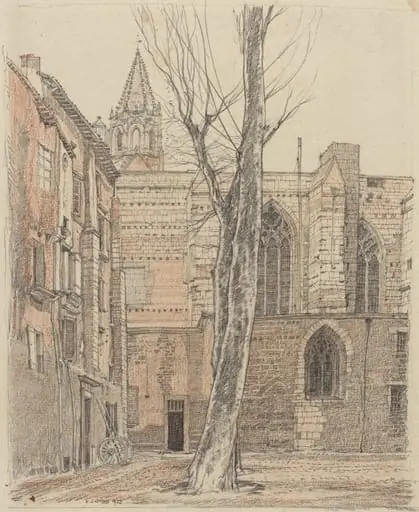 Cloitre St. Pierre, Avignon
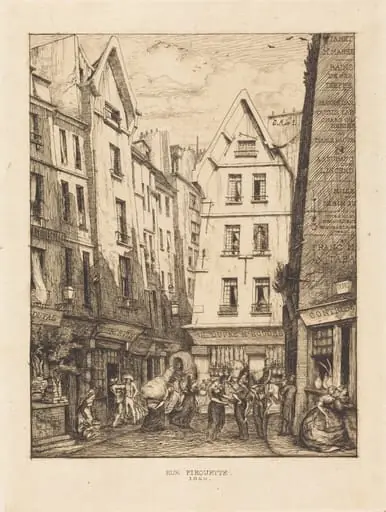 La Rue Pirouette aux halles, Paris (Pirouette Street, Near the Markets, Paris)