Artwork
The Kneeling Hermit Facing Right
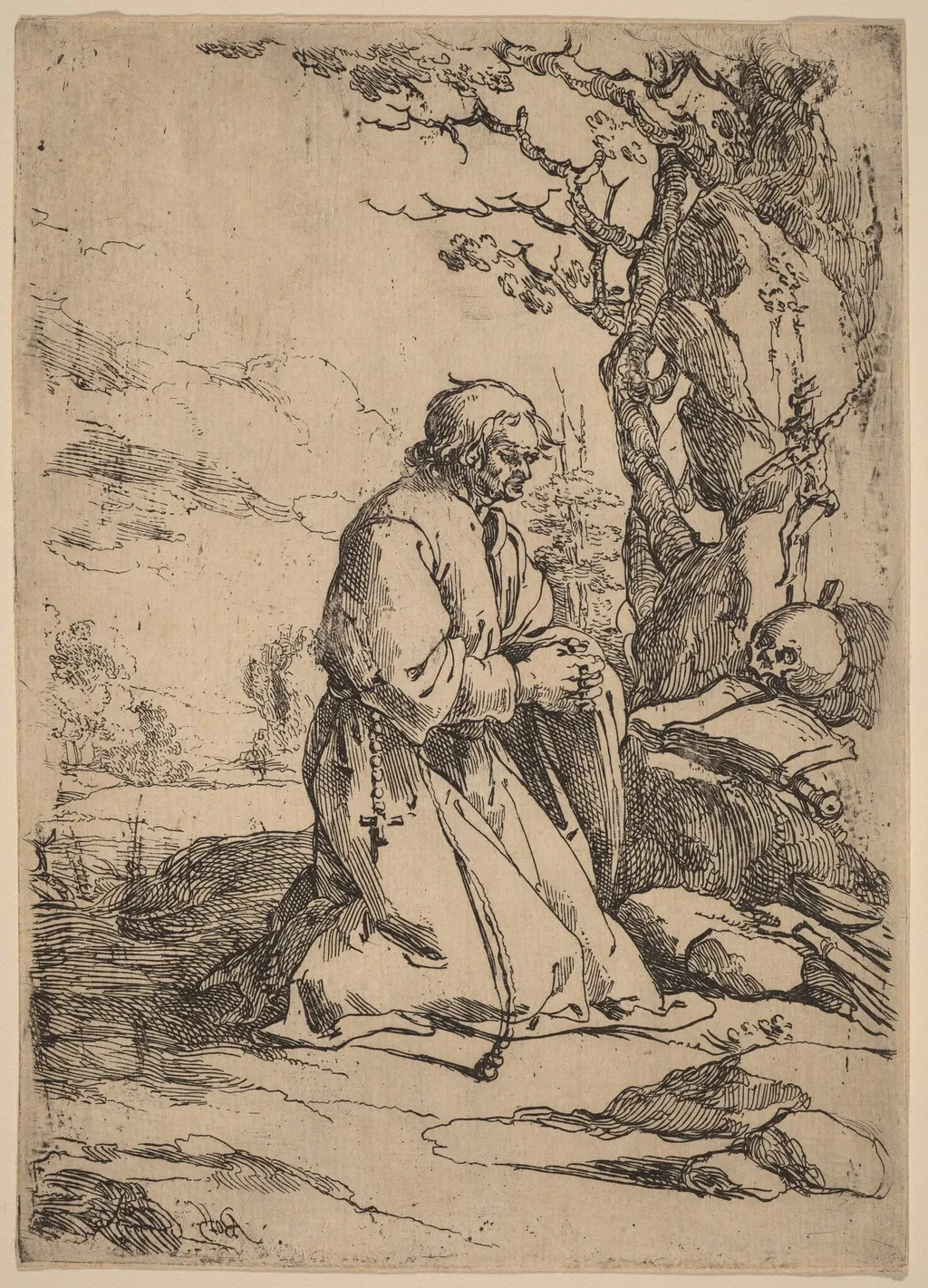
The Kneeling Hermit Facing Right is an ink print by the Baroque artist Andries Both. It dates from 1626 and is held in the collection of the National Gallery of Art.
About this work
Overview
Executed during Both’s time in Rome, the work belongs to a small group of prints that reflect the bamboccianti interest in humble, everyday figures.
Created in 1626 by Dutch artist Andries Both, this etching captures a solitary hermit in a moment of quiet prayer. Executed during Both’s time in Rome, the work belongs to a small group of prints that reflect the bamboccianti interest in humble, everyday figures. Unlike grand religious narratives, it focuses on personal devotion through minimal means, using the precision of etching to render texture and atmosphere with subtle economy.
Subject & Meaning
The figure, a hermit kneeling in contemplation, holds a rosary and faces right, his posture suggesting introspection. To his right, a skull and crossbones rest on the ground—symbols of mortality and spiritual preparation. The absence of elaborate iconography directs attention to the inner life of the subject. The scene avoids theatricality, instead emphasizing quiet piety and the solitary nature of ascetic practice in a rural setting.
Technique & Style
Both employed etching to achieve fine linear detail and tonal variation, using controlled incisions to suggest the texture of fabric, foliage, and rocky ground. The cloudy sky is rendered with soft, atmospheric washes, while the hermit’s robe and the skull are defined by sharper, deliberate lines. The composition’s simplicity and focus on naturalism align with the bamboccianti preference for unidealized observation over idealized form.
History & Provenance
Andries Both, active in Rome between 1620 and 1635, produced this print during a period when Northern European artists in Italy began documenting local peasant life. While few of his etchings survive in large numbers, this work is documented in early 17th-century collections. Its survival suggests it was valued for its intimate scale and devotional tone, though it was never widely circulated like more popular prints of the era.
Context
This print emerged within the bamboccianti circle, a group of Northern artists in Rome who rejected classical grandeur in favor of scenes from the city’s margins. Their works often included beggars, laborers, and hermits—figures overlooked by mainstream religious art. Both’s etching fits this trend, offering a quiet counterpoint to the monumental altarpieces of the Counter-Reformation, grounded in the lived reality of Rome’s outskirts.
Legacy
Though Andries Both’s reputation faded after his early death, this etching remains a representative example of the bamboccianti approach to spiritual subjects. It influenced later artists interested in modest, psychologically grounded depictions of religious life. Its endurance in museum collections reflects its quiet power as a study in solitude, not as spectacle, but as sustained inner reflection.
Artist & collection
Artist
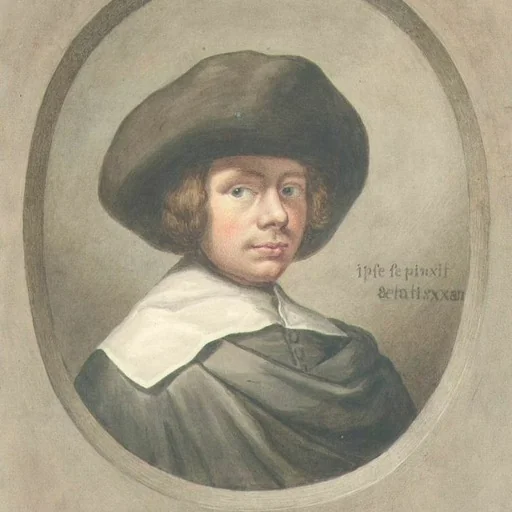
Andries Both (1612/1613 – 23 March 1642), was a Dutch genre painter. He was part of the group of Dutch and Flemish genre painters active in Rome in the 17th century known as the bamboccianti, who painted scenes from the…

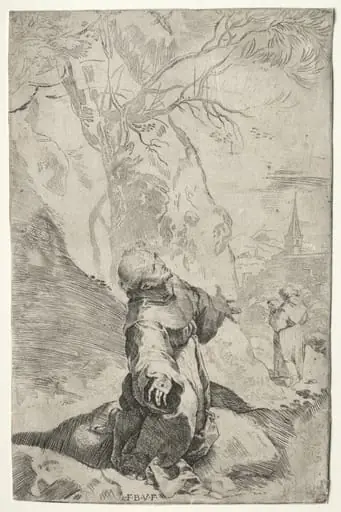 St. Francis Receiving the Stigmata
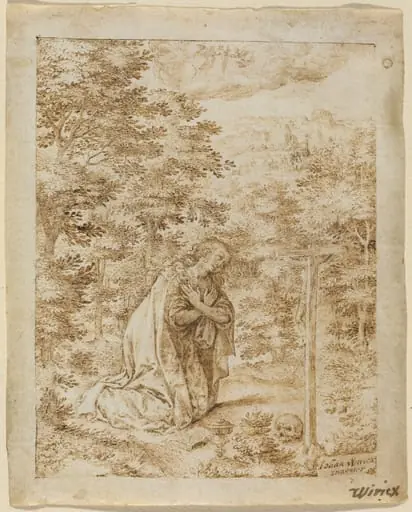 Mary Magdalene Praying in the Wilderness
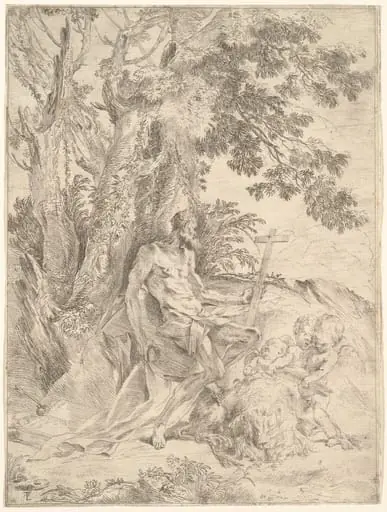 Saint Jerome
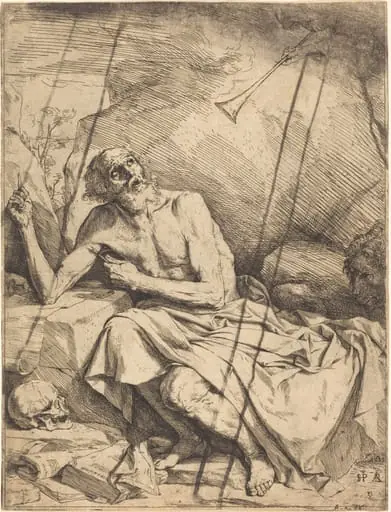 Saint Jerome Hearing the Trumpet of the Last Judgment
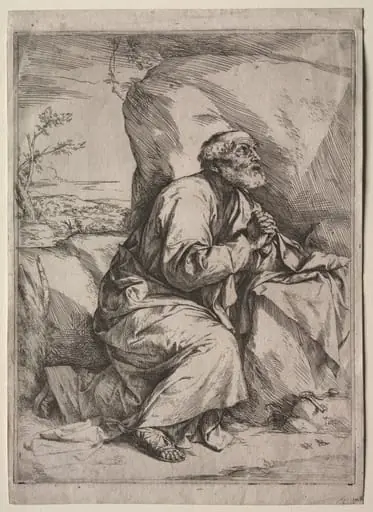 The Penitent St. Peter
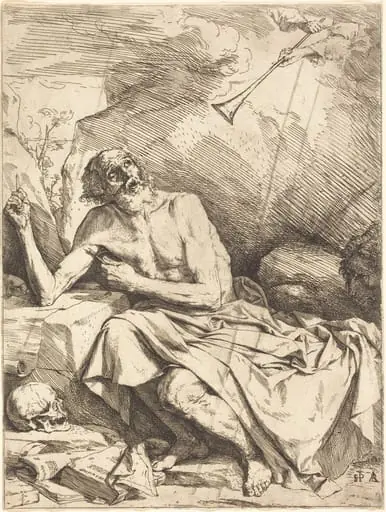 Saint Jerome Hearing the Trumpet of the Last Judgment
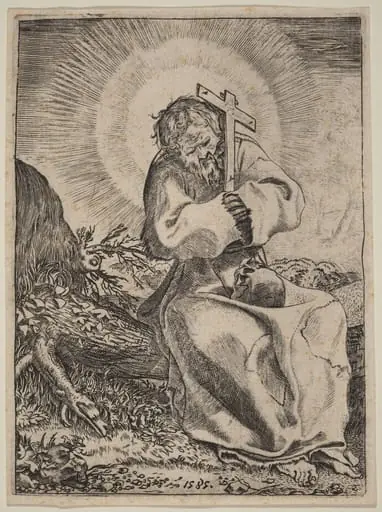 Saint Francis of Assisi
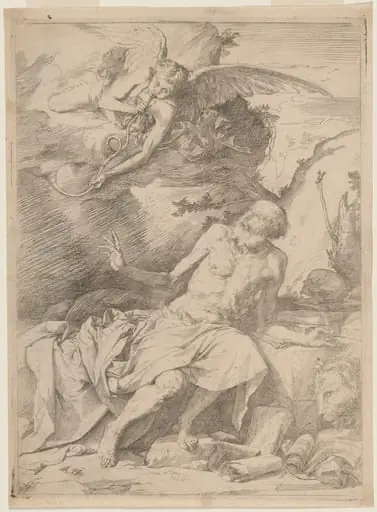 Saint Jerome Hearing the Trumpet of the Last Judgement
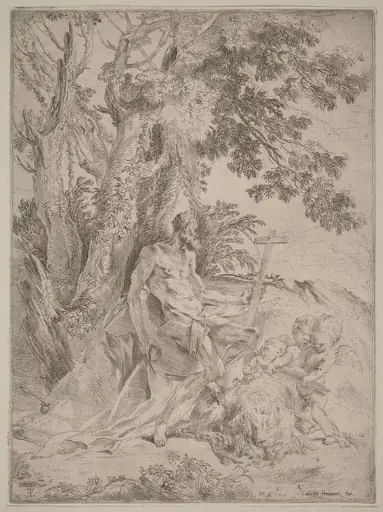 Saint Jerome
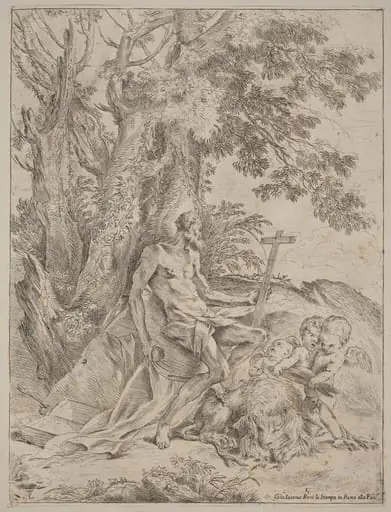 Saint Jerome