Artwork
Title Plate to John Hayward, Life and Reigne of King Edward the Sixth
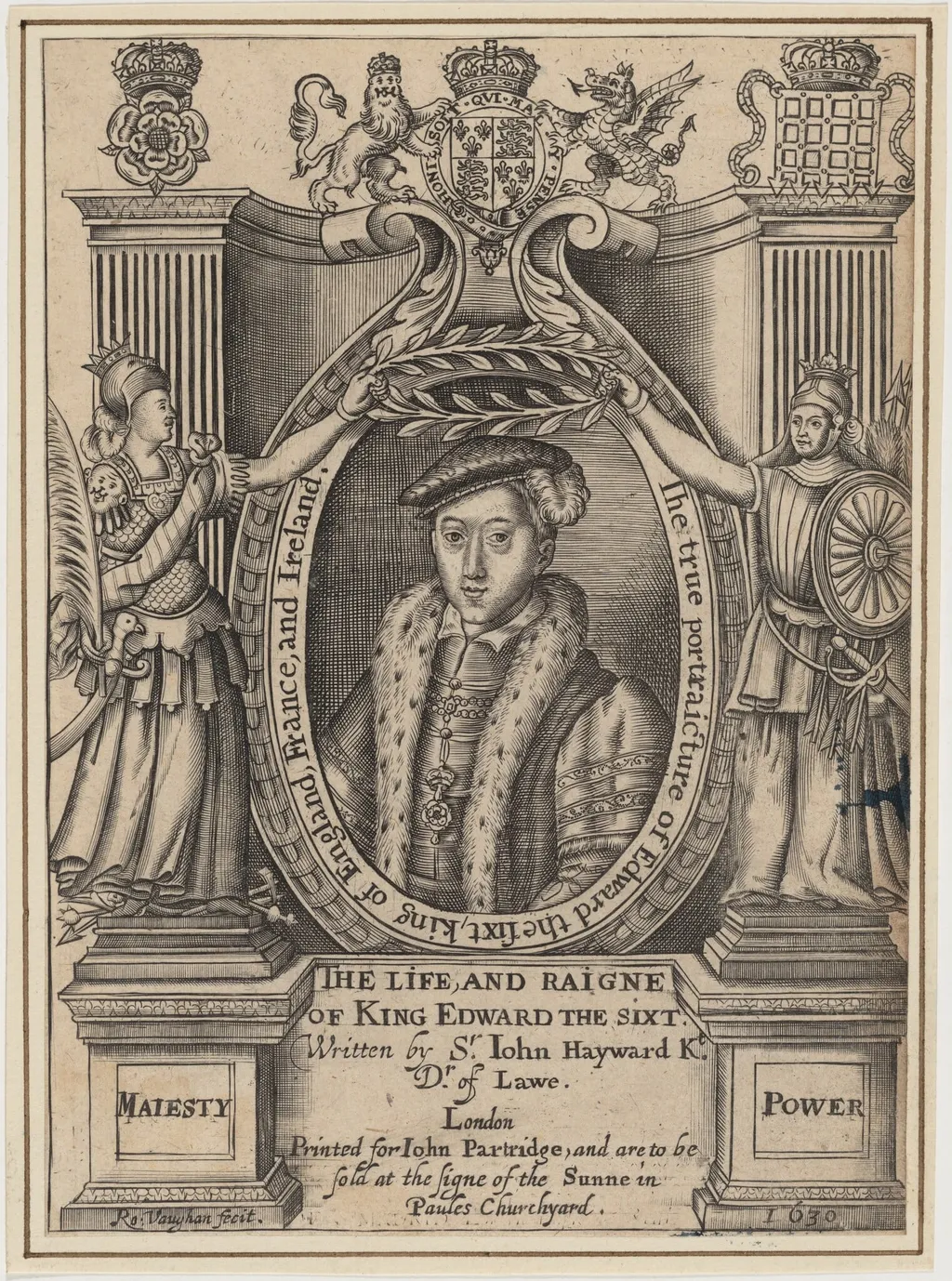
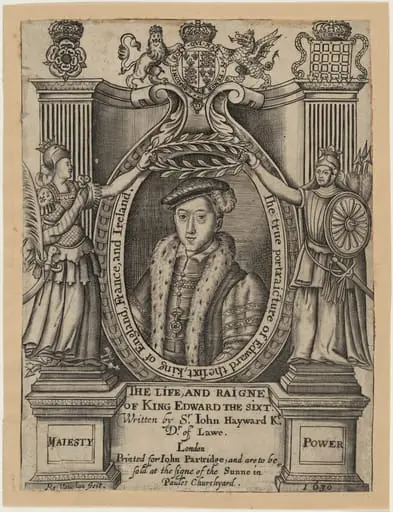
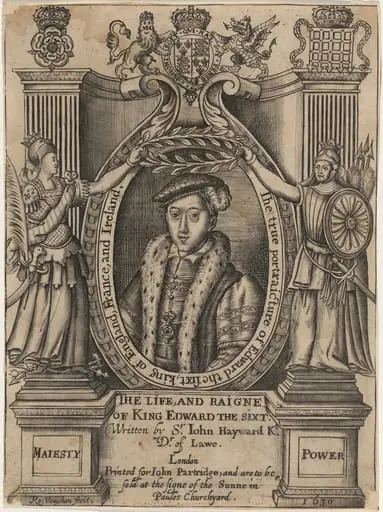
Title Plate to John Hayward, Life and Reigne of King Edward the Sixth is an ink print by the Baroque artist Robert Vaughan. It dates from 1630 and is held in the collection of the National Gallery of Art.
About this work
Behind him is a coat of arms, and the words around him say things like "France and Ireland" and "the true portraiture of forward.
This print shows a man in a fur collar framed by two standing figures. The man’s face is front and center, with a crown above him. Behind him is a coat of arms, and the words around him say things like "France and Ireland" and "the true portraiture of forward." The two figures on the sides each hold a scroll—one labeled "Majesty," the other "Power."
The print is the title page for a book about King Edward VI, published in 1630. The artist, Robert Vaughan, used fine lines to create shadows and texture, a technique called cross-hatching.
Try looking up cross-hatching to see how artists build depth with just lines.
Overview
Robert Vaughan’s engraving, dated 1630, served as the title plate for John Hayward’s historical work on King Edward VI. The print presents a central figure wearing a fur‑trimmed collar and a crown, flanked by two standing allegorical figures, each holding a scroll.
Subject & Meaning
The crowned man represents Edward VI, while the surrounding inscriptions reference his dominions—France and Ireland—and allude to the concepts of majesty and power. The allegorical figures, labeled “Majesty” and “Power,” reinforce the political authority associated with the young monarch.
Technique & Style
Vaughan employed fine cross‑hatching, a method of intersecting lines, to render shadows, texture, and depth across the composition. This approach creates a nuanced tonal range despite the monochrome medium, emphasizing the regal attire and heraldic elements.
History & Provenance
Created for the 1630 publication of Hayward’s biography of Edward VI, the engraving was likely printed as part of the book’s front matter. Its survival in library collections attests to its role in disseminating royal propaganda during the early Stuart period.
Context
The early seventeenth century saw a resurgence of interest in Tudor history, often framed to support contemporary notions of sovereign legitimacy. Vaughan’s plate reflects this trend, using visual symbolism to link Edward VI’s brief reign with broader claims of English authority over France and Ireland.
Artist & collection

 Title Plate to John Hayward, Life and Reigne of King Edward the Sixth
 Title Plate to John Hayward, Life and Reigne of King Edward the Sixth
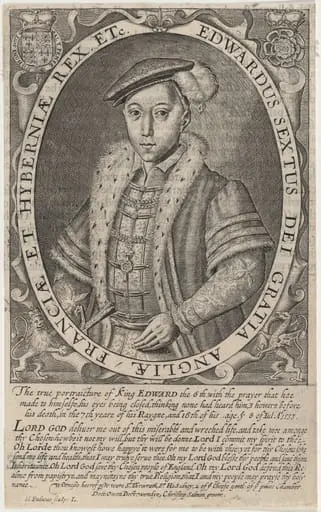 Edward VI
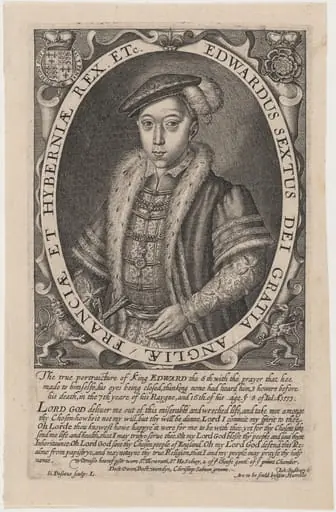 Edward VI of England
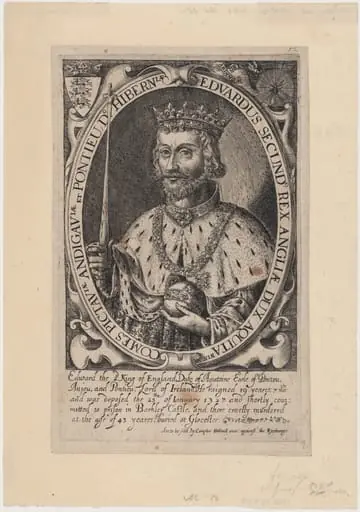 Edward II of England
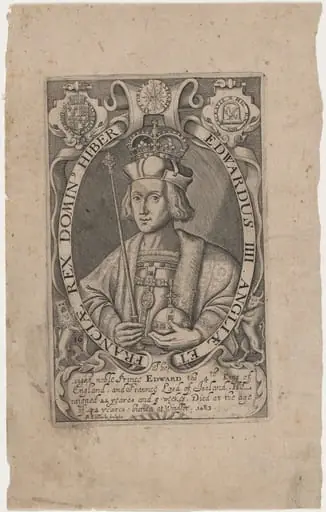 Edward IV of England
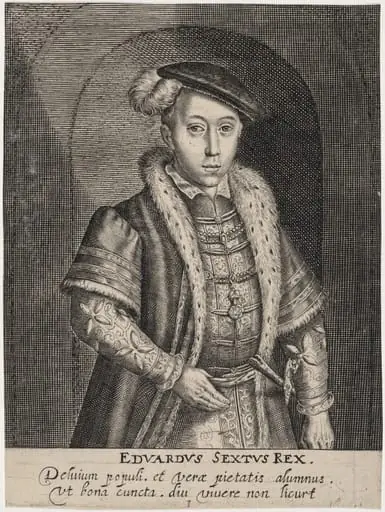 Edward VI
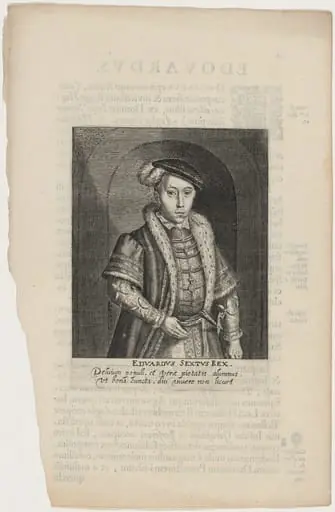 Edward VI
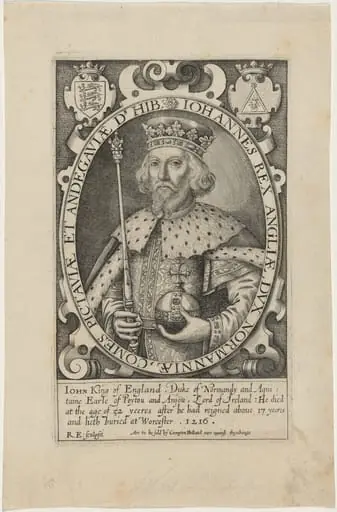 King John of England
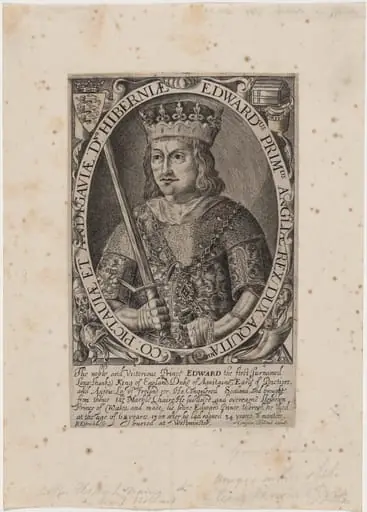 Edward I of England
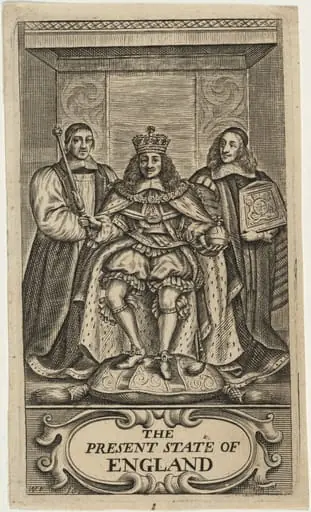 Title Page to The Edward Chamberlayne, The Present State of England