Artwork
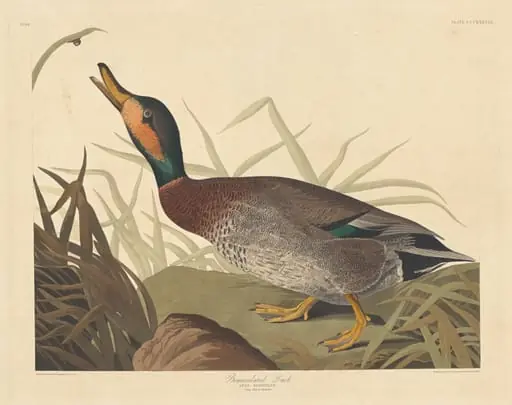
Bimaculated Duck
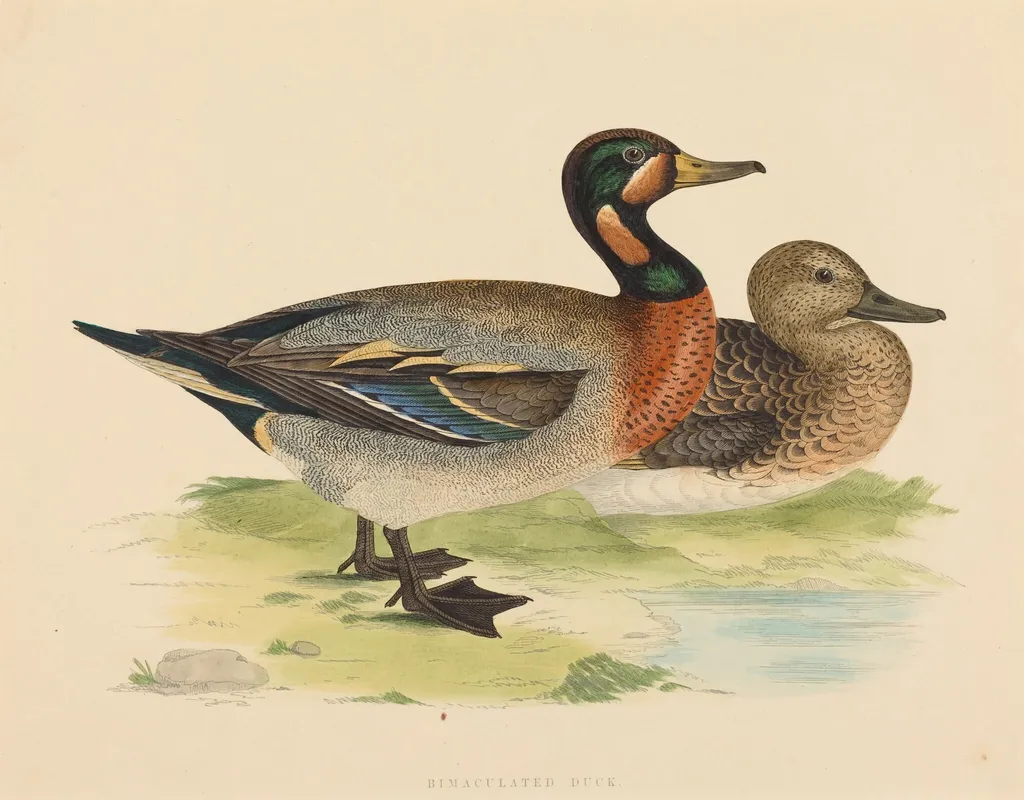
Bimaculated Duck is an ink print by the Impressionist artist British 19th Century. It dates from 1855 and is held in the collection of the National Gallery of Art.
About this work
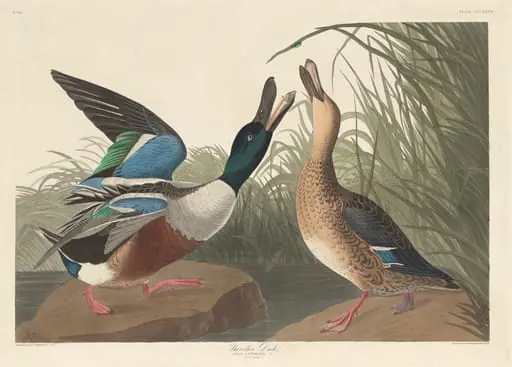
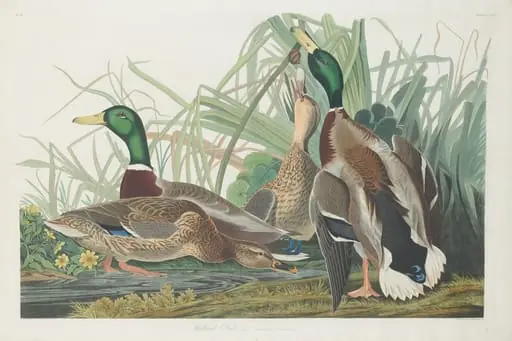
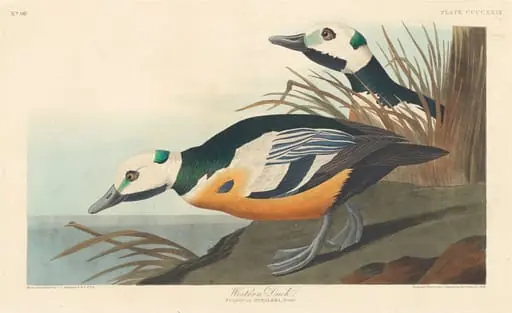
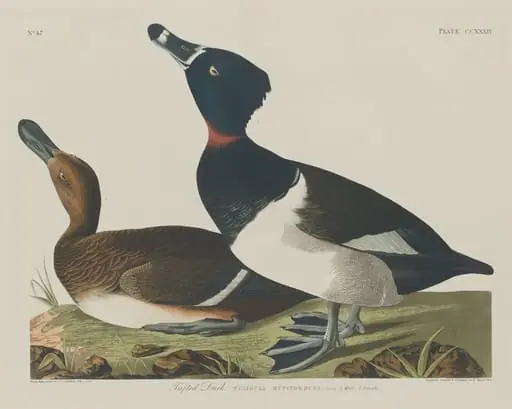
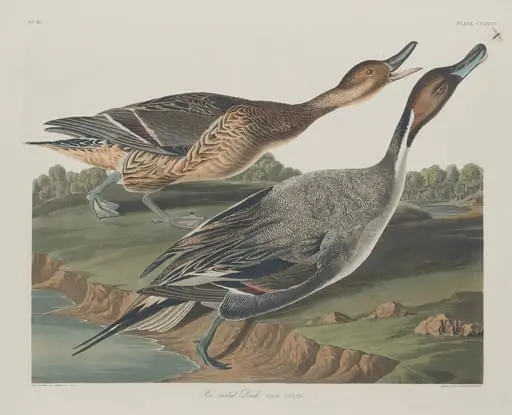
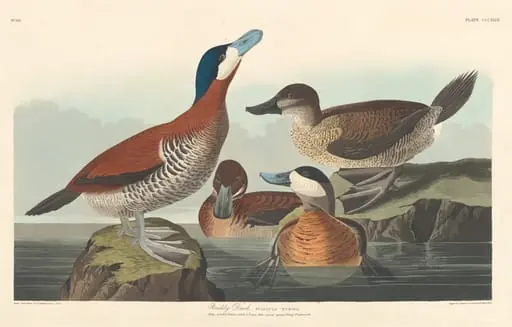
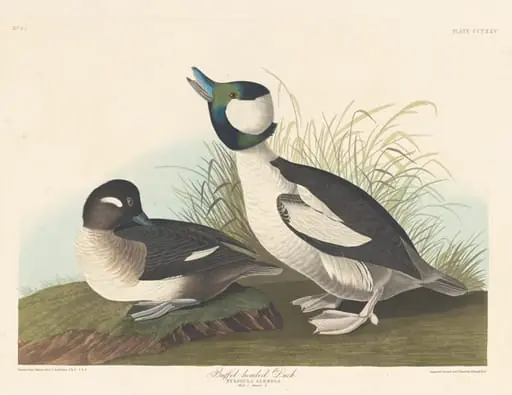
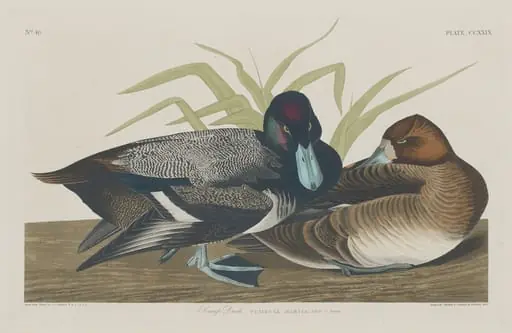
You see a duck with two black patches near its beak. Its body is brown with white speckles. A green wing patch stands out against the brown.
This is a color lithograph from 1855. It’s not a painting—ink was pressed onto paper in layers. The artist used fine lines to show every feather’s edge.
Look up lithography next. It’s a way to print art with flat stones and greasy ink.
Overview
The work titled “Bimaculated Duck” is a color lithograph produced in 1855. Executed on paper, the image presents a duck distinguished by two dark markings near its beak, a brown plumage speckled with white, and a vivid green patch on one wing. The piece functions as a naturalistic illustration rather than a narrative composition.
Subject & Meaning
The subject is a male bimaculated duck (Mergellus albellus), rendered with attention to distinctive field marks that aid identification. By highlighting the bird’s characteristic coloration and feather pattern, the print serves an educational purpose, likely intended for a scientific or popular audience interested in ornithology.
Technique & Style
Created through lithography, the artist drew directly onto a limestone surface with a greasy medium, then treated the stone so that ink adhered only to the drawn areas. Multiple stones were employed to apply separate colors, allowing layered tones. Fine linear work delineates each feather edge, producing a precise, almost taxonomic visual style.
History & Provenance
The lithograph dates to the mid‑nineteenth century, a period when printed natural history illustrations were widely circulated in books and periodicals. While the specific publisher is not recorded here, such prints were commonly issued by scientific societies or commercial firms distributing educational material to collectors and libraries.
Context
In the 1850s, advances in lithographic technology enabled mass production of detailed animal studies, meeting growing public interest in natural science sparked by explorers and the expansion of museum collections. The “Bimaculated Duck” reflects this trend, combining artistic skill with the era’s demand for accurate visual documentation of wildlife.
Artist & collection

Artist
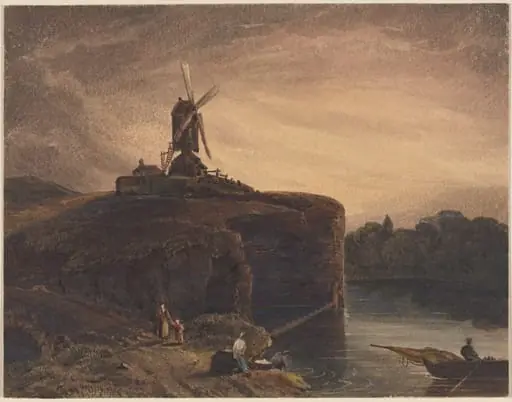
This artist’s short life left behind a quiet obsession with water—whether the churn of a mill wheel, the choppy waves off England’s south coast, or the way light bounces off pond lilies.