Artwork
Red-Headed Duck
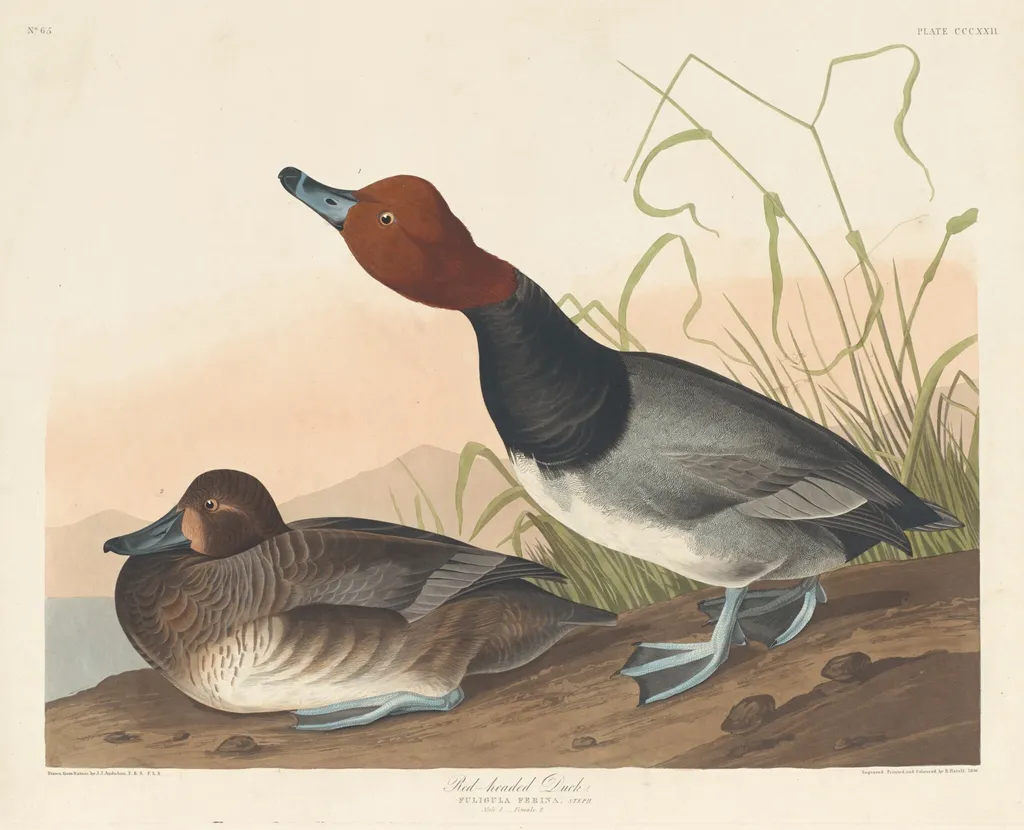
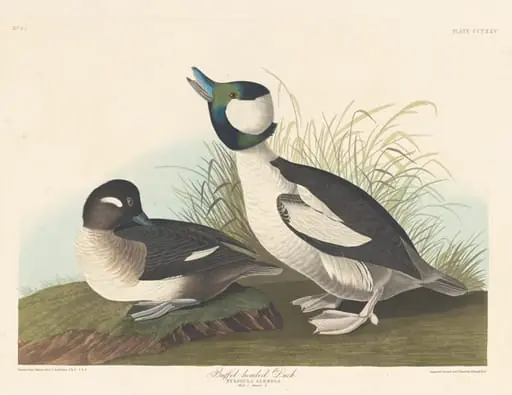
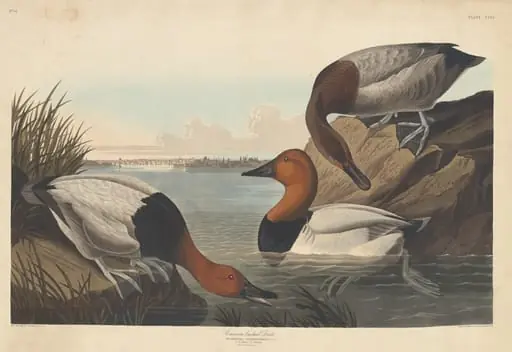
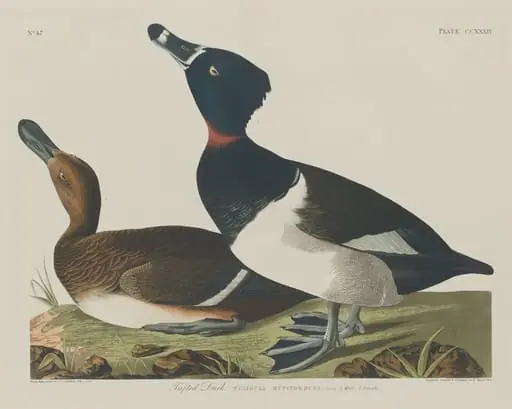
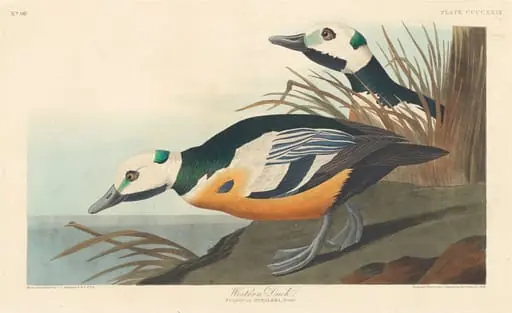
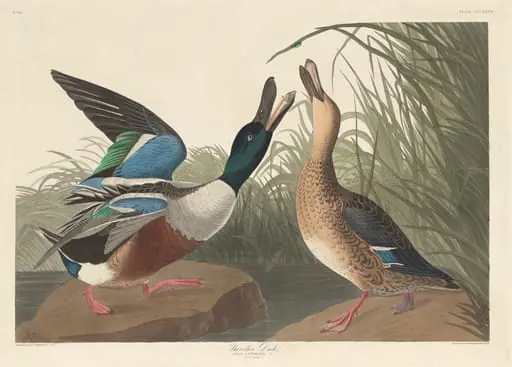
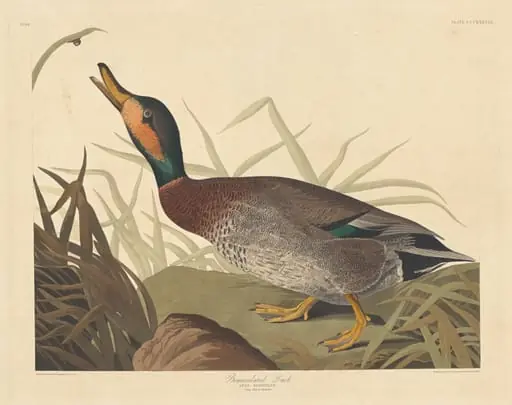
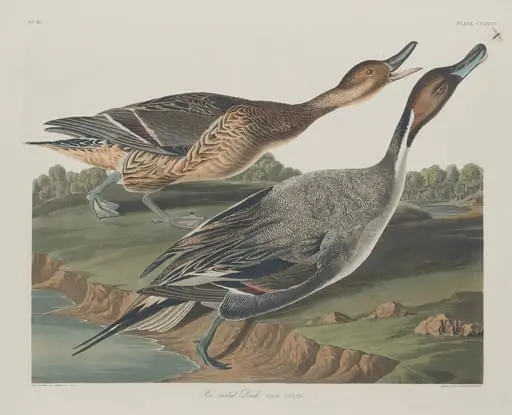
Red-Headed Duck is an ink print by the Romanticist artist Robert Havell Jr.. It dates from 1836 and is held in the collection of the National Gallery of Art. Created in 1836, *Red‑Headed Duck* is a hand‑colored print that combines engraving with aquatint on smooth Whatman wove paper.
About this work
Overview
Created in 1836, *Red‑Headed Duck* is a hand‑colored print that combines engraving with aquatint on smooth Whatman wove paper. The image presents a vividly rendered waterfowl against a natural backdrop, reflecting the period’s interest in detailed, scientific illustration of wildlife.
Technique & Style
The work employs a dual process: a fine line engraving establishes the bird’s form, while aquatint provides tonal washes that suggest depth and texture. After printing, selective hand‑coloring adds the characteristic crimson plumage, a method typical of early‑19th‑century natural history plates.
Context
Robert Havell Jr., a member of the Havell family of Reading, Berkshire, produced the print within a lineage renowned for engraving and for collaborations with naturalists. The family’s connections to Indian artistic traditions and to the burgeoning market for illustrated scientific books shaped the print’s aesthetic and purpose.
History & Provenance
The print remains attributed to Havell Jr., whose career was anchored in the multigenerational Havell workshop. It exemplifies the type of image that would have been distributed in contemporary publications, serving both educational and decorative functions for collectors of natural history material.
Own this work as a print
Artist & collection

Artist
The Havell family of Reading, Berkshire, England, included a number of notable engravers, etchers and painters, as well as writers, publishers, educators, and musicians.