Artwork
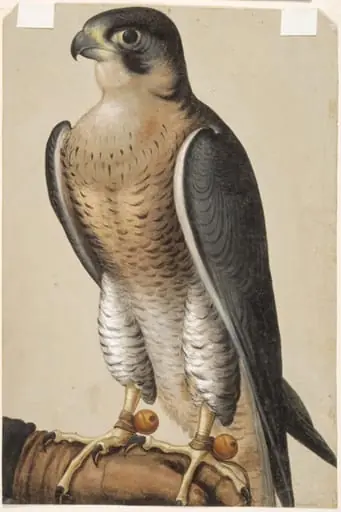
Barbary Falcon - Adult male
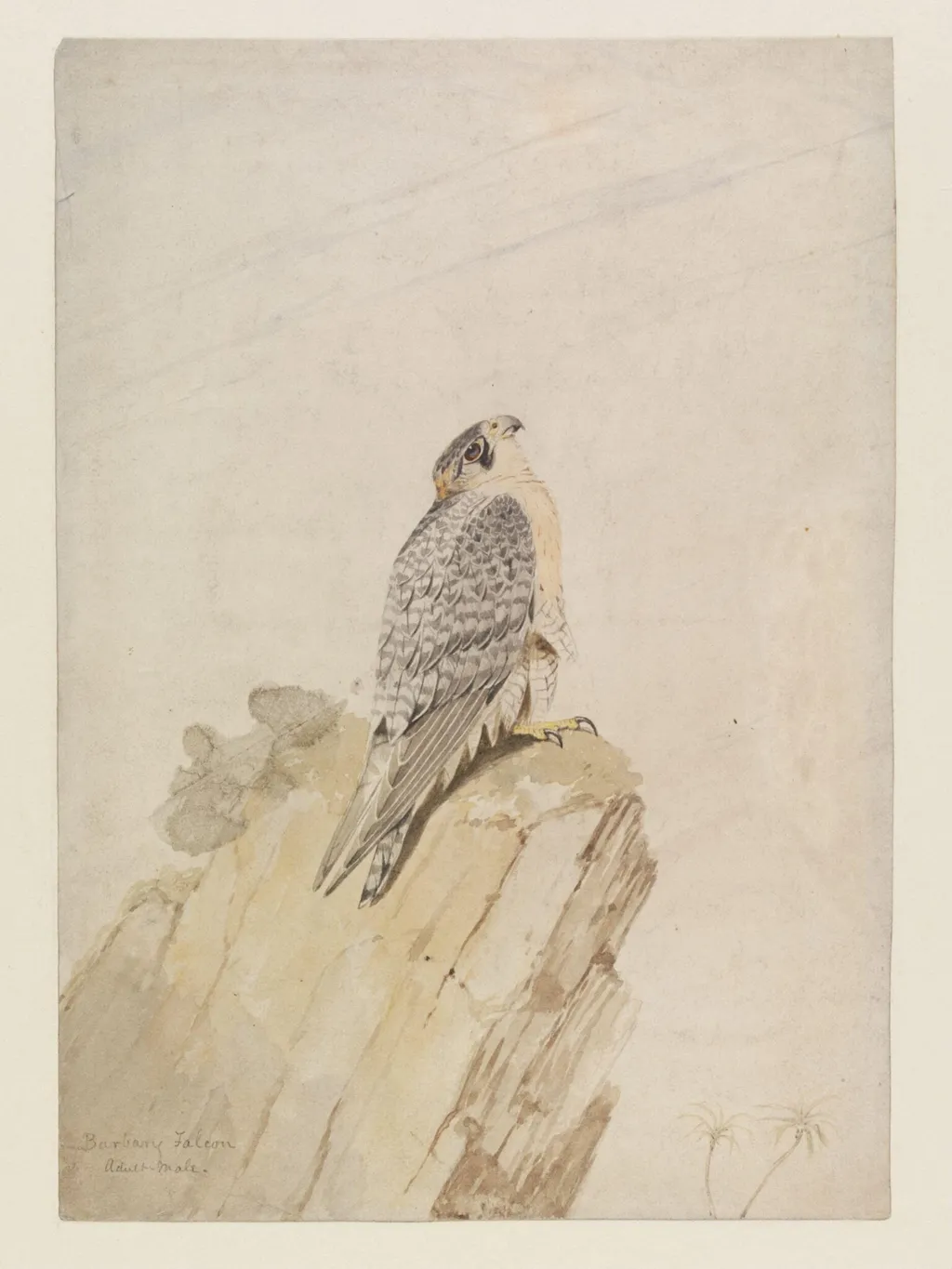
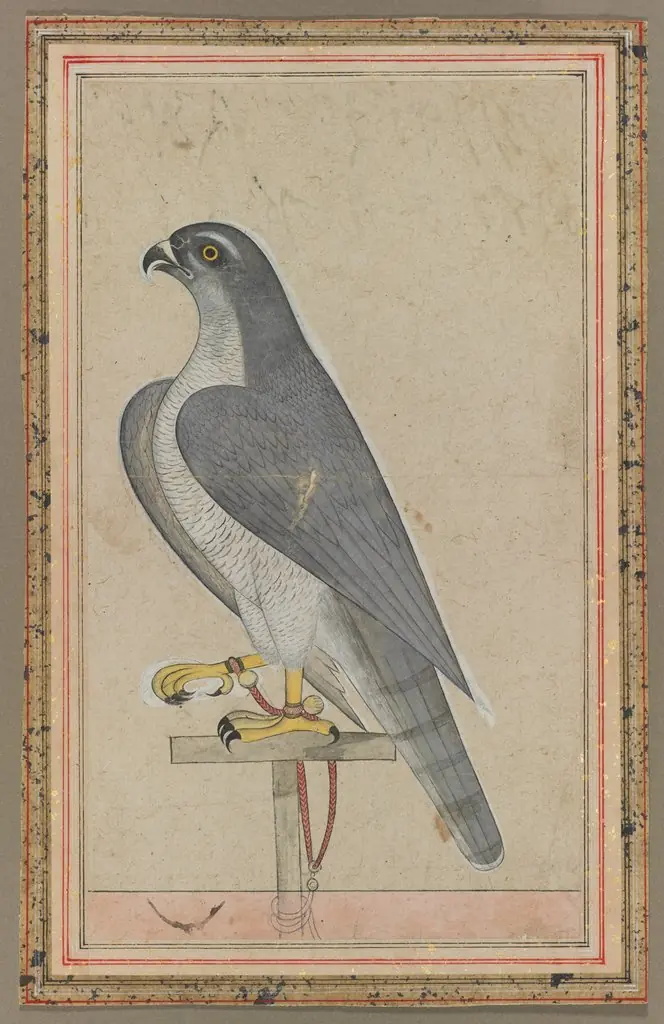
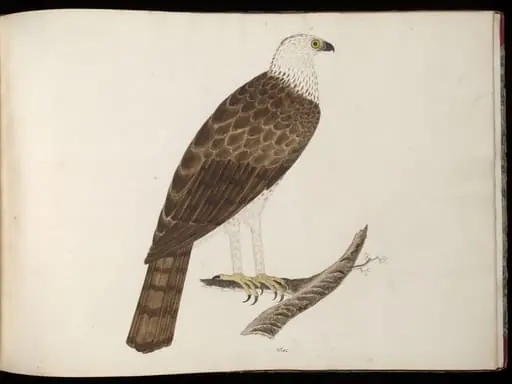
Barbary Falcon - Adult male is a watercolor work on paper by the Impressionist artist William Brodrick. It dates from 1872 and is held in the collection of the Victoria and Albert Museum.
About this work
Overview
The work was later adapted into a lithograph for the 1873 second edition of *Falconry in the British Isles*, where Brodrick is credited as the lithographer.
Created in 1872, this watercolour depicts an adult male Barbary falcon, painted by William Brodrick. The work was later adapted into a lithograph for the 1873 second edition of *Falconry in the British Isles*, where Brodrick is credited as the lithographer. The original piece remained in private hands until its acquisition by M. Strange in 1970. Its quiet composition and precise detail reflect Brodrick’s focus on ornithological accuracy within a restrained aesthetic.
Subject & Meaning
The painting portrays a solitary male Barbary falcon perched on a rugged stone, its posture alert and still. The bird’s plumage—gray with dark streaking—and facial markings of black and orange are rendered with careful observation. No narrative or symbolic context is implied; the focus is on the falcon as a specimen of natural form, emphasizing its presence and readiness, consistent with the scientific documentation of raptors in 19th-century falconry literature.
Technique & Style
Executed in watercolour, the piece employs soft washes and subtle layering to suggest texture without heavy detail. The bird’s feathers are defined by delicate gradations of tone, while the jagged rock is rendered with minimal, rough strokes. The plain background, with only faint hints of distant vegetation, isolates the subject and enhances its immediacy. The technique prioritizes clarity and naturalism over decorative flourish.
History & Provenance
The original watercolour was completed in 1872 and subsequently reproduced as a lithographic plate for *Falconry in the British Isles* (1873). Brodrick, known for his contributions to ornithological publications, also illustrated *Falconers’ Favourites* in 1865. The painting remained in private ownership until September 1970, when it was acquired by M. Strange. Its transition from original study to printed illustration reflects the period’s practice of using art to support natural history scholarship.
Context
In the late 19th century, detailed bird illustrations served both scientific and sporting interests, particularly among British falconers. Brodrick’s work aligns with a tradition of naturalist art that valued precision over artistic expression. His illustrations supported publications that documented raptor species for practical use in hunting and breeding, contributing to a broader cultural effort to classify and preserve knowledge of avian life.
Legacy
Brodrick’s watercolours, including this depiction of the Barbary falcon, remain as records of ornithological observation from a time when visual documentation was essential to biological study. Though not widely exhibited, his illustrations circulated through specialized texts, influencing how falconers and naturalists perceived raptor anatomy. His work endures as part of a quiet but significant archive of 19th-century natural history art.
Own this work as a print
Artist & collection
Artist
William Brodrick painted birds in watercolour during the late 19th century. His Barbary Falcon – Adult male from 1872 shows a sharp-eyed raptor perched on a branch, the brown feathers catching the light. It’s a quiet…