Artwork
Labrador Falcon
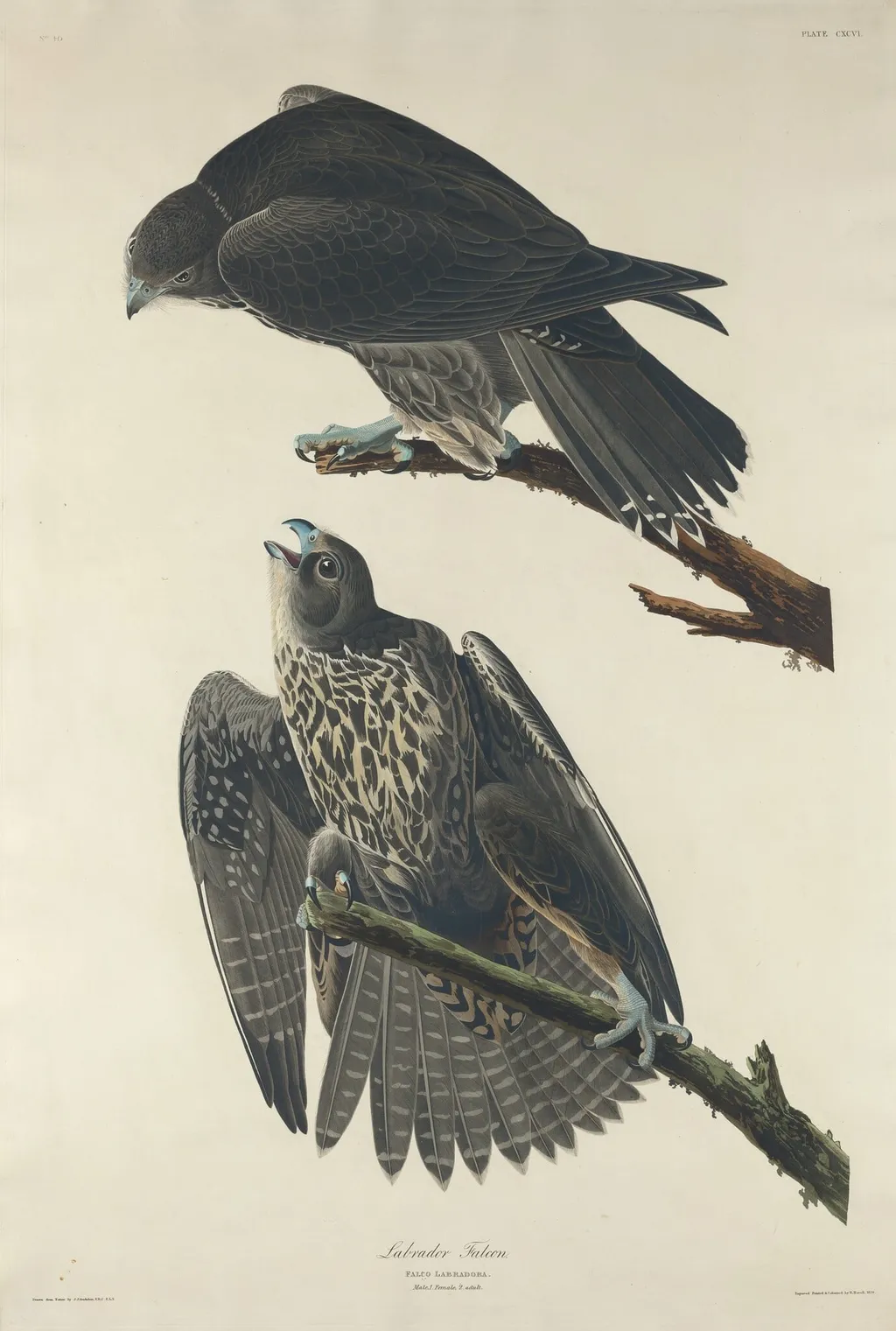
Labrador Falcon is an ink print by the Romanticist artist Robert Havell Jr.. It dates from 1834 and is held in the collection of the National Gallery of Art.
About this work
Overview
It belongs to a series of natural history illustrations produced by the Havell family, known for their technical precision in printmaking.
Created in 1834 by Robert Havell Jr., this print is a hand-colored engraving and aquatint on Whatman wove paper. It belongs to a series of natural history illustrations produced by the Havell family, known for their technical precision in printmaking. The work exemplifies the family’s long-standing role in British scientific illustration, particularly through their collaboration with ornithological publications of the period.
Subject & Meaning
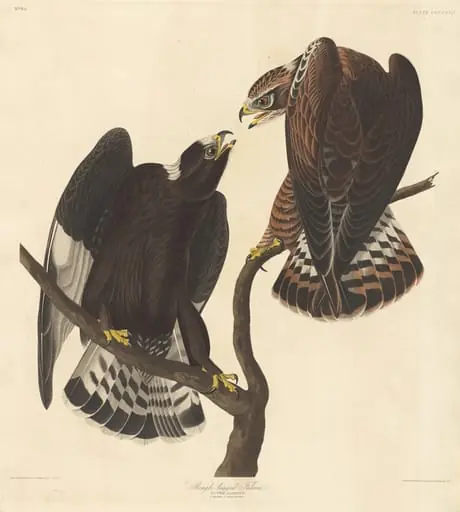
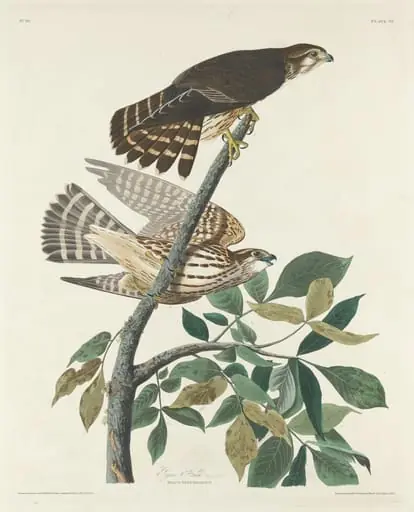
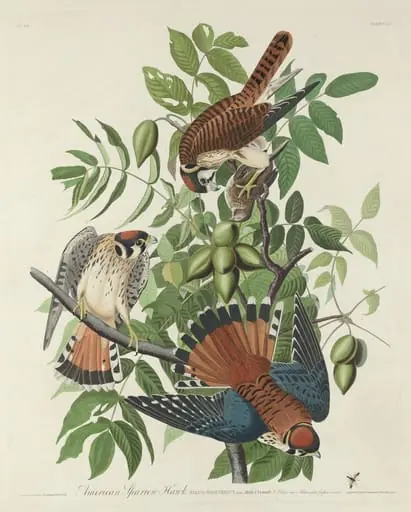
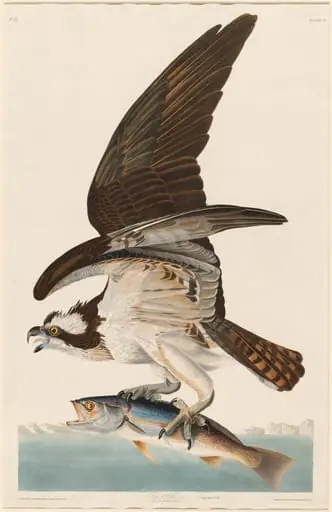
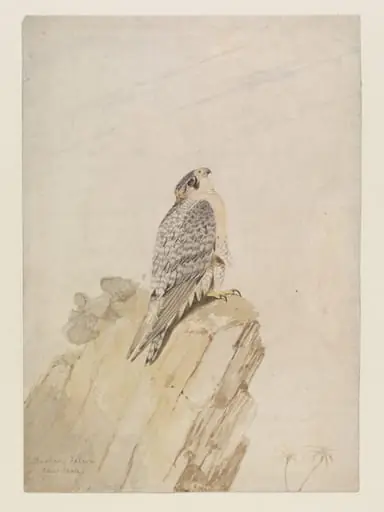
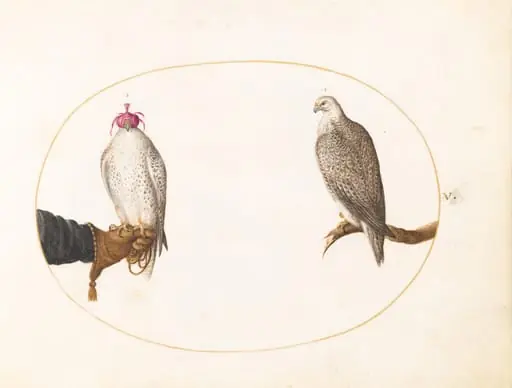
The image depicts two falcons perched on branches, one facing left and the other right, wings partially spread. Their postures suggest alertness, capturing a moment of stillness before movement. The birds are rendered without symbolic embellishment, emphasizing observational accuracy over narrative. This focus reflects the scientific intent of 19th-century natural history illustration, where visual fidelity served as a tool for classification and study.
Technique & Style
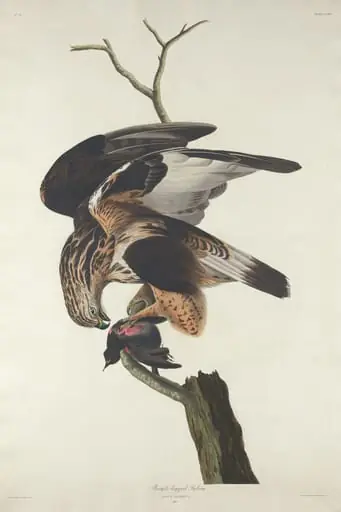
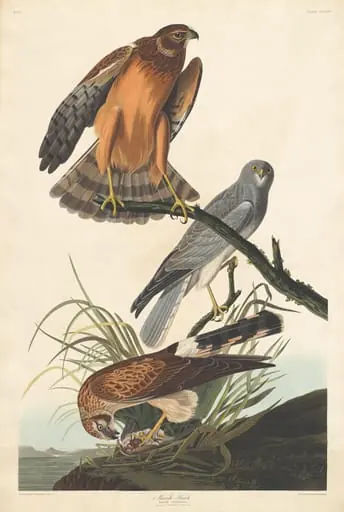
Havell employed aquatint to achieve subtle tonal gradations in the falcons’ plumage, enhanced by delicate hand-coloring. The feathers are rendered with fine engraving lines that define texture and volume, while the branches are treated with softer, atmospheric tones to avoid competing with the birds. The use of Whatman paper, prized for its smooth surface, allowed for precise ink hold and color layering, supporting the work’s lifelike detail.
History & Provenance
Robert Havell Jr. was part of a multi-generational family of engravers based in Reading, Berkshire, who specialized in natural history prints. His father and uncle were key figures in the field, and Havell Jr. continued their legacy through work on major publications. This print likely originated from a larger project, possibly linked to John James Audubon’s ornithological surveys, though it was produced independently of direct collaboration.
Context
In the 1830s, British printmakers were central to the dissemination of scientific knowledge through visual media. Natural history illustration was both an artistic and scholarly pursuit, often funded by institutions or private patrons. Havell’s work emerged within this ecosystem, where accuracy, craftsmanship, and accessibility were equally valued in reaching audiences beyond academia.
Legacy
The Havell family’s prints remain valued for their technical mastery and contribution to the visual record of avian species. While not widely exhibited today, their works are held in institutional collections as important artifacts of early scientific publishing. Robert Havell Jr.’s prints continue to be referenced in studies of 19th-century printmaking and the history of ornithology.
Artist & collection

Artist
The Havell family of Reading, Berkshire, England, included a number of notable engravers, etchers and painters, as well as writers, publishers, educators, and musicians.