Artwork
Louisiana Hawk
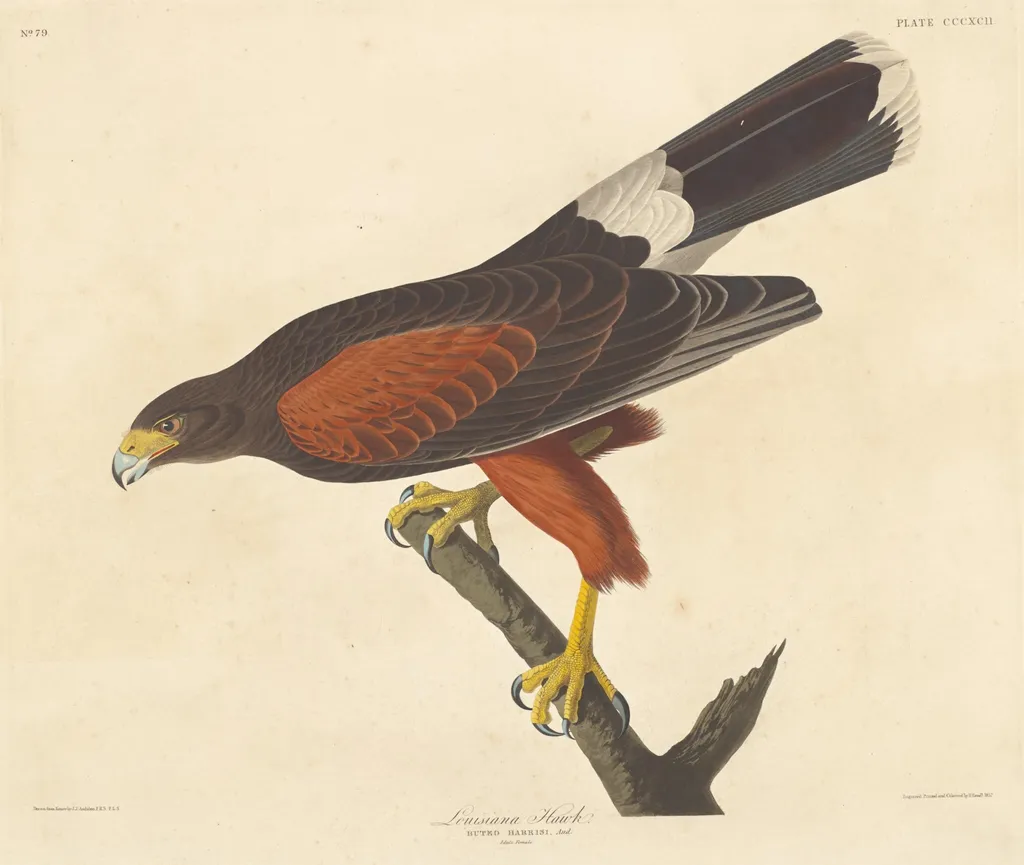
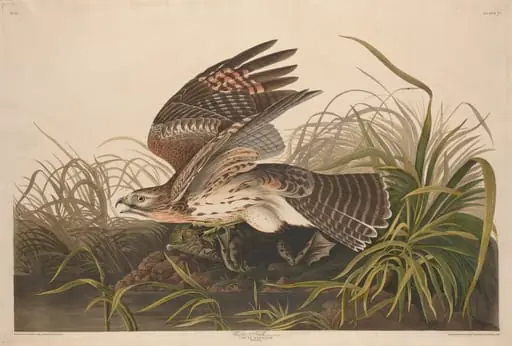
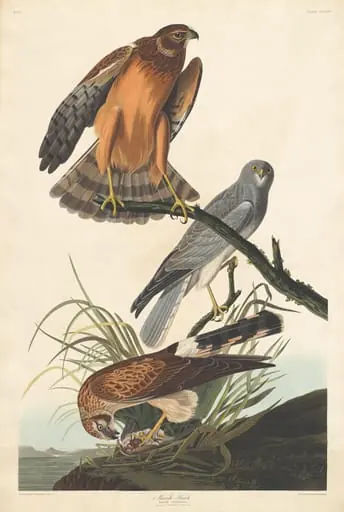
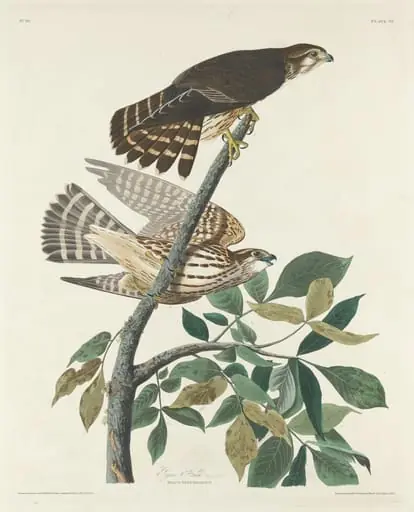
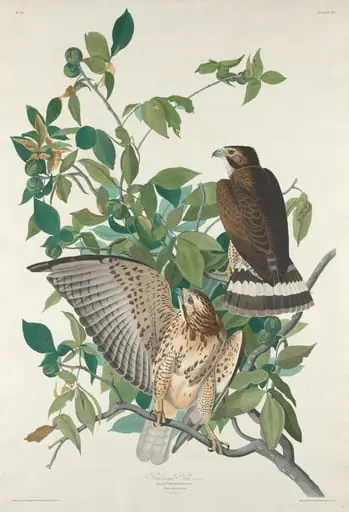
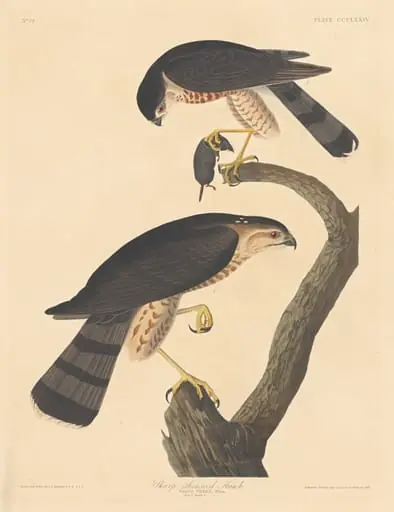
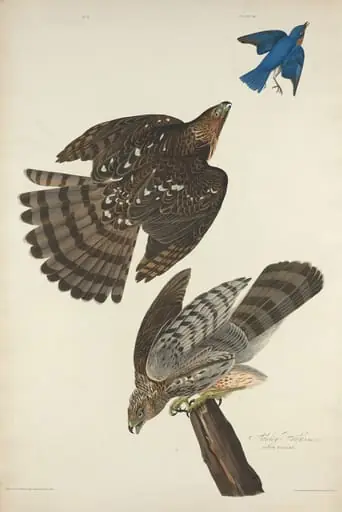
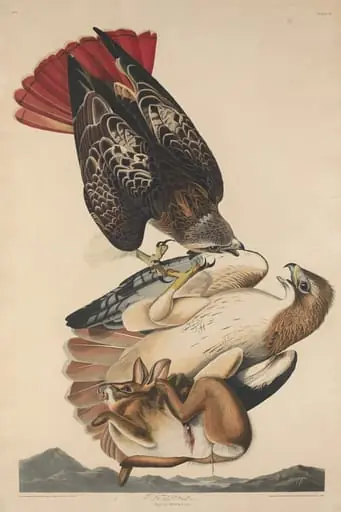
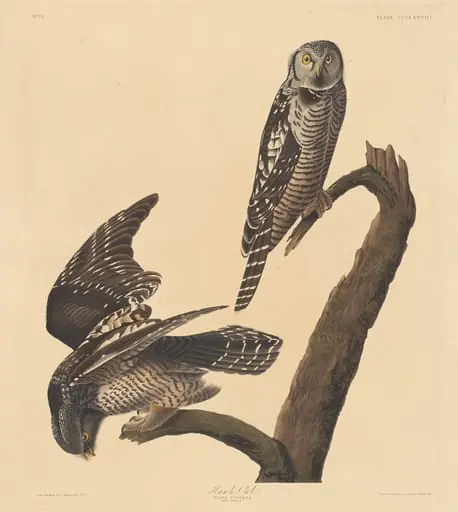
Louisiana Hawk is an ink print by the Romanticist artist Robert Havell Jr.. It dates from 1837 and is held in the collection of the National Gallery of Art.
About this work
Overview
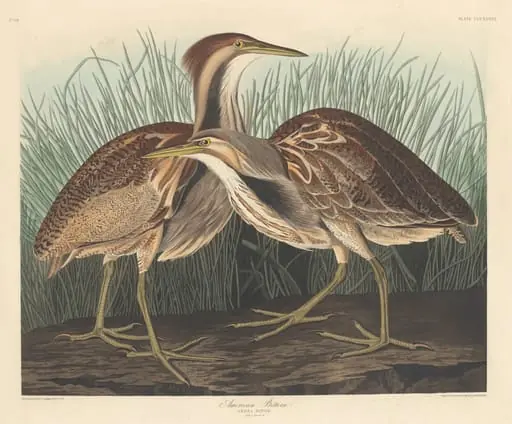
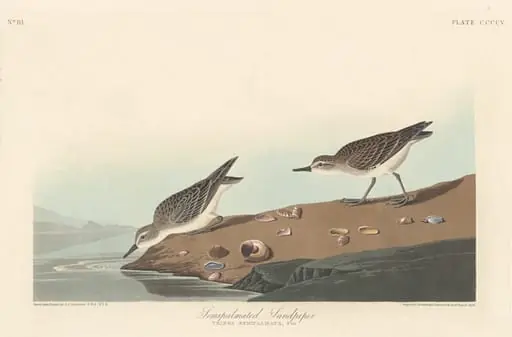
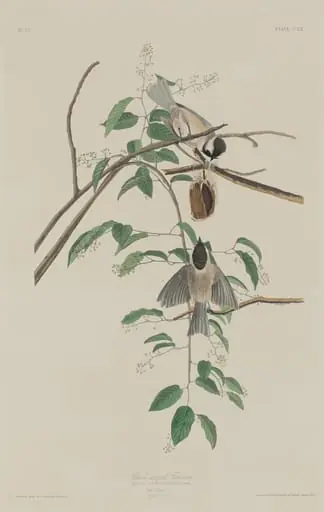
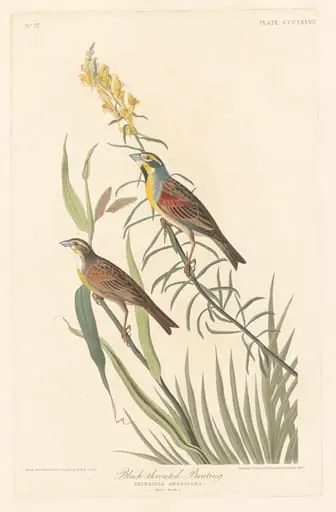
The work belongs to a tradition of natural history illustration that combined scientific observation with artisanal printmaking.
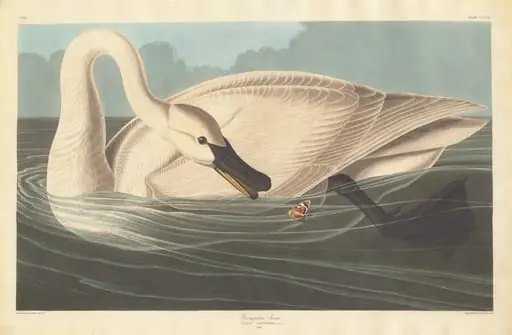
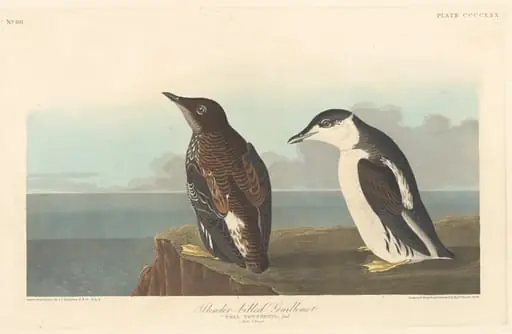
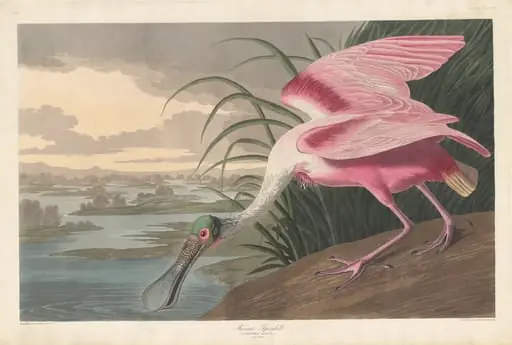
Created in 1837, *Louisiana Hawk* is a hand-colored engraving and aquatint on Whatman wove paper by Robert Havell Jr. The work belongs to a tradition of natural history illustration that combined scientific observation with artisanal printmaking. Havell’s technique involved meticulous ink-based printing followed by deliberate, manual application of watercolor, a labor-intensive step often omitted by commercial printers.
Subject & Meaning
The print portrays a red-tailed hawk perched on a branch, rendered with anatomical precision and heightened by subtle tonal gradations. Its piercing gaze and exposed talons suggest alertness and predatory presence. The composition isolates the bird against a soft sky and muted foliage, emphasizing its vitality without narrative embellishment, aligning with the observational goals of 19th-century naturalist documentation.
Technique & Style
Havell employed aquatint to achieve delicate tonal transitions in the feathers and sky, while fine engraving defined the hawk’s sharp contours. Hand-coloring was applied with care, enhancing the naturalism of the plumage without obscuring the underlying line work. This method distinguished his prints from mass-produced counterparts, reflecting the Havell family’s commitment to artisanal quality in ornithological illustration.
History & Provenance
Robert Havell Jr. came from a multi-generational family of London-based engravers, including his father Robert Havell the Elder and uncle Luke Havell, who were known for their work on Audubon’s *Birds of America*. His prints, including *Louisiana Hawk*, were produced during a period when detailed natural history imagery gained traction among scientific and amateur audiences in both Europe and America.
Context
The print emerged amid a surge in American natural history studies, fueled by expeditions and publications documenting newly cataloged species. While Havell worked in England, his imagery responded to American subjects, often based on specimens sent across the Atlantic. His prints served as both scientific records and aesthetic objects, bridging the gap between empirical study and public fascination with the natural world.
Legacy
Havell’s hand-colored prints remain valued for their technical refinement and fidelity to avian form. Though less widely known than his father’s contributions to Audubon’s folios, his individual works like *Louisiana Hawk* exemplify the quiet precision of 19th-century naturalist printmaking. Original impressions are held in institutional collections, including the National Gallery of Art in Washington, D.C.
Artist & collection

Artist
The Havell family of Reading, Berkshire, England, included a number of notable engravers, etchers and painters, as well as writers, publishers, educators, and musicians.