Artwork
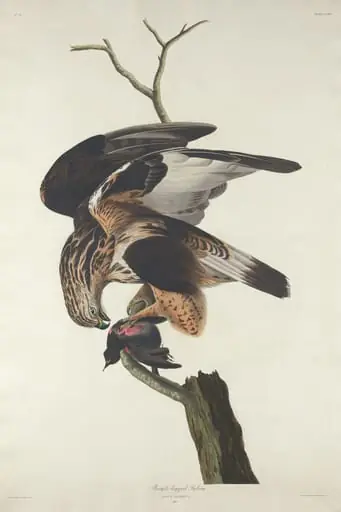
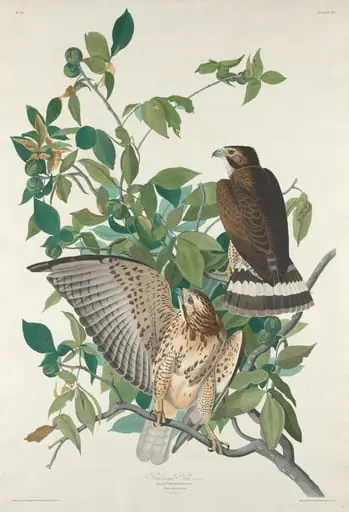
Rough-legged Falcon
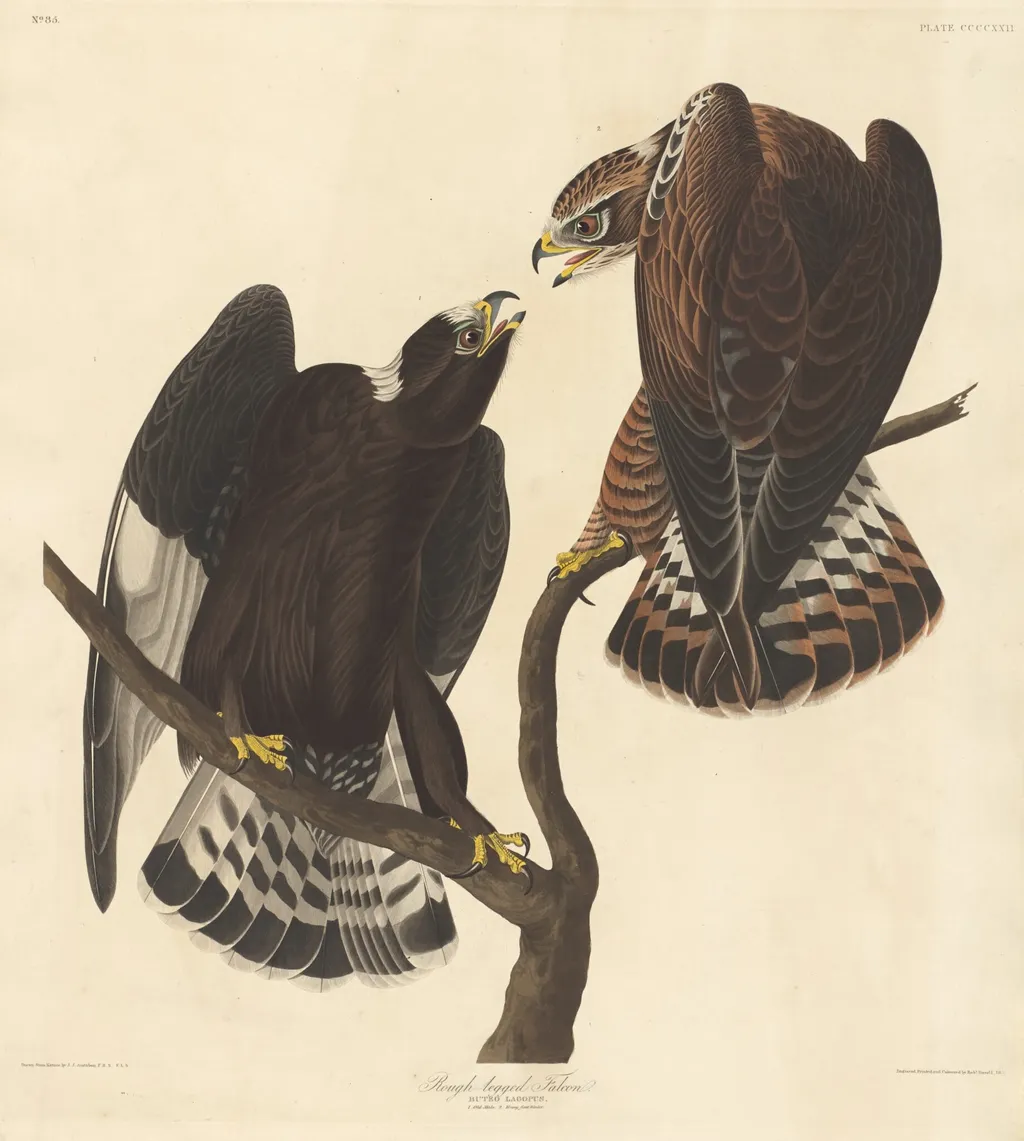
Rough-legged Falcon is an ink print by the Romanticist artist Robert Havell Jr.. It dates from 1838 and is held in the collection of the National Gallery of Art.
About this work
Overview
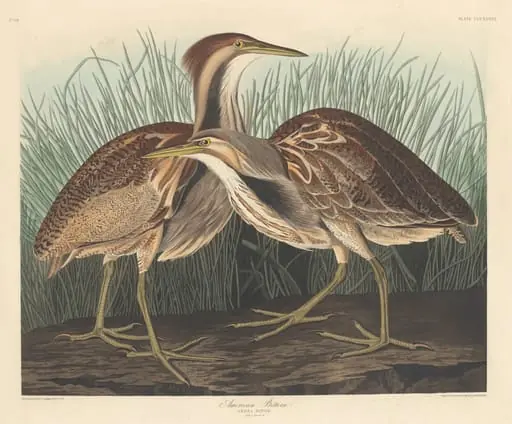
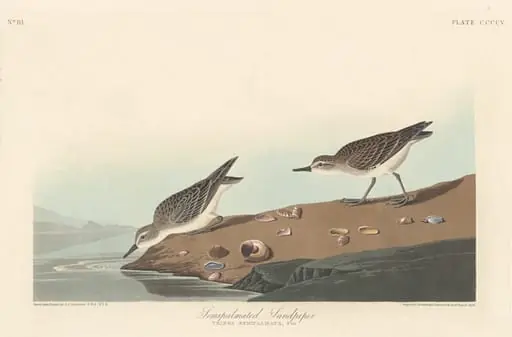
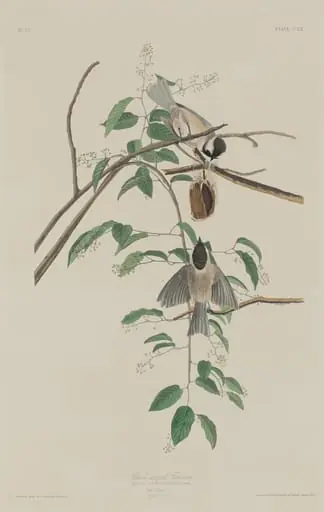
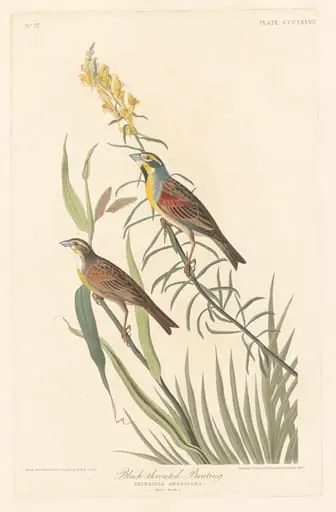
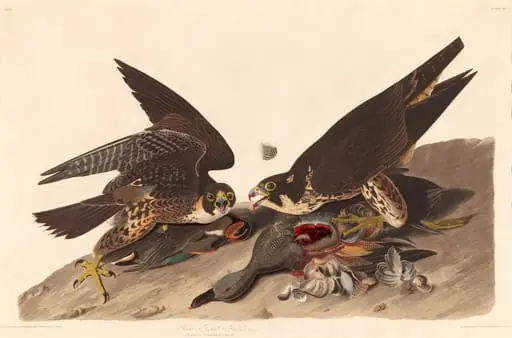
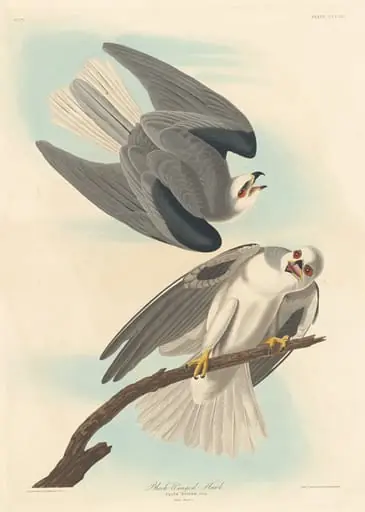
It belongs to a series of ornithological illustrations produced during the early 19th century, reflecting the Havell family’s technical mastery in printmaking.
Created in 1838, this print by Robert Havell Jr. is a hand-colored engraving and aquatint on Whatman wove paper. It belongs to a series of ornithological illustrations produced during the early 19th century, reflecting the Havell family’s technical mastery in printmaking. The work combines precise line work with subtle tonal gradations achieved through aquatint, a method the family helped refine in Britain.
Subject & Meaning
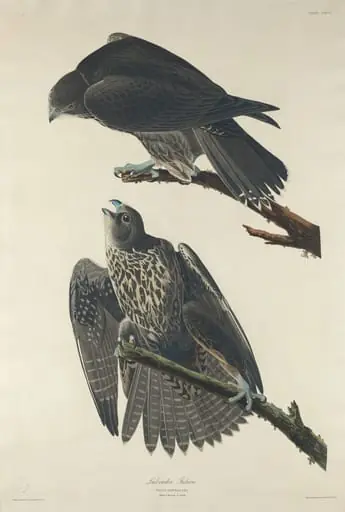
The image depicts two rough-legged falcons perched on a gnarled branch, one with darker plumage facing a lighter counterpart. Their postures suggest interaction, possibly territorial or mating behavior. The composition emphasizes naturalism over symbolism, aligning with scientific illustration traditions of the period. The birds are rendered with anatomical accuracy, prioritizing observation over romanticized emotion.
Technique & Style
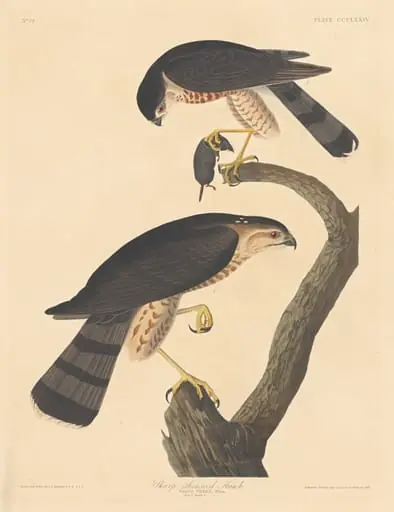
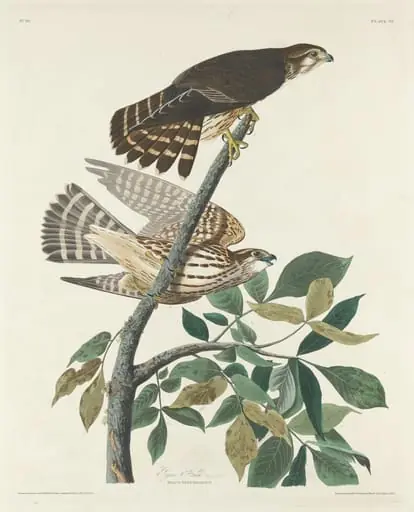
Havell employed engraving for sharp detail in feathers and beaks, complemented by aquatint to achieve soft tonal transitions in the plumage and background. Hand-coloring was applied with care, enhancing natural hues without overwhelming the underlying lines. The twisted branch adds compositional tension, while the pale, uncluttered background focuses attention on the birds’ form and texture.
History & Provenance
Robert Havell Jr. was part of a multi-generational English family of printmakers known for their work on natural history publications. This print likely originated from a larger ornithological project, possibly linked to John James Audubon’s *Birds of America*, for which Havell was a principal engraver. The use of Whatman paper, prized for its durability and texture, underscores the work’s high production standards.
Context
Produced during a period of expanding natural science and colonial exploration, the image reflects growing public interest in documenting global wildlife. While Romanticism influenced attitudes toward nature, this work leans more toward empirical representation than emotional idealization. It aligns with contemporary scientific endeavors that sought to classify and preserve visual records of species.
Legacy
Havell’s prints remain valued for their technical precision and contribution to ornithological documentation. Though not widely exhibited as fine art, they serve as important historical records in natural history collections. His methods influenced later generations of scientific illustrators, bridging art and biology in an era before photography.
Artist & collection

Artist
The Havell family of Reading, Berkshire, England, included a number of notable engravers, etchers and painters, as well as writers, publishers, educators, and musicians.