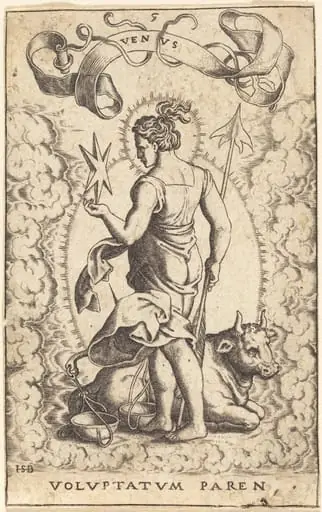
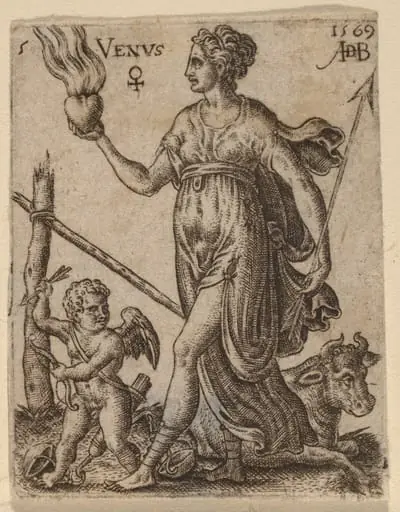
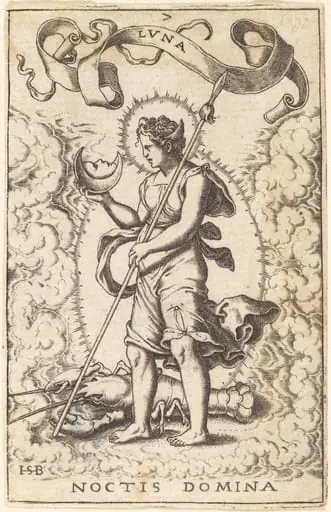
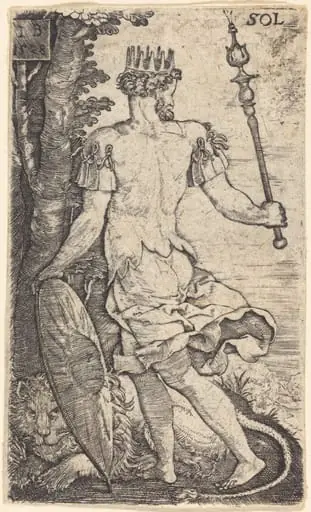
Artwork
Mars
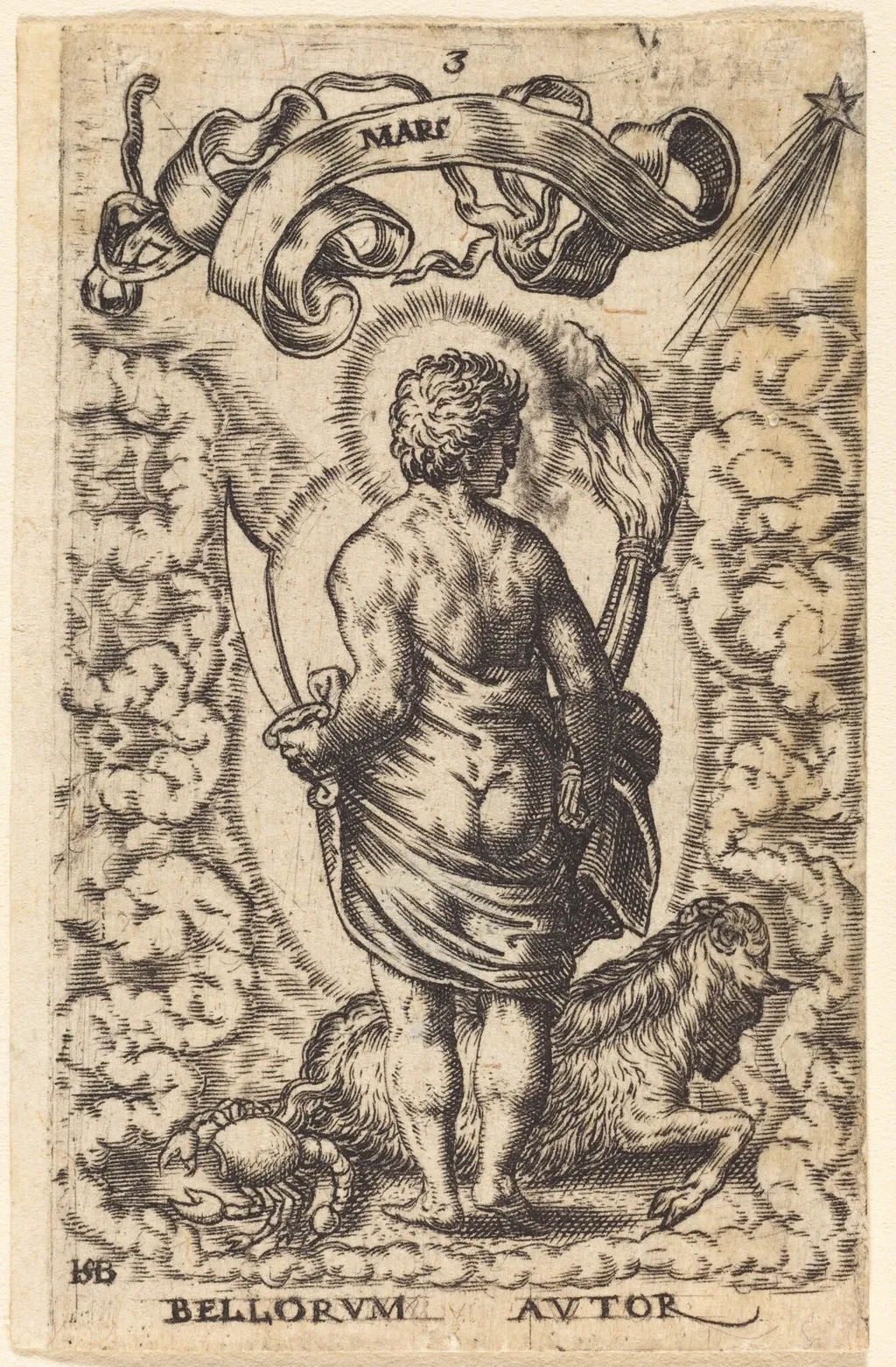
Mars is an ink print by the Renaissance artist Theodor de Bry. It dates from 1584 and is held in the collection of the National Gallery of Art.
About this work
Overview
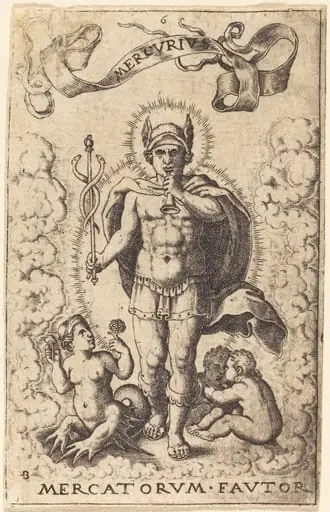
The 1584 engraving titled *Mars* was produced by Theodor de Bry, a Walloon printmaker who specialized in images of early European voyages. Executed in a single plate, the work portrays a solitary figure standing on a cloud, armed with a sword and a torch, accompanied by a goat and a crab, with a banner bearing the title above his head.
Subject & Meaning
The central figure, shown from behind, evokes the Roman god of war, his posture confident and weight shifted onto one leg. The inclusion of a goat and a crab—traditional symbols of Capricorn and Cancer—introduces astrological or allegorical layers, suggesting a synthesis of martial power and cosmic order.
Technique & Style
De Bry employs bold, incised lines and cross‑hatching to model form and generate depth, while chiaroscuro shading creates a three‑dimensional effect on the cloud and figures. The engraving’s crisp outlines and careful stippling reflect the artist’s mastery of metal‑plate printing, a hallmark of late‑sixteenth‑century Northern European printmaking.
History & Provenance
Fleeing the Spanish Inquisition in the Southern Netherlands, de Bry settled in Frankfurt, where he established a workshop that produced illustrated books on exploration. *Mars* was likely intended as a frontispiece or illustrative plate for one of his publications, aligning with his broader output that combined firsthand reports with imaginative visual narratives.
Context
Created during a period of intense European interest in discovery and conquest, the engraving mirrors contemporary fascination with classical mythology as a framework for interpreting new lands and conflicts. De Bry’s work often merged documentary detail with symbolic imagery, positioning *Mars* within the larger visual culture of early modern travel literature.
Artist & collection
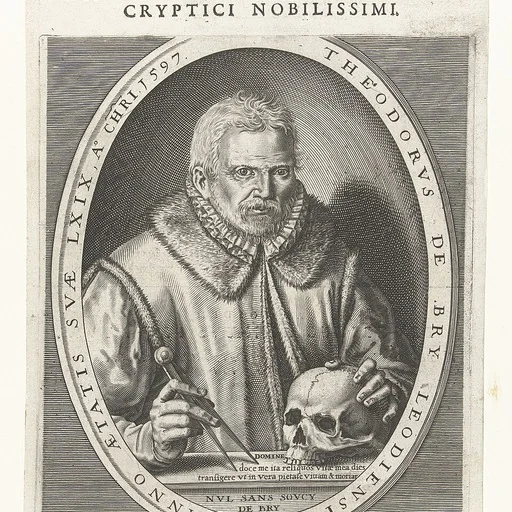
Artist
Theodor de Bry (also Theodorus de Bry; 1528 – 27 March 1598) was a Walloon engraver, goldsmith, editor and publisher, famous for his depictions of early European expeditions to the Americas.