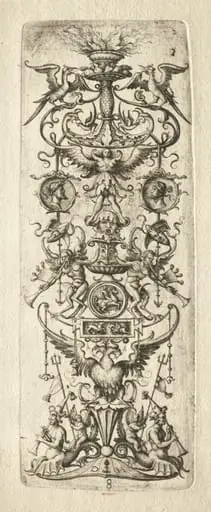
Artwork
Ornament
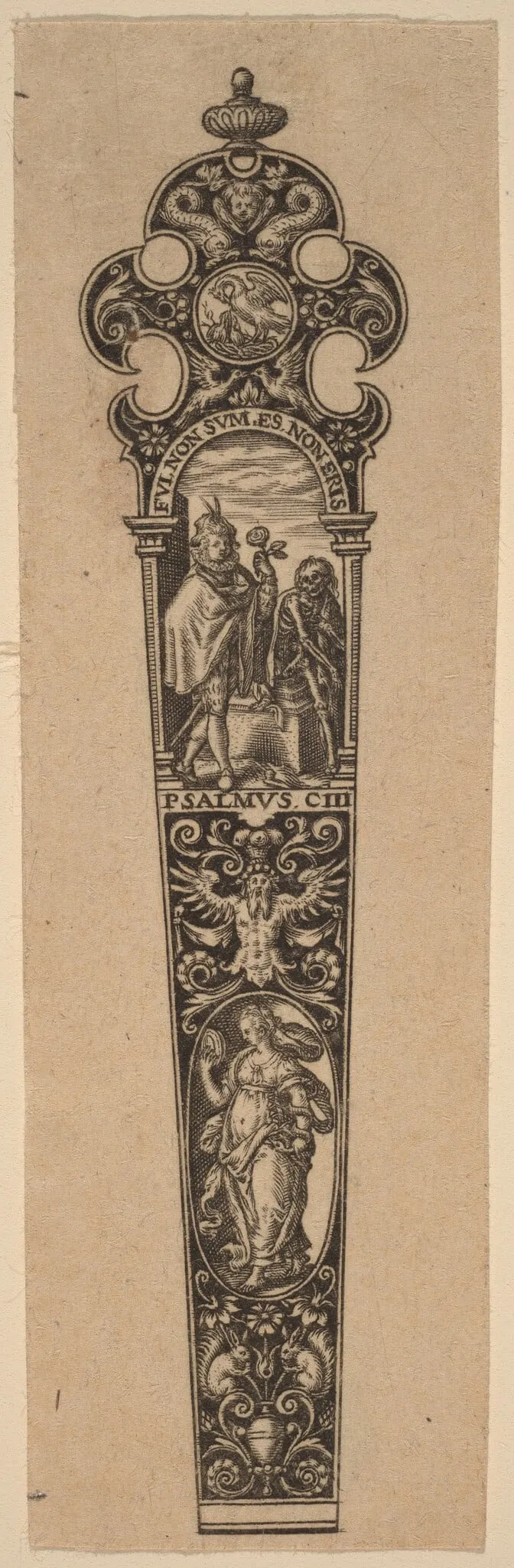
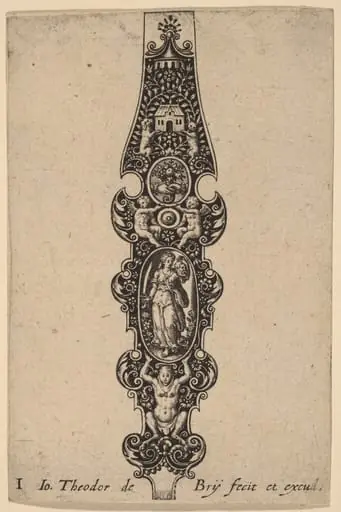
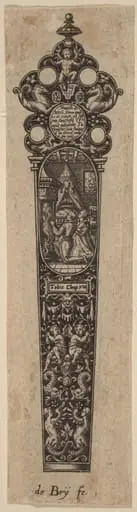
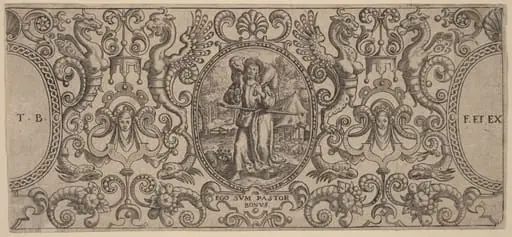
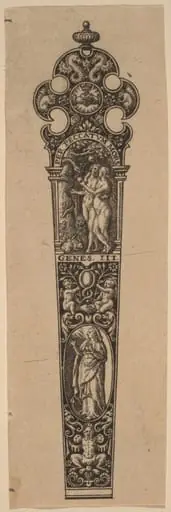
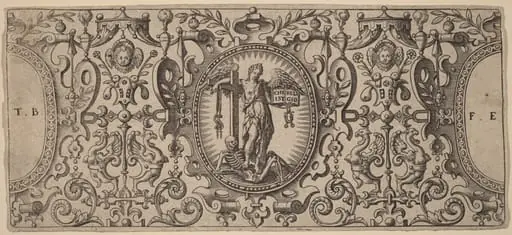
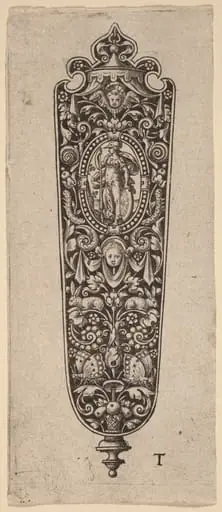
Ornament is an ink print by the Renaissance artist Theodor de Bry. It dates from 1563 and is held in the collection of the National Gallery of Art.
About this work
Overview
Ornament is a 1563 engraving by Theodor de Bry, a Walloon engraver and goldsmith who fled the Spanish Netherlands due to religious persecution. This tall, narrow print features intricate black lines on a light background, combining figurative elements with ornate patterns and decorative borders.
Subject & Meaning
The engraving's subject matter includes a crowned, framed scene of two figures (one holding a scroll, the other pointing upward) above curved panels with additional figures. The inscription "PSALMUS CIII" at the bottom suggests a biblical reference, likely Psalm 103, indicating a religious theme intertwined with the ornamental design.
Technique & Style
De Bry's engraving showcases his mastery of 16th-century printmaking techniques, characterized by fine lines, shading, and depth. The style aligns with Renaissance aesthetics, blending detailed beauty with religious motifs, achieved through the precise, layered process of engraving.
History & Provenance
Created in 1563 after de Bry's relocation to Frankfurt, "Ornament" reflects his established practice of detailed, observation-based illustrations. His work in this period was influenced by his experiences as a Protestant refugee and his subsequent success in Frankfurt.
Context
"Ornament" was produced during a time of religious turmoil and European exploration. De Bry's work, with its religious themes and meticulous craftsmanship, situates itself within the broader cultural and artistic movements of the Renaissance.
Artist & collection
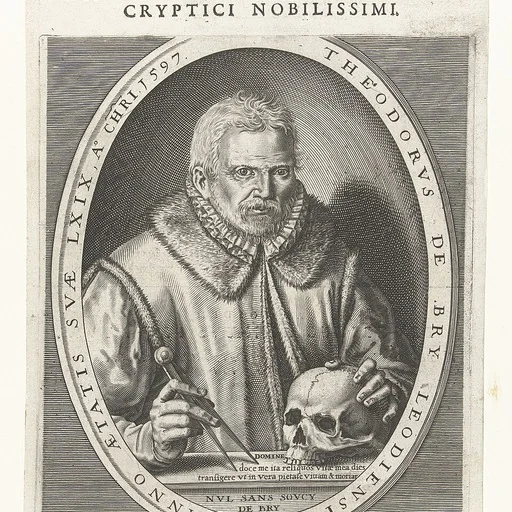
Artist
Theodor de Bry (also Theodorus de Bry; 1528 – 27 March 1598) was a Walloon engraver, goldsmith, editor and publisher, famous for his depictions of early European expeditions to the Americas.