Artwork
Mercury
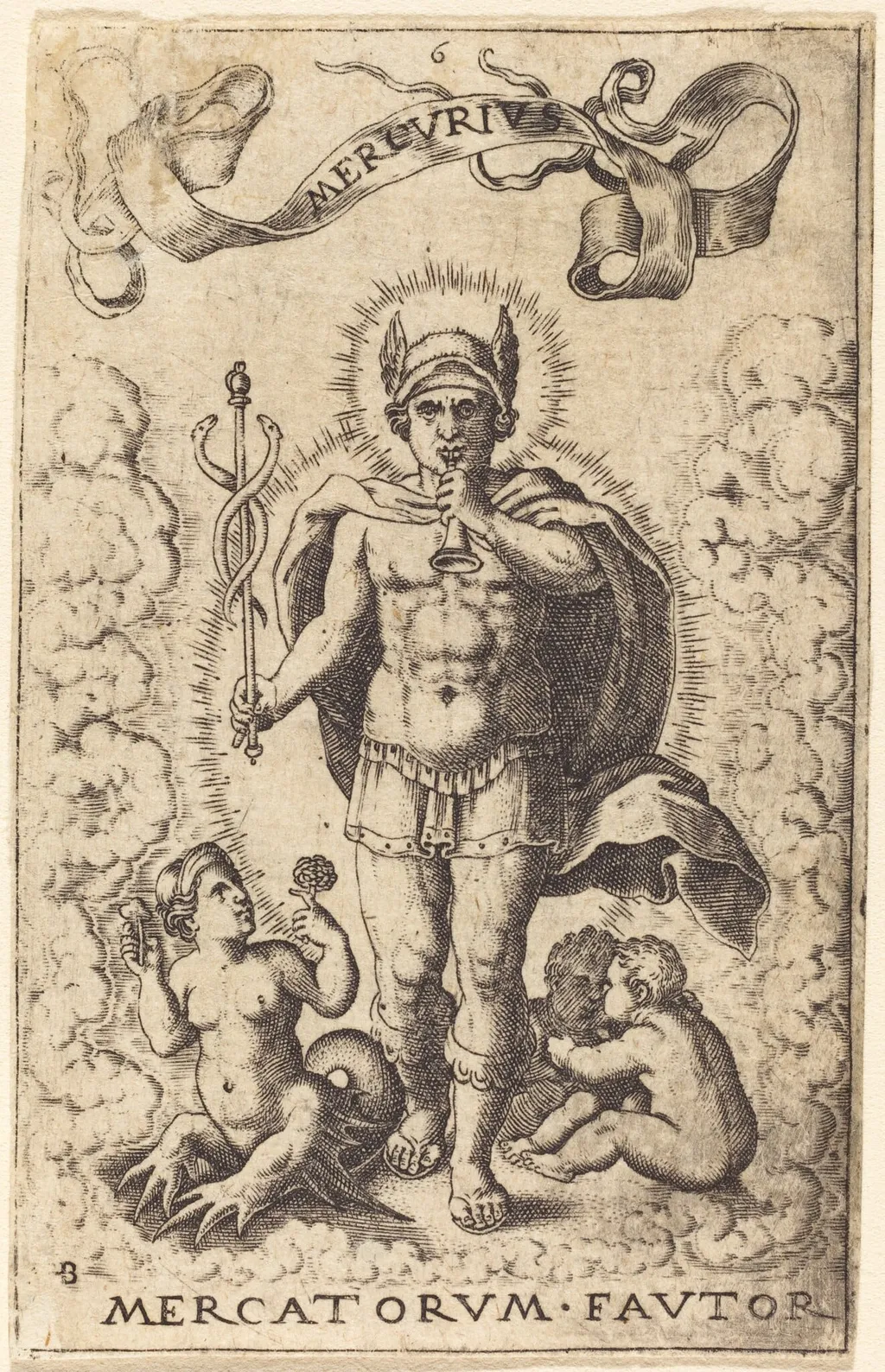
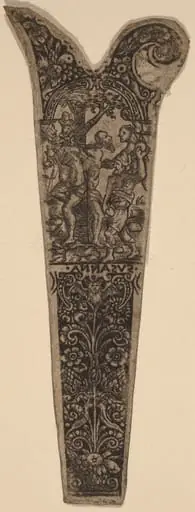
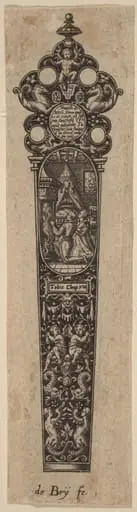
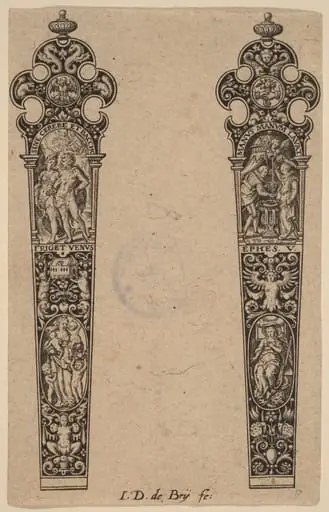
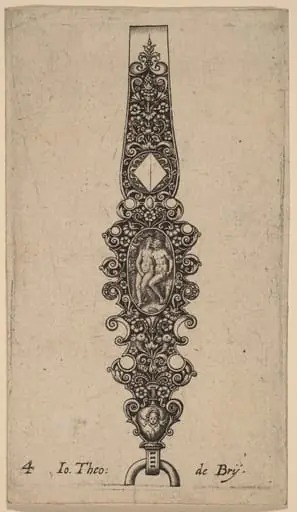
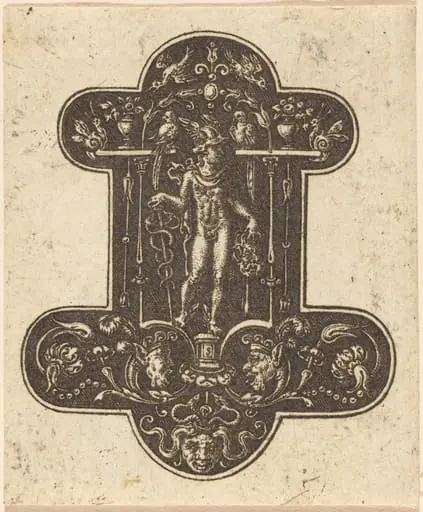
Mercury is an ink print by the Renaissance artist Theodor de Bry. It dates from 1584 and is held in the collection of the National Gallery of Art.
About this work
Overview
Executed with precision typical of his craft, the image stands as a standalone mythological subject rather than a scene from a travel narrative.
Theodor de Bry, a Walloon engraver and publisher who relocated to Frankfurt after fleeing religious persecution in the Spanish Netherlands, produced this engraving in 1584. Though best known for his illustrated accounts of New World voyages, this work reflects his broader engagement with classical iconography. Executed with precision typical of his craft, the image stands as a standalone mythological subject rather than a scene from a travel narrative.
Subject & Meaning
The figure depicted is identified by the Latin inscription 'MERCVRIVS' and attributes associated with the Roman god Mercury: winged helmet, caduceus-like staff, and herald’s horn. The presence of two cherubs at his feet—engaged in tender interaction—introduces a gentle, humanizing element. The composition aligns with Renaissance efforts to revive classical deities as symbols of communication, travel, and commerce, rendered here with a blend of solemnity and lightheartedness.
Technique & Style
De Bry employed fine-line engraving to render intricate details in the figure’s drapery, winged helmet, and the cherubs’ forms. The controlled cross-hatching and delicate linework demonstrate his mastery of the medium, honed through years of printmaking and book illustration. The balanced composition, clear contours, and idealized anatomy reflect Renaissance ideals, while the flat background and symbolic focus distinguish it from naturalistic landscape traditions.
History & Provenance
Created during de Bry’s time in Frankfurt, where he established a publishing house, this engraving likely served as a standalone plate or part of a broader collection of mythological subjects. Though not part of his famous American voyage series, it exemplifies his editorial practice of integrating classical imagery into printed works. Its survival suggests it was circulated among collectors and scholars interested in humanist themes.
Context
In late 16th-century Europe, classical mythology remained a vital visual language for educated audiences. De Bry’s engagement with Mercury reflects broader trends in print culture, where mythological figures were reproduced to convey moral, intellectual, or allegorical ideas. His work bridged the gap between scholarly humanism and popular imagery, making ancient symbols accessible through the expanding medium of the printed page.
Legacy
While overshadowed by de Bry’s colonial illustrations, this engraving illustrates his versatility and the enduring appeal of classical themes in early modern printmaking. It contributes to understanding how mythological subjects were adapted for private and academic audiences outside of monumental art. The work remains a testament to the role of engravers in sustaining classical iconography during a period of religious and cultural transformation.
Artist & collection
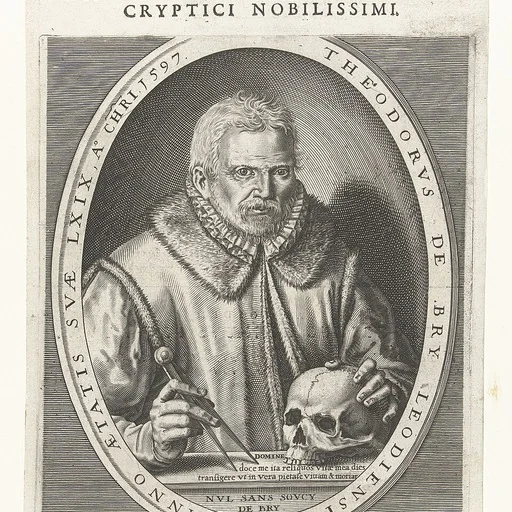
Artist
Theodor de Bry (also Theodorus de Bry; 1528 – 27 March 1598) was a Walloon engraver, goldsmith, editor and publisher, famous for his depictions of early European expeditions to the Americas.