Artwork
Ornament for Knife Handle
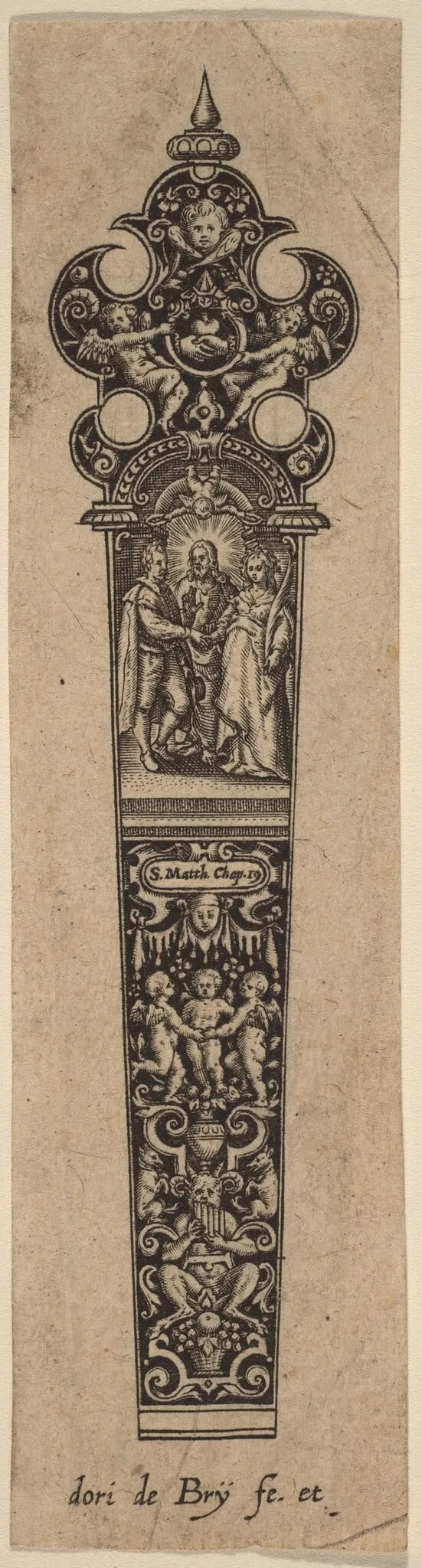
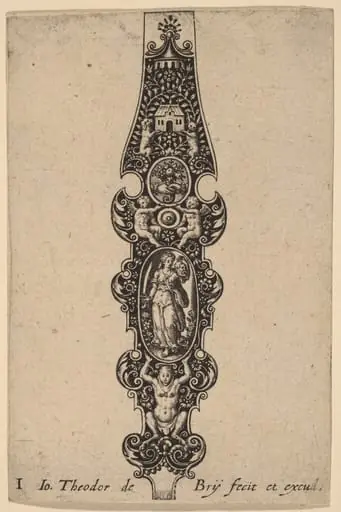
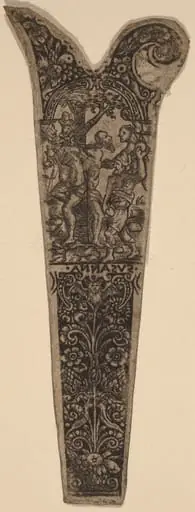
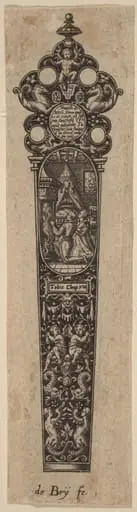
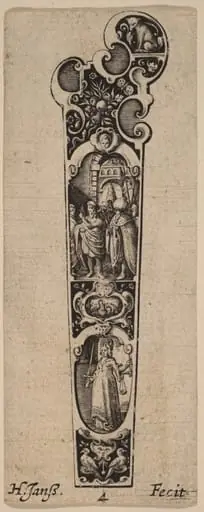
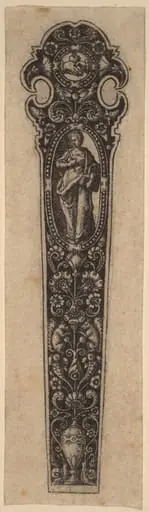
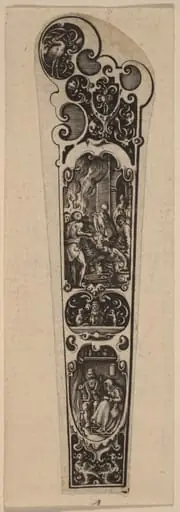
Ornament for Knife Handle is an ink print by the Renaissance artist Theodor de Bry. It dates from 1563 and is held in the collection of the National Gallery of Art.
About this work
Overview
Executed in black ink on a narrow vertical format, it demonstrates the precision and intricate line work characteristic of 16th-century engraving techniques.
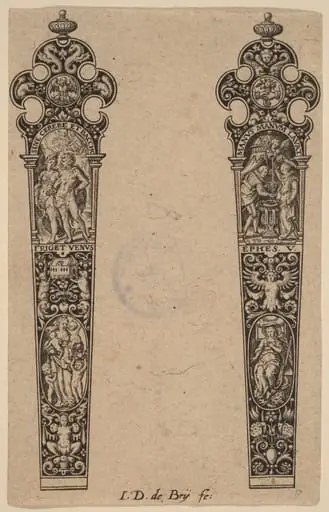
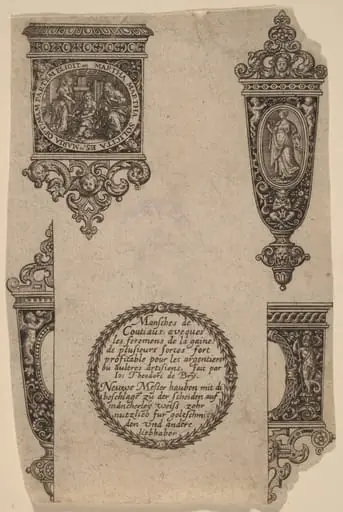
Created in 1563 by Theodor de Bry, this engraving serves as a decorative design for a knife handle. Though de Bry is better known for his illustrations of New World expeditions, this piece reflects his mastery in fine metalwork and printmaking. Executed in black ink on a narrow vertical format, it demonstrates the precision and intricate line work characteristic of 16th-century engraving techniques.
Subject & Meaning
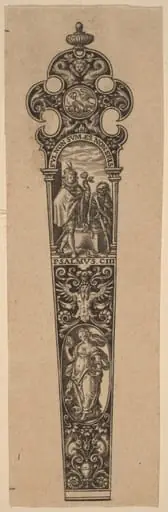
The design features a central figure in robes holding a book, crowned and surrounded by smaller figures below. The imagery suggests allegorical themes—perhaps knowledge, authority, or virtue—rather than a specific historical event. The composition functions as symbolic ornamentation, intended to convey ideals through visual metaphor rather than narrative realism.
Technique & Style
De Bry employed fine cross-hatching and delicate line work to model form and create depth within a flat plane. Every space is filled with intricate patterns, swirling motifs, and minute details, typical of Mannerist decorative arts. The absence of color emphasizes the contrast and texture achievable through engraved lines, showcasing the artist’s control over the burin tool.
History & Provenance
De Bry, a Protestant refugee from the Spanish Netherlands, produced this work during his travels through major European centers of printmaking. By 1563, he was likely in Strasbourg or Antwerp, before settling in Frankfurt. This piece predates his famous colonial illustrations and represents his early career focus on ornamental designs for luxury objects.
Context
In the mid-16th century, engraved designs like this were commonly used to decorate weapons, jewelry, and tableware among the elite. Such ornamentation blended artistic expression with functional utility, reflecting Renaissance interests in classical symbolism and craftsmanship. De Bry’s work fits within a broader tradition of Northern European metalwork decoration.
Legacy
Though not widely exhibited today, this engraving exemplifies the technical standards of Renaissance printmakers who worked outside the realm of major religious or historical subjects. It preserves evidence of how artistic skill was applied to everyday luxury items, influencing later decorative arts and the dissemination of visual motifs across Europe.
Artist & collection
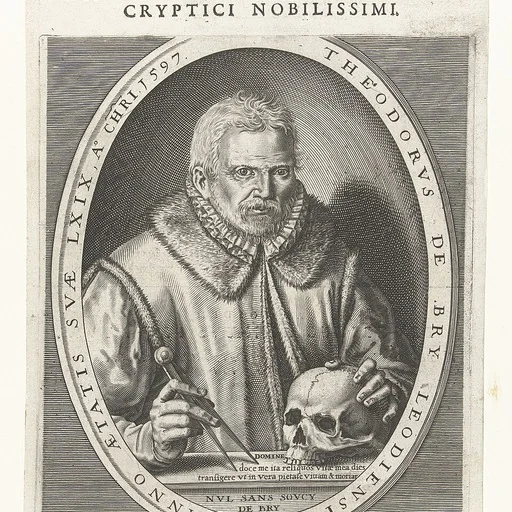
Artist
Theodor de Bry (also Theodorus de Bry; 1528 – 27 March 1598) was a Walloon engraver, goldsmith, editor and publisher, famous for his depictions of early European expeditions to the Americas.