Artwork
Peasants with a Cart
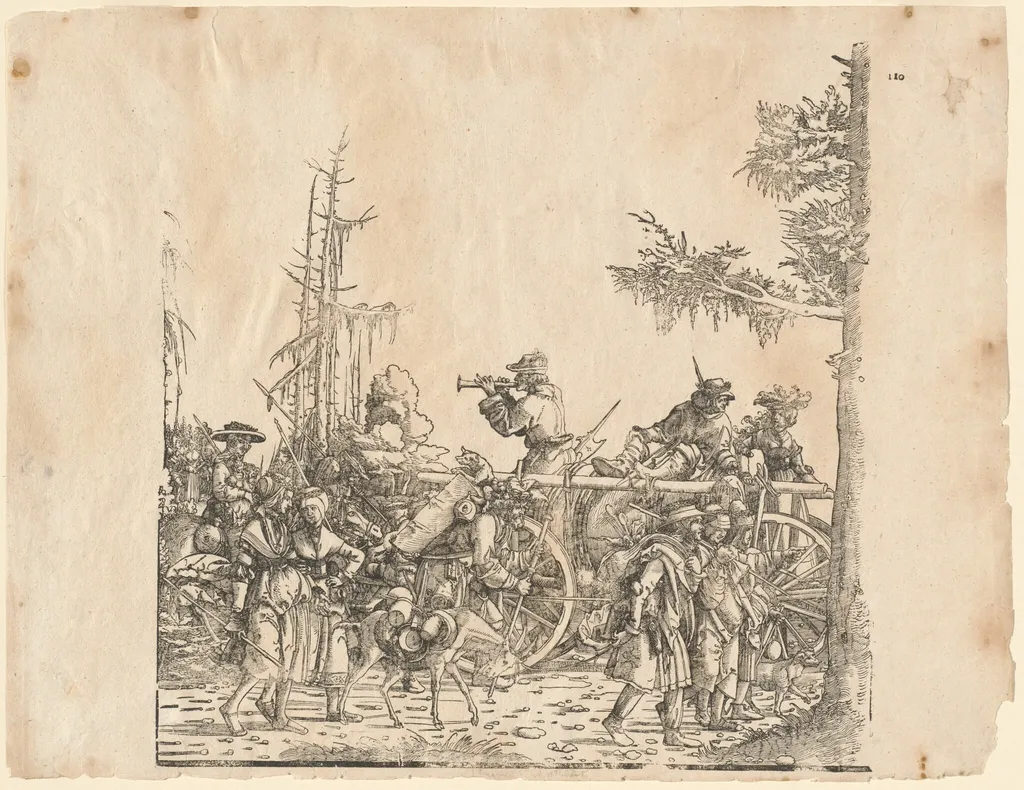
Peasants with a Cart is an ink print by the Renaissance artist Hans Burgkmair the Elder. It dates from 1517 and is held in the collection of the National Gallery of Art.
About this work
Overview
Hans Burgkmair I’s woodcut titled *Peasants with a Cart* dates from 1517. Executed on laid paper, the monochrome image records a rural labor scene: a group of figures maneuvering a laden cart through a forested landscape, accompanied by horses and a horn‑blowing rider.
Subject & Meaning
The composition presents a collective effort of agrarian workers, each dressed in long garments and hats, some bearing poles or tools. The central figure on the cart sounds a horn, perhaps to coordinate the pull of the horses, while the surrounding trees frame the arduous, muddy terrain.
Technique & Style
Burgkmair employed the woodcut process, carving the design into a wood block, inking the raised surfaces, and transferring the image onto laid paper. The stark black‑and‑white contrast and the linear, somewhat coarse rendering are characteristic of early 16th‑century printmaking, a medium valued for its reproducibility.
History & Provenance
Created in the early Reformation period, the print reflects the era’s interest in depicting everyday life. While specific ownership records are scarce, the work survives in several museum collections, attesting to the durability of woodcut prints and their circulation among early modern audiences.
Context
The image aligns with Burgkmair’s broader output, which often combined genre scenes with detailed natural settings. In the early 1500s, woodcuts served both decorative and didactic purposes, disseminating visual narratives to a literate and illiterate public alike.
Artist & collection
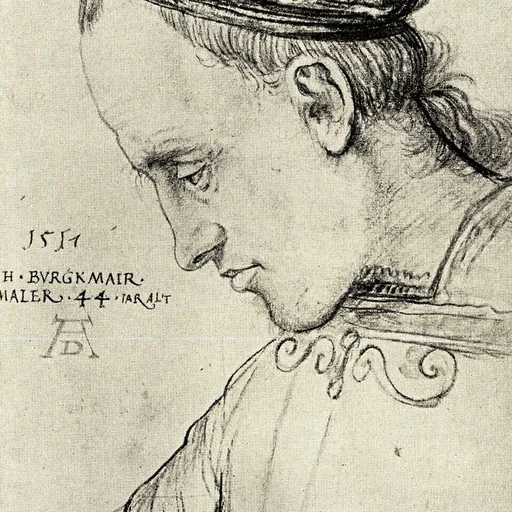
Artist
Hans Burgkmair the Elder (1473–1531) was a German artist, born in Augsburg.

![Le tonneau d'arrosage [upper half], by Gabriel de Saint-Aubin](https://artifactworldgallery.com/img/gabriel-de-saint-aubin--le-tonneau-d-arrosage-upper-half--a57323e669478730-w320.webp) Le tonneau d'arrosage [upper half]
Le tonneau d'arrosage [upper half]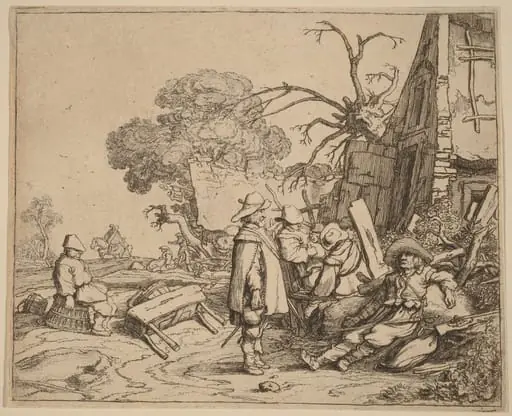 Soldier Receiving an Order from a Sitting Officer
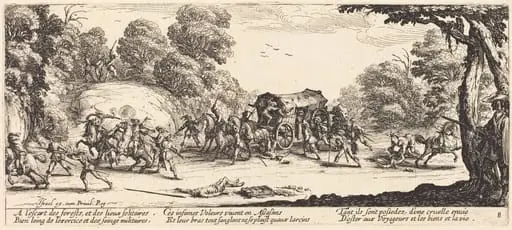 Attack on a Coach
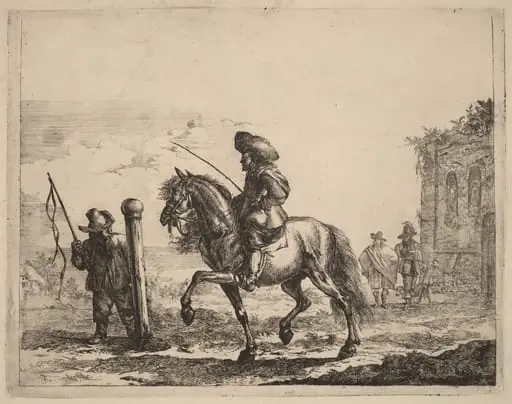 Riding School
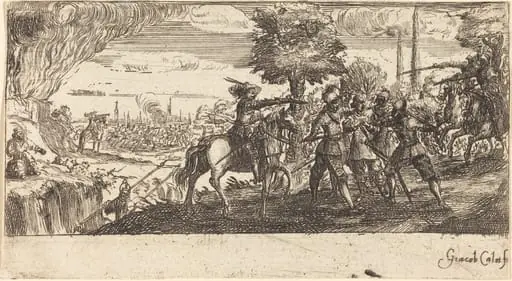 Landscape with Battle Scene
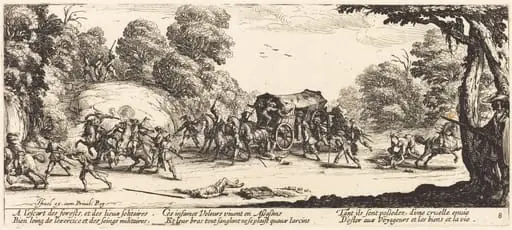 Attack on a Coach
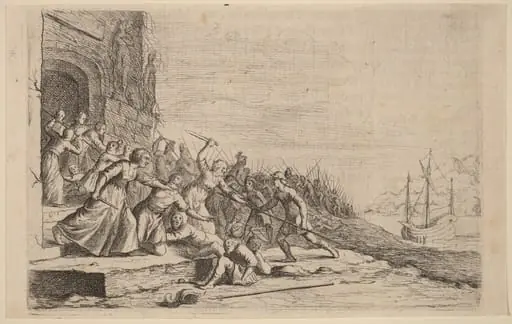 The Followers of Solon Defending the Temple of Venus
![Entry of Marie de Medici into Amsterdam [plate 6 of 6], by Pieter Nolpe](https://artifactworldgallery.com/img/pieter-nolpe--entry-of-marie-de-medici-into-amsterdam-plate-6-of-6--1180e5a1b81c4aa0-w320.webp) Entry of Marie de Medici into Amsterdam [plate 6 of 6]
Entry of Marie de Medici into Amsterdam [plate 6 of 6] Cavalry and Hay Wagon
 The Flight into Egypt (La fuite en Egypte)
 Discovery of the Criminal Soldiers
 Village Festival