Artwork
The Coat of Arms of Wigeleus von Fröschel, Bishop of Passau
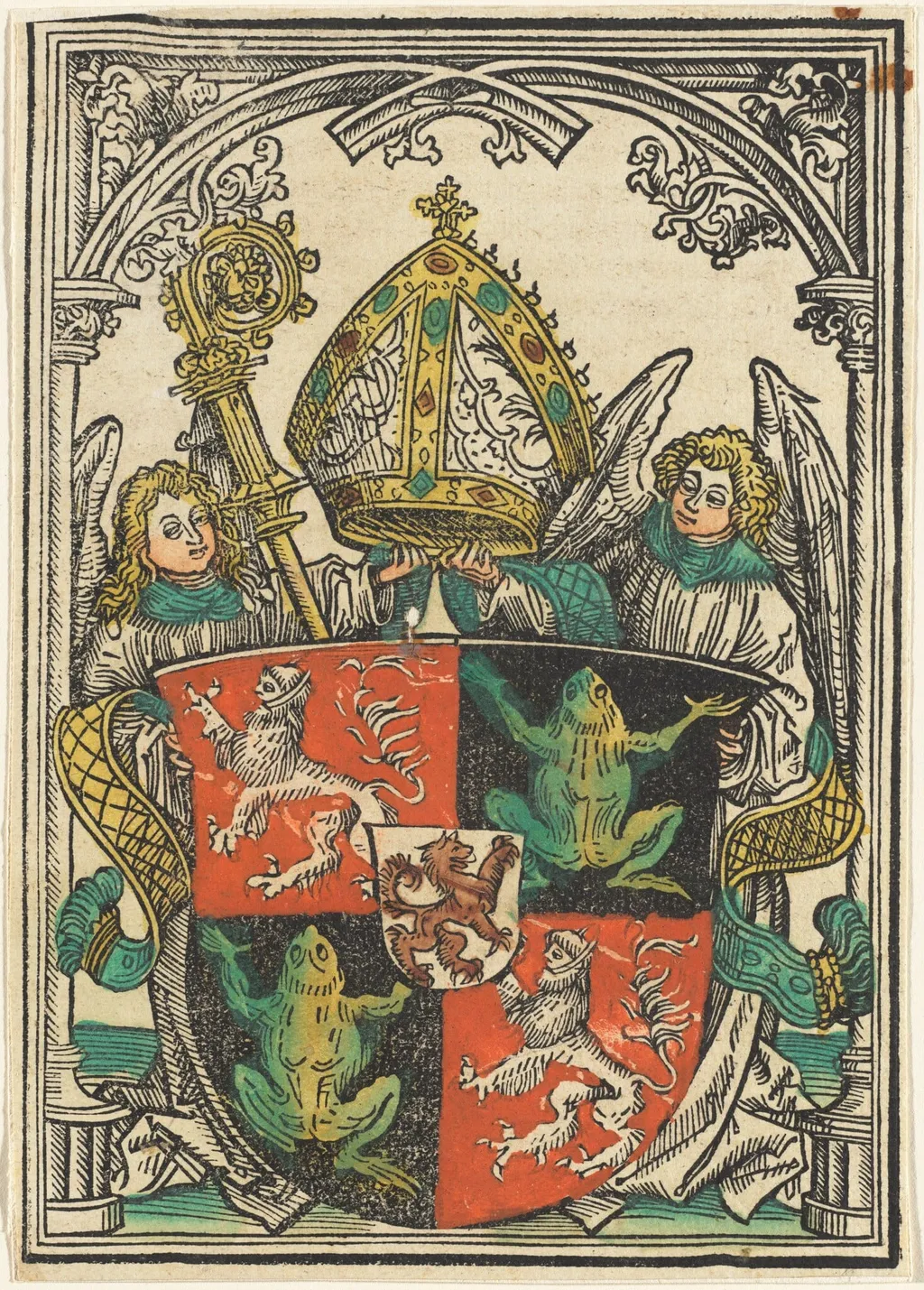
The Coat of Arms of Wigeleus von Fröschel, Bishop of Passau is an ink print by the Renaissance artist Hans Burgkmair the Elder. It dates from 1503 and is held in the collection of the National Gallery of Art. This 1503 woodcut on laid paper, attributed to Hans Burgkmair I, depicts the heraldic emblem of Wigeleus von Fröschel, Bishop of Passau.
About this work
This woodcut shows a bishop’s coat of arms with a bishop’s staff and a frog on a shield, all outlined in black and colored by hand. The frog is the odd detail—it’s a pun on the bishop’s name, which means “little frog” in German.
The print is from 1503, over 500 years old. Hand coloring makes each copy unique.
Try looking up woodcut prints by Albrecht Dürer next.
Overview
This 1503 woodcut on laid paper, attributed to Hans Burgkmair I, depicts the heraldic emblem of Wigeleus von Fröschel, Bishop of Passau. The print combines black outlines with hand coloring, resulting in unique variations across copies.
Subject & Meaning
The coat of arms features a bishop’s staff and a frog on a shield. The frog is a visual pun referencing the bishop’s surname, 'Fröschel', which translates to 'little frog' in German, adding a layer of personal symbolism to the heraldic design.
Technique & Style
Executed in woodcut, a technique popular during the Renaissance, the piece showcases precise black outlines. The addition of hand coloring introduces a tactile, individualized quality to each printed copy.
History & Provenance
Created in 1503, this print is over 500 years old. While the current location and full ownership history are not specified, its age and attribution to Burgkmair I underscore its historical significance within 16th-century German printmaking.
Context
Contemporaneous with the works of Albrecht Dürer, this woodcut reflects the flourishing of woodcut printing in early 16th-century Germany. Comparisons with Dürer’s woodcuts can provide insight into the stylistic and technical currents of the time.
Artist & collection
Artist
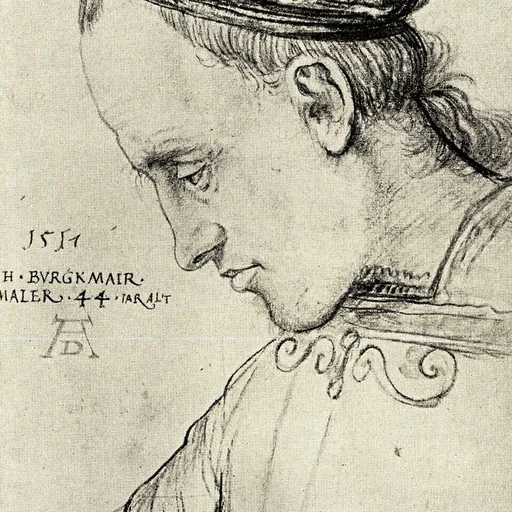
Hans Burgkmair the Elder (1473–1531) was a German artist, born in Augsburg.

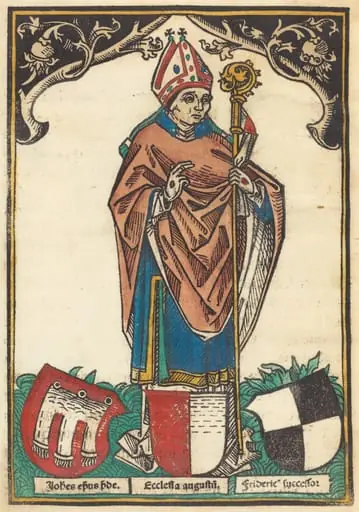 Bishop of Augsburg with Three Coats of Arms
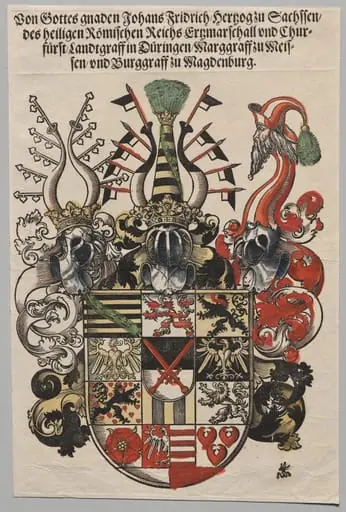 Coat of Arms of John Frederic, Elector of Saxony, called the Magnanimous
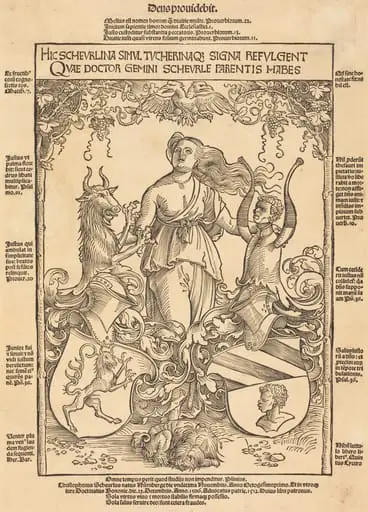 Coat of Arms of Scheurl and Tucher Families
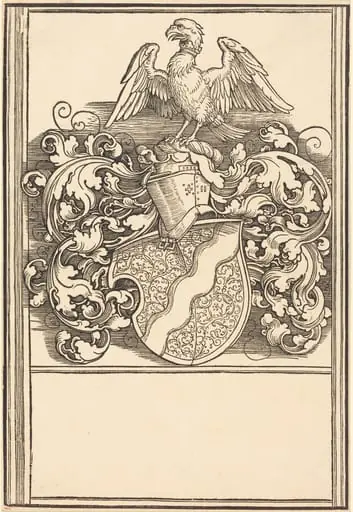 Coat of Arms of Michael Behaim
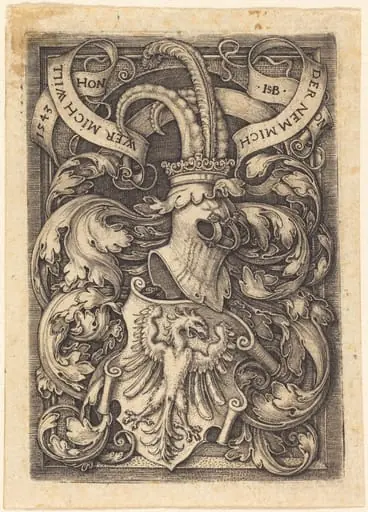 Coat of Arms with an Eagle
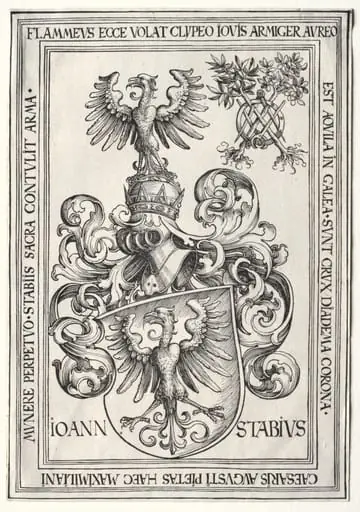 Coat of Arms of Johann Stabius
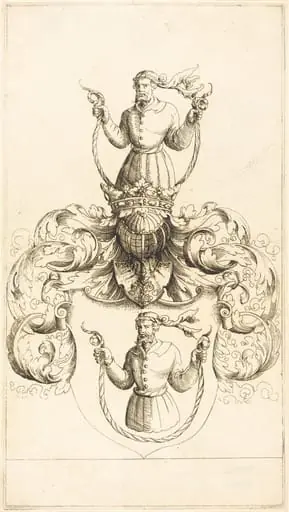 Coat of Arms of Unknown Man
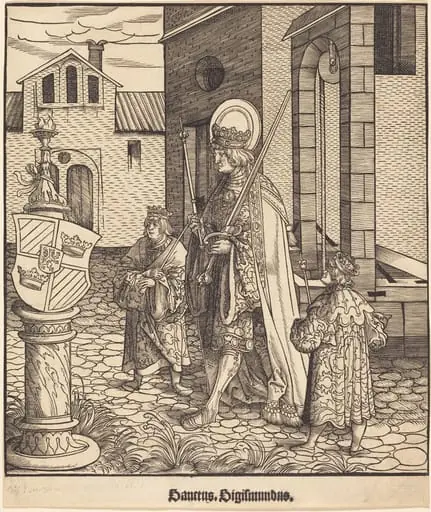 Saint Sigismundus
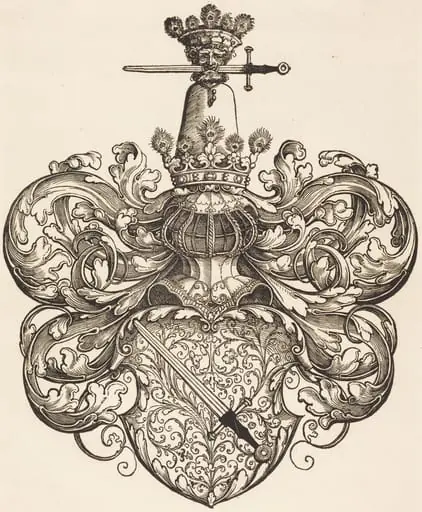 Coat of Arms of the Kress von Kressenstein Family