Artwork
Bishop of Augsburg with Three Coats of Arms
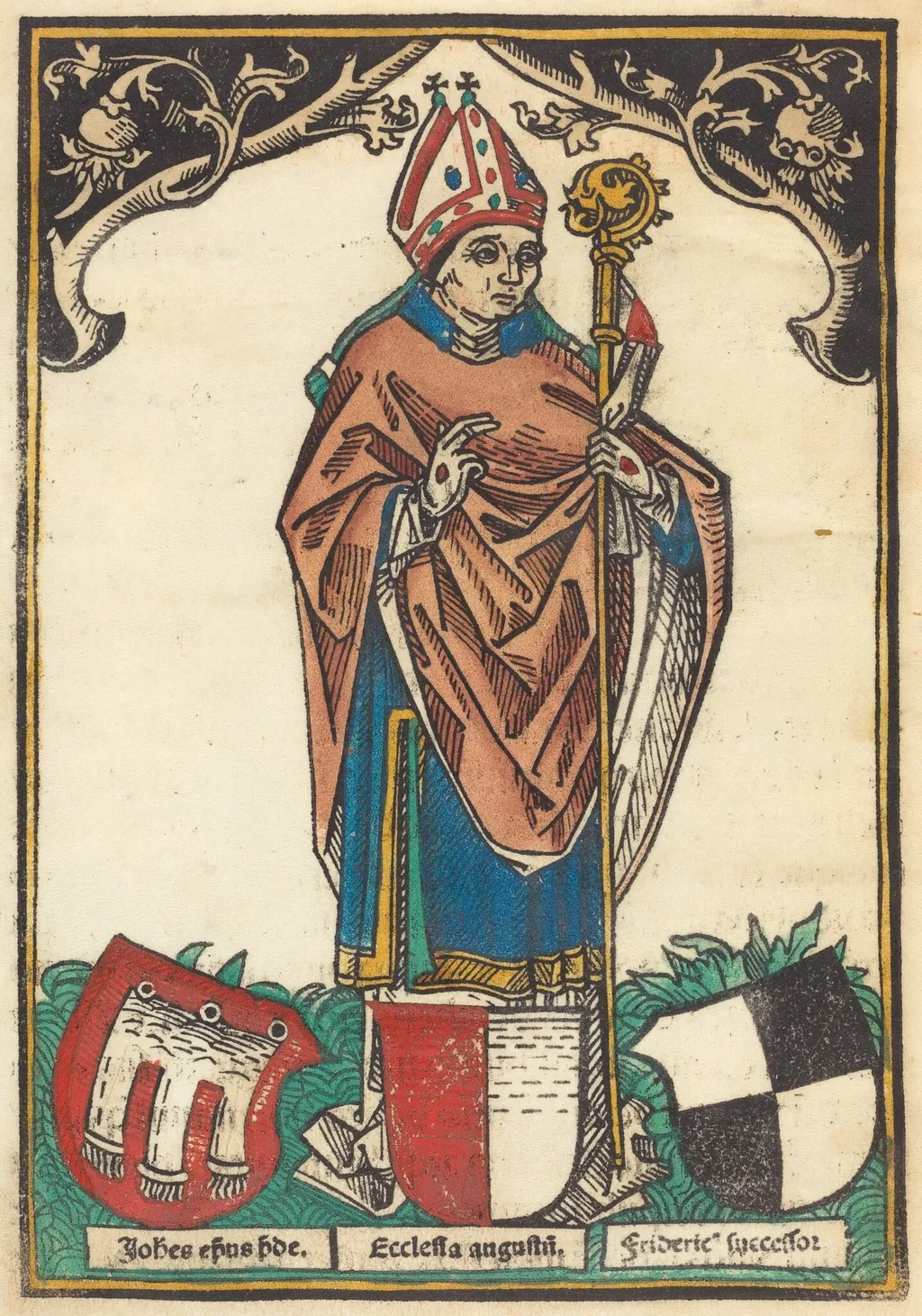
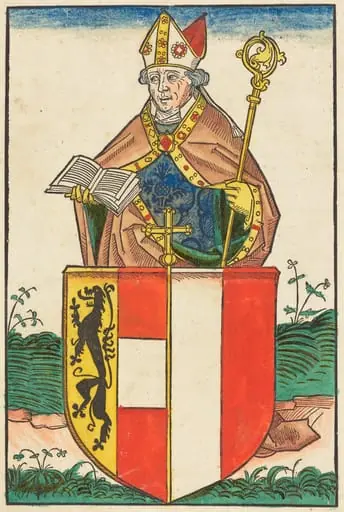
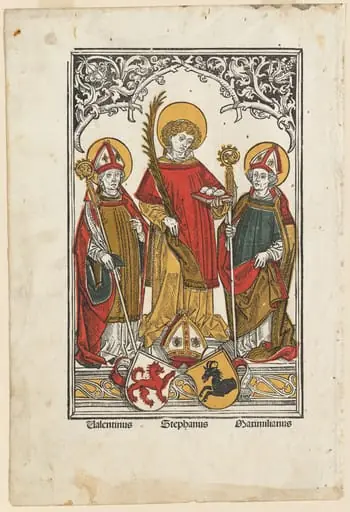
Bishop of Augsburg with Three Coats of Arms is an ink print by the Renaissance artist German 15th Century. It dates from 1485 and is held in the collection of the National Gallery of Art. This hand-colored woodcut on vellum depicts a bishop of Augsburg in elaborate attire, adorned with jewels and holding a golden staff.
About this work
Overview
This hand-colored woodcut on vellum depicts a bishop of Augsburg in elaborate attire, adorned with jewels and holding a golden staff. The image features three coats of arms at his feet, set against a background of swirling black lines accented with gold.
Subject & Meaning
The bishop's opulent robes and the presence of three distinct coats of arms (featuring a red deer, a red and white split design, and a black-and-white cow) signify his importance and likely connections to noble families or the city of Augsburg, emphasizing power and lineage.
Technique & Style
Executed as a hand-colored woodcut, the piece showcases a traditional printing method of the pre-photography era, where designs were carved into wood blocks for printing. The style blends detailed, symbolic elements with expressive, swirling background patterns.
Context
Created in the 1400s, this type of image was commonly used to display wealth, heritage, and authority, reflecting the societal values of the time.
Legacy
As a representative of 15th-century printmaking, the work provides insight into the artistic and social practices of its era, though its specific impact or influence on later art movements is not notably distinguished.
Artist & collection

Artist
This 15th-century German artist carved vivid religious scenes into metal and wood, then hand-painted them in bright, symbolic colors.

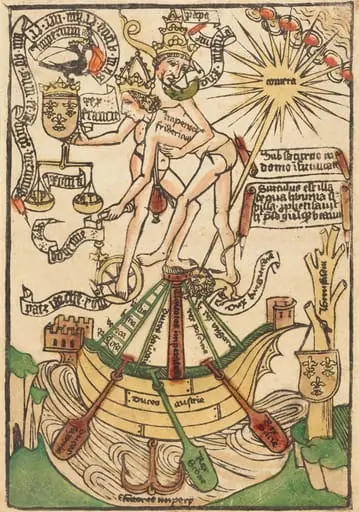 Allegory of the Meeting of Pope Paul II and Emperor Frederick III
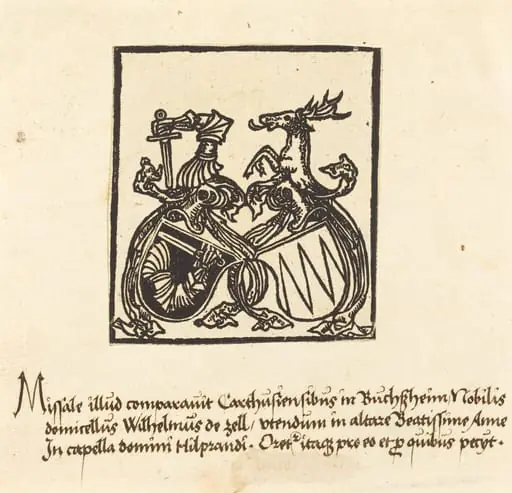 Bookplate of Wilhelm von Zell
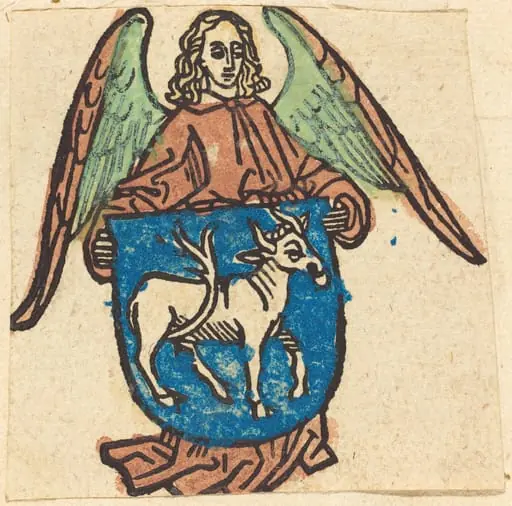 Bookplate of Hilprand Brandenburg of Bibrach
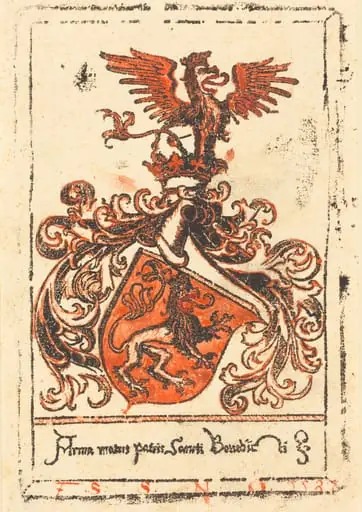 Bookplate of the Abbey of Ottobeuren
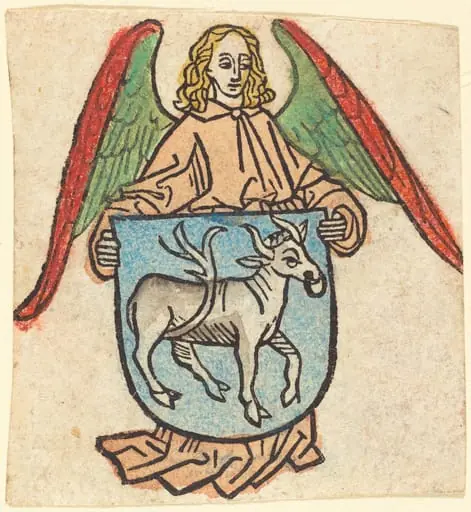 Bookplate of Hilprand Brandenburg of Bibrach
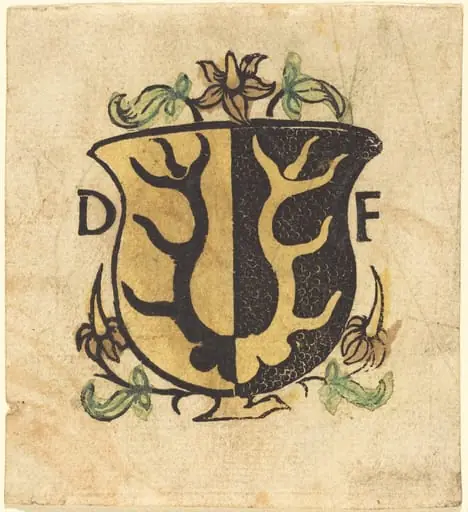 Bookplate of Dominicus Frauenfelder
![Studies for Six Figures (sheet from a model book) [recto], by German 15th Century](https://artifactworldgallery.com/img/german-15th-century--studies-for-six-figures-sheet-from-a-model-book-recto--4837429e0755bc3f-w320.webp) Studies for Six Figures (sheet from a model book) [recto]
Studies for Six Figures (sheet from a model book) [recto]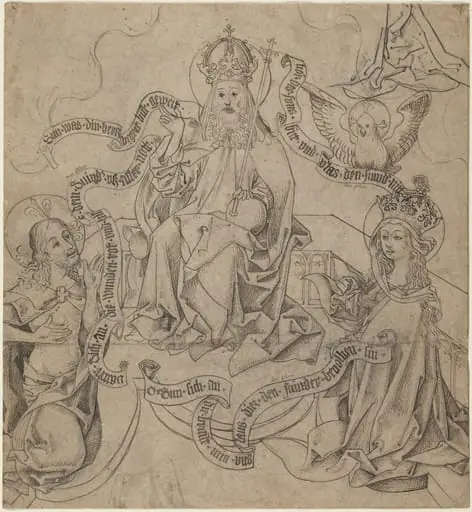 Christ and Mary Interceding with God the Father