Artwork
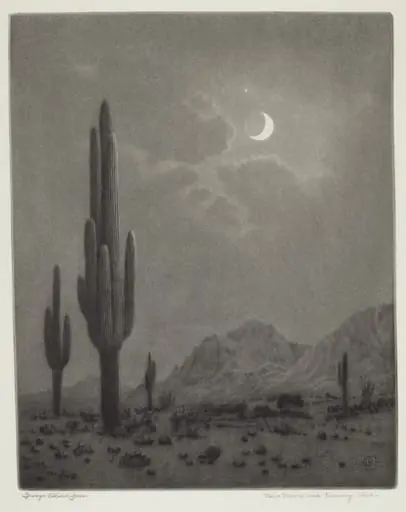
Arizona Night
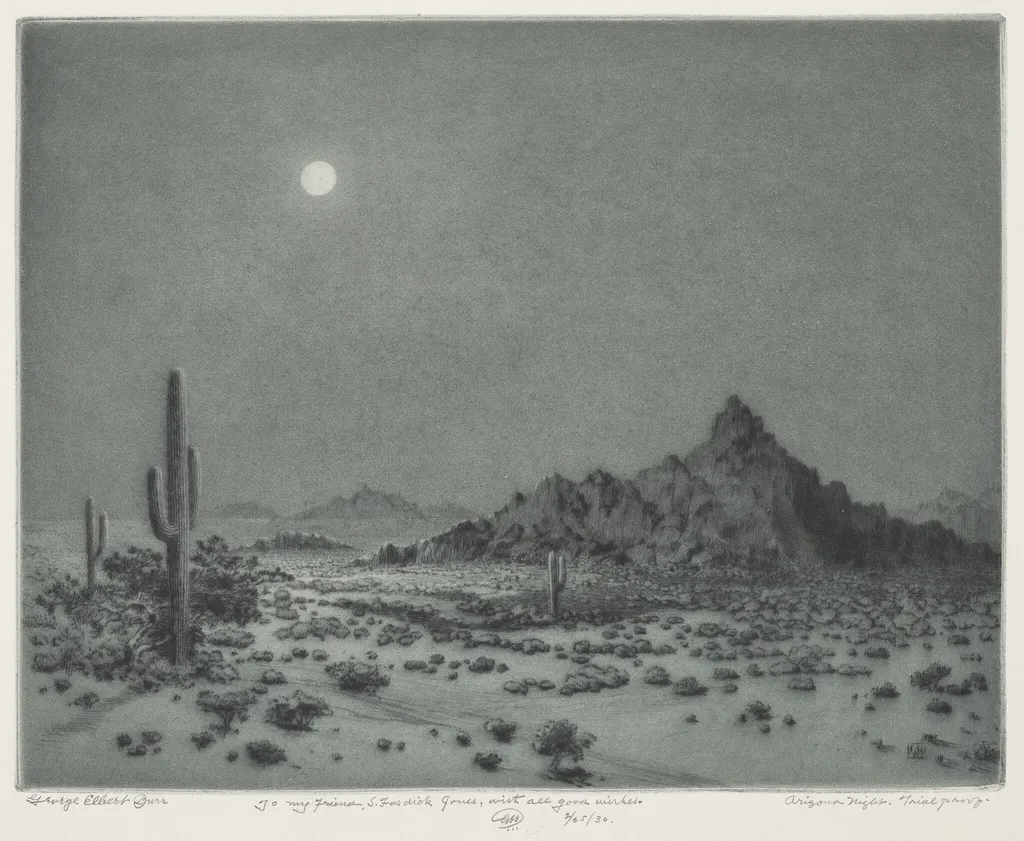
Arizona Night is an ink print by George Elbert Burr. It dates from 1930 and is held in the collection of the National Gallery of Art.
About this work
Overview
Arizona Night, created in 1930 by George Elbert Burr, is a print in drypoint and aquatint on wove paper, rendered in a muted green palette. It captures a nocturnal desert scene characteristic of Burr’s focus on the American Southwest. The work exemplifies his technical mastery in intaglio printmaking, using subtle tonal variations to evoke atmosphere rather than detail.
Subject & Meaning
The composition presents a quiet desert night: low shrubs and cacti dominate the foreground, receding into distant mountain silhouettes under a luminous full moon. The absence of human presence and the monochromatic green tones suggest isolation and stillness. Burr conveys the desert not as barren, but as a contemplative, almost spectral landscape shaped by light and shadow.
Technique & Style
Burr employed drypoint for its rich, velvety lines to define texture in the vegetation and rock, while aquatint provided graduated tones for the sky and distant peaks. The green ink, unusual for landscape prints, enhances the eerie, moonlit quality. His method prioritizes atmospheric effect over precision, using the inherent grain and depth of intaglio to mimic the hushed stillness of night.
History & Provenance
Created during the height of Burr’s career, Arizona Night reflects his decades-long engagement with Western landscapes, beginning in the 1890s. Though specific ownership history is not widely documented, the print aligns with works held in institutions like the Smithsonian and the Library of Congress, which collected his prints for their regional significance and technical innovation.
Context
In the early 20th century, American artists increasingly turned to regional subjects as part of a broader cultural shift away from European traditions. Burr’s desert scenes stood apart from the romanticized frontier imagery of his peers, offering instead intimate, quiet observations of arid terrain—aligned with emerging modernist interests in mood and materiality over narrative.
Legacy
Burr’s prints, including Arizona Night, influenced later generations of printmakers drawn to the expressive potential of drypoint and aquatint. His restrained palette and focus on nocturnal landscapes helped redefine Western American art, shifting emphasis from spectacle to subtlety. His work remains referenced in studies of early 20th-century printmaking and regionalist aesthetics.
Own this work as a print
Artist & collection

Artist
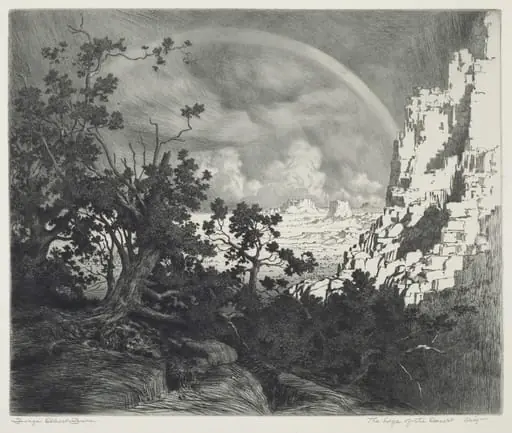
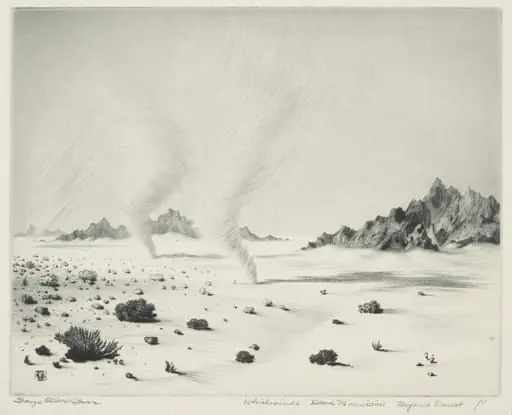
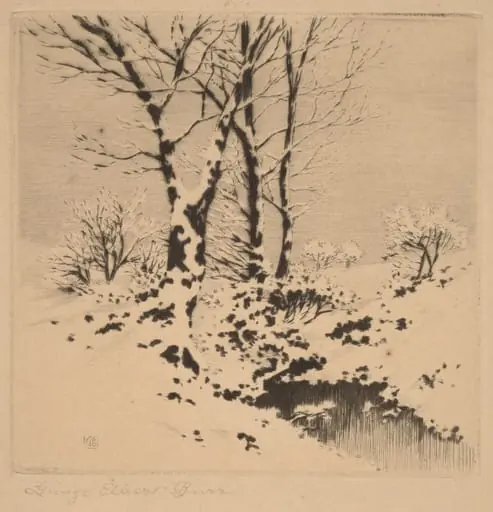
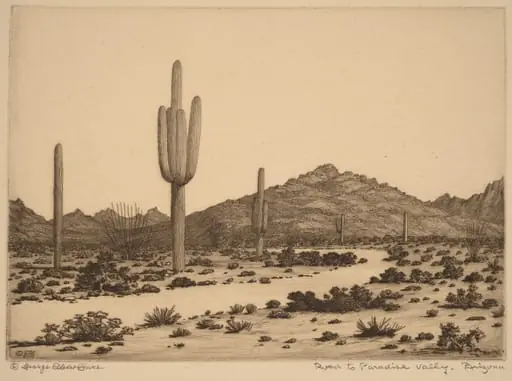
George Elbert Burr (April 14, 1859 – November 17, 1939 ) was an American printmaker and painter best known for his etchings and drypoints of the desert and mountain regions of the American West.

 New Moon and Evening Star
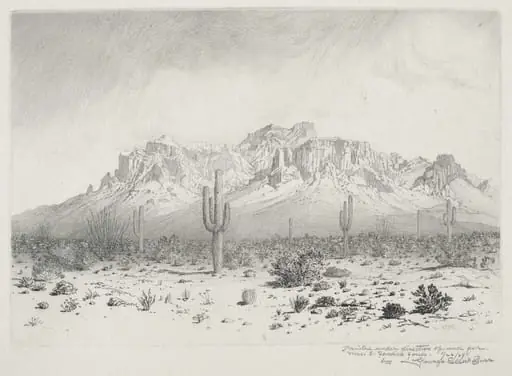 Superstition Mountain, Apache Trail, Arizona (no.1)
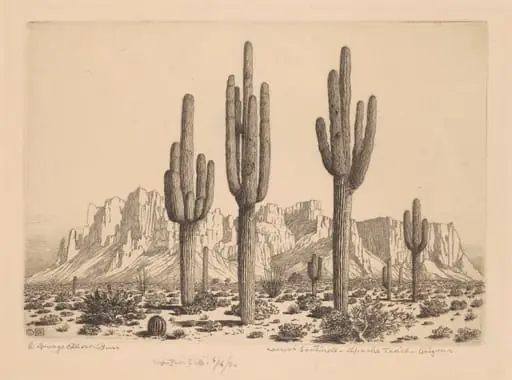 Desert Sentinels, Apache Trail, Arizona
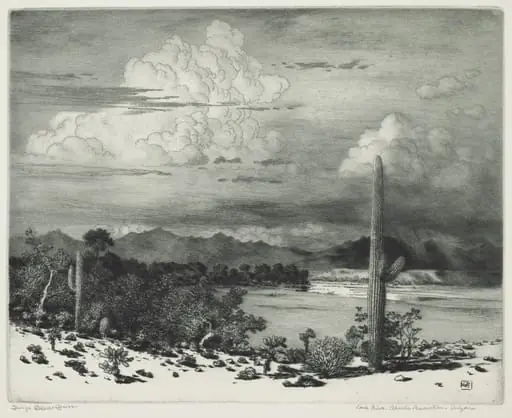 Verde River, Apache Reservation, Arizona
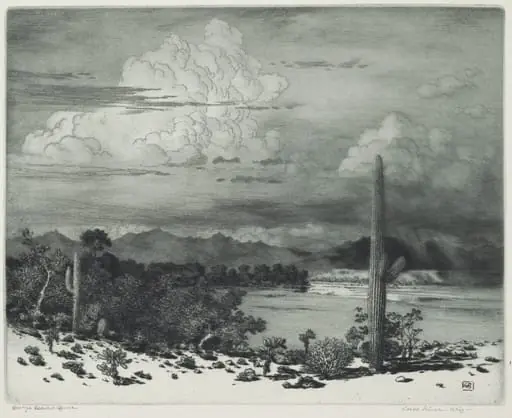 Verde River, Arizona
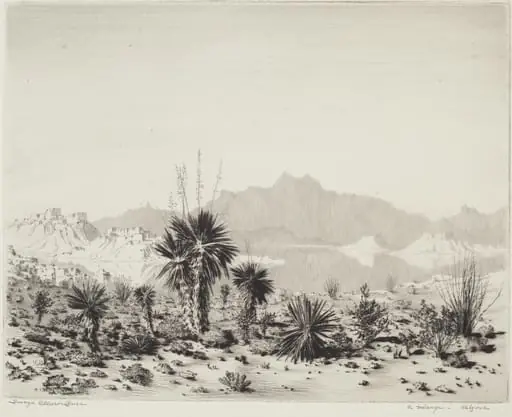 A Mirage, Arizona
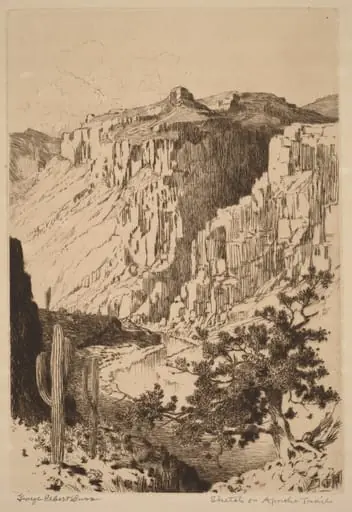 Sketch on Apache Trail, Arizona
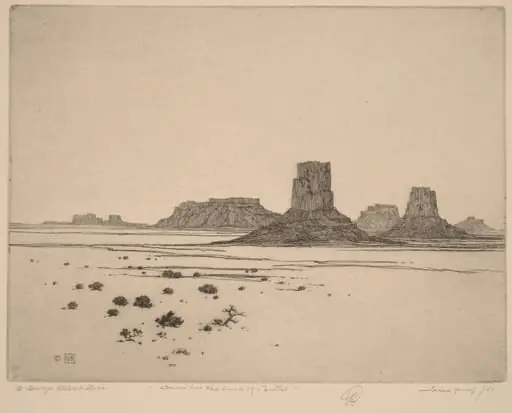 Dawn in the Land of the Buttes
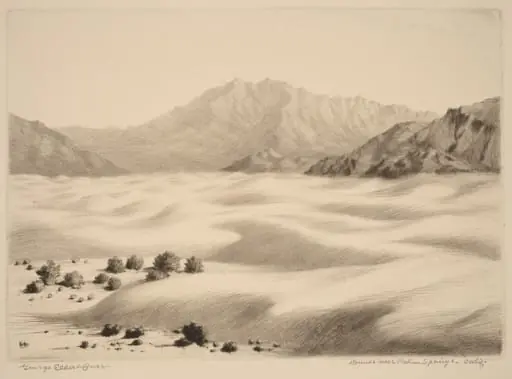 Dunes near Palm Springs, California (no.2)
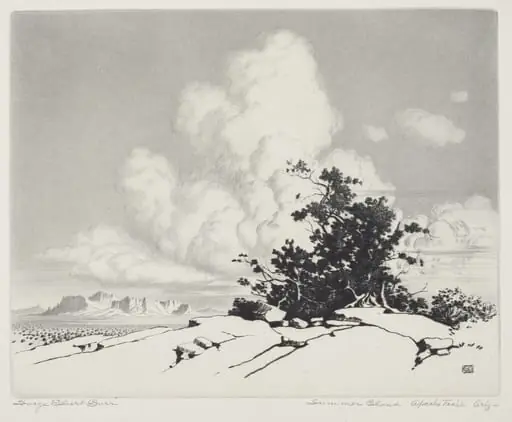 Summer Cloud, Apache Trail, Arizona
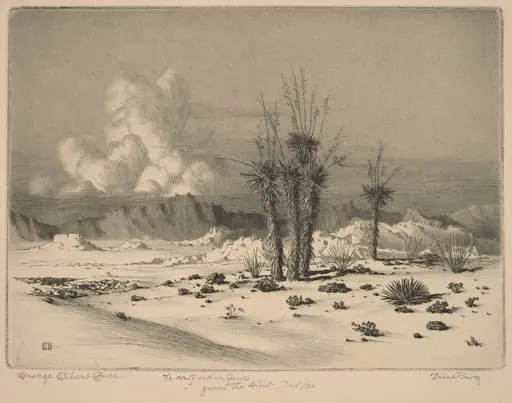 Evening, Arizona