Artwork
The Hurdy-Gurdy Player
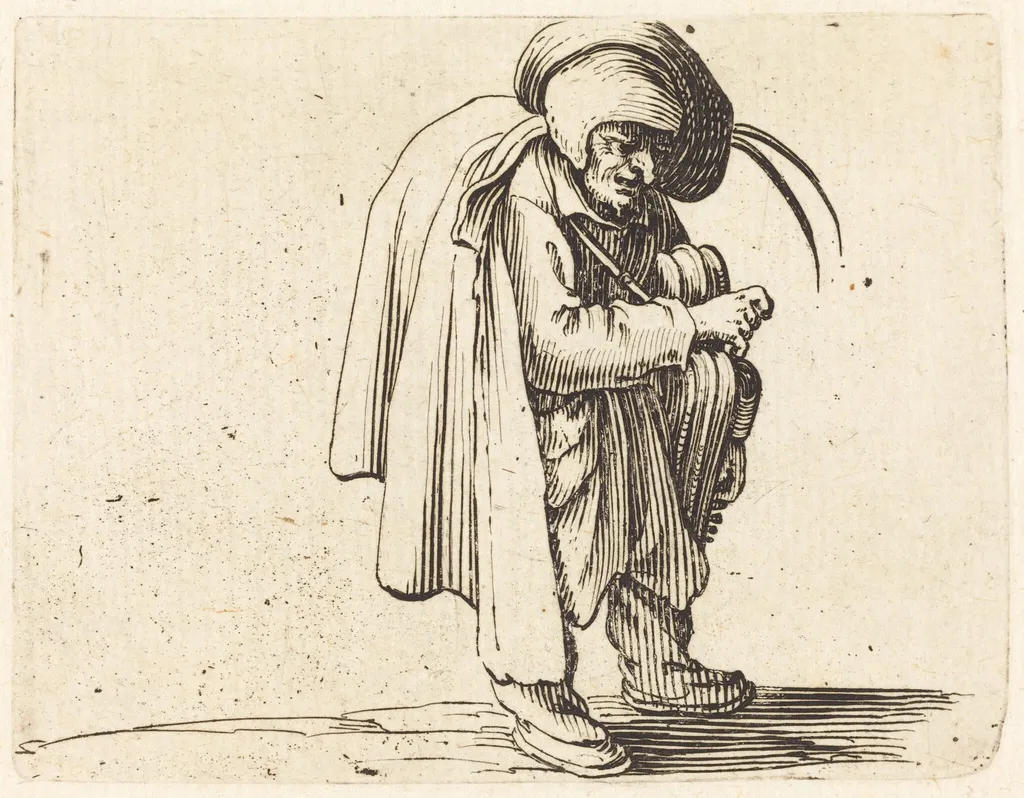
The Hurdy-Gurdy Player is an ink print by the Baroque artist Jacques Callot. It dates from 1622 and is held in the collection of the National Gallery of Art.
About this work
Overview
Created around 1622, *The Hurdy-Gurdy Player* is an etching and engraving on laid paper by Jacques Callot, a prolific French baroque printmaker from Lorraine, known for documenting contemporary life through over 1,400 etchings.
Subject & Meaning
The print portrays a weary street musician playing the hurdy-gurdy, exemplifying Callot’s fascination with everyday figures and activities, from commoners to court life, often set against detailed backdrops.
Technique & Style
Characterized by scratchy, uneven lines, the work showcases Callot’s technical mastery of etching (where acid-etched metal plates enabled mass production) combined with engraving, resulting in a distinctly rough, handmade appearance.
History & Provenance
While specific provenance details for *The Hurdy-Gurdy Player* are not provided, it is part of Callot’s extensive oeuvre, significant in the evolution of old master printmaking due to his observational precision and skill.
Context
Produced in the early 17th century, this piece reflects the baroque era’s emphasis on realism and the everyday, positioning Callot among artists who valued capturing the mundane and the marginalized.
Legacy
*The Hurdy-Gurdy Player* contributes to Callot’s legacy as a pivotal figure in old master printmaking, influencing the development of the medium through his prolific output and technical innovations.
Artist & collection
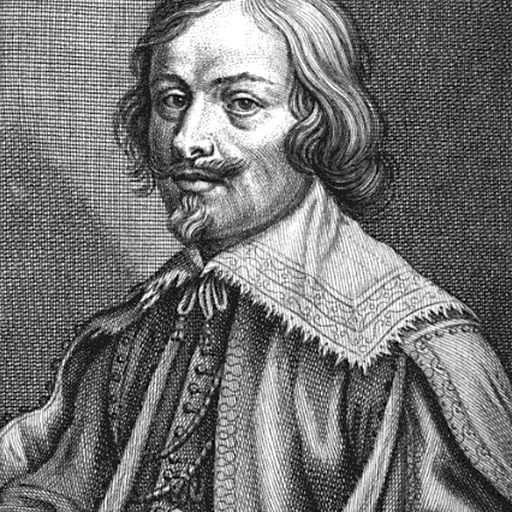
Artist
Jacques Callot was a baroque printmaker and draftsman from the Duchy of Lorraine.

 Holy Family at supper
 Restoration of the Aqueduct at Pisa
 Restoration of the Aqueduct at Pisa
 Square in Paris with Many Figures
 Square in Paris with Many Figures
 Horsemen Attacked by Robbers
 HOW WILL A COVERED PART BE CORRECTED?HOW WIKA A COVERED HEART DEED CORRECTED?
![Christ Walking on the Water [second plate], by Jacques Callot](https://artifactworldgallery.com/img/jacques-callot--christ-walking-on-the-water-second-plate--2069f3bfe4cb2126-w320.webp) Christ Walking on the Water [second plate]
Christ Walking on the Water [second plate]
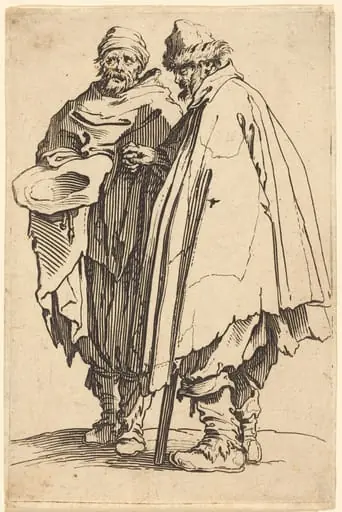 Blind Beggar and Companion
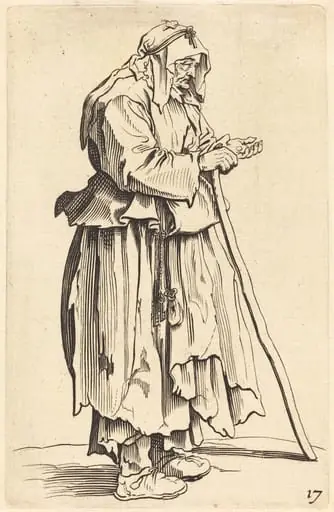 Beggar Woman Receiving Charity
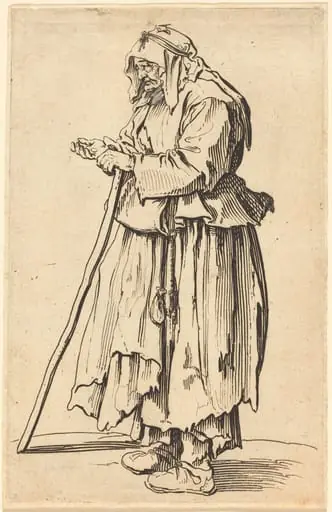 Beggar Woman Receiving Charity
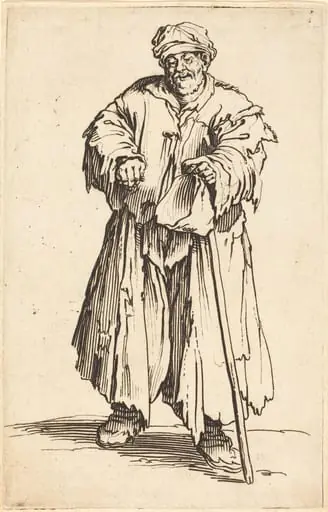 Fat Beggar with Eyes Cast Down
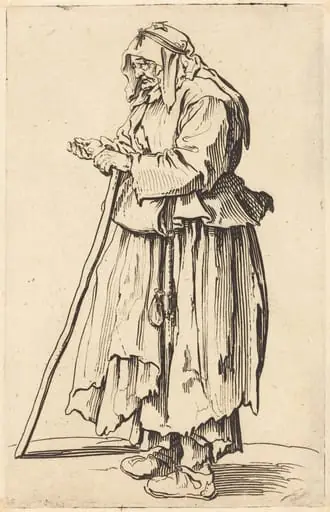 Beggar Woman Receiving Charity
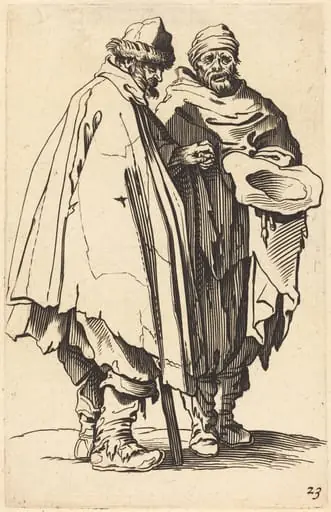 Blind Beggar and Companion
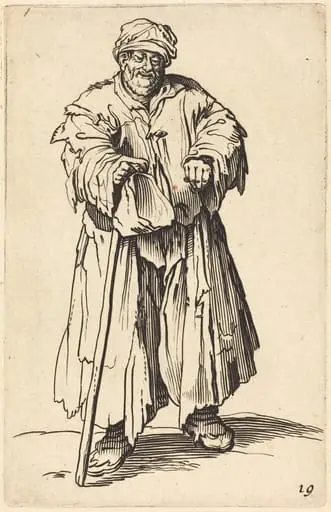 Fat Beggar with Eyes Cast Down
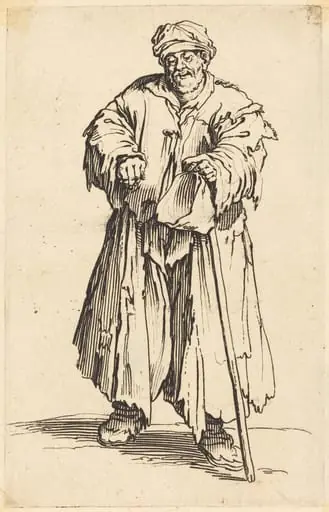 Fat Beggar with Eyes Cast Down
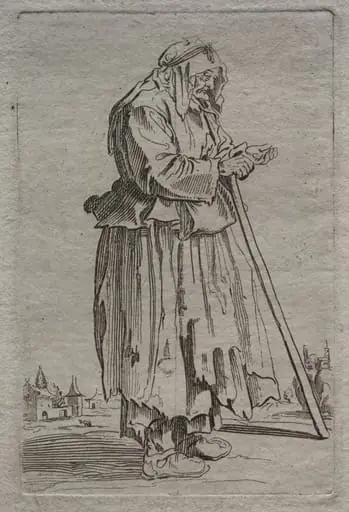 Old Beggar Woman
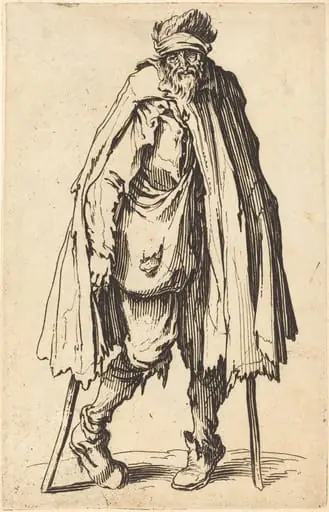 Beggar with Crutches and Sack
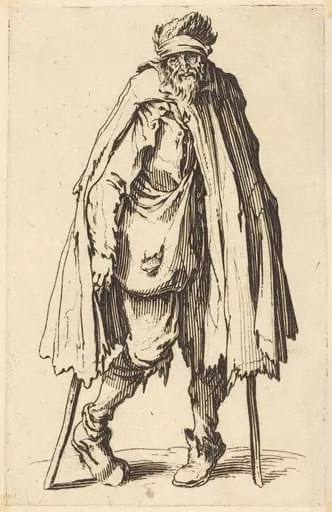 Beggar with Crutches and Sack
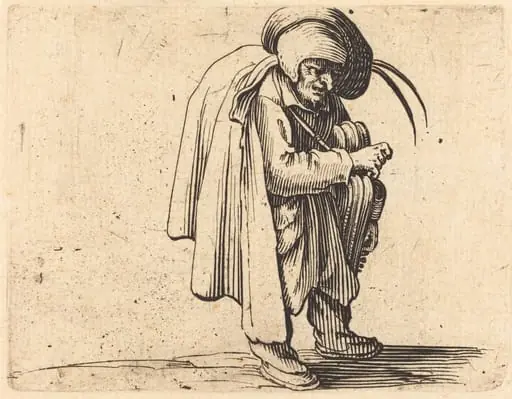 The Hurdy-Gurdy Player