Artwork
Three Women, One Holding a Child
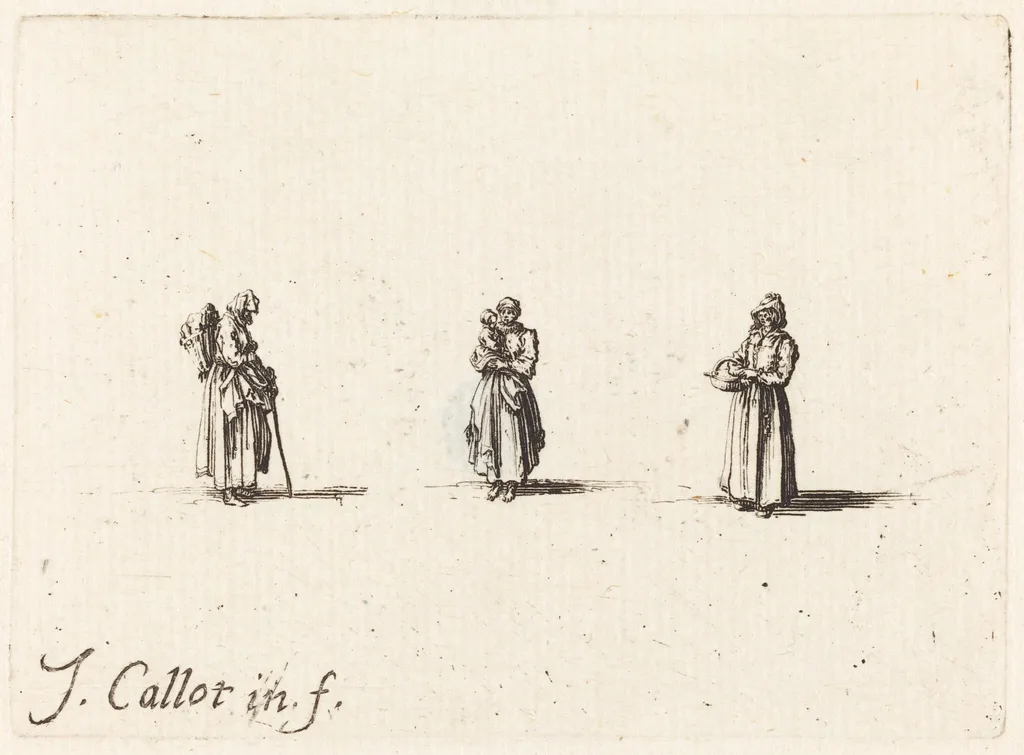
Three Women, One Holding a Child is an ink print by the Baroque artist Jacques Callot. It dates from 1634 and is held in the collection of the National Gallery of Art.
About this work
Overview
As part of a vast output of over 1,400 prints, the work exemplifies Callot’s focus on ordinary life in early 17th-century Europe.
Created around 1634 by Jacques Callot, this etching on laid paper depicts three women, one cradling a child. As part of a vast output of over 1,400 prints, the work exemplifies Callot’s focus on ordinary life in early 17th-century Europe. Rendered in subtle tonal gradations, the composition avoids theatricality, instead emphasizing quiet observation and restrained emotion through delicate line work and careful shading.
Subject & Meaning
The scene portrays three women in modest, flowing attire, their interaction centered on the child held by the central figure. No narrative or symbolic context is overtly stated, suggesting an intimate, unposed moment of daily life. Callot’s choice to elevate such a private gesture reflects his interest in human dignity within common existence, aligning with his broader documentation of social figures beyond elite subjects.
Technique & Style
Callot employed fine, controlled etching lines to model form and texture, particularly in the drapery of the garments, where folds are rendered with precision. The tonal range—delicate grays from near-white to deep shadow—creates volume without heavy contrast. The absence of bold outlines and the soft transitions between light and dark contribute to a sense of quiet realism, characteristic of his mature style.
History & Provenance
The print emerged during Callot’s time in Florence, where he was active in court circles but maintained a keen interest in secular subjects. While its early ownership is undocumented, it entered major collections in the 19th century, likely through European print dealers who recognized its technical refinement. It remains part of institutional holdings today, valued for its historical and artistic continuity.
Context
In the 1630s, etching was a dominant medium for disseminating images across Europe, and Callot stood among its most skilled practitioners. While contemporaries often depicted grand events or mythological scenes, he turned to the margins of society—servants, travelers, laborers—capturing their presence with nuance. This work fits within that quiet tradition, offering a counterpoint to the era’s more dramatic visual culture.
Legacy
Callot’s influence extended to later printmakers through his mastery of fine-line etching and his commitment to observing everyday life. Though not widely exhibited as a standalone work, this etching exemplifies the quiet power of his approach: dignity found in restraint, detail in simplicity. It remains a reference point for studies of Baroque printmaking and the representation of domestic life in early modern Europe.
Artist & collection

Artist
Jacques Callot was a baroque printmaker and draftsman from the Duchy of Lorraine.

 Holy Family at supper
 Restoration of the Aqueduct at Pisa
 Restoration of the Aqueduct at Pisa
 Square in Paris with Many Figures
 Square in Paris with Many Figures
 Horsemen Attacked by Robbers
 HOW WILL A COVERED PART BE CORRECTED?HOW WIKA A COVERED HEART DEED CORRECTED?
![Christ Walking on the Water [second plate], by Jacques Callot](https://artifactworldgallery.com/img/jacques-callot--christ-walking-on-the-water-second-plate--2069f3bfe4cb2126-w320.webp) Christ Walking on the Water [second plate]
Christ Walking on the Water [second plate]
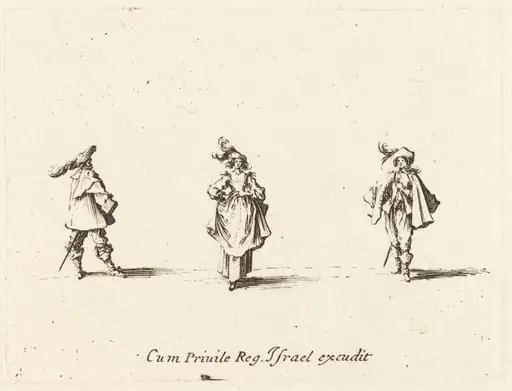 Lady with Plumes, and Two Gentlemen
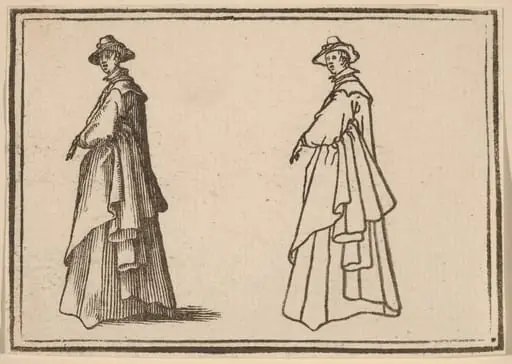 Standing Woman in a Great Coat
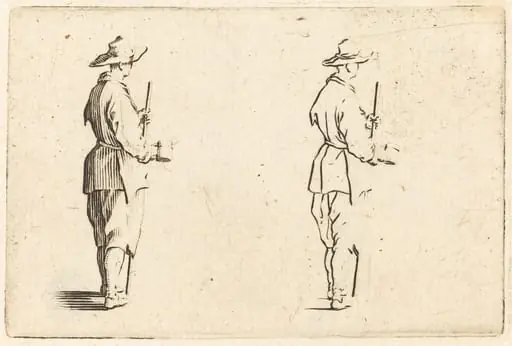 Peasant with a Cup
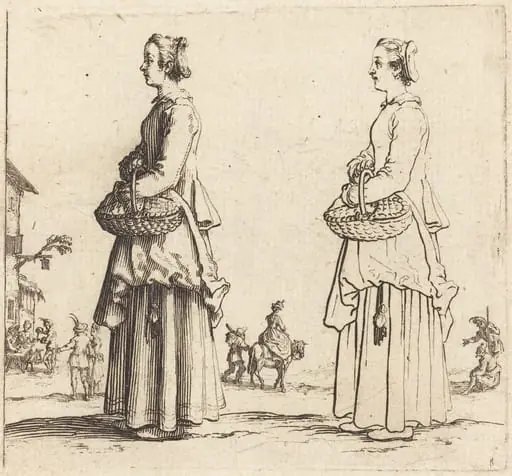 Peasant Woman with Basket, in Profile, Facing Left
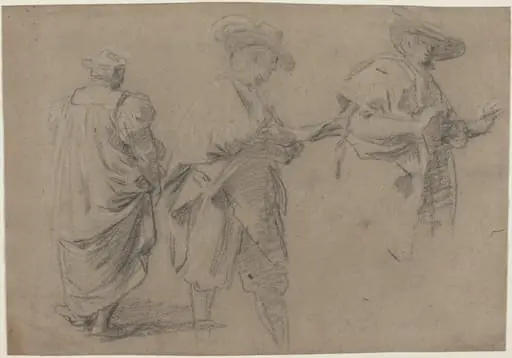 A Judge and Two Gentlemen Lawyers
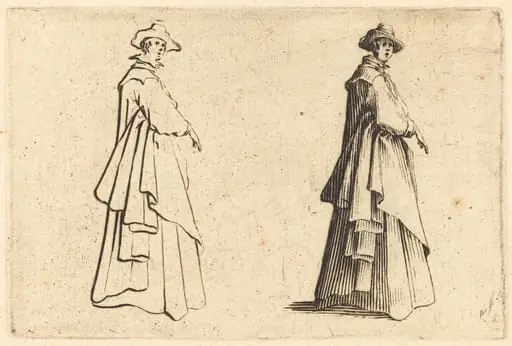 Lady in a Large Coat
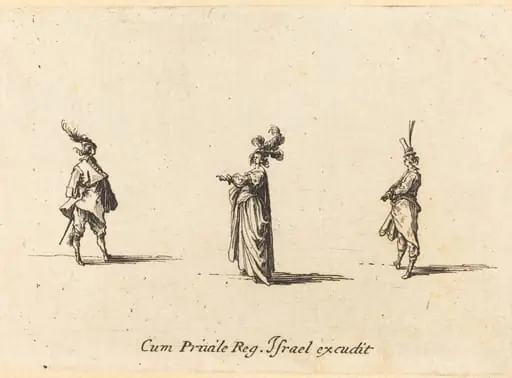 Lady with Plumed Hat, and Two Gentlemen
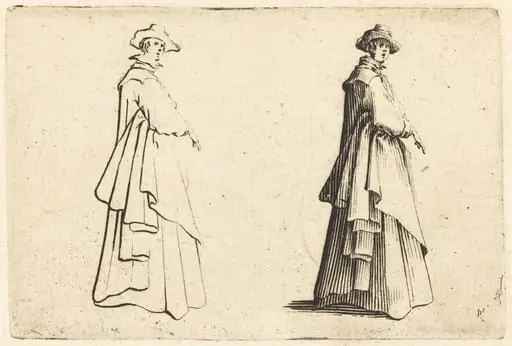 Lady in a Large Coat
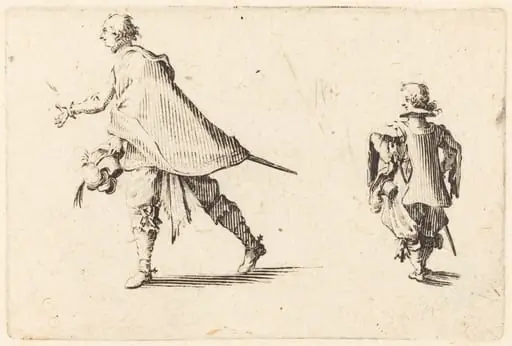 Gentleman and His Page
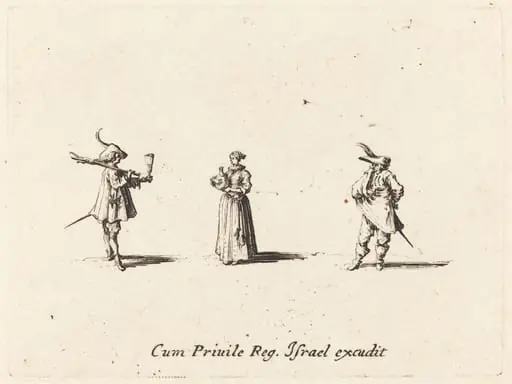 Lady with Wine Bottle, and Two Gentlemen
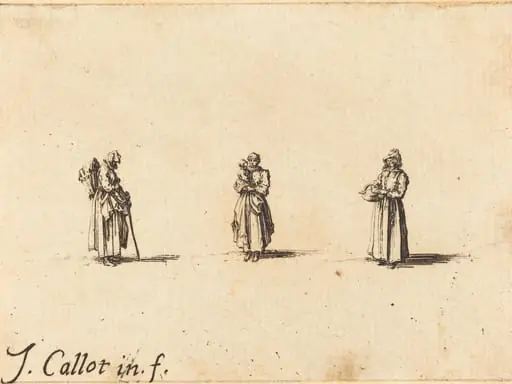 Three Women, One Holding a Child
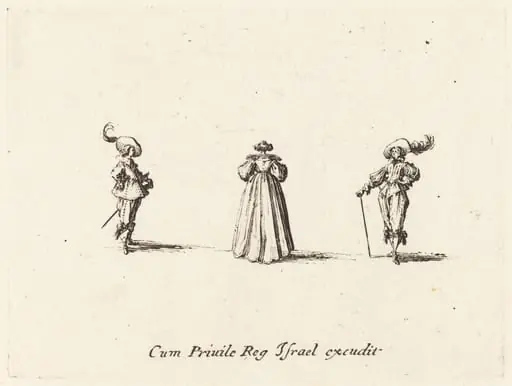 Lady Seen from Behind, and Two Gentlemen